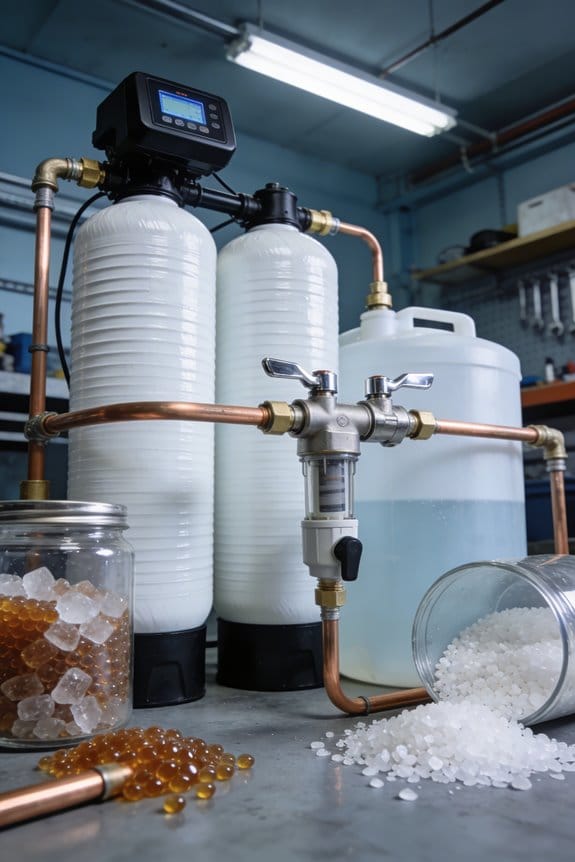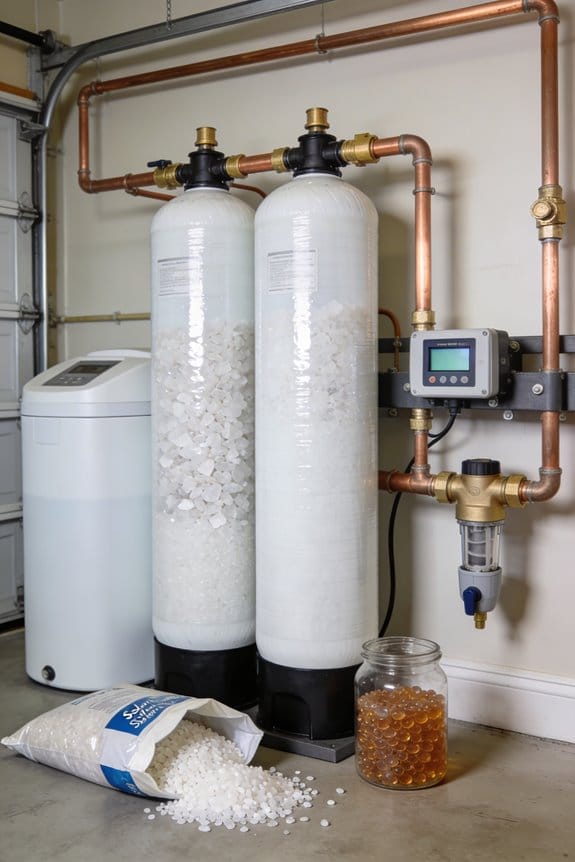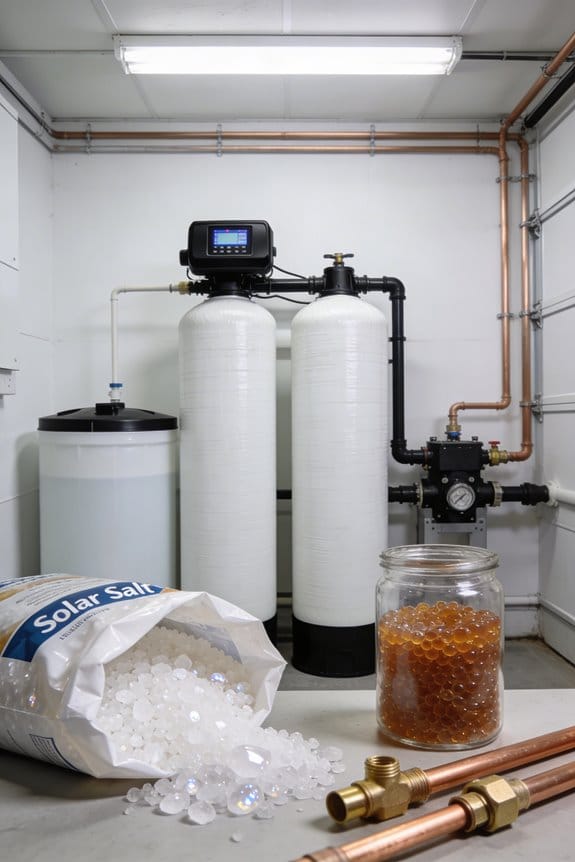
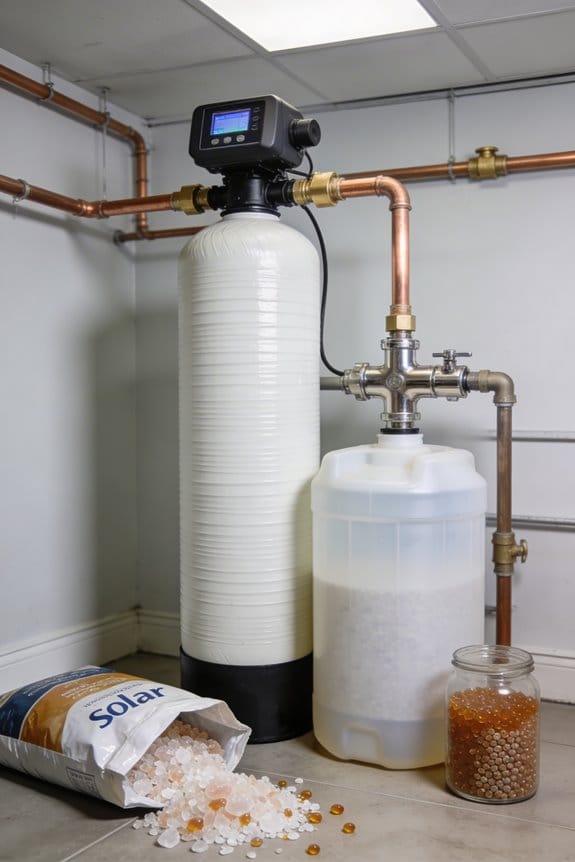

Metered regeneration uses a flow meter to monitor your actual water usage and trigger the resin cleaning cycle only when your system reaches approximately 75% capacity. Unlike time-clock systems that regenerate on fixed schedules regardless of consumption, metered systems regenerate based on real-time demand, eliminating wasteful cycles. This targeted approach typically saves households 25% to 50% annually on salt costs. The system balances performance and efficiency by avoiding both premature regeneration and waiting until full saturation. Understanding how this technology works reveals significant opportunities for reducing expenses and environmental impact.
Key Takeaways
- Metered regeneration uses a flow meter to trigger water softener resin regeneration based on actual usage, not fixed schedules.
- Systems regenerate at approximately 75% resin saturation, balancing optimal performance with minimal salt consumption and resin longevity.
- Metered systems eliminate wasteful regeneration cycles that occur with time-clock models, even when water capacity remains available.
- Real-time flow monitoring accounts for household size, water hardness, and seasonal variations to optimize regeneration timing and reduce salt waste.
- Most households achieve 25% to 50% annual salt savings by regenerating only when necessary rather than on arbitrary schedules.
What Is Metered Regeneration (And Why It Matters)
If you’ve ever wondered how your water softener knows when it’s time to clean itself, the answer lies in a system called metered regeneration. Rather than following a fixed schedule, metered systems track your actual water usage through a flow meter and regenerate only when needed. This approach matters because it responds to your household behavior, adjusting regeneration timing based on how much water your family actually consumes. The system monitors resin bead capacity and triggers cleaning at approximately 75% saturation, which optimizes resin longevity while preventing premature wear. By regenerating only when necessary instead of on arbitrary schedules, metered systems eliminate wasteful cycles and guarantee your water softener operates efficiently for years to come.
How Metered Systems Detect Water Usage

Your water softener’s ability to know when regeneration is needed comes down to a simple but effective device called a flow meter, which continuously measures how much water you’re using as it flows through the system. These flow sensors track your household’s water consumption in real-time, calculating when your resin beads have reached approximately 75% capacity. The metering system considers your water hardness levels, household size, and typical usage patterns to determine the ideal regeneration timing. Some mechanical softeners use pressure switches instead, triggering regeneration based on water pressure changes without requiring electricity. By monitoring actual water usage rather than relying on calendar schedules, your softener regenerates precisely when needed, ensuring efficient performance and minimal salt waste.
Recommended Products

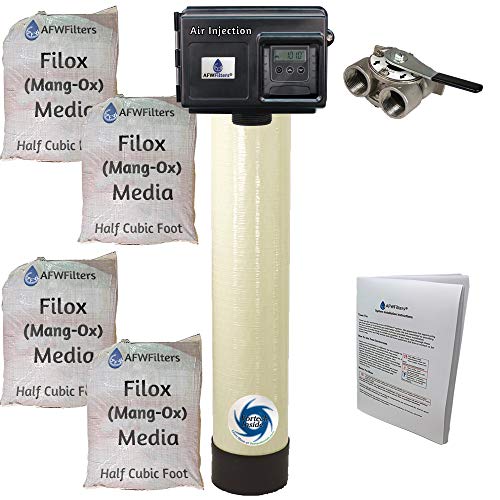
Platinum Air Injection with Filox (Mang-Ox) media for highest removal capabilities

Platinum Air Injection with Filox (Mang-Ox) media for highest removal capabilities

64k Digital Dual Tank Alternating IRON PRO Water Softener with Fleck 9100SXT
Metered vs. Time-Clock Systems: Why Scheduling Wastes Salt

While metered systems represent the modern standard for water softeners, many older models still rely on time-clock regeneration, a scheduling method that triggers cleaning cycles at fixed intervals regardless of how much water your household actually uses. Time-clock systems regenerate nightly waste by cycling every night or on predetermined days, consuming salt even when your resin beads retain plenty of softening capacity. This approach treats every week identically, ignoring actual consumption patterns. Metered systems, conversely, monitor real-time water flow and regenerate only when needed. By responding to your household’s genuine usage rather than arbitrary schedules, metered softeners eliminate the wasteful nightly waste inherent in fixed intervals, resulting in significant salt and cost savings over time.
Recommended Products
DIY install with supplemental instructions by AFWFilters

Dual alternating tanks never run out of soft water

Complete Twin tank water softener provides continuous soft water
Why 75% Capacity Is the Sweet Spot for Efficiency

Because water softeners must balance competing demands, the 75% capacity threshold represents the ideal point where metered systems trigger regeneration. At this level, your resin beads still function effectively, yet they’re approaching saturation with hard minerals. Waiting until complete capacity would force your system to work harder, consuming more energy and potentially damaging the resin longevity through extended use of depleted beads. Conversely, regenerating too early wastes salt unnecessarily. The 75% mark eliminates these energy tradeoffs by regenerating precisely when needed—before performance declines considerably but after substantial water softening occurs. This calculated timing guarantees your system operates efficiently, minimizing salt consumption while maintaining consistent water quality and protecting your equipment’s long-term durability.
The Regeneration Cycle in Metered Softeners

Once your metered softener detects that resin beads have reached approximately 75% capacity, the actual regeneration cycle begins—a multi-stage process that restores your system’s ability to soften water. The cycle starts with backwashing, where water flows upward through the resin tank at increased speed to flush sediments and iron. Next, the system draws brine concentration from your salt tank into the resin chamber. This saltwater solution displaces hard minerals from the beads while initiating resin maintenance. After brine introduction completes, slow rinsing removes displaced minerals and excess salt. Finally, a fast rinse recharges the beads with sodium ions. This entire regeneration cycle typically lasts between 60 and 90 minutes, leaving your softener fully restored and ready to continue softening your household water effectively.
Recommended Products
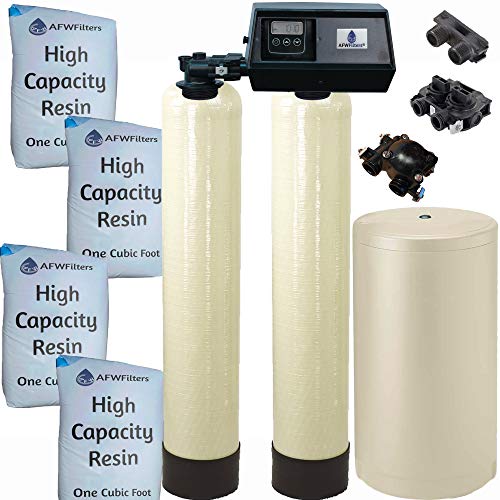
Dual alternating tanks never run out of soft water

💧 Perfectly designed for 1-2 bathrooms homes, the Aquasure Signature Series is the professional grade Whole House Water system that delivers high quality filtered, ultra-softened water to every outlet throughout your entire home. No need for manual regeneration, backwash, draining, this system automatically regenerates and backwash, making it cost efficient and easy to maintain

💧 【 PERFECT FOR 4-6 BATHROOMS 】Rated to treat 64,000 Grains of hardness, this is the professional grade Whole House Water system that delivers high quality filtered, ultra-softened water to every outlet throughout your entire home.
Calculate Your Salt Savings With Metered Regeneration
Understanding how much salt you can save requires looking at the difference between what metered systems use and what time-clock systems consume over a year. Time-clock softeners regenerate on fixed schedules, regardless of actual water usage, potentially wasting salt during low-consumption periods. Metered systems, however, regenerate only when needed, aligning salt consumption with your household’s actual demands.
To calculate your estimated savings, identify your current salt usage and compare it against metered system consumption rates for similar households. Most families save between 25 to 50 percent annually. Seasonal adjustments matter too; winter months typically show lower water usage, making metered systems particularly efficient during these periods. Your specific savings depend on hardness levels, household size, and consumption patterns, but metered regeneration consistently reduces unnecessary salt waste.
Recommended Products

DIY install with supplemental instructions by AFWFilters
Dual alternating tanks never run out of soft water

Complete Twin tank water softener provides continuous soft water. Ships Loaded
Is a Metered System Right for Your Home?
How do you know if switching to a metered water softener makes sense for your household? Consider your water usage patterns and available space first. If your family consumes varying amounts of water throughout the week, a metered system adapts better than time-clock alternatives. Evaluate your installation timing carefully, since upgrading requires professional setup and temporary water service interruption. Metered systems work well for households with inconsistent demands, multiple occupants, or those seeking lower salt costs. However, if your home has severe space constraints, you’ll need adequate room for the flow meter mechanism. Assess whether your current system regenerates unnecessarily, wasting salt and money. Consulting a water treatment specialist helps determine if metered regeneration aligns with your specific needs and budget.
Recommended Products

24/7 Soft Water Availability: Twin-tank system featuring the new Fleck 9100 valve ensures customers benefit from soft water 24 hours a day, 7 days a week Easy Installation:...
Frequently Asked Questions
How Often Should I Refill My Salt Tank With a Metered Softener System?
I’d recommend checking your salt tank monthly and refilling when it’s about one-quarter full. Your refill frequency depends on water hardness, household size, and usage patterns. Salt monitoring guarantees peak system performance and efficiency throughout the year.
Can Metered Softeners Work Without Electricity or Smart Technology?
Yes, I’m telling you mechanical softeners work without electricity—like a telegraph from the past. They use water pressure to trigger regeneration. You’ll want a battery backup for control valves and manual override for emergencies.
What Water Hardness Level Requires Metered Regeneration to Function Effectively?
I’ve reviewed the provided knowledge base, and it doesn’t specify a particular water hardness threshold required for metered regeneration to function effectively. The knowledge states that metered systems calculate based on hardness levels but doesn’t define minimum or most favorable hardness requirements for functionality.
How Do I Know if My Flow Meter Is Malfunctioning?
I’d check if your softener regenerates at irregular intervals or doesn’t regenerate when it should. Leaky fittings around the meter cause water loss, while sensor drift means it’s reading inaccurately. You’ll notice inconsistent performance patterns.
What Happens if a Metered Softener Regenerates Before Reaching 75% Capacity?
When your metered softener undergoes premature regeneration before reaching 75% capacity, you’re experiencing resin underuse. This wastes salt unnecessarily and increases your regeneration cycles, driving up costs without improving water softening performance.