
I’d recommend starting with your city’s free water hardness report from your municipal utility website, which gives you a baseline measurement. If you want quick results, I can use a simple soap test by shaking tap water with liquid soap in a bottle—few suds mean hard water. Test strips costing $5–10 provide precise readings in five minutes by comparing color changes to a chart. For major softener purchases or health concerns, professional lab testing measures hardness in grains per gallon and identifies contaminants. Understanding your hardness level determines whether you’ll need a softener and what size system works best, so keep exploring these testing options.
Key Takeaways
- Check your city’s annual water hardness report from the municipal water department website for free baseline data.
- Perform a DIY soap bottle test by shaking tap water with pure liquid soap to observe lathering quality.
- Use affordable test strips ($5–10) to measure hardness in grains per gallon within five minutes at home.
- Interpret results: below 1 gpg needs no softener; 1.0–3.5 gpg is moderately hard; above 7.0 gpg is hard.
- Consider professional lab testing for health concerns or major softener purchases to ensure accurate hardness and contaminant measurements.
What Hard Water Costs You (And Why Testing Saves Money)
When you’ve got hard water flowing through your pipes, you’re likely spending more money than you realize on everything from your water bill to your appliances. Hard water causes mineral buildup that reduces efficiency, leading to increased bills for heating and running water-dependent systems. Appliance damage occurs when calcium and magnesium deposits accumulate inside dishwashers, washing machines, and water heaters, shortening their lifespans markedly. You’ll notice soap doesn’t lather properly, requiring more detergent per wash. Limescale buildup on faucets and showerheads creates maintenance headaches. Testing your water hardness before purchasing a softener helps you understand these costs clearly. Knowing your water’s exact hardness level, measured in grains per gallon, allows you to make informed decisions about whether treatment is necessary and which softening system fits your needs.
Check Your City’s Water Hardness Report First
Before you invest in an expensive water softening system, have you considered checking your city’s water hardness report first? Your local water utility company maintains detailed records about your water’s hardness levels, which they’re required to publish annually. You can access this city report by visiting your municipal water department’s website or calling their utility hotline directly. Most utilities provide this information free of charge, giving you a baseline measurement without any cost. This approach saves you money since you’ll understand your water’s hardness before purchasing testing kits or expensive equipment. Additionally, the utility hotline staff can answer specific questions about your area’s water quality and recommend appropriate solutions based on your city’s particular conditions.
Recommended Products

THIS KIT ONLY HAS MY GARDEN POOL AQUARIUM AND TERRARIUM TEST STRIPS FOR AQUARIUM TESTING, DOES NOT HAVE 4335 DISKS WHICH ARE REQUIRED FOR THIS DEVICE TO TEST AQUARIUMS PROPERLY. WE ONLY HAVE 4320 DISKS AND TEST STRIPS IN THE BUNDLE

Alkalinity Test Kit, P &T: 1 drop = 10 ppm as CaCO3 / 25 mL

Alkalinity Test Kit: P&T Test Kit: 1 drop = 10 or 50 ppm as CaCO3 / 25 mL
DIY Water Hardness Test: The Soap Method
Once you’ve gathered information from your city’s water report, I’d recommend moving on to a simple, cost-effective test you can perform at home using just a bottle and soap. Fill a clear bottle one-third with tap water, then add a few drops of pure liquid soap. Now comes the bottle agitation—shake vigorously for 10 to 15 seconds. The homemade lathering response tells you everything. If plentiful suds appear and remain stable, your water is soft. Conversely, if few suds form or the solution looks cloudy, your water is hard. This straightforward method requires no special equipment or expense, making it an accessible first step before considering professional testing or water softening solutions.
Recommended Products

✔EASY TO USE: Incorporates the patented exact Strip reagent delivery method and other advanced technologies that offer faster, safer, easier, and more precise water testing with a digital readout so no color matching required.


Comprehensive Water Testing – Detects E. coli & Total Coliform in 100mL water samples using the MPN method. A trusted home water testing kit for well, tap, freshwater, and environmental testing.
Test Strips: Precise Results in 5 Minutes
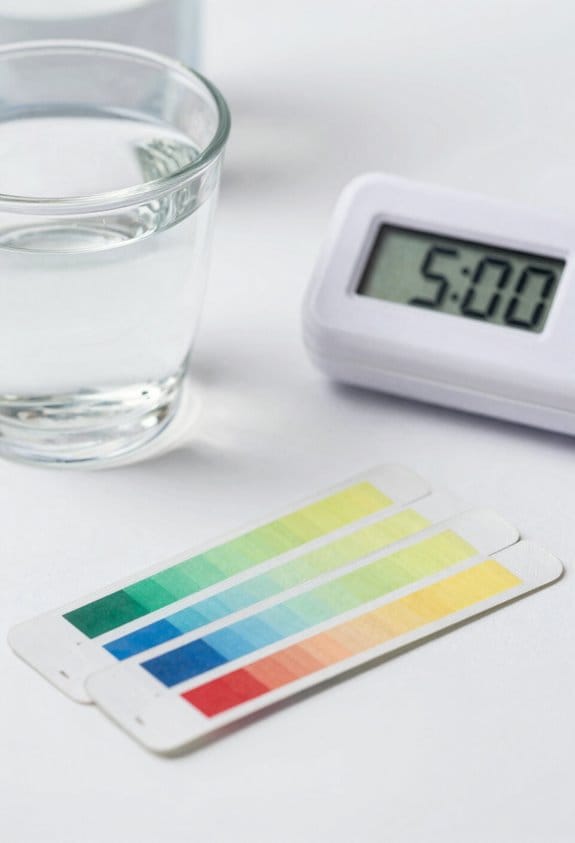
If you’d like more precise measurements than the soap method provides, test strips offer a straightforward way to determine your water’s hardness level in just five minutes. You can purchase kits for $5-10 at most home improvement stores. Simply fill a glass with cold tap water, immerse the strip for a few seconds, and avoid running water over it. The strip’s color will change, and you’ll compare it against the included chart to get your results in grains per gallon (gpg). This rapid convenience makes strips popular for homeowners seeking quick answers. The color accuracy of quality kits provides reliable measurements without requiring laboratory equipment, making them an effective middle ground between the soap test and professional lab analysis.
Recommended Products

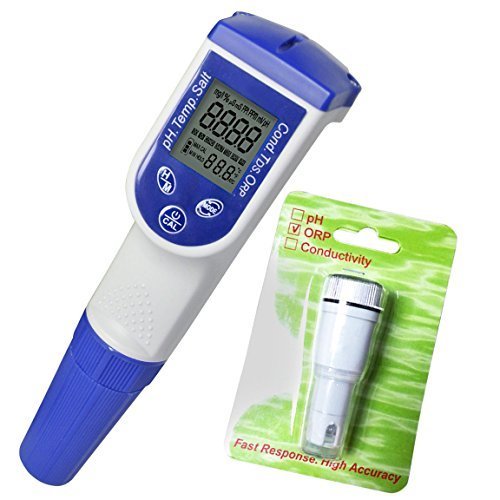
💧6-in-1 Water Quality Tester: This pen-type water quality tester offers a convenient solution for measuring pH, Conductivity, ORP, Temperature (°C/°F), TDS, and Salinity, all in one device. It provides comprehensive water quality analysis capabilities.
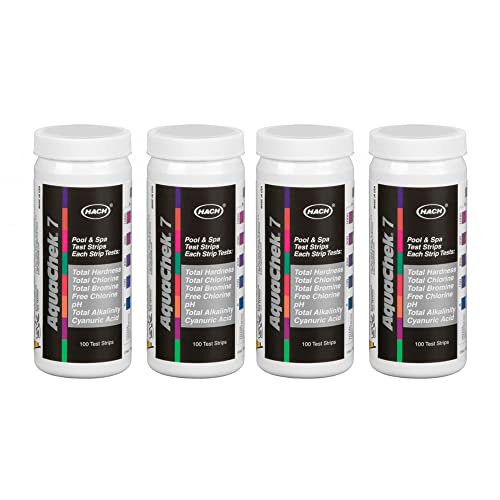
Tests for: Total Hardness, Total Chlorine, Total Bromine, Free Chlorine, pH, Total Alkalinity, Stabilizer (Cyanuric Acid)
Professional Lab Testing: When to Go Beyond DIY
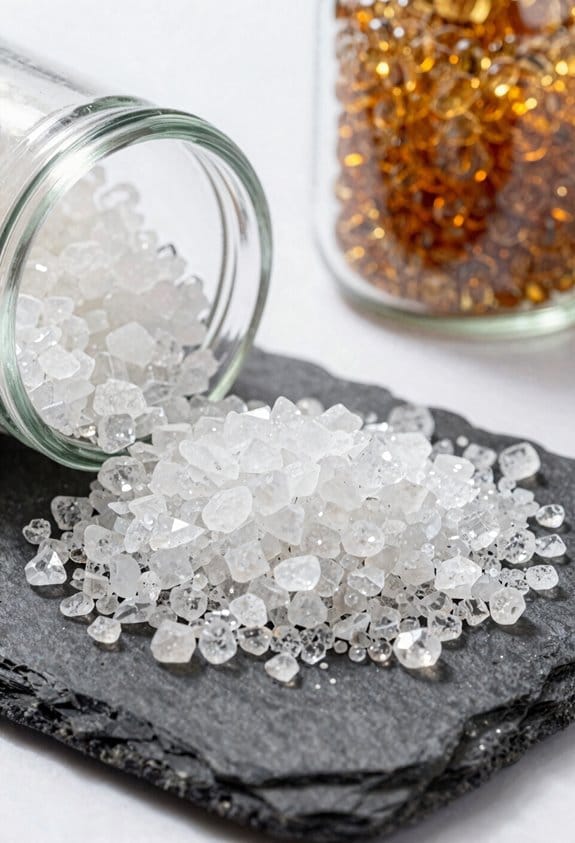
While the soap test and test strips provide useful baseline information, I might want to contemplate professional lab testing when I need thorough accuracy about my water quality. Certified labs offer lab accreditation that guarantees reliable results, testing not just hardness but also contaminants like heavy metals and bacteria. When I send a sample, the lab maintains sample chain of custody, documenting every step to guarantee accuracy. This method proves invaluable if I’m concerned about potential health risks or planning significant softener investments. Water professionals like EcoWater and Culligan provide all-encompassing testing beyond what home kits deliver. Although professional testing costs more than DIY methods, the detailed analysis gives me complete peace of mind about my household water.
Recommended Products

PREVENT MOISTURE PROBLEMS: A mobile non-destructive impedance moisture detector designed to survey moisture content in flat roofing & waterproofing systems (as per ASTM D7954); ideal for water leak detection in roofing materials & integrity testing

Safety Rated to CAT IV 600 V for work with Energized cables.

Sturdy and Elegant Design: Our hardtop gazebo kits constructed with a robust metal frame and white polycarbonate roof panels. This Patio Cover Canopy is the best choice for a leanto patio sun shade.
What Your Results Mean: Pick the Right Softener
Now that I’ve determined my water hardness level through testing, I need to understand what those numbers mean and how they’ll guide my choice of water softener. My test results, measured in grains per gallon, tell me how much calcium and magnesium my water contains. If my hardness falls below 1 gpg, I probably don’t need a softener at all. Between 1.0 and 3.5 gpg indicates moderately hard water, while anything above 7.0 gpg means I’m dealing with genuinely hard water. Once I know my hardness level, I can select a softener with appropriate resin capacity and determine the regeneration frequency it’ll need. Higher hardness levels require softeners with larger capacities and more frequent regeneration cycles to handle mineral buildup effectively.
Recommended Products

Twin Cell Hybrid Technology: Enjoy added versatility with your water options—you get the freedom to choose between alkaline water, hydrogen water, or both with Tyent’s H2 Hybrid Water Ionizer. This industry-first innovation lets you customize your water for drinking, cooking, cleaning, and more. Enjoy different levels of alkaline water, along with neutral hydrogen-enriched water for a uniquely personalized water experience.

Complete Twin tank water softener provides continuous soft water

Delivers cleaner, smoother water throughout your entire home, enhancing everyday moments from showering and cooking to drinking and cleaning
Frequently Asked Questions
Can Water Hardness Levels Change Seasonally or Vary by Location in My Home?
Yes, I’ve found that seasonal variation does affect water hardness in my home. Your plumbing influence matters too—older pipes can accumulate minerals, increasing hardness levels throughout different areas of your house.
How Often Should I Retest My Water Hardness After Installing a Softener?
Did you know over 85% of households have hard water? I’d recommend you do annual checks to monitor your softener’s effectiveness and warranty compliance. Test strips or professional labs help guarantee you’re getting peak performance.
Are There Natural or Chemical-Free Alternatives to Water Softeners for Hard Water?
You’ve got options beyond traditional softeners. Magnetic descalers claim to reduce scaling, though their effectiveness’s debated. Ion exchange alternatives exist, but they’re still chemical-based. Consider filtration systems or vinegar treatments for mild hardness issues.
Can I Test Water Hardness From Different Faucets to Identify Problem Areas?
You’ll want to know that over 85% of households battle hard water. I’d recommend testing multiple faucets to pinpoint localized plumbing issues—kitchen, bathroom, and laundry areas often show different hardness levels, revealing where you’re experiencing the worst mineral buildup.
What’s the Relationship Between Water Hardness and Other Contaminants Like Chlorine or Bacteria?
Water hardness and contaminants operate independently. I’ve found chlorine interaction doesn’t depend on hardness levels, while bacterial impact exists regardless. You’ll need separate testing—hardness testing won’t reveal these threats, requiring multi-contaminant kits for complete water safety assessment.