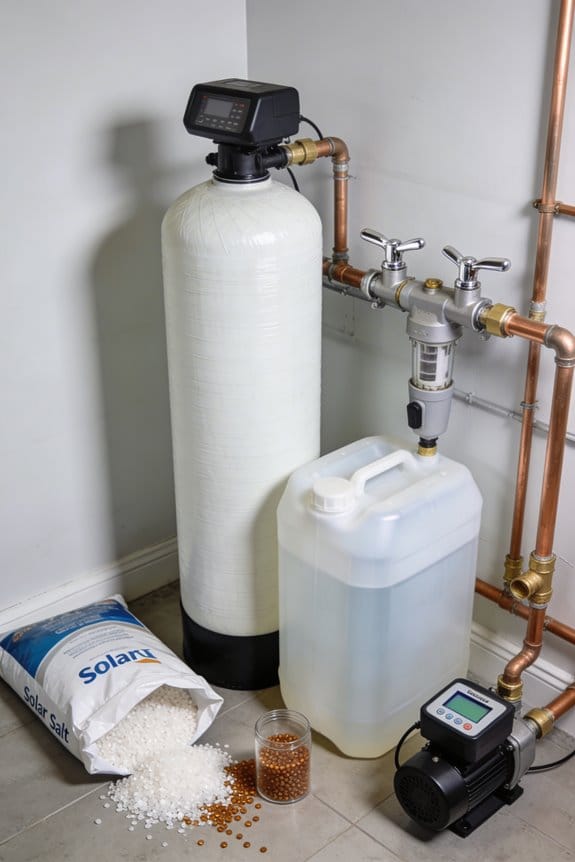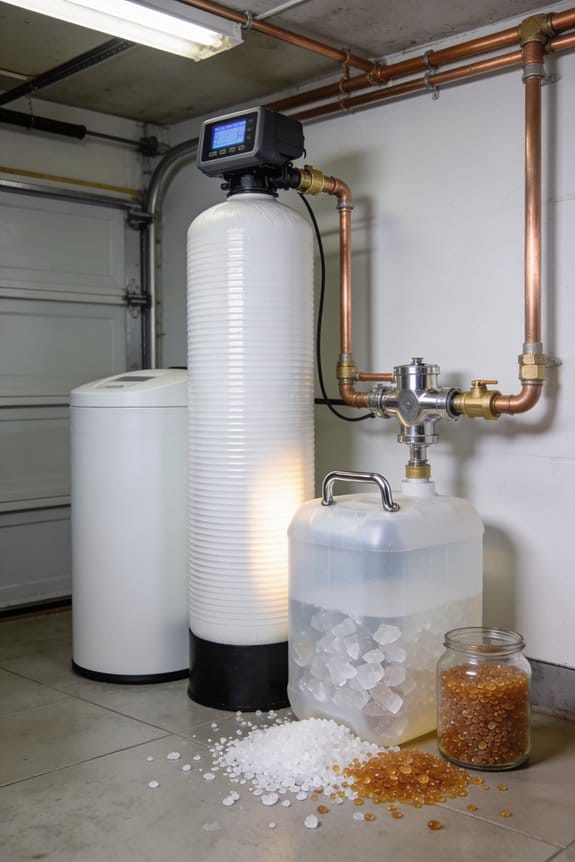
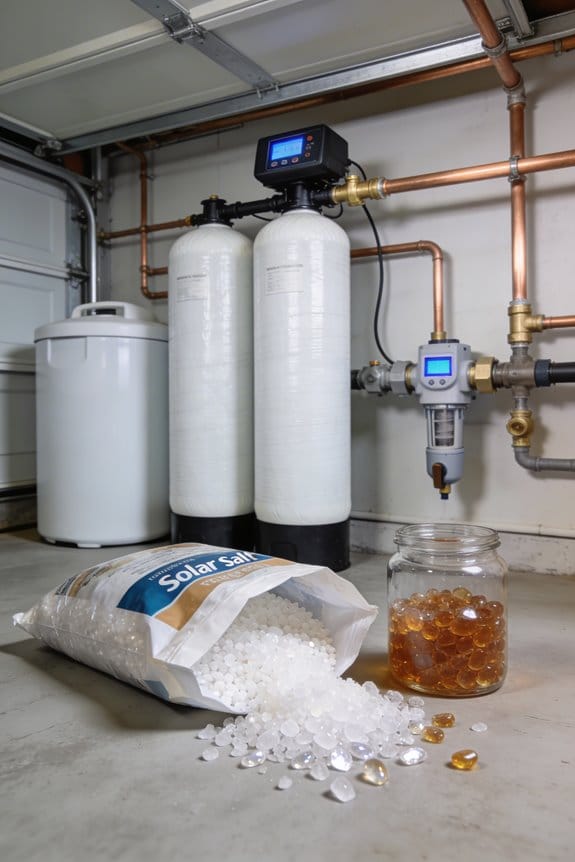

Hard water minerals like calcium and magnesium build up inside your pipes over time, creating layers of scale that narrow water flow and reduce pressure throughout your home. This buildup also insulates your water heater, forcing it to work harder and increasing energy bills. The minerals trap moisture against metal pipes, causing corrosion and tiny pinhole leaks that eventually require expensive replacements. Understanding why this happens reveals the best prevention methods.
Key Takeaways
- Calcium and magnesium deposits accumulate on pipe walls, gradually narrowing water passages and creating mineral blockages.
- Reduced water flow occurs as mineral buildup restricts available space, weakening pressure throughout your home’s fixtures.
- Minerals trap moisture against metal surfaces, causing corrosion and pitting that develop into pinhole leaks.
- Scale buildup on water heater elements insulates surfaces, forcing the system to work harder and use more energy.
- Ion exchange water softeners provide the most effective prevention by removing minerals before they enter your plumbing system.
How Hard Water Buildup Clogs Your Pipes
Hard water minerals build up over time in your pipes, creating a layering process that gradually narrows the space water travels through. Calcium and magnesium deposits accumulate on pipe walls, forming what’s called pipe encrustation. As these mineral layers thicken, they restrict water flow and reduce pressure at your faucets and showerheads. The process of mineral bridging occurs when deposits connect across the pipe’s diameter, creating blockages that trap debris and accelerate clogging. Over months and years, this buildup becomes increasingly problematic. You might notice weak water pressure or visible white deposits on fixtures. Eventually, severely encrusted pipes can fail entirely, requiring expensive replacements. Understanding this gradual accumulation helps you recognize why your plumbing performance declines and why water softening becomes an important preventative measure.
Recommended Products

The WECO Backwashing filter with KL/OZ is a specialized Point-Of-Entry (POE) system designed for municipal and well water supplies. Utilizes iron reduction media consisting of manganese dioxide (MnO2) coated onto naturally mined ZEOSORB. Lightweight filtration media with various functions and properties for water treatment and remediation.

Twin Cell Hybrid Technology: Enjoy added versatility with your water options—you get the freedom to choose between alkaline water, hydrogen water, or both with Tyent’s H2 Hybrid Water Ionizer. This industry-first innovation lets you customize your water for drinking, cooking, cleaning, and more. Enjoy different levels of alkaline water, along with neutral hydrogen-enriched water for a uniquely personalized water experience.

High removal capacity of iron, manganese, hydrogen sulfide. Removes suspended solids and turbidity.
Why Hard Water Weakens Water Pressure Throughout Your Home

When mineral deposits build up inside your pipes, they eat away at your water pressure in ways you’ll notice throughout your home. As calcium and magnesium accumulate on pipe walls, they narrow the available space for water to travel, causing significant flow reduction. This narrowing creates pressure loss that affects every fixture, from your kitchen sink to your shower. You might notice weaker water streams, even though your municipal supply operates normally. The problem worsens gradually over months and years as more scale develops. Appliances like dishwashers and washing machines also suffer, working harder against the restricted flow. Eventually, this pressure loss strains your entire plumbing system, leading to inconsistent performance and potential damage that requires expensive repairs.
Recommended Products

【 DESIGNED FOR 4-6+ BATHROOMS 】This bundle includes our Salt-Free Conditioner, a Fortitude Pro Water Treatment System and a Pleated Sediment Pre-Filter, providing salt-free water for the entire house. Safeguard your plumbing and appliances from scale build-up without the need for electricity or salt.

PROTECTS PLUMBING AND APPLIANCES FROM HARD WATER SCALE WITH ZERO WATER WASTE FILTERS DIRT, SAND, SILT, CLAY, RUST, AND OTHER DEBRIS WITH REUSABLE SEDIMENT FILTER CARTRIDGE CAN BE USED FOR HOMES WITH UP-TO 5 BATHROOMS EASY INSTALLATION, LOW MAINTENANCE 120-DAY SATISFACTION GUARANTEE

EASILY WIPE AWAY SCALE: HydroFlow’s advanced technology electronically treats water to prevent minerals from binding to pipes, water heaters, faucets, etc. While it does not prevent the white stuff/scale, the HydroFlow unit prevents the minerals from binding to your pipes and faucets making clean up a simple wipe.
Why Hard Water Drives Up Your Energy Bills
Beyond the immediate frustration of weak water pressure, the mineral buildup from hard water creates another costly problem in your home: markedly higher energy bills. When calcium and magnesium deposits accumulate inside your water heater, they form an insulating layer that prevents efficient heat transfer. Your water heater must work harder and longer to reach desired temperatures, consuming substantially more energy. This reduced efficiency directly translates to higher bills on your utility statement. Additionally, mineral scale forces your dishwasher and washing machine to operate less effectively, requiring them to use more energy to complete their cycles. The combination of these effects compounds over time, making hard water an expensive problem that extends beyond simple plumbing concerns.
Recommended Products

Exclusive "Tank-in-Tank" Technology

Indoor or Outdoor Installation – Natural Gas or Propane Compatible. Versatile Rinnai RXP199iN condensing tankless water heater installs indoors or outdoors using Versa Vent (RX-OVC vent cap required for outdoor setup). Smart Sense gas control automatically adapts to natural gas or propane, making this whole house on-demand water heater ideal for residential replacement or new construction.

Powerful Flush Toilet: MaP flush performance scores at 1,000 grams —the Casta Diva K030PRO smart toilet with tank built in, no water pressure restrictions, delivering exceptional flush and water-saving convenience. Unique technology ensures smooth, quiet flushing for a clean, serene experience, keeping your bathroom fresh day and night
How Corrosion and Leaks Damage Pipes Over Time

While scale buildup narrows your pipes and reduces water pressure, it simultaneously creates conditions that accelerate corrosion and eventually lead to leaks. When minerals trap moisture against metal surfaces, they trigger two damaging processes. Pipe pitting occurs as minerals eat into copper and galvanized steel, creating tiny holes that expand over time. Galvanic corrosion happens when different metals contact each other in the presence of mineral-rich water, causing accelerated deterioration at joints and connections. These corrosive reactions weaken your plumbing system’s structural integrity. What starts as microscopic pitting develops into pinhole leaks at vulnerable points, particularly where pipes bend or connect. The combination of scale buildup and corrosion dramatically shortens your pipes’ lifespan, necessitating costly replacements and emergency repairs.
When Limescale Damages Water Heaters Beyond Repair

Limescale accumulation inside your water heater represents one of the most serious consequences of hard water, and understanding this threat helps you recognize when repairs become impossible. When mineral deposits build up on heating elements, they insulate the metal surfaces, causing element failure and forcing your system to work harder. This overheating damages internal components and reduces efficiency markedly. Eventually, corrosion combines with heavy scaling to create leaks that require complete replacement. I’ve learned that attempting repairs on severely scaled units often proves futile, and warranty voiding occurs when mineral damage becomes extensive. Once your water heater reaches this point, replacement becomes your only viable option, making early water softening an investment that protects both your finances and your plumbing system’s longevity.
Recommended Products


STOP SCALE BUILDUP: HydroFLOW’s technology prevents scale from forming in your home’s water systems, keeping your faucets and shower nozzles running smoothly and efficiently.

Reduces hardness in the water, eliminates scale, spot build up for the entire home and combat the high iron issue at up to 10 ppm and removes red stain buildup.
Water Softeners, Filters, and Descaling: Which Actually Works?
Now that you understand how severe hard water damage can become, you might wonder what solutions actually prevent these costly problems from occurring in the first place. Water softeners using ion exchange systems remove calcium and magnesium minerals before they reach your pipes, offering the most effective prevention method. Filters trap some minerals but don’t eliminate dissolved ones completely. Magnetic descalers claim to alter mineral behavior, though scientific evidence supporting their effectiveness remains limited. Chemical descaling treatments dissolve existing buildup temporarily, but don’t prevent future accumulation. For maximum protection, ion exchange water softeners provide the most reliable solution, reducing scale formation considerably and extending your plumbing’s lifespan markedly.
Recommended Products

Dual alternating tanks never run out of soft water

ANTIOXIDANT BOOST TECHNOLOGY | Antioxidants help increase energy, eliminate free radicals, and reduce inflammation which helps the body repair itself.

Platinum Water Softener: Removes Hard Water Deposits
Frequently Asked Questions
How Can I Tell if Hard Water Is Already Damaging My Plumbing System?
You’ll notice visible buildup on faucets and showerheads, reduced flow from your fixtures, corroded fixtures showing discoloration, and frequent clogs despite proper maintenance. These signs indicate hard water’s already damaging your plumbing system.
What Is the Difference Between Hard Water and Soft Water Chemically?
Over 85% of U.S. homes have hard water. Hard water’s mineral composition contains calcium and magnesium ions, while soft water’s been treated through ion exchange, removing those minerals for cleaner, gentler water flow.
How Much Does It Cost to Replace Pipes Damaged by Hard Water?
I’d say pipe replacement costs typically range from $3,000 to $25,000, depending on your home’s size and pipe material. Labor costs constitute 50-70% of the total expense, making professional assessment essential before starting work.
Can Hard Water Cause Health Problems for My Family?
I’ll tell you straight: hard water doesn’t cause serious health problems, but it can irritate your skin. You’ll notice mineral buildup on your body after showering, leaving you feeling dry and uncomfortable rather than refreshed.
How Often Should I Test My Home’s Water Hardness Levels?
I’d recommend annual testing as your baseline, though seasonal testing gives you better insights into water hardness fluctuations throughout the year. This helps you monitor mineral levels and determine if you’re experiencing significant changes in your water quality.