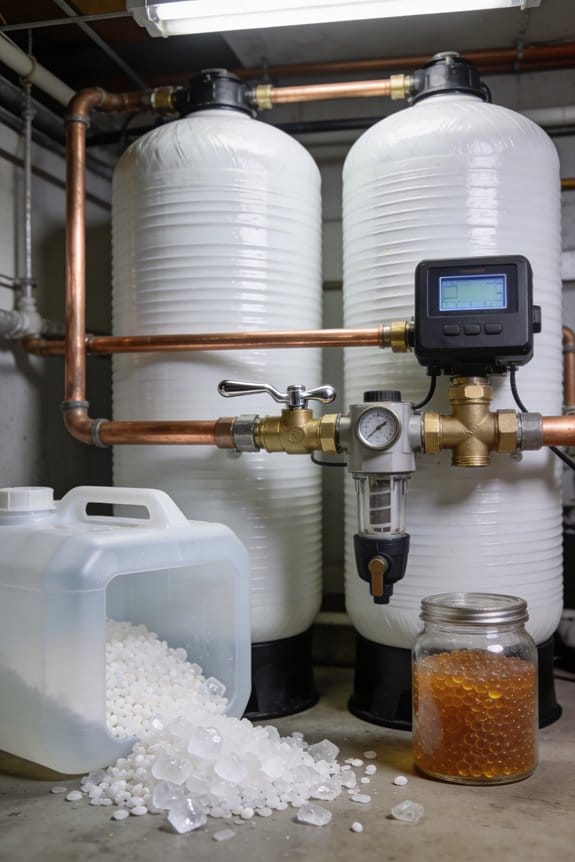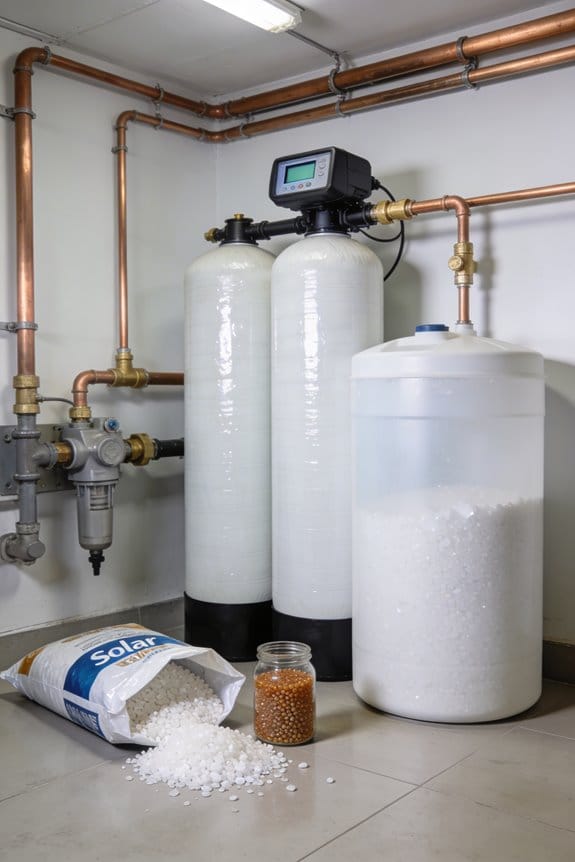

Traditional water softeners discharge 25–50 pounds of salt annually per household, contaminating local freshwater systems and harming fish, plants, and aquatic life through salinity stress. This pollution costs cities millions in treatment upgrades, raising your water bills. The culprit: regeneration cycles that flush brine directly into wastewater systems, where standard treatment can’t remove chlorides. However, high-efficiency softeners with demand-initiated controls can reduce salt discharge by 86%, protecting ecosystems while lowering your environmental footprint and municipal costs.
Key Takeaways
- Traditional water softeners discharge 25–50 lbs salt annually per household, accumulating in local waterways and groundwater supplies.
- Chloride buildup causes salinity stress in fish, insects, amphibians, and freshwater plants, threatening native species adapted to low-salt environments.
- Wastewater plants cannot efficiently remove chlorides; treatment costs $5 per pound, increasing community water bills substantially.
- Aged softener resin beads degrade and leach chemicals including BTEX and decay products into your water supply.
- High-efficiency softeners with demand-initiated controls reduce salt discharge by 86% while protecting septic systems and extending their lifespan.
Why Your Water Softener Is Polluting Local Freshwater
Every time your water softener regenerates, it’s releasing chlorides—salt compounds that don’t break down naturally—directly into your local water system. These chlorides accumulate in freshwater bodies, making them progressively saltier and threatening native fish, bugs, and amphibians that depend on low-salt environments. The problem extends beyond surface waters; chlorides infiltrate groundwater, risking drinking water supplies across entire communities. Brine disposal from softeners contributes the largest chloride source to approximately 100 wastewater treatment plants nationwide. Currently, 68 lakes and streams exceed state water quality standards for chloride pollution. Community outreach efforts emphasize that homeowners’ individual choices collectively impact regional water quality. Understanding this connection helps residents recognize their role in protecting shared aquatic ecosystems and drinking water resources.
How Salt Accumulation Damages Fish, Plants, and Aquatic Life
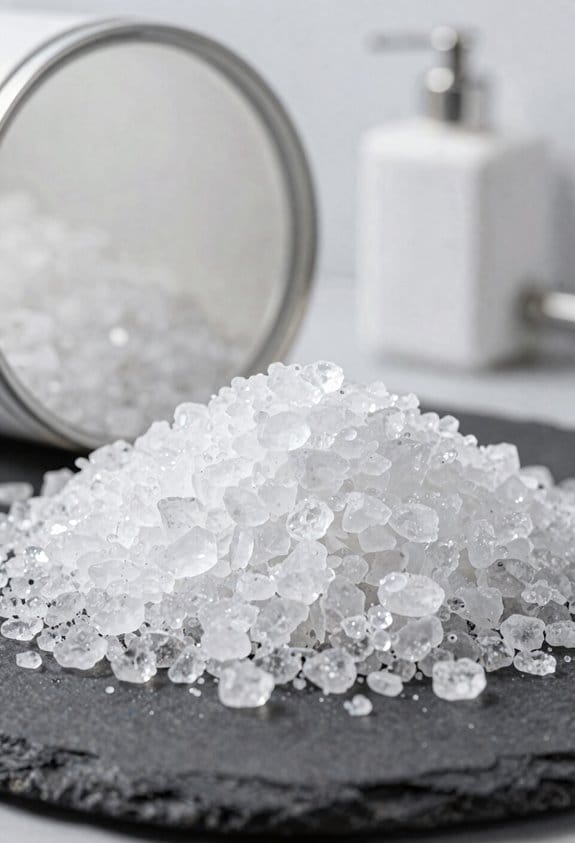
As chlorides from water softeners accumulate in freshwater ecosystems, they fundamentally alter the chemical balance that aquatic organisms depend on to survive. When salt concentrations rise, fish, insects, and amphibians experience salinity stress that disrupts their internal body chemistry. This ion imbalance interferes with how these creatures regulate water and electrolytes, ultimately weakening their ability to function properly.
Plants suffer similarly when salt-laden water infiltrates irrigation systems. Elevated chloride levels restrict root absorption, preventing plants from accessing essential nutrients and water. Meanwhile, aquatic vegetation can’t tolerate the changing salinity conditions either.
Scientists have documented that these effects accumulate steadily. Since the 1950s, salt concentrations in freshwater systems have risen consistently due to road salt and softener discharge. This ongoing contamination threatens the survival of native species adapted to freshwater conditions.
The Real Cost: Why Cities Charge More for Chloride Cleanup
While the ecological damage from salt accumulation is severe, the financial burden of cleaning up chloride pollution falls directly on your water bill. Wastewater treatment plants can’t remove chloride through standard processes, forcing cities to invest in expensive solutions. Removing one pound of chloride costs plants approximately $5, compared to just $0.20 to add it through your softener. These regulatory impacts drive utility pricing increases as municipalities implement stricter chloride reduction standards. Cities raise water and sewer rates to cover these elevated treatment costs. When you consider that average households discharge 25–50 pounds of salt yearly from softeners, the cumulative expense becomes substantial. Your community ultimately pays the price for chloride cleanup through higher monthly bills.
Recommended Products

Durable & Safe: Premium Hextex 0.9mm PVC hull (with reinforced rubber impact strips at collision-prone areas). Precision robotic thermal welding ensures high-strength integrated construction to reduce deformation risks. Tested over 30,000 times for abrasion/puncture resistance, featuring exceptional scratch/oxidation resistance and UV protection. Performs in fresh/saltwater with four independent air chambers ensuring safety flotation if punctured

Used to measure the amount of moisture emitted from the surface of a concrete slab.
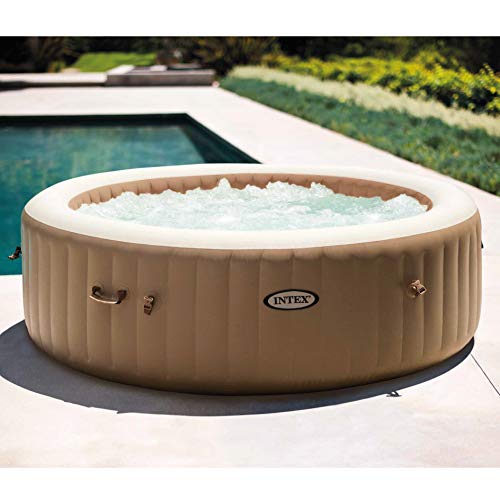
Seating capacity: 6 people
How Much Salt Your Softener Discharges Each Year
Most households don’t realize just how much salt their water softeners discharge into local water systems each year. The average household discharges between 25 to 50 pounds of salt annually through modern softeners. To put this in perspective, that’s roughly equivalent to the amount of salt one person consumes through food in a year. When you consider a household comparison across an entire community, the cumulative effect becomes significant. If a neighborhood of 100 homes each discharges 37 pounds yearly, that totals 3,700 pounds entering local waterways annually. This annual discharge accumulates over time, gradually increasing salinity levels in lakes and streams. The problem intensifies because chlorides don’t break down naturally, meaning they persist indefinitely in freshwater ecosystems.
Recommended Products
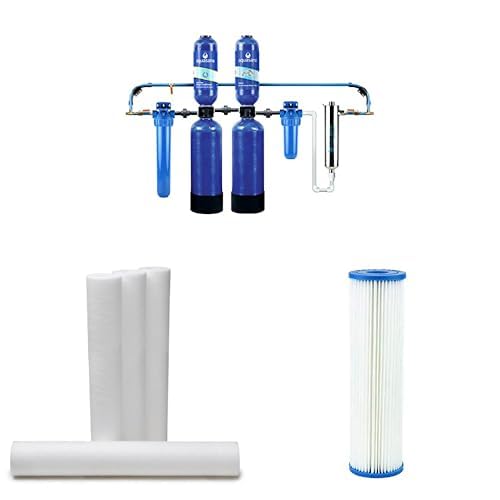
Clean, Great Tasting Water From Every Tap In Your Home - Removes 97% of chlorine. Plus, activated carbon is effective at reducing organic chemicals including pesticides, herbicides, and VOCs while allowing for a fast and reliable flow rate.

Complete Twin tank water softener provides continuous soft water

4 STAGE ULTIMATE PROTECTION: Specifically designed to provide unmatched filtration and softening performance. This whole house filtration/salt-free softener conditioner package will provide safe soft water for your entire home and remove heavy metals, odors, colors, and many other contaminants in your water.
For Septic Systems: Why Softener Efficiency Matters Underground
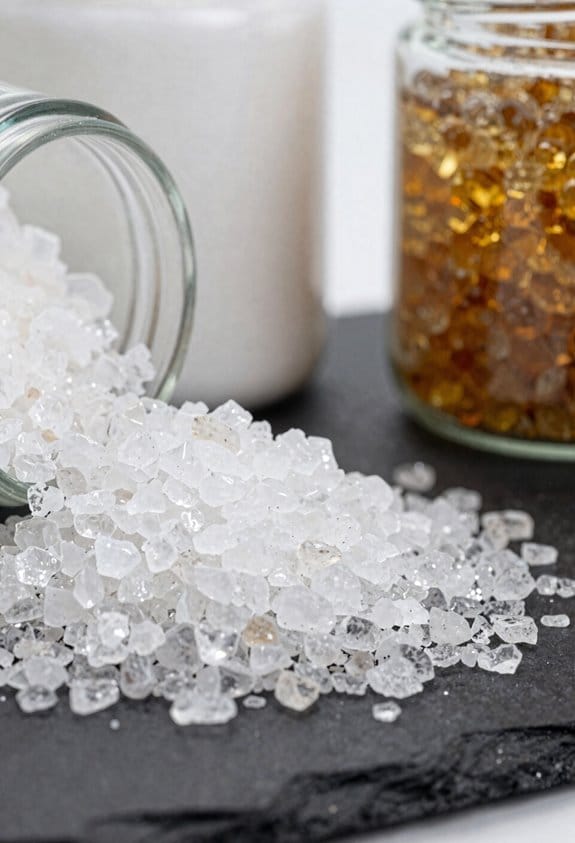
If you rely on a septic system rather than a municipal sewer line, your water softener’s efficiency directly affects how well your septic tank functions underground. Inefficient softeners, rated below 1000 grains per pound of salt efficiency, discharge excess solids into your drain field, potentially causing drainfield clogging and reducing septic longevity. Conversely, efficient models rated 3000 grains per pound or higher minimize solid discharge, protecting your system’s performance.
The difference matters because septic systems depend on balanced bacterial activity and proper drainage. When softeners waste excessive salt and solids, they disrupt this delicate underground environment. Your water hardness level and household waste volume influence the impact’s severity. Upgrading to a high-efficiency softener reduces strain on your septic system, extending its lifespan and preventing costly repairs.
Recommended Products

High removal capacity of iron, manganese, hydrogen sulfide. Removes suspended solids and turbidity.

✅𝗘𝗙𝗙𝗜𝗖𝗜𝗘𝗡𝗧 𝗪𝗔𝗧𝗘𝗥 𝗦𝗢𝗙𝗧𝗘𝗡𝗜𝗡𝗚: Our WECO UXC-1665 water softener system is designed to prevent mineral scale buildup on sinks, faucets, shower doors, and plumbing fixtures. This compact water softener reduces the need for frequent scrubbing and cleaning, making maintenance easier for residential and commercial spaces.

Dual alternating tanks never run out of soft water
Resin Degradation and Chemical Leakage: Hidden Softener Costs Beyond Salt
Beyond the salt discharge that concerns municipalities and aquatic ecosystems, water softeners carry another environmental burden: the gradual breakdown of their internal resin beads and the chemicals they release during this process. Over time, the resin beads that trap hard minerals become damaged and deteriorate, causing resin leaching into your water supply. During regeneration cycles, softeners release chemical byproducts including high levels of total sulfur and organic carbon. Additionally, aged resins accumulate chlorine decay and retain hydrocarbons like BTEX, which are harmful compounds. Since resins require replacement every five to ten years due to irreversible binding, you’re effectively cycling these degraded materials through your home’s water system regularly, creating hidden environmental costs beyond the visible salt problem.
Recommended Products

Upgraded Large Light Commercial 18x40 round brine tank w/safety float

Perfect for homes with 4 to 6 bathrooms and up to 7 family members, who desires softened water and clean, chemical-free water for the whole family.

Reduces hardness in the water, eliminates scale, spot build up for the entire home and combat the high iron issue at up to 10 ppm and removes red stain buildup.
Cut Your Softener’s Salt Discharge by 86% With These Optimizations
The good news about water softener salt discharge is that you don’t have to accept the environmental burden as inevitable. You can reduce your softener’s salt output by 86% through smart regeneration adjustments and efficient system choices. High-efficiency models use 30-50% less salt than older timer-based systems because they regenerate only when needed, not on fixed schedules. Installing brine capture systems allows you to recycle some wastewater for landscaping or cleaning rather than sending everything to treatment plants. Optimizing your current softener—whether through demand-initiated controls or professional tuning—can cut your household’s annual salt discharge from 25-50 pounds down to just a few pounds. These practical modifications make environmental protection achievable without sacrificing water softness.
Recommended Products
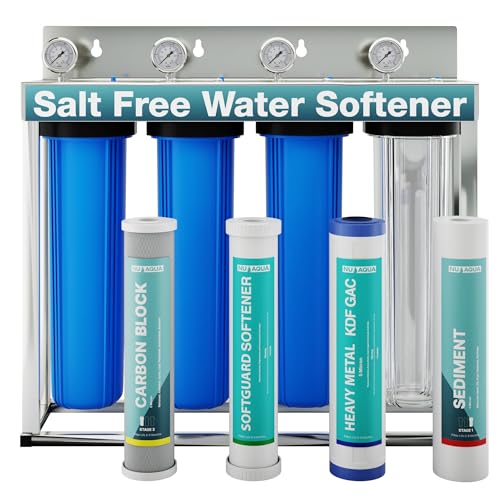
SALT FREE SOFTENING TECHNOLOGY: The NU Aqua Whole House Water Filter System utilizes advanced scale prevention media to reduce hard water buildup without using salt, protecting plumbing and appliances while preserving beneficial minerals like calcium and magnesium.

【 PERFECT FOR LARGE HOUSEHOLDS】 Ideal for 6-8 people with up to 6 bathrooms on city, municipal, and well water sources, this heavy-duty whole house water softener system delivers ultra-soft water to every tap.

Perfect for Families Large or Small: Designed for households of 1–5+ people dealing with hard water. The EcoPure EP42 treats up to 42,000 grains and removes up to 11 ppm of clear water iron, protecting your entire home from scale buildup and stains
Frequently Asked Questions
How Often Do Water Softener Resins Need Replacement, and What Chemicals Do They Release?
I’ll help you rejuvenate your softener’s performance: resins need replacing every 5-10 years because they’re subject to irreversible binding. During their resin lifespan, chemical leaching releases concerning levels of sulfur and organic carbon, requiring attention.
Can Wastewater Treatment Plants Remove Chloride From Softener Discharge?
I’ll tell you directly: treatment plants can’t remove chloride from softener discharge. These treatment limitations mean I’m stuck paying higher water rates while they struggle managing the chloride pollution your softener creates.
What Specific Contaminants Besides Salt Do Softeners Release During Regeneration?
During regeneration, I’ve learned your softener releases trace metals and organic compounds like total sulfur (445 mg/L) and organic carbon (937 mg/L). Aged resins retain hydrocarbons such as BTEX, requiring replacement every 5-10 years.
Do High-Efficiency Softeners Actually Reduce Environmental Impact Compared to Timer-Based Systems?
Yes, they do. I’ve found that high-efficiency softeners use 30-50% less salt than timer-based systems, reducing chloride pollution. They optimize flow rates and energy savings, making them environmentally superior while cutting your wastewater treatment costs.
How Does Softener Discharge Affect Groundwater and Drinking Water Supplies?
I’ll explain how softener discharge threatens your drinking water. Chlorides infiltrate groundwater without breaking down, causing aquifer contamination and groundwater salinization. This accumulation directly risks your household’s drinking water supply safety.