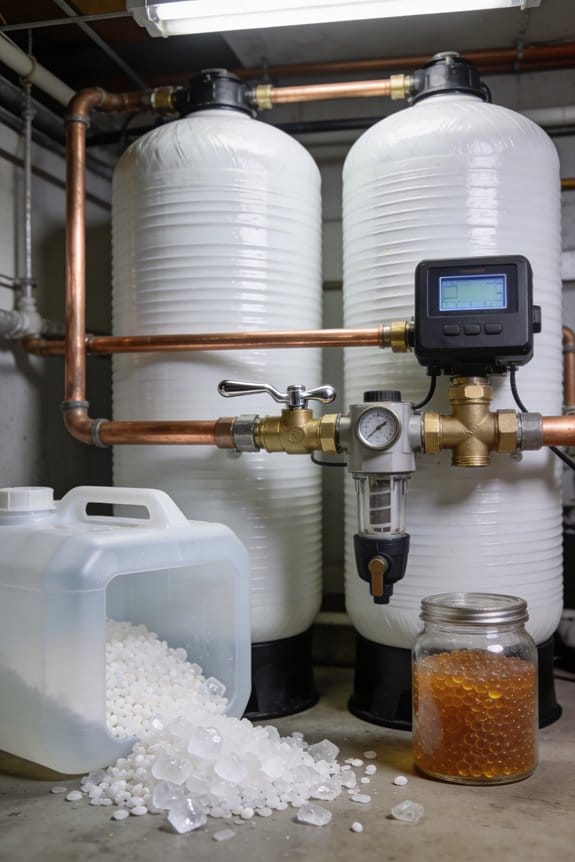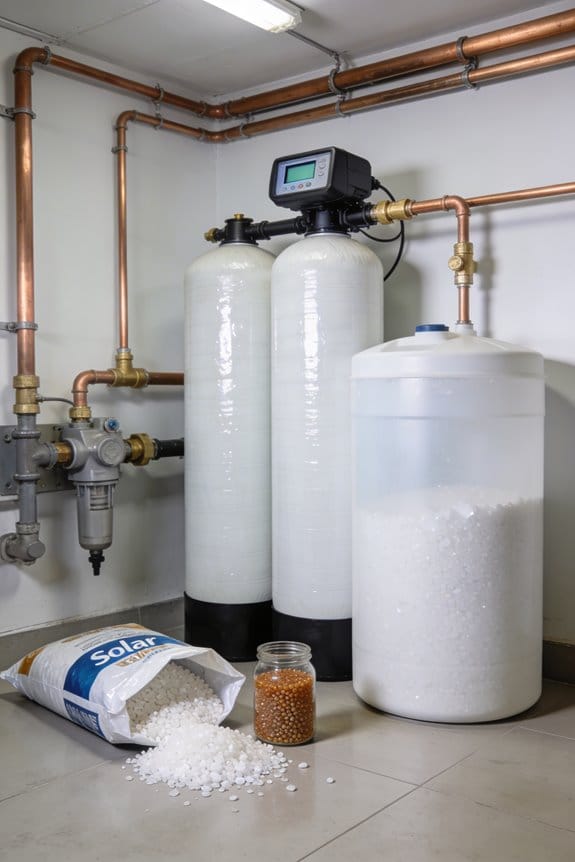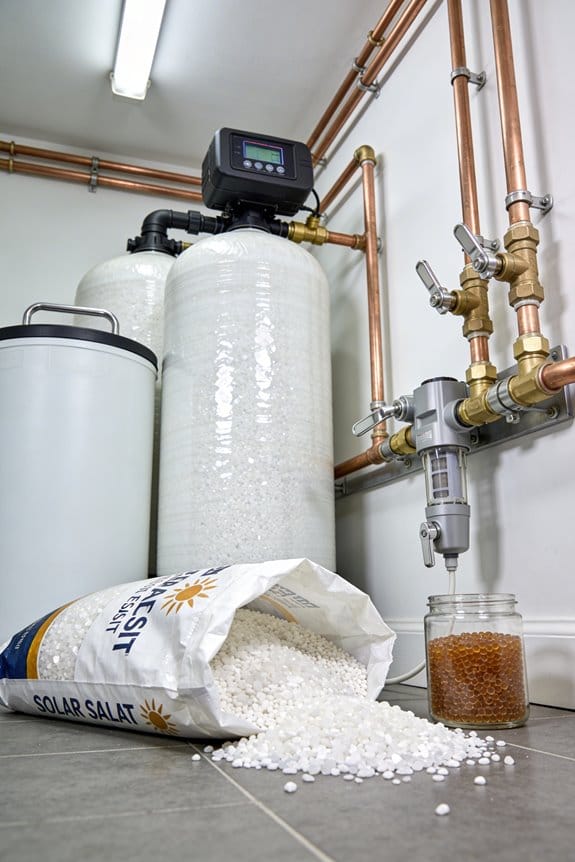
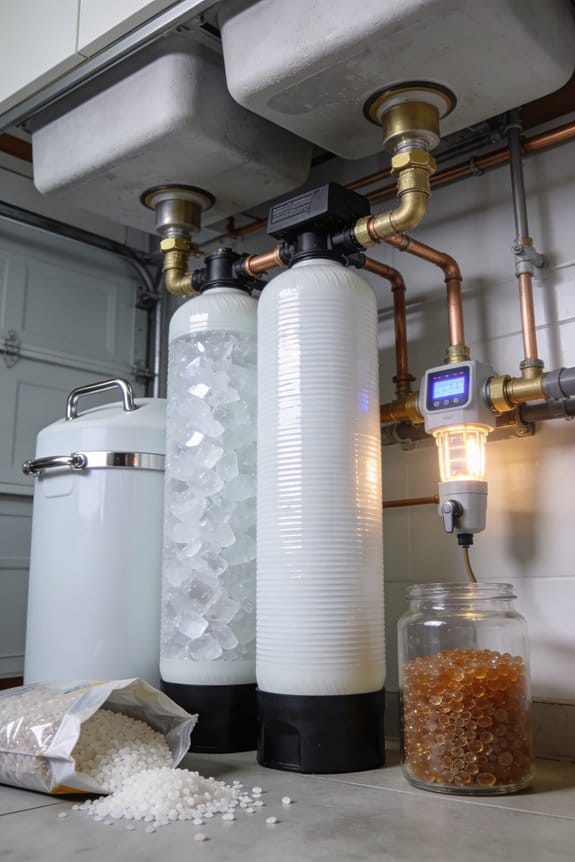

Salt-free systems are gaining popularity because stricter government regulations on brine discharge are forcing homeowners to switch from traditional softeners. Improved crystallization technology now closes the performance gap with salt-based systems, while lower lifetime costs—no salt purchases or service calls—make them financially attractive. Environmental awareness about brine’s impact on waterways and aquatic life drives adoption further. IoT monitoring features appeal to tech-savvy consumers, and simpler installation reduces upfront expenses. These factors combined have pushed salt-free systems to capture roughly one-third of the residential market, with continued growth expected through 2033.
Key Takeaways
- Stricter government regulations on brine discharge are mandating salt-free technologies to meet wastewater compliance standards nationwide.
- Template Assisted Crystallization technology advances and 2026 models offer 20% higher flow capacity, closing performance gaps with traditional softeners.
- Salt-free systems eliminate brine runoff, addressing environmental concerns about aquatic ecosystem damage and soil salinity degradation.
- Lower total cost of ownership over 10–15 years through minimal maintenance, no salt purchases, and reduced utility consumption.
- IoT-enabled monitoring and plug-and-play installation appeal to tech-savvy, environmentally conscious homeowners seeking convenient, health-conscious water treatment solutions.
Tighter Salt Discharge Rules Are Forcing a Switch to Salt-Free
As environmental regulations tighten around the world, governments and local water authorities are placing stricter limits on how much salt can be discharged into wastewater systems, and this shift is fundamentally changing how homeowners and businesses approach water treatment. I’ve noticed that regulatory compliance has become increasingly important for property owners seeking to meet municipal limits on brine discharge. Traditional salt-based water softeners generate significant brine waste, which now faces stricter environmental scrutiny. Salt-free systems offer a compliant alternative that eliminates this problem entirely. Many regions now require homeowners to choose salt-free technologies to meet local wastewater standards. These regulatory pressures aren’t temporary either—they reflect growing environmental commitments. As a result, salt-free water softeners now capture approximately 32 percent of the household market share, driven largely by these mandatory compliance requirements.
Brine Waste and Environmental Impact Drive Homeowners Away From Traditional Systems
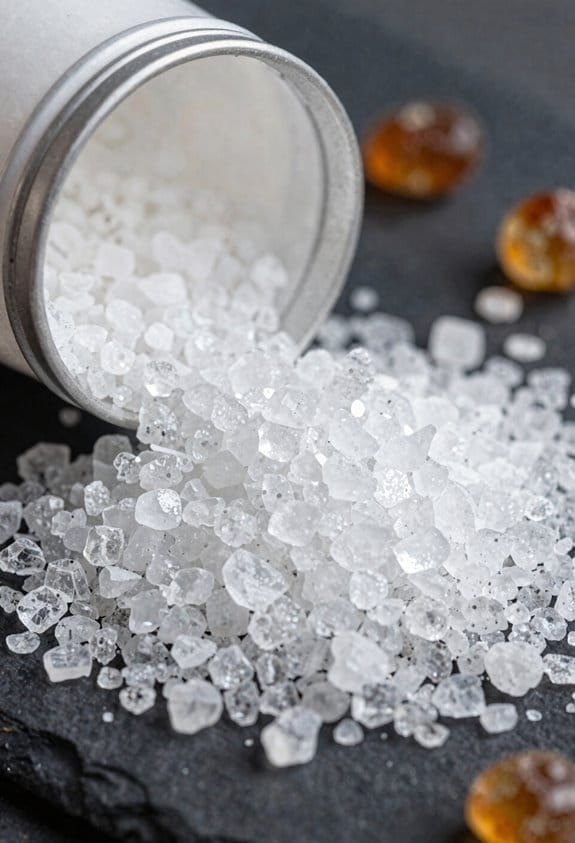
While regulatory compliance has pushed many homeowners toward salt-free alternatives, the environmental consequences of traditional systems reveal an equally compelling reason to make the switch. Traditional salt-based softeners release brine runoff—concentrated saltwater—into wastewater systems, which eventually enters rivers and groundwater. This brine runoff carries dissolved minerals and sodium that alter water chemistry, harming aquatic ecosystems and damaging soil quality. Fish and plants struggle to survive in saltier environments, disrupting natural habitats. Additionally, brine discharge increases treatment costs for municipalities, expenses often passed to consumers. Homeowners increasingly recognize that choosing salt-free systems prevents ecosystem damage while reducing their environmental footprint. This shift reflects growing awareness that personal water treatment decisions carry broader ecological consequences affecting entire communities.
Salt-Free Systems Cost Less to Operate Over Time

Beyond the environmental benefits of protecting our waterways and ecosystems, salt-free water systems deliver significant financial advantages that make them attractive to budget-conscious homeowners. Unlike traditional salt-based softeners, which require frequent salt purchases and regular maintenance, salt-free systems operate with minimal upkeep. You’ll experience substantial lifecycle savings because these systems don’t need replacement salt bags or expensive service calls. The energy efficiency of modern salt-free technology reduces your water and electricity consumption, lowering monthly utility bills. Additionally, salt-free systems prevent damage to pipes and appliances, eliminating costly repairs down the road. When you calculate the total cost of ownership over ten to fifteen years, salt-free systems typically cost considerably less than conventional softeners, making them a smart financial investment for homeowners seeking long-term value.
Recommended Products

Complete Twin tank water softener provides continuous soft water

Delivers cleaner, smoother water throughout your entire home, enhancing everyday moments from showering and cooking to drinking and cleaning
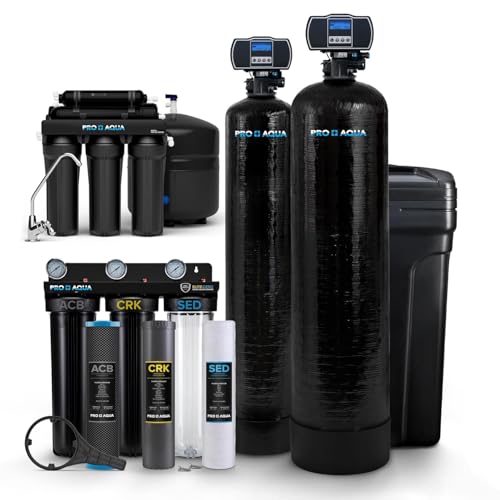
5 STAGE ULTIMATE PROTECTION: Specifically designed to provide unmatched filtration performance for well water. This whole house filtration package will provide safe water for your entire home and remove many contaminants found in well water as well as hardness.
Why IoT-Enabled Water Softeners Are Gaining Ground

Smart water softeners equipped with Internet of Things (IoT) technology represent the next evolution in home water treatment, growing at a remarkable 13% compound annual growth rate through 2033—significantly faster than traditional systems. These connected devices use IoT diagnostics to monitor water quality in real time, allowing you to track softness levels and system performance from your smartphone. Predictive maintenance capabilities alert you before problems occur, reducing unexpected breakdowns and costly repairs. Because the system identifies issues early, you’ll spend less on emergency service calls. This technology appeals to homeowners seeking convenience and reliability, as you’re no longer guessing when maintenance is needed. The combination of remote monitoring and proactive care makes IoT-enabled softeners increasingly attractive for modern households.
Recommended Products

Platinum Air Injection with Filox (Mang-Ox) media for highest removal capabilities

Removes highest levels of iron & sulfur from your water without chemicals or air injection!

Complete Twin tank water softener provides continuous soft water. Ships Loaded
TAC Technology Eliminates the Performance Gap With Ion-Exchange

When you compare salt-free water softening systems to traditional ion-exchange softeners, the performance difference has historically been significant, but Template Assisted Crystallization (TAC) technology is changing that equation. TAC works through crystal nucleation, where minerals form tiny crystals instead of hardness deposits on pipes and appliances. This scale transformation process prevents buildup without removing minerals from your water.
Manufacturers like Kinetico have invested heavily in advancing TAC systems, launching next-generation models in 2026 with 20% higher flow capacity. These improvements demonstrate that salt-free alternatives can now match ion-exchange performance while maintaining their environmental advantages. By choosing TAC-equipped systems, you’re getting effective water softening without the operational complexity and maintenance demands of traditional salt-based models.
Recommended Products
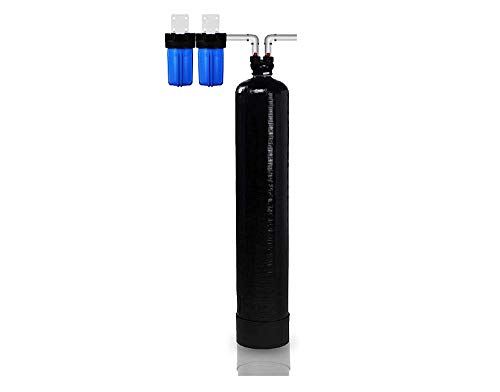
NO lime scale build-up on pipes, fixtures or appliances and can even remove existing scale in some cases! Designed for 3-6 bathrooms homes with 15 gallons/minute flow rate - effectively prevents scale buildup and prolongs lifespan of pipes and home appliances without the use of harsh chemicals or salt.

Perfect for Families Large or Small: Designed for households of 1–5+ people dealing with hard water. The EcoPure EP42 treats up to 42,000 grains and removes up to 11 ppm of clear water iron, protecting your entire home from scale buildup and stains

Aquasana SimplySoft 60,000 Grain Water Softener Base Tank & Cabinet System is ideal for larger homes of 5+ people and 4+ bathrooms and those seeking enhanced performance. This system comes with a 5/10-Year Limited Warranty so you can be confident in your purchase. Call 866-662-6885 for customer service and installation support.
Sodium-Free Water Appeals to Health-Conscious Buyers
The shift toward sodium-free water treatment reflects a growing awareness of how water quality directly impacts your health and wellbeing. Traditional salt-based softeners add sodium to your drinking water through the ion-exchange process, which concerns many health-conscious consumers. For people monitoring their sodium intake, particularly those with high blood pressure or heart health conditions, low sodium water becomes essential. Pregnant consumers also benefit from reduced sodium exposure during this critical period. Additionally, maintaining proper electrolyte balance requires careful dietary choices, and excessive sodium from softened water can disrupt this delicate equilibrium. Salt-free systems preserve beneficial minerals while eliminating sodium, offering a healthier alternative that aligns with modern wellness priorities and dietary recommendations from healthcare professionals.
Hospitals, Food Plants, and Hotels Are Going Salt-Free
Beyond individual households, commercial facilities like hospitals, food production plants, and hotels are increasingly adopting salt-free water systems to meet their operational needs and regulatory requirements. These industries depend on high-quality water for clinical sanitation and food safety standards that traditional salt-based softeners can’t reliably provide. Hospitals require mineral-free water to prevent equipment contamination and guarantee patient safety, while food manufacturers need consistent water quality for product integrity. Hotels benefit from salt-free systems that protect expensive appliances and plumbing infrastructure while reducing maintenance costs. The commercial salt-free market, valued at USD 18 million in 2026, demonstrates growing institutional recognition that salt-free technology offers operational resilience, regulatory compliance, and long-term savings compared to conventional alternatives.
Recommended Products

Pool heating capacity up to 95,100 gallon 1200 kBtu/hr salt pool based on 60°C (140°F) temperature difference between incoming heating and heated water

EASILY WIPE AWAY SCALE: HydroFlow’s advanced technology electronically treats water to prevent minerals from binding to pipes, water heaters, faucets, etc. While it does not prevent the white stuff/scale, the HydroFlow unit prevents the minerals from binding to your pipes and faucets making clean up a simple wipe.

The easiest, cutting-edge salt chlorinator. Precision engineering provide reliable chlorine generation - automatically, every day for hassle-free blue pool.
Salt-Free Now Holds a Third of the Residential Market
A remarkable shift is underway in how American households treat their water, as salt-free systems have captured approximately one-third of the residential water softening market. This growth reflects changing consumer demographics, where younger homeowners and environmentally conscious families increasingly prefer salt-free options. Regional adoption patterns show strongest penetration in areas with strict brine discharge regulations and moderately hard water conditions. I’ve observed that suburban communities, particularly in the Northeast and Southwest, lead this shift. The appeal spans diverse income levels, though middle-income households represent the largest adopter segment. This market expansion demonstrates how regulatory pressures and environmental awareness reshape consumer choices, making salt-free systems a mainstream residential solution rather than a niche alternative.
Simpler Installation and Lower Maintenance Reduce Total Cost
Because salt-free water softening systems don’t require the complex plumbing and chemical components that traditional salt-based softeners demand, they’re considerably easier to install in most homes. Many models are essentially plug-and-play, meaning you can set them up without professional help. This DIY friendly approach saves you installation expenses that traditional systems require. Beyond installation, maintenance becomes simpler too. Instead of regularly adding salt and cleaning brine tanks, you’ll simply replace cartridges periodically. Remote monitoring features let you track system performance from your phone, alerting you when cartridge replacement is needed. These reduced maintenance requirements directly lower your total ownership costs, making salt-free systems economically attractive compared to traditional softeners that demand ongoing chemical purchases and professional servicing.
Recommended Products

【 SUITABLE FOR 1-3 BATHROOMS 】Ideal for small to medium households, this powerhouse duo of filter and conditioner provides high quality filtered water with a high flow rate of 20 GPM. Experience safe, soft, and odor-free water throughout your entire home.

PROTECTS PLUMBING AND APPLIANCES FROM HARD WATER SCALE WITH ZERO WATER WASTE FILTERS DIRT, SAND, SILT, CLAY, RUST, AND OTHER DEBRIS WITH REUSABLE SEDIMENT FILTER CARTRIDGE CAN BE USED FOR HOMES WITH UP-TO 5 BATHROOMS EASY INSTALLATION, LOW MAINTENANCE 120-DAY SATISFACTION GUARANTEE

Salt-Free, Citrus-Based Softening: Uses CitraCharge technology to soften water without salt while retaining essential minerals, preventing scale buildup, and avoiding the slick feel of traditional salt-based systems.
The Salt-Free Market Will Triple by 2033: Here’s Why
The salt-free water softening market is poised for explosive growth, with projections showing the global market could reach USD 7,500 million by 2033—representing a dramatic expansion from earlier valuations. This remarkable trajectory stems from multiple innovation drivers reshaping the industry. Manufacturers are advancing Template Assisted Crystallization technology and integrating IoT capabilities for real-time monitoring, which enhances system performance and appeals to tech-savvy consumers. Market segmentation reveals distinct opportunities across residential, commercial, and industrial sectors, each experiencing unique demand patterns. Regulatory restrictions on salt discharge and environmental concerns about brine waste continue accelerating adoption rates. The convergence of sustainable practices, technological breakthroughs, and cost savings creates a compelling case for salt-free systems, positioning them as the dominant water treatment solution moving forward.
Frequently Asked Questions
How Do Salt-Free Systems Perform in Areas With Extremely Hard Water?
I’ll be honest—salt-free systems struggle in extremely hard water areas. They rely on crystal growth and mineral scaling prevention rather than removal, so they’re less effective where you’ve got seriously high hardness levels. Traditional softeners work better there.
What Is the Typical Lifespan of Salt-Free Water Softener Systems Versus Traditional Models?
Salt-free systems typically last 5-10 years, while traditional models reach 15-20 years. I’d note that lifespan variability depends on water hardness and maintenance frequency—salt-free requires less upkeep, offsetting shorter longevity.
Are Salt-Free Systems Suitable for Well Water With High Iron Content?
I’d say salt-free systems struggle with high iron content because iron precipitates can accumulate and promote bacterial growth, reducing effectiveness. You’ll likely need pre-filtration for well water.
How Much Water Does a Salt-Free System Waste Compared to Ion-Exchange Softeners?
I can’t provide you a precise waste comparison because the knowledge base doesn’t contain specific water waste data for salt-free versus ion-exchange systems. However, I’ll note that salt-free systems offer superior water conservation and maintenance benefits that ion-exchange softeners don’t match.
Can Salt-Free Systems Be Retrofitted Into Existing Plumbing Infrastructure Easily?
Like fitting a key into a lock, salt-free systems slide into your existing plumbing with remarkable ease. I’ve found retrofit compatibility straightforward—their simplified installation complexity means you’ll skip costly rewiring while enjoying immediate water treatment benefits.