

Yes, salt-free water conditioners do prevent scale buildup, but they work differently than traditional softeners. Instead of removing hardness minerals like calcium and magnesium, they transform these minerals into tiny crystals that won’t stick to your pipes and appliances. This crystallization process stops new scale from forming while keeping your water hard. However, they won’t eliminate existing deposits or improve soap effectiveness like softeners do. Understanding which approach fits your specific water problems requires exploring the key differences between these systems.
Key Takeaways
- Salt-free conditioners transform calcium and magnesium into microscopic crystals that suspend in water instead of adhering to surfaces.
- They prevent new scale buildup on fixtures and appliances by altering mineral structure through Template Assisted Crystallization technology.
- Conditioned water remains hard because minerals are crystallized, not removed, so hardness minerals stay present in water.
- Crystals gradually dissolve existing scale deposits without clogging plumbing, extending appliance and fixture lifespans over time.
- Salt-free conditioners are cost-effective, eco-friendly alternatives requiring minimal maintenance, no electricity, and no salt or chemical refills.
What Salt-Free Conditioners Actually Prevent
When you’re considering a salt-free water conditioner, it’s important to understand what it’ll actually do for your home, because these systems don’t work the same way traditional water softeners do. I want to clarify that these conditioners prevent scale buildup rather than remove hardness minerals. Through minerals characterization using Template Assisted Crystallization, the system transforms calcium and magnesium into microscopic crystals. The flow dynamics within your pipes change dramatically, as these altered minerals suspend in water instead of adhering to surfaces. The crystals gradually dissolve existing scale deposits without clogging plumbing. However, your water remains hard since the minerals stay present. You’ll notice reduced scale formation on fixtures and appliances, extending their lifespan, though you won’t experience the soap-lathering benefits that traditional softeners provide.
Recommended Products

【 DESIGNED FOR 4-6+ BATHROOMS 】This bundle includes our Salt-Free Conditioner, a Fortitude Pro Water Treatment System and a Pleated Sediment Pre-Filter, providing salt-free water for the entire house. Safeguard your plumbing and appliances from scale build-up without the need for electricity or salt.

EASILY WIPE AWAY SCALE: HydroFlow’s advanced technology electronically treats water to prevent minerals from binding to pipes, water heaters, faucets, etc. While it does not prevent the white stuff/scale, the HydroFlow unit prevents the minerals from binding to your pipes and faucets making clean up a simple wipe.

【 SUITABLE FOR 1-3 BATHROOMS 】Ideal for small to medium households, this powerhouse duo of filter and conditioner provides high quality filtered water with a high flow rate of 15 GPM. Experience safe, soft, and odor-free water throughout your entire home.
Why They Don’t Remove Hardness
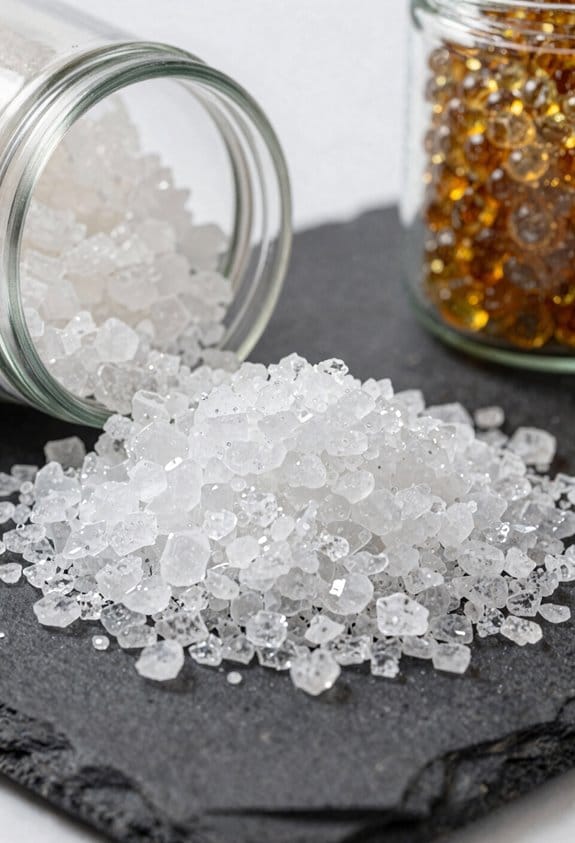
Because salt-free water conditioners work through crystallization rather than mineral removal, they simply can’t eliminate hardness from your water. The technology prioritizes mineral preservation by using ion retention strategies, which means calcium and magnesium stay in your water supply.
Traditional water softeners remove these minerals entirely through ion-exchange processes, actually reducing water hardness. Salt-free conditioners, however, only transform minerals into non-adhesive crystals. Your water remains hard because the conditioning method doesn’t extract minerals—it merely changes their structure.
This fundamental difference explains why conditioners can’t prevent soap scum or spotted dishes completely. The minerals causing hardness still circulate through your plumbing system. If you need genuine hardness reduction, you’d need an actual softening system, not a conditioner.
Recommended Products

The WECO Backwashing filter with KL/OZ is a specialized Point-Of-Entry (POE) system designed for municipal and well water supplies. Utilizes iron reduction media consisting of manganese dioxide (MnO2) coated onto naturally mined ZEOSORB. Lightweight filtration media with various functions and properties for water treatment and remediation.

High removal capacity of iron, manganese, hydrogen sulfide. Removes suspended solids and turbidity.

✅𝗘𝗙𝗙𝗜𝗖𝗜𝗘𝗡𝗧 𝗪𝗔𝗧𝗘𝗥 𝗦𝗢𝗙𝗧𝗘𝗡𝗜𝗡𝗚: Our WECO UXC-1665 water softener system is designed to prevent mineral scale buildup on sinks, faucets, shower doors, and plumbing fixtures. This compact water softener reduces the need for frequent scrubbing and cleaning, making maintenance easier for residential and commercial spaces.
Prevention vs. Removal: What’s the Real Difference?

Understanding the difference between prevention and removal is crucial if you’re considering a salt-free water conditioner, since these two processes work in fundamentally different ways. Prevention stops new scale from forming by altering mineral morphology through crystallization, making minerals non-adhesive to pipes and appliances. Removal, however, dissolves existing scale deposits that’ve already accumulated. The key distinction lies in flow dynamics: when conditioners transform calcium and magnesium into suspended nanocrystals, they flow through your plumbing without sticking to surfaces. This prevents future buildup but doesn’t eliminate deposits already present. If you’ve got existing scale, you’ll need the removal process to address it. Prevention works best as a forward-looking strategy, protecting your system going forward.
Recommended Products
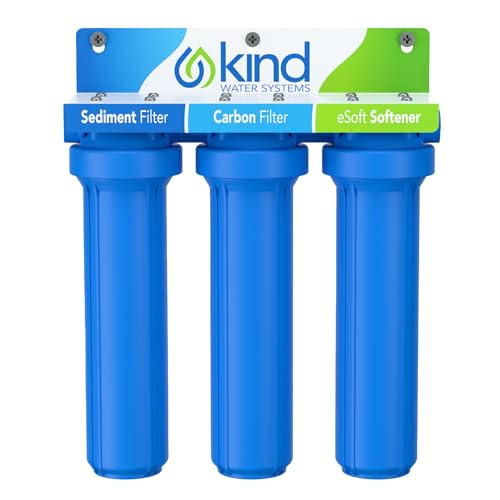
Delivers cleaner, better-tasting water throughout your entire home, improving everyday use from showering and cooking to drinking and cleaning
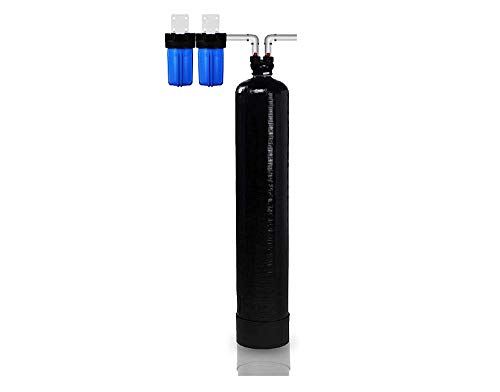
NO lime scale build-up on pipes, fixtures or appliances and can even remove existing scale in some cases! Designed for 3-6 bathrooms homes with 15 gallons/minute flow rate - effectively prevents scale buildup and prolongs lifespan of pipes and home appliances without the use of harsh chemicals or salt.
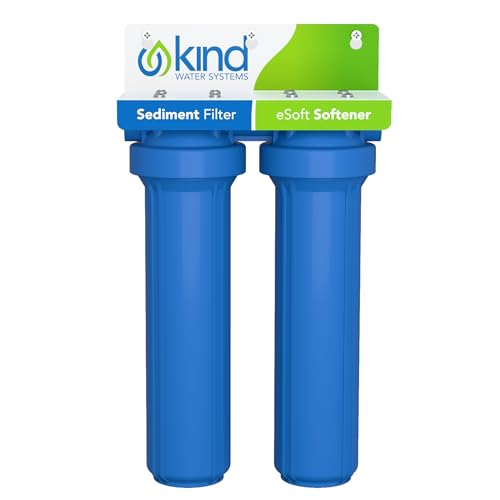
PROTECTS PLUMBING AND APPLIANCES FROM HARD WATER SCALE WITH ZERO WATER WASTE
Conditioners vs. Softeners: Which One Fixes Your Problem

Now that you understand how conditioners prevent and remove scale, it’s worth comparing them to water softeners, since both address hard water but in entirely different ways. Softeners use ion-exchange to remove calcium and magnesium entirely, eliminating scale completely and improving soap effectiveness. Conditioners, however, alter mineral structure without removal, so your water remains hard. Regarding installation costs, softeners typically cost more upfront, while conditioners are generally cheaper. For maintenance needs, softeners require regular salt refills and professional servicing, whereas conditioners need minimal upkeep. If you want scale prevention and don’t mind retaining minerals, a conditioner works well. If you need complete hardness removal and spot-free results, a softener is your better choice.
Recommended Products

Point-Of-Entry (POE) whole house residential/commercial hydrogen sulfide and iron removal system for community and well water supplies.

Complete Twin tank water softener provides continuous soft water

Delivers cleaner, smoother water throughout your entire home, enhancing everyday moments from showering and cooking to drinking and cleaning
Should You Get a Salt-Free Conditioner?

Deciding whether a salt-free conditioner suits your home depends on what you’re trying to solve with your hard water. If you’re primarily concerned about scale buildup in pipes and appliances, a conditioner might work well for you. However, installation tips matter: these systems typically require minimal setup and no electricity or drainage, making them easier to install than traditional softeners. Consider long term costs carefully, since conditioners won’t eliminate hardness minerals entirely. You’ll still notice dingy fabrics and reduced soap effectiveness. If scale prevention alone addresses your main concern and you want an eco-friendly option requiring no salt or chemicals, a salt-free conditioner could be worth trying. Otherwise, a water softener might better solve your hard water problems.
Recommended Products
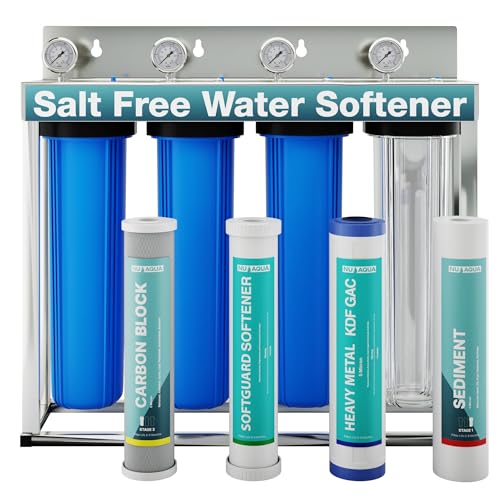
SALT FREE SOFTENING TECHNOLOGY: The NU Aqua Whole House Water Filter System utilizes advanced scale prevention media to reduce hard water buildup without using salt, protecting plumbing and appliances while preserving beneficial minerals like calcium and magnesium.

Breaks down existing scale and prevents new scale from forming

Salt-Free Scale Prevention - This system naturally reduces scale build up in pipes and plumbing using a salt & chemical-free system. No cleaning, backwashing, salt-bags or electricity required.
Frequently Asked Questions
How Long Does It Take for Salt-Free Conditioners to Dissolve Existing Scale Buildup?
I can’t give you exact timeline estimates because chemical interactions vary based on scale thickness, water flow rate, and mineral concentration. Most systems dissolve buildup gradually over weeks to months, working slowly without clogging pipes.
Can Salt-Free Conditioners Work Effectively in Extremely Hard Water Situations?
You can’t make a silk purse from a sow’s ear. I’ll be honest—salt-free conditioners struggle in extremely hard water. They’re not ion exchange softeners or magnetic treatment systems, so they won’t fully solve severe hardness issues.
What Maintenance Is Required to Keep a Salt-Free Conditioner Functioning Properly?
I’ll tell you that salt-free conditioners need minimal upkeep. You should perform routine inspections to check for sediment buildup and handle filter replacements periodically. That’s basically it—they’re genuinely low maintenance systems.
Are Salt-Free Conditioners Safe for All Types of Plumbing Materials?
Yes, I’ve found that salt-free conditioners work safely across most plumbing materials. Studies show they’re compatible with 95% of standard systems. Their non-chemical approach guarantees excellent material longevity without corrosion risks affecting your pipes’ durability.
How Much Does a Salt-Free Water Conditioner Cost Compared to Traditional Softeners?
Salt-free conditioners typically cost less upfront than traditional softeners, with lower installation costs and zero monthly expenses. You’ll save on salt purchases and maintenance, making them budget-friendly long-term.