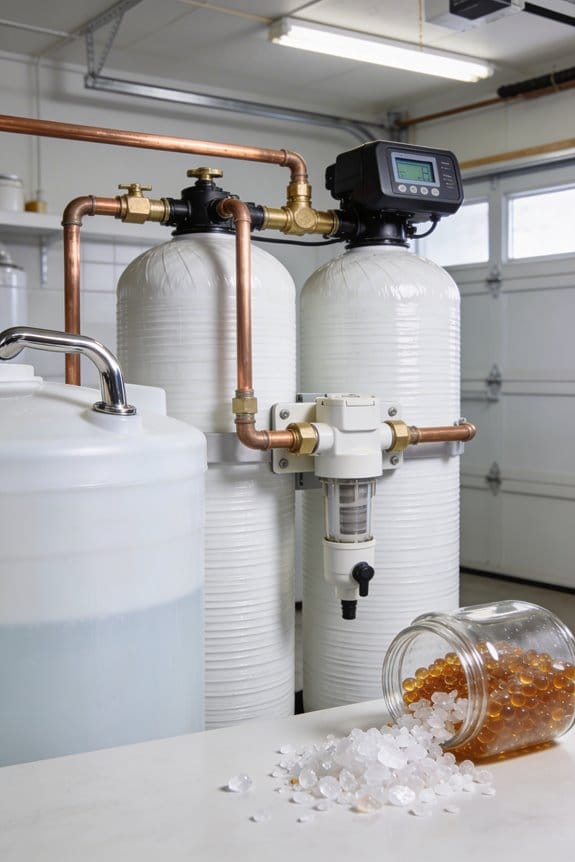
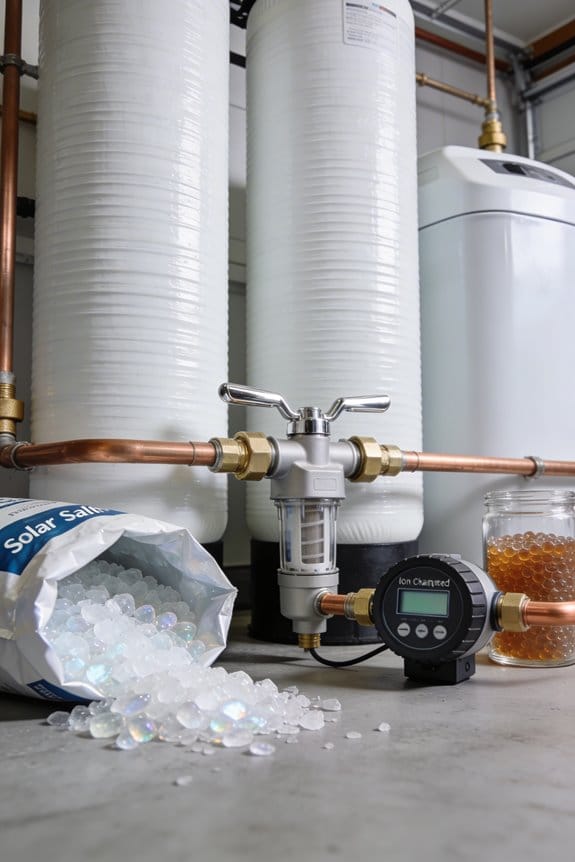

I’d choose fine mesh resin if your well water contains high iron levels, since its smaller beads create 3–4× more surface area and handle up to 10 ppm iron versus standard mesh‘s 3 ppm limit. Standard mesh works fine for municipal water and costs 15–25% less, but it requires less maintenance. The trade-off is real though: fine mesh creates higher pressure drop and needs a stronger pump. Your decision hinges on your iron content, water flow needs, and budget, with deeper considerations beyond these basics.
Key Takeaways
- Fine mesh removes up to 10 ppm iron versus 3 ppm for standard mesh, ideal for elevated iron well water.
- Standard mesh costs 15–25% less and requires less frequent maintenance due to its more open structure.
- Fine mesh creates higher pressure drop (10–15 psi) and limits flow to 8–10 gpm/ft², requiring stronger pumps.
- Standard mesh allows higher flow rates (15–20 gpm/ft²) with lower pressure drop (3–5 psi) for typical applications.
- Choose fine mesh for high-iron well water despite higher costs and maintenance; select standard mesh for budget-conscious, lower-iron needs.
Bead Size: Why Smaller Beads Pack Tighter
When you’re comparing fine mesh and standard mesh resins, the difference in bead size is where the story really begins to unfold. Fine mesh beads measure 0.3-0.5mm in diameter, while standard mesh ranges from 0.3-1.2mm. This size difference markedly impacts packing density—how tightly beads arrange together in your tank.
Smaller beads create superior packing density because their uniformity allows them to nest more efficiently. Fine mesh yields 3-4 times more beads per cubic foot than standard mesh. This tighter arrangement reduces air voids by 20-30%, meaning more bead contact points throughout the resin bed. The result? Enhanced ion exchange performance and more effective water treatment. Understanding bead uniformity helps explain why fine mesh resin works better for specific applications requiring maximum contact surface area.
Surface Area and Iron Removal: What Fine Mesh Gains

The advantages of fine mesh resin become increasingly apparent when you examine how surface area directly affects iron removal performance. Fine mesh beads provide 2-3 times greater surface area per volume than standard mesh, which means more opportunities for iron particles to attach and be removed from your water. This expanded surface area, combined with superior pore distribution, creates ideal conditions for surface chemistry reactions that capture dissolved iron effectively. While standard mesh removes only 3 ppm of iron, fine mesh handles up to 10 ppm, making it the clear choice for well water applications where iron contamination runs high. The tighter packing density in fine mesh beds generates more contact points between water and resin, enhancing overall ion exchange efficiency and delivering noticeably cleaner water.
Pressure Drop and Flow: The Trade-Off Explained

While fine mesh resin‘s superior surface area makes it exceptional at removing iron, that same tight packing creates a significant drawback you’ll need to take into account: increased pressure drop across your resin bed. Fine mesh experiences 10-15 psi pressure drop at 10 gpm/ft², compared to standard mesh’s 3-5 psi at the same flow rate. This difference matters markedly for your flow dynamics and pump sizing decisions. Fine mesh limits maximum flow to 8-10 gpm/ft², whereas standard mesh handles 15-20 gpm/ft². If you choose fine mesh, you’ll need a more powerful pump to maintain adequate water pressure throughout your system. Understanding these trade-offs helps you select the right resin for your specific water treatment needs.
Standard vs. Fine Mesh: Iron Removal Capacity Compared
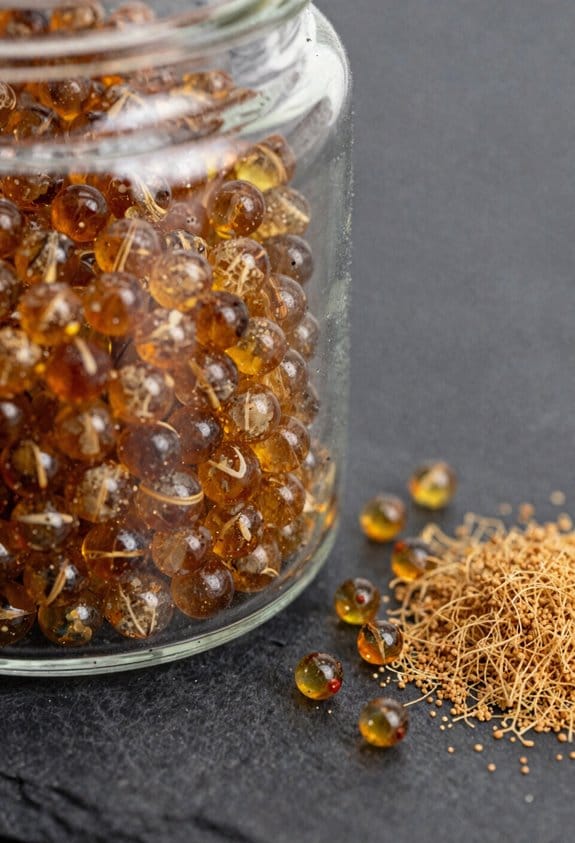
If you’re dealing with iron-heavy well water, your choice between standard and fine mesh resin directly impacts how much iron your system can actually remove from your water supply. Fine mesh resin removes up to 10 ppm of iron, while standard mesh handles only 3 ppm maximum. This significant difference stems from fine mesh’s substantially larger surface area, which provides more contact points for iron particles to attach. The tighter packing density in fine mesh beds enhances overall ion exchange efficiency. However, fine mesh requires more frequent cleaning to prevent iron biofouling, which can compromise regeneration efficiency and system performance over time. For well water applications with elevated iron content, fine mesh’s superior capacity makes it the more effective choice despite increased maintenance demands.
Recommended Products

💧 Perfectly designed for 1-2 bathrooms homes, the Aquasure Signature Series is the professional grade Whole House Water system that delivers high quality filtered, ultra-softened water to every outlet throughout your entire home. No need for manual regeneration, backwash, draining, this system automatically regenerates and backwash, making it cost efficient and easy to maintain

💧 【 PERFECT FOR 4-6 BATHROOMS 】Rated to treat 64,000 Grains of hardness, this is the professional grade Whole House Water system that delivers high quality filtered, ultra-softened water to every outlet throughout your entire home.

Platinum Air Injection with Filox (Mang-Ox) media for highest removal capabilities
Cost: What You’ll Pay for Each Type

Standard mesh resin typically costs 15-25% less than fine mesh resin, making it the more budget-friendly option upfront. The price difference stems from manufacturing complexity; producing smaller fine mesh beads requires more precision and resources than standard mesh production.
When calculating total installation costs, consider that fine mesh systems demand specialized equipment and professional setup, which can increase your overall expenses. However, warranty terms often reflect these differences, with fine mesh products sometimes offering extended coverage due to their higher initial investment.
You shouldn’t overlook long-term value either. While fine mesh costs more initially, its superior iron removal capacity and longevity in well water applications might justify the premium investment for your specific situation.
Recommended Products

Platinum Air Injection with Filox (Mang-Ox) media for highest removal capabilities

Removes highest levels of iron & sulfur from your water without chemicals or air injection!

64k Digital Dual Tank Alternating IRON PRO Water Softener with Fleck 9100SXT
Municipal or Well Water: Which Resin Fits?
Because your water source fundamentally affects which resin type performs best, you’ll want to understand the key differences between municipal and well water treatment needs. Municipal water typically contains low iron levels, making standard mesh resin ideal for this application. Well water, however, often contains higher iron concentrations that cause pipe corrosion and require more aggressive treatment. Fine mesh resin excels at removing up to 10 ppm iron, while standard mesh handles only 3 ppm. If you’re drawing from a well, I’d recommend conducting well testing to determine your iron content before selecting resin. This data guides whether fine mesh’s superior iron removal capacity justifies its higher cost and maintenance requirements for your specific situation.
Recommended Products

Platinum Air Injection with Filox (Mang-Ox) media for highest removal capabilities

48k Digital Dual Tank Alternating IRON PRO Water Softener with 9100SXT

COMPLETE PACKAGE - Complete package that includes a whole house Water Softener & Upflow Carbon Filtration System. Our package also includes an installation manual and technical support. AFW Filters water bottle included with system. Water bottle has sanitizer pack, silicone lubricant, and hardness test strips for the PERFECT install!
Maintenance and Lifespan: True Cost of Ownership
Once you’ve selected the right resin type for your water source, understanding the maintenance demands and longevity of each option becomes just as important as the initial choice itself. Fine mesh resin demands more frequent regeneration cycles because its tighter packing fouls faster, requiring regular cleaning to prevent pressure buildup. Standard mesh, conversely, needs less intensive maintenance due to its more open structure. When calculating true cost of ownership, consider that premium 10% crosslinked resins extend fine mesh lifespan markedly. Many manufacturers offer long term warranties covering fine mesh for 5-10 years, offsetting higher initial expenses. Standard mesh typically carries shorter coverage periods. Over time, fine mesh’s superior performance in iron removal may justify increased regeneration frequency and maintenance investment.
Recommended Products

COMPLETE PACKAGE - Complete package that includes a whole house Water Softener w/ UPGRADED Purolite C100E US made resin & Upflow Carbon Filtration System. Our package also...
Quick Decision Guide: Choose Your Resin in Three Steps
Now that you’ve worked through maintenance considerations and long-term costs, it’s time to narrow down your choice by examining your specific water conditions and system requirements.
Start by testing your water for iron content and flow demands. If you’re dealing with well water containing high iron levels, fine mesh resin becomes your better option despite higher costs. For municipal water with minimal iron, standard mesh suffices.
Next, consider your installation tips and available space. Fine mesh requires compact, careful placement, while standard mesh adapts more flexibly to various tank sizes.
Finally, evaluate seasonal adjustments needed in your climate. Fine mesh demands more frequent monitoring during temperature fluctuations, whereas standard mesh remains more forgiving year-round. This assessment clarifies which resin matches your situation.
Frequently Asked Questions
Can I Mix Fine Mesh and Standard Mesh Resin in the Same Tank?
I’d advise against it. Mixing fine mesh and standard mesh creates mixed compatibility issues—they’ll settle unevenly, causing operational considerations like uneven flow patterns and reduced ion exchange efficiency throughout your tank.
How Does Water Temperature Affect Fine Mesh Versus Standard Mesh Performance?
I’ll tell you: fine mesh shows greater temperature sensitivity than standard mesh. As water heats up, you’ll notice fine mesh’s flow rate drops more markedly due to its tighter packing density affecting viscosity changes.
What Contaminants Besides Iron Does Fine Mesh Remove More Effectively?
Like a fine net catching what others miss, fine mesh excels at trapping manganese and suspended solids. Its tighter packing and expanded surface area—your water’s invisible guardian—outperform standard mesh in removing these stubborn contaminants.
How Often Should Fine Mesh Resin Be Replaced Compared to Standard Mesh?
I’d recommend replacing fine mesh resin more frequently than standard mesh because its tighter packing fouls faster. While standard mesh typically lasts 3-5 years, fine mesh’s lifespan comparison shows 2-4 years, depending on your water quality and replacement frequency.
Does Fine Mesh Work Effectively With Existing Softener Systems Designed for Standard Mesh?
I’d recommend compatibility testing before switching. Fine mesh’s higher pressure drop—10-15 psi versus standard’s 3-5 psi—may strain your existing system’s valve and pump capacity.