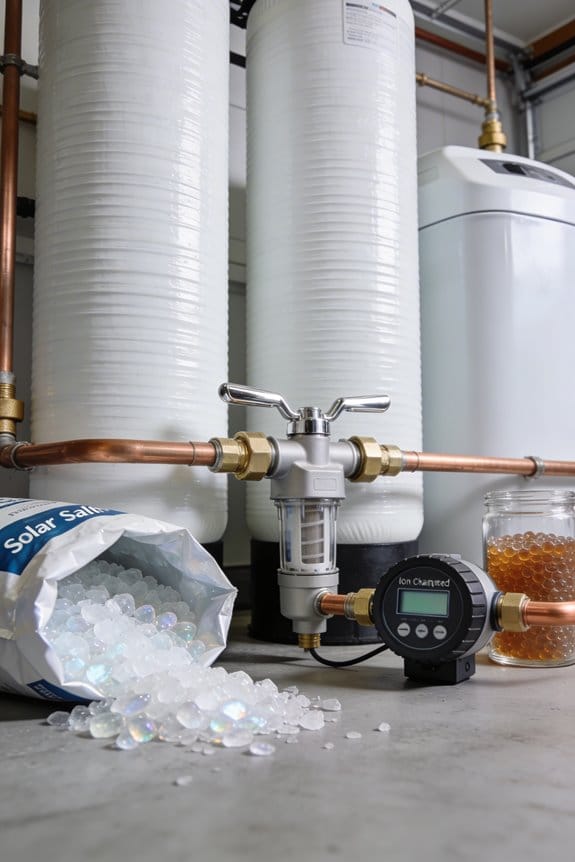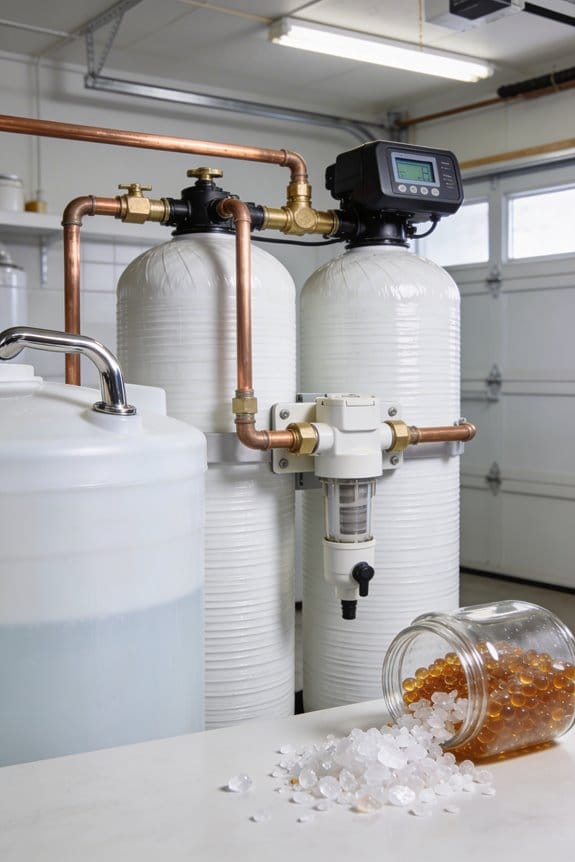
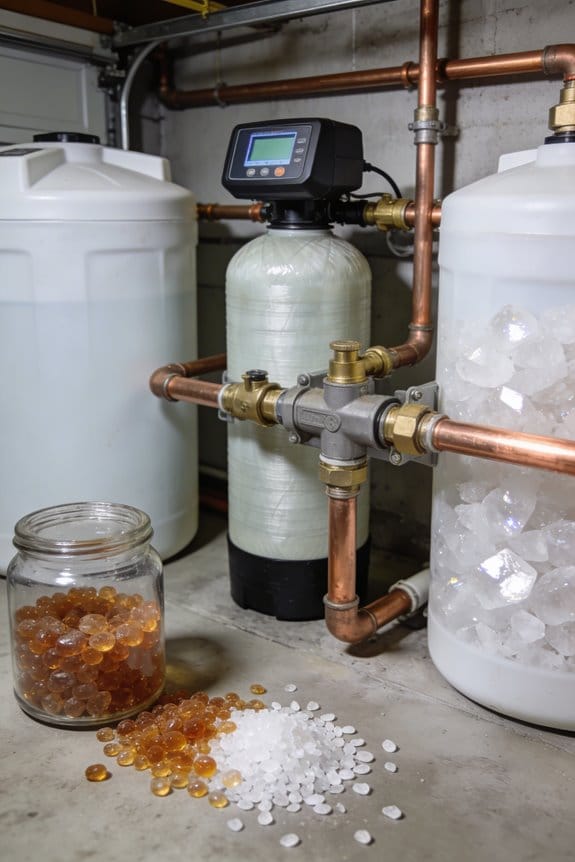

The key difference is chemical density. Ten percent crosslink resin contains roughly twice as many internal bonds as eight percent, making it markedly tougher against chlorine, hard water minerals, and oxidative damage. While eight percent typically lasts about ten years, ten percent resin survives roughly twenty years under standard conditions. Though ten percent costs more upfront, its doubled lifespan and reduced maintenance needs often provide better long-term value. Understanding what else degrades your resin reveals whether you should prioritize budget or durability.
Key Takeaways
- 10% crosslink resin contains roughly twice as many chemical bonds as 8%, providing superior structural integrity and longevity.
- 8% resin typically lasts around 10 years; 10% resin approximately 20 years under standard water conditions.
- Chlorine oxidation breaks down fewer bonds in 8% resin, causing faster degradation than premium 10% crosslink resin.
- 10% resin better resists mineral accumulation, high-flow abrasion, and frequent regeneration cycles that accelerate 8% resin breakdown.
- Despite higher upfront costs, 10% resin offers superior long-term ROI through reduced replacement frequency and maintenance needs.
8% vs. 10% Crosslink: What’s the Real Difference?
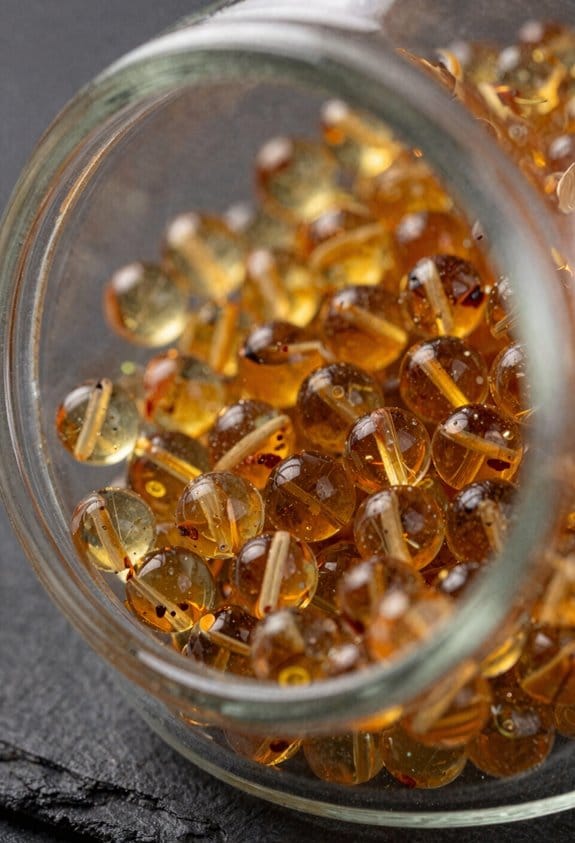
What’s really going on inside your water softener resin? The difference between 8% and 10% crosslink comes down to how tightly the resin beads are bonded together. I’m talking about the ratio of divinylbenzene to styrene, which determines the bead’s structural integrity. The 10% crosslink variant has more chemical links throughout its structure, creating superior mechanical strength and thermal stability compared to the standard 8% option. Think of it like this: 8% resin is like a loosely woven fabric, while 10% is tightly woven. That extra crosslinking means 10% beads resist degradation better, maintain their shape longer under pressure, and handle temperature fluctuations more effectively. This fundamental difference directly impacts how long your resin lasts.
Recommended Products

★ MORE SAVINGS, LESS MAINTENANCE! Whole House Water Softener System Saves Up To 75% On Salt Usage And 64% On Waste Water Over Other Leading Brands!
★ MORE SAVINGS, LESS MAINTENANCE! Whole House Water Softener System Saves Up To 75% On Salt Usage And 64% On Waste Water Over Other Leading Brands!

AFW filters Designed by WQA Certified Water Specialist
Why Chlorine Destroys 8% Resin Faster Than 10%?
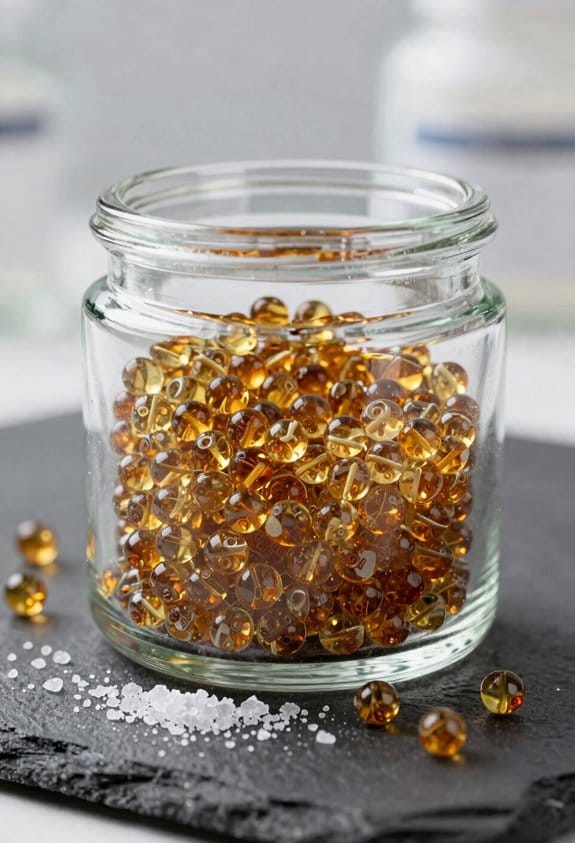
Now that you understand how crosslink density affects resin structure, let’s look at what happens when chlorine enters the picture. Chlorine is an oxidant, meaning it attacks the chemical bonds holding resin beads together through a process called oxidative cleavage. With 8% crosslink resin, fewer bonds exist to defend against this chemical assault, so chlorine breaks them apart relatively quickly. The beads degrade into a mushy gel, losing their ability to soften water effectively. Ten percent crosslink resin, however, has markedly more bonds throughout its structure. This increased molecular stability provides better protection against oxidative damage. When chlorine encounters 10% resin, it must break through substantially more crosslinks before compromising the bead’s integrity, which is why premium resin lasts considerably longer in chlorinated municipal water supplies.
Double the Lifespan: How 10% Resin Outlasts 8
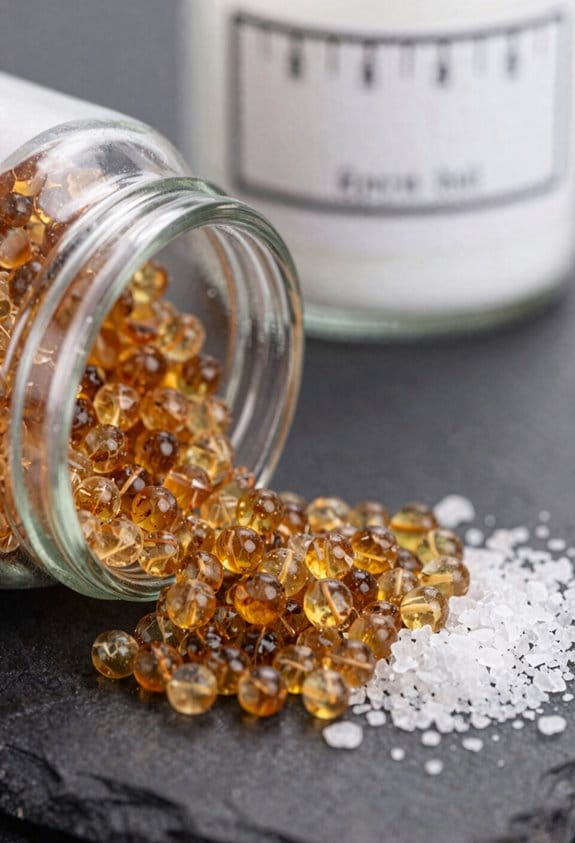
Because 10% crosslink resin contains roughly twice as many chemical bonds as 8% resin, it can withstand the stresses of water softening for substantially longer periods. The longevity mechanisms behind this difference are straightforward: stronger internal structure resists degradation from hard water minerals and oxidizing chemicals. Field performance data confirms this advantage consistently. While 8% resin typically lasts around 10 years under standard conditions, 10% resin achieves approximately 20 years of reliable service. This doubled lifespan results from enhanced bead rigidity and improved porosity stability. The increased durability means fewer replacements, reduced maintenance frequency, and lower long-term costs. In challenging water conditions with elevated chlorine or high mineral content, the gap widens even further, making 10% resin the superior investment for most applications.
Recommended Products

Complete Twin tank water softener provides continuous soft water

Complete Twin tank water softener provides continuous soft water. Ships Loaded
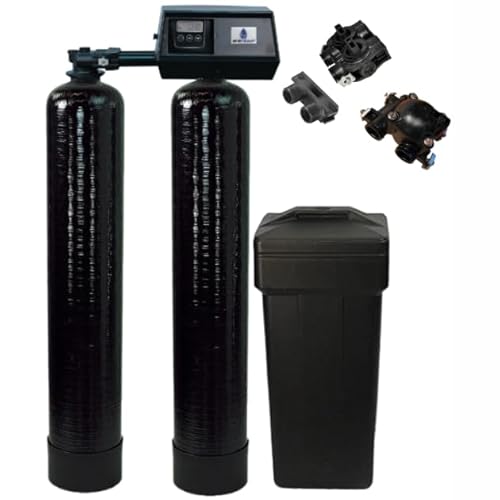
The AFWFilters Complete Twin Tank Water Softener is an innovative solution designed to ensure a constant supply of soft water. Unlike traditional single-tank systems, this twin-tank design allows for one tank to undergo the regeneration process while the other continues to provide soft water. This means you’ll never experience a downtime in soft water availability, making it ideal for households with high water usage or those who simply want the convenience of uninterrupted service.
Beyond Chlorine: What Else Kills Your Resin Early
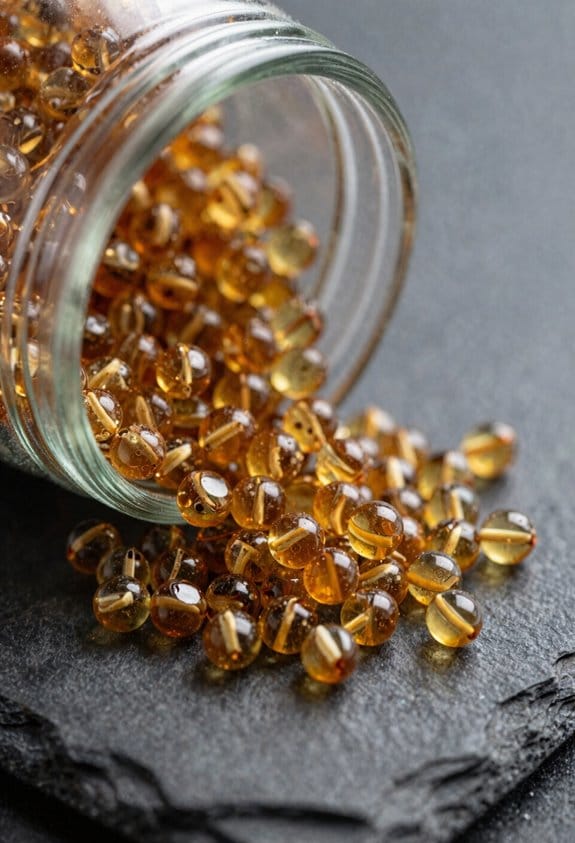
While chlorine damage gets most of the attention when we talk about resin degradation, it’s actually just one of several factors that can shorten your system’s lifespan markedly. Iron buildup represents a significant threat, as dissolved iron particles accumulate on resin beads and cause physical deterioration. High flow abrasion occurs when water moves too rapidly through your tank, creating pressure that mechanically wears down bead surfaces. Additionally, calcium and other minerals contribute to attrition loss, especially in systems with lower crosslink percentages. Frequent regeneration cycles, common in undersized systems, accelerate bead breakdown. Chloramine compounds, a chlorine derivative found in some municipal water supplies, also degrade resin structure. Understanding these multiple threats helps explain why 10% crosslink resin outperforms 8% across various water conditions beyond just chlorinated environments.
Recommended Products
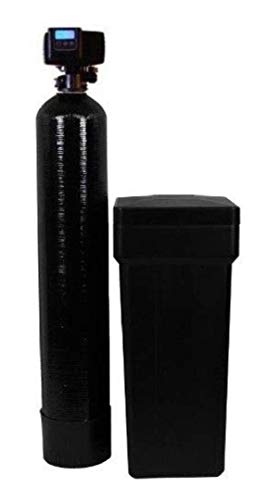
High flow whole house water softener for larger homes

Replace your old Water Softening Tank instead of dealing with the mess and struggle of replacing just the media
Replace your old Water Softening Tank instead of dealing with the mess and struggle of replacing just the media
Choosing Your Resin: 8% for Budget, 10% for Durability
Understanding that multiple threats damage your resin—not just chlorine—makes the choice between 8% and 10% crosslink resin clearer than it might initially seem. I’ll help you weigh your options based on your situation.
If you’re prioritizing budget performance, 8% crosslink resin offers lower installation cost and upfront savings. This standard option works adequately in gentler water conditions without heavy chlorine or iron content. However, you’ll replace it more frequently, typically every 5-7 years.
I’d recommend 10% crosslink resin if you want genuine durability. Yes, the installation cost runs higher initially, but you’ll gain double the lifespan—around 20 years. When you factor in replacement labor and shipping costs, the premium resin becomes economically smarter long-term, especially in challenging water environments.
Recommended Products

Package Deal! 64,000 grain 2 cuft softener with upgraded 10% resin and whole house radial flow carbon filter. Filter and soften water all throughout your home!
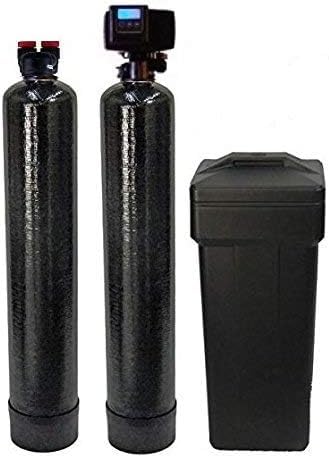
Ready to install! Water softener (9"x48") tank with upgraded 10% crosslink resin and 1cuft (9"x48) carbon tank.

1 softener 9X48 tank 10% crosslink resin
Does 10% Resin Pay for Itself?
The higher upfront cost of 10% crosslink resin might seem like a disadvantage until you calculate the total expense over time. When you examine long term ROI, 10% resin wins financially. Since 10% beads last approximately 20 years compared to 8% resin’s 10-year lifespan, you’ll replace your system half as often. This means fewer replacement purchases, which substantially reduces your overall investment. Additionally, maintenance costs favor 10% resin because it resists chlorine and oxidation better, requiring less frequent regeneration cycles. Lower regeneration frequency means reduced salt and water consumption. The combined savings from extended lifespan, decreased maintenance costs, and minimal replacement frequency make 10% crosslink resin a smart financial choice for homeowners seeking genuine value.
Recommended Products

10% Resin Cation Premium Grade Softening Resin Strong Acid Cation Exchange Resin. Tired of paying hundreds of dollars to high mark up brands to replace your resin? Start saving with LiquaGen DIY resin. World class lab tested quality resin ensuring great water. High end product without the high end price! Designed to extend softener life, reduce scale build-up and to ensure soft pure water.

ENGINEERED FOR HARSH WATER (PREMIUM 10% CROSS-LINK): Unlike standard 8% resin that turns "mushy" after a year, our heavy-duty 10% cross-linked beads are built for extreme durability. Designed for full-time RVers and areas with high-chlorine city water, this high-density media resists oxidation and physical breakdown, delivering up to 2x the lifespan of standard resin while maintaining high water pressure.

15 Colors: The colors are vibrant and go well with all sorts of colored beads. You will love the colors. Perfect to make prayer cloths for church. Attached to every cloth for missions trip.
Frequently Asked Questions
Can I Mix 8% and 10% Resin Beads in the Same Water Softener Tank?
You shouldn’t mix them. Different crosslink densities create mixing effects that cause performance variability—8% beads degrade faster while 10% beads compensate unevenly, undermining your softener’s efficiency and reliability.
How Does Bead Size Affect Resin Longevity Independent of Crosslink Percentage?
I’ve found that smaller beads surprisingly outlast larger ones because increased surface area accelerates ion exchange efficiency, while greater bead porosity stability means faster regeneration cycles and reduced strain on individual beads.
What’s the Exact Cost Difference Between Replacing 8% Versus 10% Resin?
I can’t give you exact resin pricing since it varies by supplier and quantity, but here’s what matters: while 10% resin costs more upfront, you’ll replace it half as often, making replacement frequency and total resin pricing favor 10% long-term.
Does Water Temperature Impact the Degradation Rate of Either Crosslink Type?
Temperature absolutely hammers resin degradation—I’ve seen it destroy systems faster than you’d believe. Warmer water accelerates resin swelling and chemical breakdown in both types, though 10% resists this slightly better than standard 8%.
Can Damaged 8% Resin Be Regenerated or Must It Be Completely Replaced?
I’ll tell you that damaged 8% resin can’t be fully restored through resin reactivation—you’ll need partial replacement of the degraded beads to restore your softener’s performance effectively.