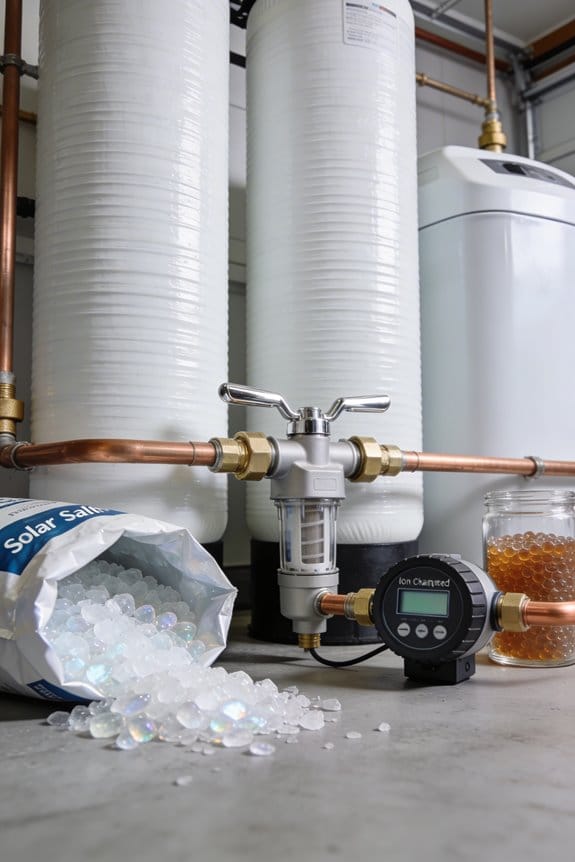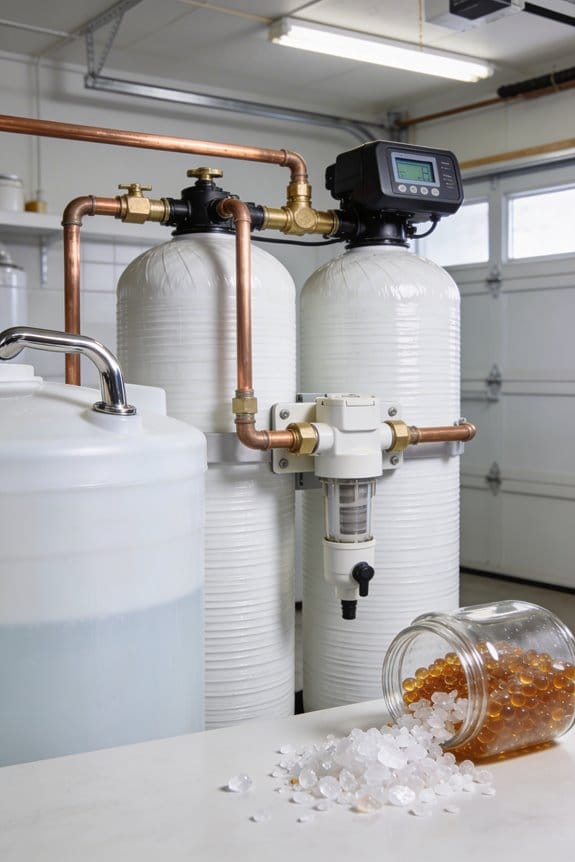
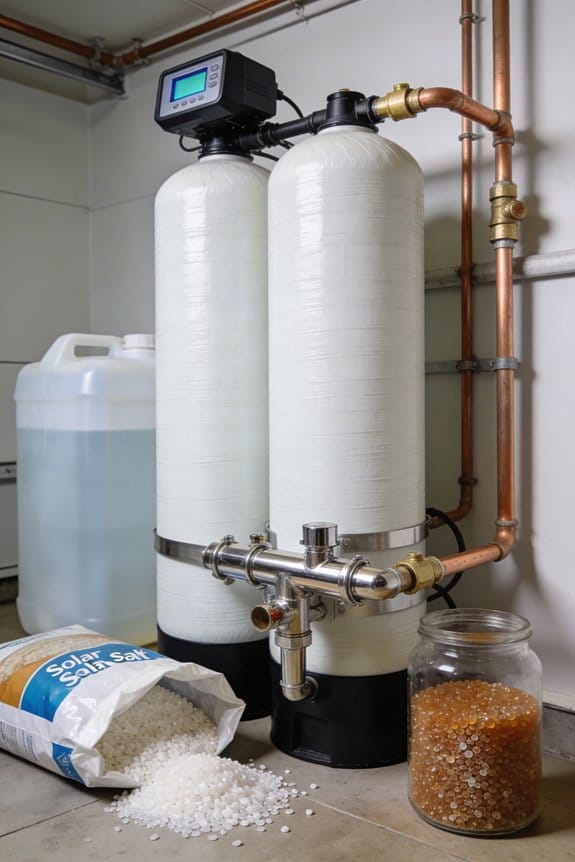

Chlorine in tap water oxidizes the divinylbenzene crosslinks that bind your resin beads together, causing them to swell and lose their rigid shape. Even low levels around 1.0 ppm gradually weaken these chemical bonds, shrinking the pores that trap hardness minerals. Your beads become soft and mushy, water flows poorly, and softening stops working. Installing a carbon filter upstream removes chlorine before it reaches your resin, protecting your investment for years longer. Understanding the full scope of this damage reveals several protective strategies worth exploring.
Key Takeaways
- Chlorine oxidizes divinylbenzene crosslinks that hold polymer chains together, causing structural degradation and bond breakage.
- Even low tap water chlorine levels (0.5–1.0 ppm) gradually weaken crosslinks, potentially cutting resin lifespan in half.
- Oxidized resin beads swell, become mushy, and lose their rigid spherical shape, reducing ion-exchange capability significantly.
- Activated carbon filters remove chlorine before water reaches the softener, extending resin life from years to a decade.
- Regular resin inspection and carbon filter replacement protect against chlorine damage and detect oxidation before complete failure.
How Chlorine Destroys Your Resin (The Molecular Story)
When chlorine enters your water softener, it doesn’t simply pass through without consequence; instead, it initiates a chemical attack on the resin beads that form the heart of your system. I’ll explain the molecular process: chlorine targets the divinylbenzene (DVB) crosslinks that hold your resin’s polymer structure together. These crosslinks act like bridges connecting the polymer chains, and when chlorine attacks them, those bonds break down in a process called polymer degradation. The chlorine kinetics—how quickly this chemical reaction occurs—accelerates at higher chlorine concentrations. As these bonds fracture, the resin beads swell and lose their rigid spherical shape, becoming soft and mushy. This structural collapse reduces your resin’s ability to function properly, ultimately diminishing your softener’s effectiveness.
Why Even Low Chlorine Levels (0.5–1.0 Ppm) Shorten Resin Life?

Since most tap water in the US contains chlorine levels between 0.5 and 1.0 ppm, you’d think your resin beads could handle this “normal” amount without significant damage. However, even these seemingly low concentrations gradually oxidize the resin’s polymer structure. When chlorine attacks the Divinylbenzene crosslinks, it weakens the beads’ internal framework, causing microporous collapse. This deterioration impairs the ion exchange process, which is essential for softening water. As the pores shrink and close, water can’t effectively access the functional groups responsible for removing hardness minerals. The cumulative effect means that at 1.0 ppm, your resin’s lifespan drops dramatically compared to chlorine-free water. Regular exposure to even “typical” chlorine levels cuts expected resin life in half or more.
Recommended Products

COMPLETE PACKAGE - Complete package that includes a whole house Water Softener w/ UPGRADED Purolite C100E US made resin & Upflow Carbon Filtration System. Our package also includes an installation manual and technical support. Silicone lubricant and hardness test strips for the PERFECT install!
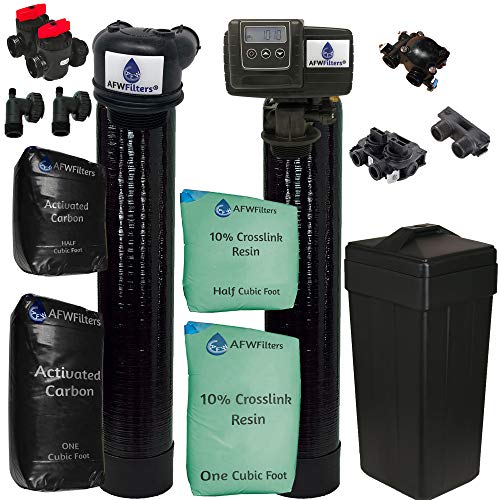
COMPLETE PACKAGE - Complete package that includes a whole house Water Softener w/ UPGRADED 10% resin & Upflow Carbon Filtration System. Our package also includes an installation manual and technical support. AFW Filters water bottle included with system. Water bottle has sanitizer pack, silicone lubricant, and hardness test strips for the PERFECT install!

Powerful Softening: This water softener system reduces over 90% of calcium and magnesium ions from hard water, effectively reducing scale buildup. The 2.12cu. ft. resin can treat up to 64,000 grains of hardness, ideal for small to mid-size households
From Rigid Beads to Mushy, Dead Resin

As chlorine oxidizes the resin beads in your water softener, you’ll notice a dramatic physical transformation that signals the resin’s decline. The beads, originally hard and spherical, begin swelling as chlorine attacks the Divinylbenzene crosslinks holding the polymer structure together. This chemical assault breaks the bonds that give the resin its rigidity, compromising bead cohesion. The surface texture deteriorates from smooth and firm to rough and mushy. When you examine the resin bed, the beads no longer maintain their shape and crush easily between your fingers. This degradation means the resin can’t effectively exchange ions or access its functional groups. The swollen beads compact the bed, reducing water flow and regeneration efficiency. Eventually, your softener stops working entirely, requiring complete resin replacement.
Recommended Products

💧 Perfectly designed for 4-6 bathrooms homes, the Aquasure Signature Series is the professional grade Whole House Water system that delivers high quality filtered, ultra-softened water to every outlet throughout your entire home. No need for manual regeneration, backwash, draining, this system automatically regenerates and backwash, making it cost efficient and easy to maintain.

Fleck 9100 SXT Digital Metered Dual Tank Control Valve for 24/7 Soft Water

COMPLETE PACKAGE - Complete package that includes a whole house Water Softener w/ UPGRADED 10% resin & Upflow Carbon Filtration System. Our package also includes an installation manual and technical support. AFW Filters included with system, sanitizer pack, silicone lubricant, and hardness test strips for the PERFECT install!
Carbon Filters: Your First Line of Defense

The most effective way to protect your water softener from chlorine damage is installing a carbon filter before the water reaches your resin bed. Activated carbon removes chlorine through a process called adsorption, where chlorine molecules stick to the carbon’s porous surface. Catalytic carbon works even better, handling chlorine at higher concentrations and breaking down chloramines that standard filters miss. I’d recommend placing this filter at your home’s main water line, ensuring all incoming water gets filtered before reaching your softener. Carbon filters typically last six to twelve months, depending on your water’s chlorine levels and usage. Regular replacement keeps your resin safe and maintains your softener’s performance long-term, potentially extending its lifespan from two years to a full decade.
Recommended Products

𝐀𝐝𝐯𝐚𝐧𝐜𝐞𝐝 𝐅𝐢𝐥𝐭𝐫𝐚𝐭𝐢𝐨𝐧 𝐓𝐞𝐜𝐡𝐧𝐨𝐥𝐨𝐠𝐲: Crystal Quest whole house water filter system employs reverse osmosis technology to efficiently remove contaminants and dissolved solids from your water supply. This advanced filtration process of our house water filter system ensures you access clean, refreshing water that tastes great.

ADVANCED FILTER MEDIA - This whole house water filter system utilizes premium KDF55 and high-quality coconut shell activated carbon to effectively remove chlorine, lead, heavy metals, PFAS, chloramine, radon, herbicides, and more.

4 STAGE ULTIMATE PROTECTION: Specifically designed to provide unmatched filtration and softening performance. This whole house filtration/salt-free softener conditioner package will provide safe soft water for your entire home and remove heavy metals, odors, colors, and many other contaminants in your water.
When to Replace Resin and Stop Chlorine Damage

Even with a carbon filter protecting your softener, you may still find yourself facing a situation where your resin has already suffered oxidation damage from chlorine exposure. Regular resin inspection helps you catch problems early, allowing you to determine replacement timing before complete failure occurs. You’ll want to perform chlorine monitoring by testing your water regularly, especially if you live near treatment facilities where levels exceed 1.0 ppm. Signs of damaged resin include reduced water flow, poor softening performance, and mushy beads that crumble easily. If you notice these symptoms, replacement becomes necessary. Taking preventive action now—installing that carbon filter and monitoring chlorine levels—protects your investment and extends your softener’s lifespan greatly.
Recommended Products
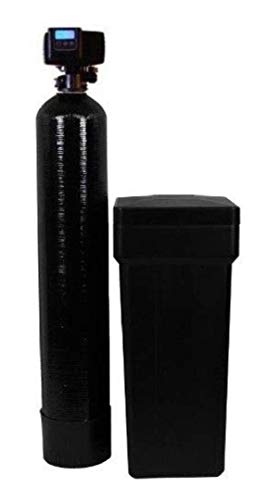
High flow whole house water softener for larger homes

Perfect for homes with 4 to 6 bathrooms and up to 7 family members, who desires softened water and clean, chemical-free water for the whole family.

Ships with resin pre-loaded for easier installation
Choosing the Right Replacement Resin and Installation Essentials
Once you’ve determined that your resin needs replacing, you’ll want to weigh several important factors before purchasing a replacement bed. First, consider your water’s chlorine levels and your home’s system design to select appropriate resin that withstands oxidation better. Premium ion exchange resins offer enhanced durability against chlorine damage compared to standard options. During installation check, make sure the resin bed sits properly within your tank and that all connections seal tightly to prevent leaks. Flush the new resin thoroughly before operating your softener to remove manufacturing dust and contaminants. Installing a carbon filter upstream provides additional protection, dechlorinating water before it reaches your softener. This preventive measure greatly extends your replacement resin’s lifespan, maximizing your investment.
Recommended Products

💧 Perfectly designed for 1-2 bathrooms homes, the Aquasure Signature Series is the professional grade Whole House Water system that delivers high quality filtered, ultra-softened water to every outlet throughout your entire home. No need for manual regeneration, backwash, draining, this system automatically regenerates and backwash, making it cost efficient and easy to maintain
💧 【 PERFECT FOR 4-6 BATHROOMS 】Rated to treat 64,000 Grains of hardness, this is the professional grade Whole House Water system that delivers high quality filtered, ultra-softened water to every outlet throughout your entire home.

★ MORE SAVINGS, LESS MAINTENANCE! Whole House Water Softener System Saves Up To 75% On Salt Usage And 64% On Waste Water Over Other Leading Brands!
Frequently Asked Questions
How Often Should I Test My Tap Water’s Chlorine Levels to Prevent Resin Damage?
I’d recommend you test your tap water’s chlorine levels monthly initially, then switch to seasonal testing once you’ve established your baseline. This helps me catch any changes before they damage your softener’s resin.
Can Damaged Resin Be Restored, or Must It Always Be Completely Replaced?
Once chlorine oxidizes your resin, you’ve crossed a point of no return. Unfortunately, damaged resin can’t be restored—you’ll need complete replacement. Resin reconditioning won’t reverse oxidation damage, though partial replacement of severely affected sections offers a temporary cost-saving option.
What’s the Cost Difference Between Carbon Filters and Replacing an Entire Resin Bed?
Carbon filters typically cost $300-800, while replacing your entire resin bed runs $1,500-3,000. I’d recommend carbon polishing upfront—it’s cheaper and offers superior lifecycle economics by protecting your costly resin investment.
Does Water Temperature Affect How Quickly Chlorine Oxidizes My Softener’s Resin?
Yes, temperature dramatically accelerates chlorine’s oxidation rate on your resin. I know you’d rather ignore this, but warmer water temperature speeds up chemical reactions, cutting your resin’s lifespan markedly faster than cold water would.
Will My Water Softener Still Work During the Resin Replacement Process?
No, your softener won’t function during resin replacement. I’d recommend arranging service coordination with your provider to install a temporary bypass, ensuring you’ll still have water access throughout the replacement process.