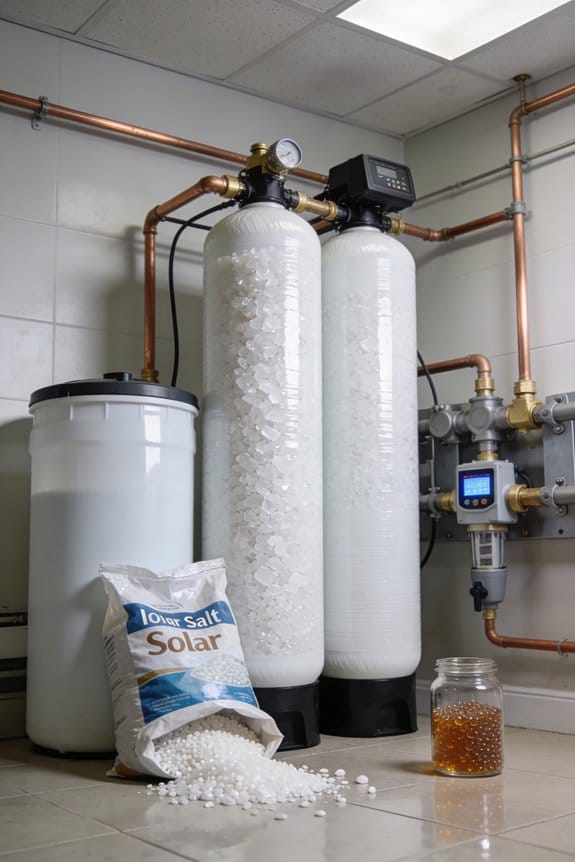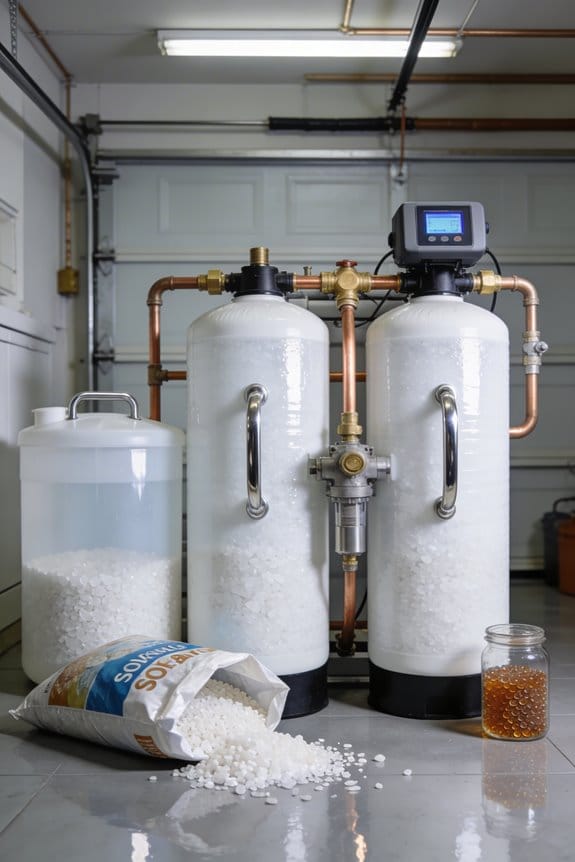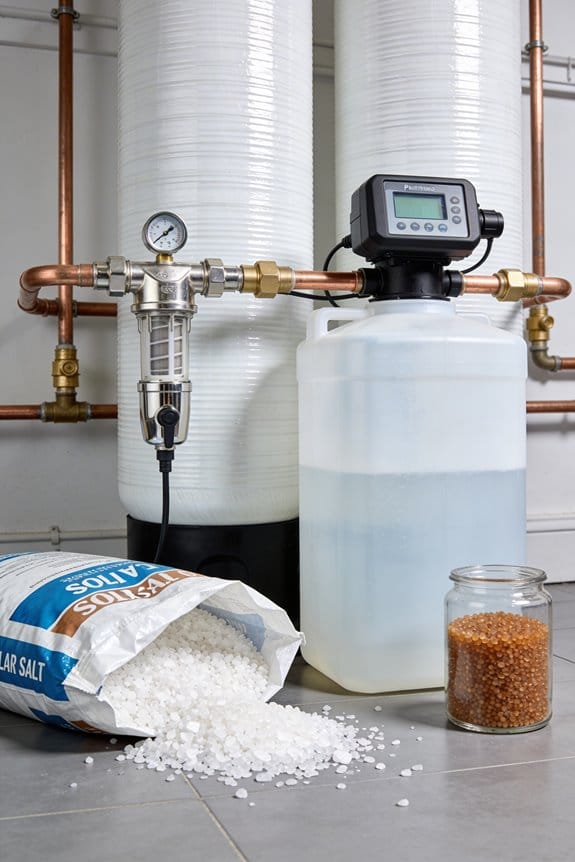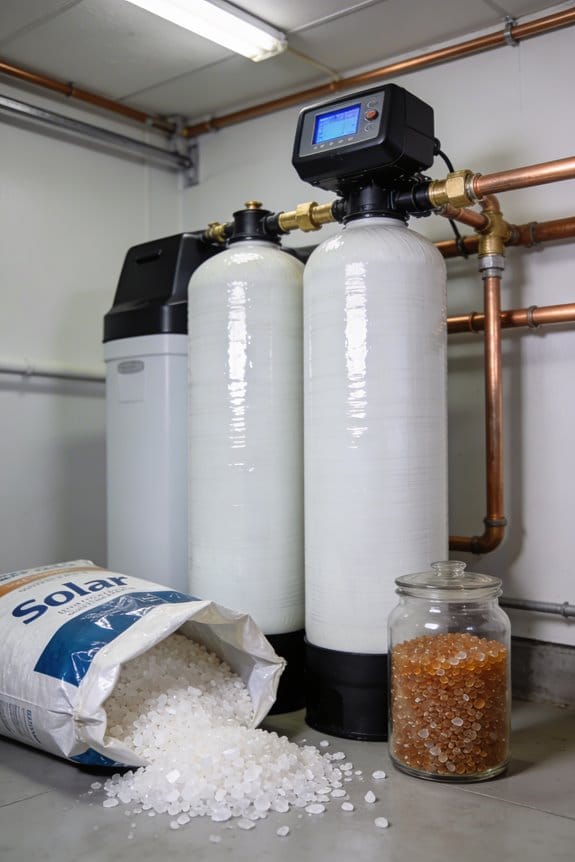
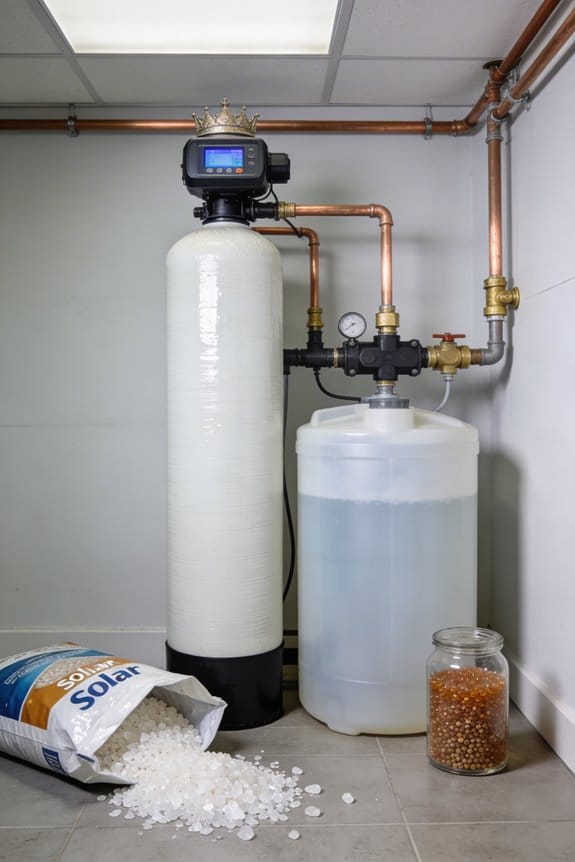

A brine tank is a container holding saltwater that your water softener needs to function. During regeneration, this brine solution pumps through your mineral tank, where sodium ions replace hardness minerals like calcium and magnesium stuck on resin beads. Without brine, your resin beads become saturated and can’t soften water anymore, eventually forcing costly replacement. The tank stays mostly empty until your softener’s regeneration cycle begins. Understanding how these components work together reveals why maintenance matters.
Key Takeaways
- A brine tank is a specialized container that holds a salt and water mixture at 10-15% salt concentration for water softener regeneration.
- Brine tanks enable ion exchange by supplying sodium ions that replace calcium and magnesium hardness minerals on resin beads during regeneration cycles.
- Without a brine tank, resin beads become saturated with hardness minerals and cannot soften water, eventually requiring expensive resin replacement.
- Safety components like brine floats, overflow fittings, and air vents prevent tank overflow, equipment damage, and system malfunctions during operation.
- Warning signs of brine tank failure include hard water return, salty odors, low water suction, excess tank water, and salt bridging.
What Is a Brine Tank and How Does It Work?
If you’ve ever wondered how your water softener actually works, you’ll need to understand the brine tank, which is a specialized container that holds a mixture of salt and water called brine solution. I’m here to explain how it functions. The brine tank creates a 10-15% salt concentration through brine chemistry, where water dissolves salt to form the saltwater mixture essential for regeneration. One gallon of water absorbs approximately three pounds of salt. The tank remains mostly empty during normal operation until your water softener begins its regeneration cycle. At that point, the brine solution gets pumped through the resin tank, where sodium ions exchange with hardness minerals trapped in the resin beads, effectively recharging them for continued water softening.
Recommended Products

Dual alternating tanks never run out of soft water

Complete Twin tank water softener provides continuous soft water
Dual alternating tanks never run out of soft water
How Does Brine Solution Regenerate Your Water Softener?

The regeneration cycle kicks into gear when your water softener detects that the resin beads have become saturated with hardness minerals and can’t soften water anymore. During regeneration, the brine solution gets pumped into your mineral tank where ion exchange occurs. Sodium ions from the brine dilution trade places with calcium and magnesium ions stuck on the resin beads. This concentrated saltwater solution contains enough volume to effectively displace those hardness minerals. Once the exchange completes, the brine and displaced minerals flush out through your drain. Your resin beads, now recharged with sodium ions, become ready to remove hardness minerals again. This regeneration process repeats regularly, keeping your water softener functioning properly and ensuring continuous soft water throughout your home.
Recommended Products

Perfect for Families: Designed for households of 1–4 people battling hard water. The EcoPure EP31 treats up to 31,000 grains to protect your home from mineral buildup, stains, and scale damage

STOP SCALE BUILDUP: HydroFLOW’s technology prevents scale from forming in your home’s water systems, keeping your faucets and shower nozzles running smoothly and efficiently.

[Revolutionary Water Treatment] Experience unparalleled water quality enhancement with iSpring EDV2 electronic descaler. Say goodbye to hard water woes without resorting to chemicals, salt, or tedious maintenance. Witness a noticeable improvement in just 12 weeks.
Why Can’t Your Water Softener Function Without a Brine Tank?

Without a brine tank, your water softener can’t create the saltwater solution necessary for the ion exchange process that removes hardness minerals from your water. The brine solution is essential because it’s the only way to recharge your resin beads with sodium ions. When resin beads become saturated with calcium and magnesium, they can’t soften water anymore. The brine tank supplies the concentrated salt solution that forces an exchange, allowing sodium ions to replace the trapped hardness minerals. Without this regeneration capability, your resin beads eventually become useless, requiring expensive resin replacement. Fundamentally, the brine tank enables your water softener to work continuously, making it an indispensable component rather than an optional feature.
Recommended Products

64k Digital Dual Tank Alternating IRON PRO Water Softener with Fleck 9100SXT

Complete Twin tank water softener provides continuous soft water. Ships Loaded

24/7 Soft Water Availability: Twin-tank system featuring the new Fleck 9100 valve ensures customers benefit from soft water 24 hours a day, 7 days a week
What Essential Components Keep Your Brine Tank Safe?

Your brine tank contains several specialized safety features that work together to prevent overflow, equipment damage, and system malfunctions. The brine float monitors water levels and automatically shuts off the water supply if it rises too high, protecting your system from damage. An overflow fitting serves as a backup drain if the float fails, directing excess water away from your equipment. Air vents allow pressure to equalize inside the tank during the regeneration cycle, preventing dangerous pressure buildup. Some brine tanks include child locks on access panels to prevent accidental contact with salt and brine solution. These components work together seamlessly, ensuring your water softener operates safely and efficiently without requiring constant supervision or maintenance.
Recommended Products
Fleck 9100 SXT Digital Metered Dual Tank Control Valve for 24/7 Soft Water

COMPLETE PACKAGE - Complete package that includes a whole house Water Softener, Upflow Carbon Filtration System, & Drinking Water Reverse Osmosis System. Our package also includes an installation manual and technical support. AFW Filters water bottle included with system. Water bottle has sanitizer pack, silicone lubricant, and hardness test strips for the PERFECT install!

Water softener & iron filter, all in one! High flow for whole house use!
Warning Signs Your Brine Tank Is Failing?

Often, a failing brine tank signals trouble through changes in your water quality and system behavior, making early detection important for preventing costly repairs. You might notice hard water returning to your taps, indicating the resin beads aren’t being properly recharged. A salty odor near your softener suggests the brine solution isn’t being drawn correctly during regeneration cycles. Low suction within the valve assembly prevents proper brine transfer, leaving your system unable to complete its regeneration process effectively. Additionally, you may observe excess water accumulating in the brine tank, which indicates float malfunction. Salt bridging, where salt forms a hollow dome above water without dissolving, also prevents proper solution formation. Addressing these warning signs promptly helps you avoid system failure and maintains your water softener’s effectiveness.
Recommended Products
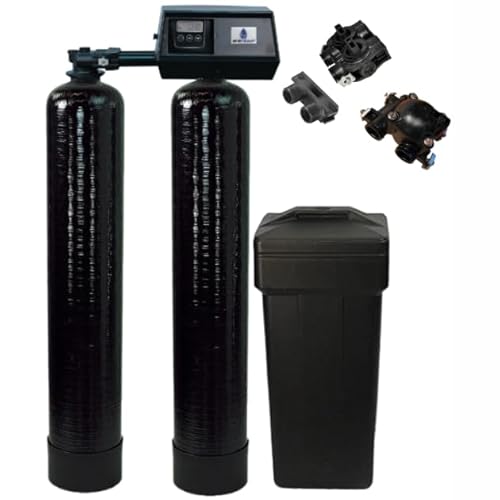
The AFWFilters Complete Twin Tank Water Softener is an innovative solution designed to ensure a constant supply of soft water. Unlike traditional single-tank systems, this twin-tank design allows for one tank to undergo the regeneration process while the other continues to provide soft water. This means you’ll never experience a downtime in soft water availability, making it ideal for households with high water usage or those who simply want the convenience of uninterrupted service.

48k Digital Dual Tank Alternating IRON PRO Water Softener with 9100SXT
Frequently Asked Questions
How Often Should I Refill the Salt in My Brine Tank?
I’d practically live at my water softener if I didn’t monitor salt levels! You’ll refill your brine tank every few months, though your refill schedule depends on water hardness. I constantly check salt levels to guarantee peak regeneration cycles.
Can I Use Different Types of Salt in My Brine Tank?
I’d recommend sticking with your softener’s recommended salt type for pellet compatibility. You can use rock, solar, or evaporated salt, but always check your manual first to guarantee proper regeneration performance.
How Much Does a Brine Tank Replacement Cost?
I’ll be straight with you—a brine tank replacement isn’t pocket change. You’re looking at $300-$800 for the tank itself, but don’t forget labor estimates typically run $150-$300, making your total replacement cost $450-$1,100.
Can I Manually Add Water to My Brine Tank?
Yes, you can manually top your brine tank for an emergency refill if needed. However, I’d recommend letting your system’s automatic float control handle regular water additions to maintain proper salt concentration levels.
What Is the Ideal Brine Tank Size for My Home?
I’d recommend sizing your brine tank based on your household capacity and family size. Most homes need 30-40 gallon tanks. Here’s the kicker: one gallon absorbs roughly 3 pounds of salt, making proper sizing essential for efficient regeneration cycles.