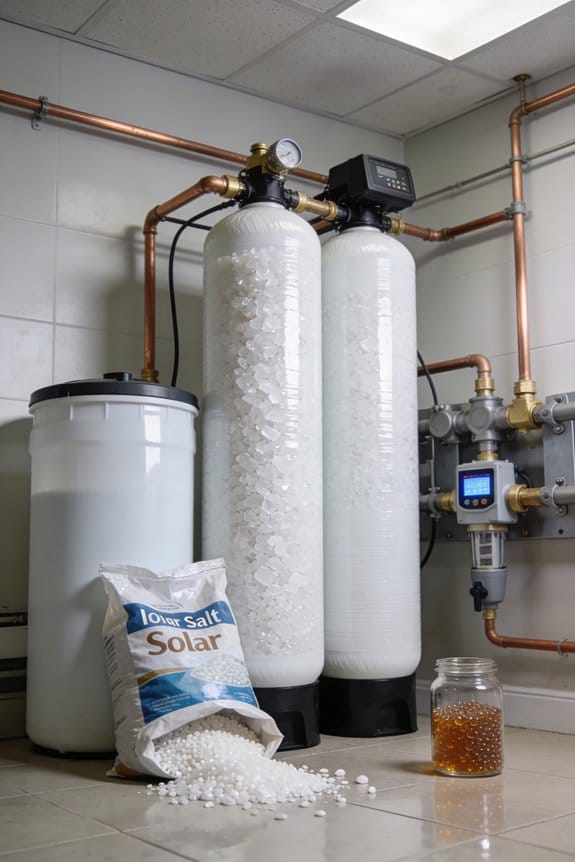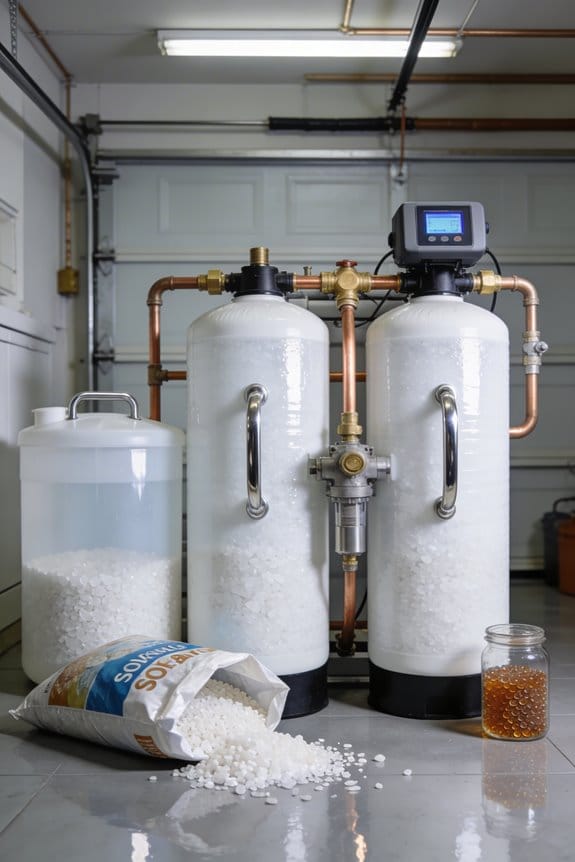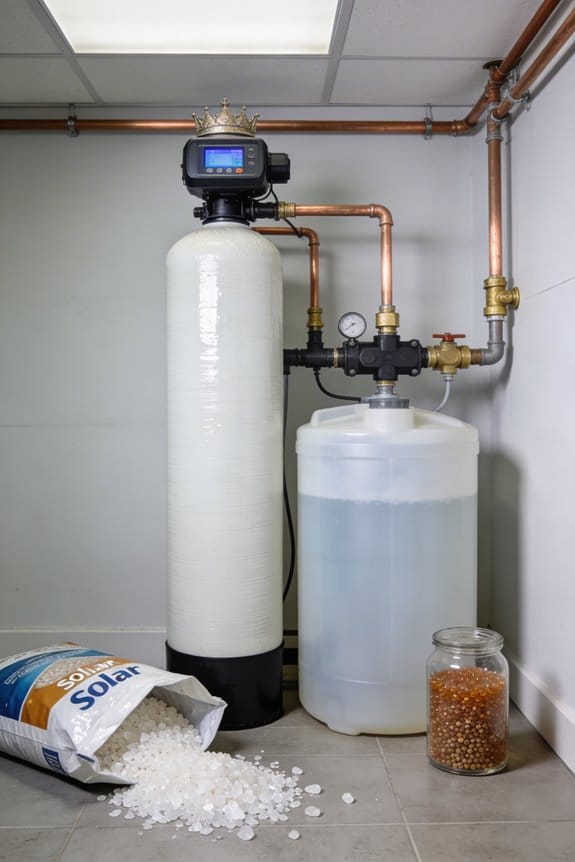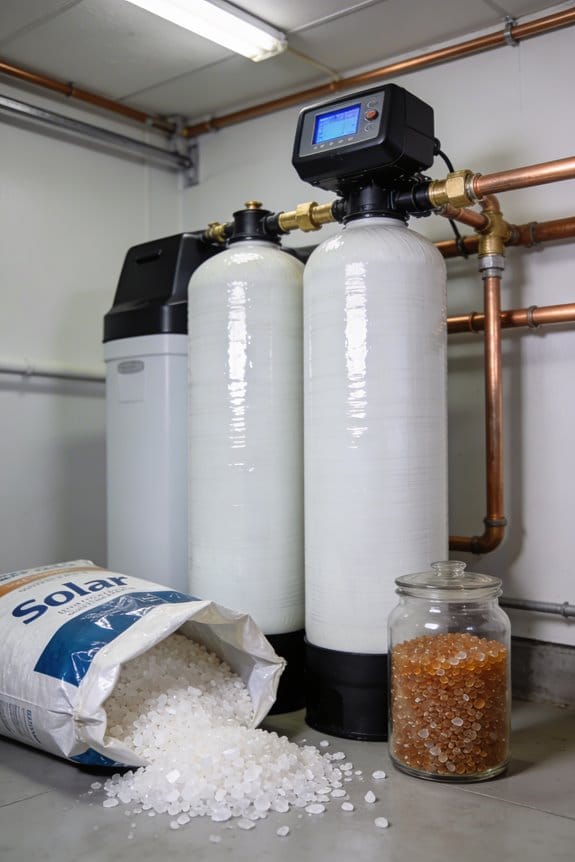
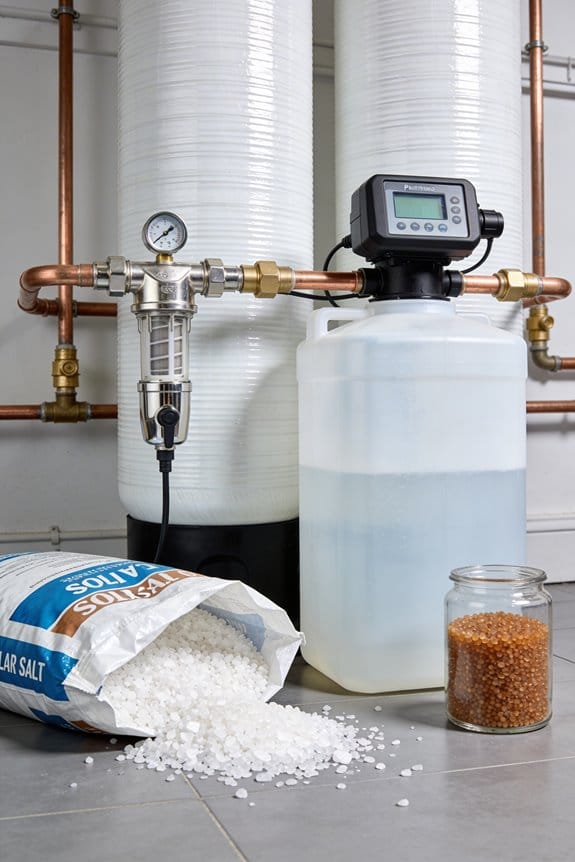

Water softeners use salt as a regenerant to recharge resin beads, which remove hard minerals like calcium and magnesium through ion exchange. During this process, sodium ions replace those minerals in your water. Don’t worry though—you’re not actually drinking salt; you’re getting sodium ions instead. The amount of sodium added is minimal, roughly 1% of your daily intake from extremely hard water. If you’re concerned about sodium for health reasons, understanding your specific situation will help you determine the best approach.
Key Takeaways
- Salt regenerates resin beads during softening; sodium ions replace calcium and magnesium minerals.
- Brine solution flushes away trapped minerals and recharges resin beads using salt as regenerant.
- Salt itself doesn’t remain in softened water; only sodium ions stay behind.
- Softened water tastes non-salty because sodium ions, not salt compounds, remain in water.
- Potassium chloride offers a sodium-free alternative that performs identical ion exchange regeneration.
Why Softeners Add Sodium (and Why It Matters)
Water softeners don’t actually add salt to your water—they add sodium, which is an important distinction that many people misunderstand. Here’s how it works: during the ion exchange process, sodium ions replace calcium and magnesium minerals on resin beads. Your softener uses salt as a regenerant to recharge these resin beads, but the salt itself doesn’t end up in your drinking water. Instead, salt breaks down to release sodium, which performs the actual softening work. The brine solution created from salt flushes away trapped minerals, allowing the resin to recharge. Once you understand this distinction between salt and sodium, you’ll realize that softened water contains minimal sodium—far less than you’d find in everyday foods.
Recommended Products

Dual alternating tanks never run out of soft water

EASILY WIPE AWAY SCALE: HydroFlow’s advanced technology electronically treats water to prevent minerals from binding to pipes, water heaters, faucets, etc. While it does not prevent the white stuff/scale, the HydroFlow unit prevents the minerals from binding to your pipes and faucets making clean up a simple wipe.

Complete Twin tank water softener provides continuous soft water. Ships Loaded
Is That Sodium Actually Dangerous?

Now that you understand the difference between salt and sodium, you might wonder whether the sodium in softened water poses any real health risks. The truth is, the sodium content in softened water represents only about 1% of your daily sodium intake. Even with extremely hard water, you’re consuming roughly 20-28 mg of sodium per 8-ounce glass, which is minimal compared to common foods like bread or steak. For most healthy adults, this level shouldn’t materially affect your health or cardiac risk. However, if you have a history of high blood pressure, you should consult your doctor about drinking softened water. Those with kidney problems may need to avoid sodium-based softeners entirely, since potassium chloride alternatives could complicate certain renal conditions. Understanding these distinctions helps you make informed decisions about your water treatment.
Recommended Products

Complete Twin tank water softener provides continuous soft water

Cleaner, Healthier Water from Every Tap in Your Home – Specially designed for well water. High-performance water filter system for great-tasting water, improved air quality, healthier hair & skin, and protected pipes & appliances

PROTECTS PLUMBING AND APPLIANCES FROM HARD WATER SCALE WITH ZERO WATER WASTE FILTERS DIRT, SAND, SILT, CLAY, RUST, AND OTHER DEBRIS WITH REUSABLE SEDIMENT FILTER CARTRIDGE CAN BE USED FOR HOMES WITH UP-TO 5 BATHROOMS EASY INSTALLATION, LOW MAINTENANCE 120-DAY SATISFACTION GUARANTEE
Who Needs to Be Careful With Sodium Softeners
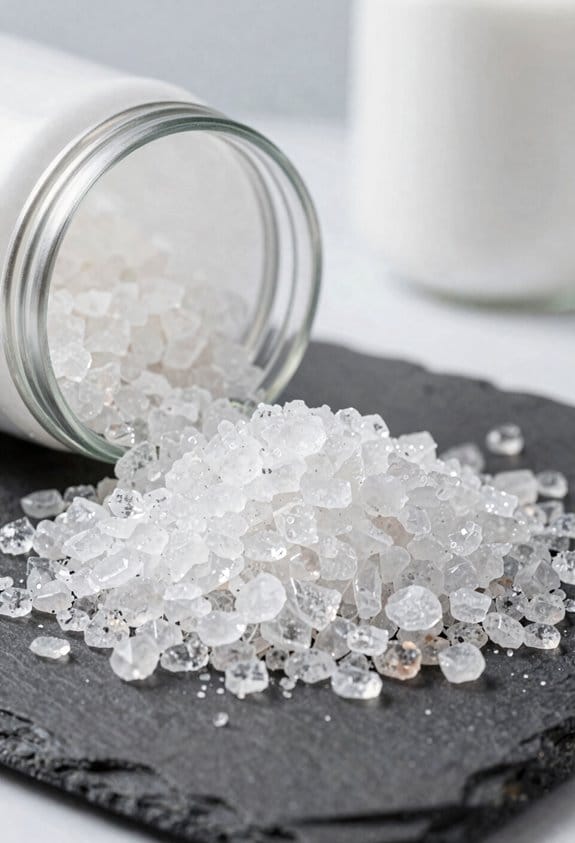
While most people can safely drink softened water, certain individuals should exercise caution with sodium-based softeners. If you have high blood pressure, I’d recommend consulting your doctor before consuming softened water regularly. People with kidney or renal problems should be particularly careful, since sodium can complicate their conditions; potassium chloride softeners might be a better alternative for you.
Pregnant individuals and salt sensitive athletes should also monitor their sodium intake closely. Since these groups need stricter dietary sodium control, drinking softened water could push them over their recommended daily limits. Consider installing unsoftened taps in your kitchen for drinking and cooking, which reduces sodium consumption while maintaining softened water’s benefits elsewhere. This approach lets you enjoy softer water without compromising your health needs.
Recommended Products

Perfect for Families Large or Small: Designed for households of 1–5+ people dealing with hard water. The EcoPure EP42 treats up to 42,000 grains and removes up to 11 ppm of clear water iron, protecting your entire home from scale buildup and stains
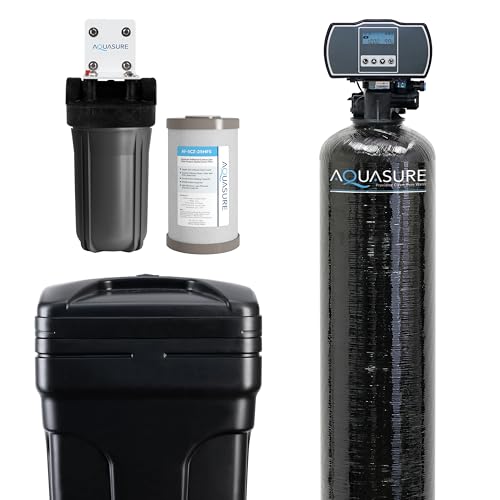
💧【 PERFECTLY DESIGNED FOR 3-4 BATHROOMS 】The Aquasure Harmony Series professional grade whole house water softener is rated to treat 50,000 grains of water hardness, removing skin damaging hard minerals like calcium and magnesium that clog up the skin pore and causes irritation.

💧【 PERFECTLY DESIGNED FOR 3-4 BATHROOMS 】The Aquasure Harmony Series is the professional grade water softener that delivers ultra-softened water to every outlet throughout your entire home.
Salt vs. Sodium: What’s Actually Different

How exactly do salt and sodium differ when they’re so often used interchangeably? The chemical difference is significant: salt is sodium chloride, a compound made of two elements bonded together, while sodium is just one element. Your water softener doesn’t actually add salt to your water; it adds only sodium ions. This distinction matters for your dietary impact because you’re consuming sodium, not salt. The brine solution uses salt as a regenerant to clean the resin beads, but that salt gets flushed away. What remains in your softened water is minimal sodium—not the salty taste you’d expect. Understanding this difference helps clarify why softened water doesn’t taste salty despite containing sodium.
Three Ways to Lower Your Softener’s Sodium

If you’re concerned about sodium levels in your softened water, you can take steps to bring down the amount that ends up in your tap water. First, you can reduce salt consumption by switching to potassium chloride instead of sodium chloride for regeneration. This alternative works similarly but adds potassium rather than sodium to your water. Second, install a bypass tap on your softener system, allowing you to use unsoftened water for cooking and drinking while still enjoying soft water elsewhere. Third, consider a point-of-use system that softens only specific areas needing it. These methods help you manage sodium intake while maintaining the benefits of water softening throughout your home.
Recommended Products

Bulk Purchase: 6 bags of high-quality water softener salt crystals, with each bag weighing 40 lbs.

240 lbs Total Supply (6 x 40 lb Bags) – Long-lasting value pack designed to keep your water softener running efficiently with fewer refills.

HIGH-PURITY SODIUM CHLORIDE: Made from all-natural solar salt with no additives, these water softener salt crystals are up to 99.8% pure for reliable, effective water softening.
Potassium Chloride: The Sodium-Free Alternative
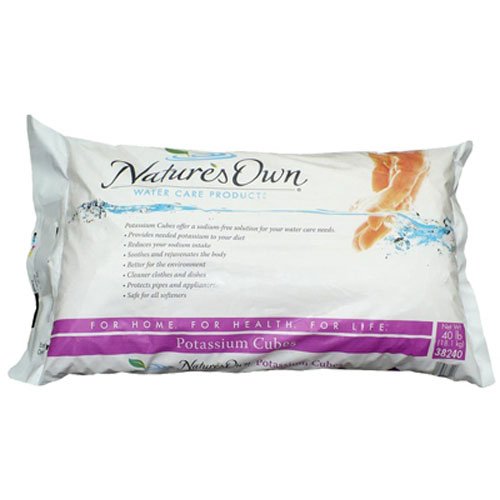
For those seeking to minimize sodium in their softened water, potassium chloride offers a practical substitute that accomplishes the same water-softening results through the ion exchange process. Instead of using sodium ions to replace calcium and magnesium, potassium benefits users by performing the identical regeneration function without adding sodium to drinking water.
When you choose potassium chloride for chloride sourcing, you’re selecting a medically safer option, particularly if you have high blood pressure or kidney concerns. The regeneration process works identically; potassium ions attach to resin beads and displace hardness minerals just as effectively as sodium does.
You’ll find potassium chloride readily available at stores selling softener salt. While it costs more than traditional sodium chloride, many people consider the health advantages worth the additional expense for their families.
Recommended Products

Sodium chloride tablets may be used to replace the sodium lost from the body and thereby return sodium chloride levels to normal.

BULK VALUE: Six 40-pound bags of water softener salt pellets for extended supply and convenience
This product adds a great value
Frequently Asked Questions
How Often Should I Check and Refill My Water Softener’s Brine Tank?
I’d recommend checking your brine tank at least monthly to guarantee it’s functioning properly. You’ll want to keep it at least half-full, refilling seasonally based on your household’s water usage and softening demands.
Why Doesn’t Softened Water Taste Salty if Sodium Is Present?
I’ll explain why you don’t detect saltiness: sodium perception differs from salt perception, and your taste thresholds simply aren’t triggered. The sodium concentration is too low for your palate to register the salty flavor you’d expect.
Can I Install Unsoftened Water Taps for Specific Household Uses?
Yes, you can install unsoftened water taps using bypass valves to direct hard water to specific faucets. I’d recommend this for cooking and drinking to reduce your sodium intake from softened water.
How Does the Ion Exchange Process Work on the Resin Beads?
I’ll explain how ion exchange works on your resin beads. Calcium and magnesium ions attach to negatively-charged beads while sodium ions replace them. During resin regeneration, concentrated brine solution flushes out trapped hardness minerals, recharging the beads for continued softening.
What Happens to the Excess Brine Solution During Regeneration Cycles?
During regeneration, I’ll tell you that the excess brine discharge—containing hardness minerals and concentrated salt solution—gets flushed directly down your drain as waste handling removes it from the system.