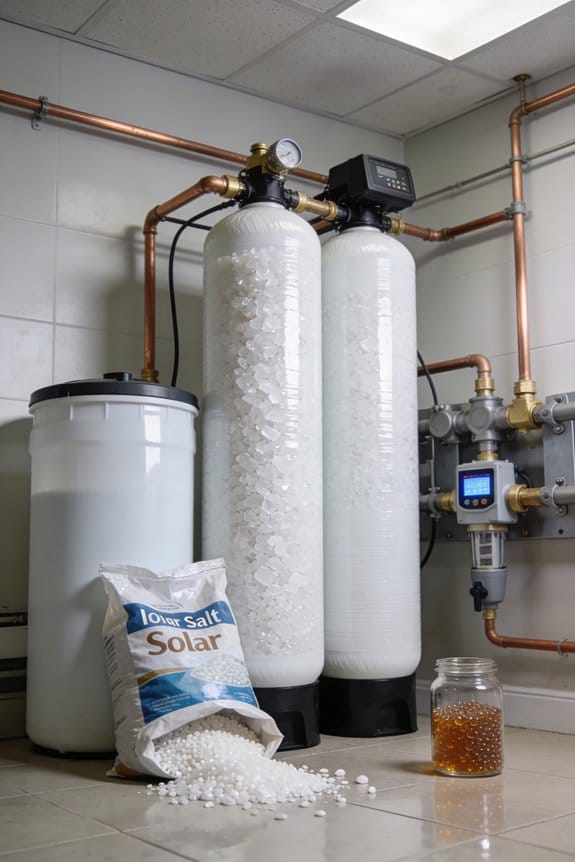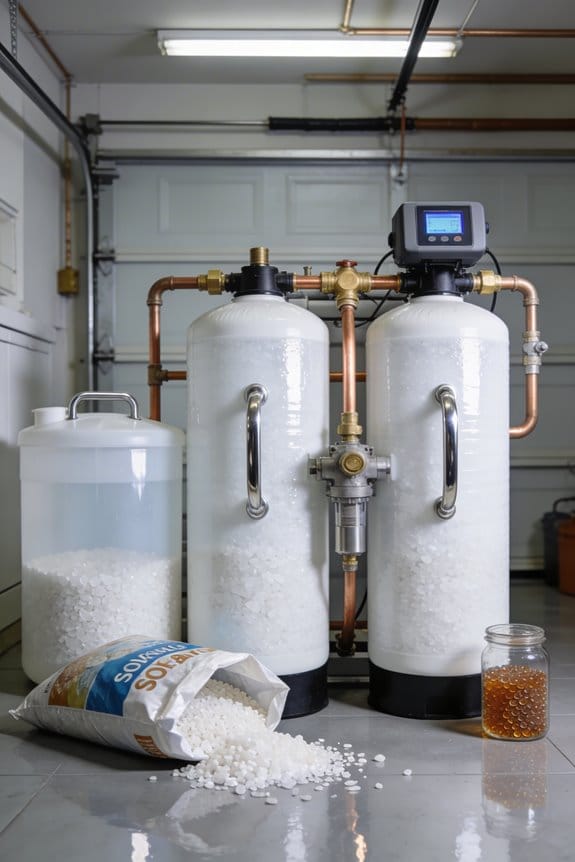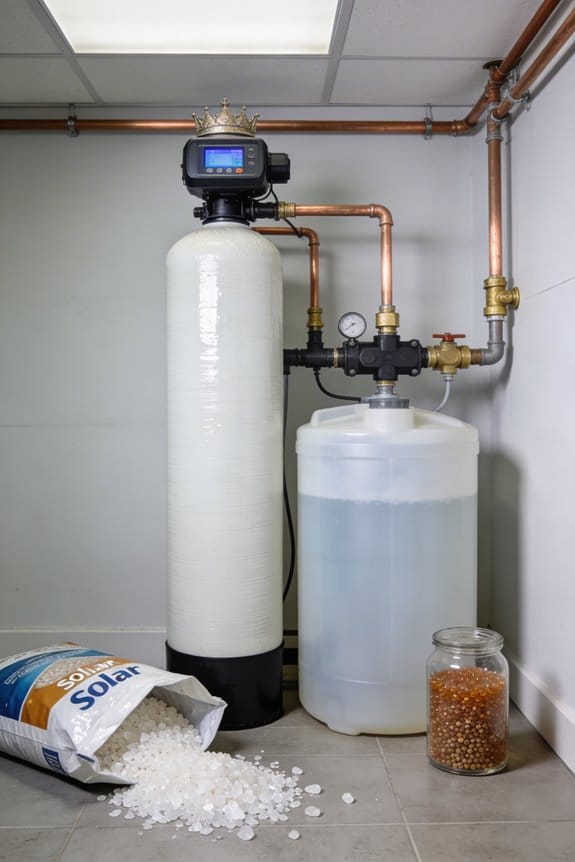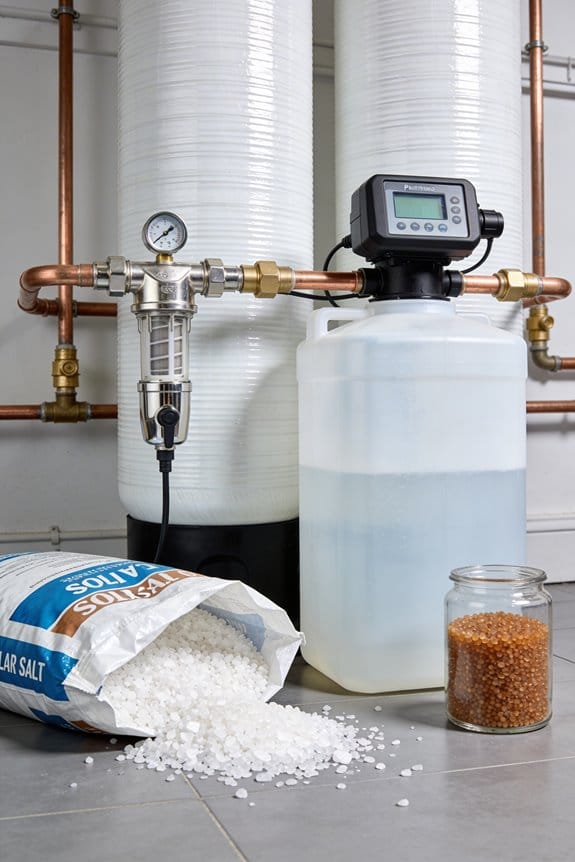
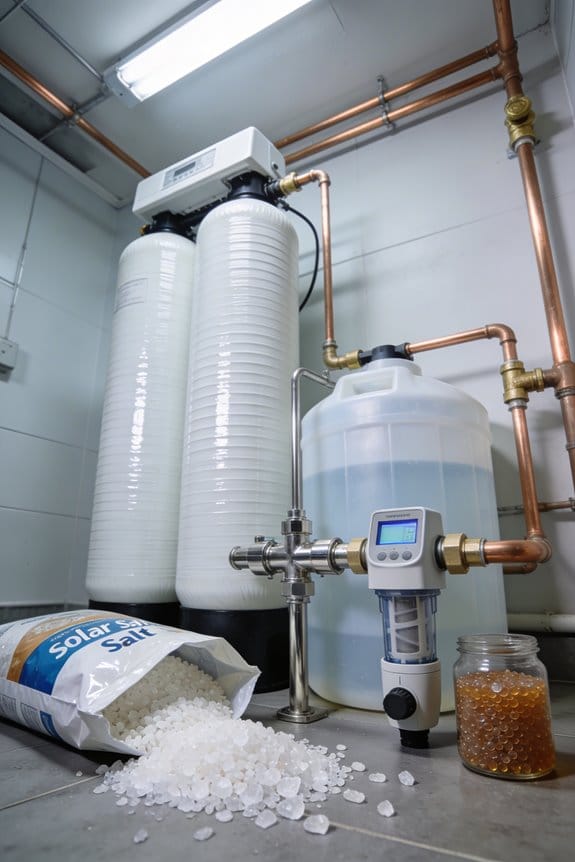

Water softener salt comes in four main types. Rock salt is the cheapest option but contains impurities that require frequent tank cleaning. Solar salt offers mid-range pricing with fewer impurities produced through seawater evaporation. Evaporated salt provides the highest purity at 99.6%, reducing maintenance and extending system life, though it costs more upfront. Potassium chloride works for low-sodium diets but costs considerably more and regenerates less efficiently. Your choice depends on water hardness, budget, and system type—factors I’ll explore further.
Key Takeaways
- Rock salt is the most affordable option but contains higher impurities requiring frequent maintenance and tank cleaning.
- Solar salt is produced by evaporating seawater and offers mid-range pricing with fewer impurities than rock salt.
- Evaporated salt provides the highest purity at 99.6%+, minimizing sediment buildup and reducing maintenance frequency significantly.
- Potassium chloride is a sodium-free alternative suitable for dietary restrictions but costs 20-30% more and requires higher dosages.
- Specialty salts like “Rust Defense” contain additives to prevent iron buildup in systems with high-iron water conditions.
Water Softener Salt Types: Quick Comparison Guide
When you’re shopping for water softener salt, you’ll quickly discover there’s no single “best” option—the right choice depends on your water hardness level, budget, and system type. Consumer preferences vary widely based on individual circumstances and water conditions. Rock salt offers affordability but requires frequent maintenance due to impurities. Solar salt balances cost and purity, making it popular for moderate hardness. Evaporated salt provides the highest purity, ideal for high-efficiency systems that benefit from faster regeneration timing and reduced buildup. Potassium chloride serves those limiting sodium intake, though it costs more and works less efficiently. Understanding these differences helps you select salt that matches your specific needs, ensuring peak system performance and minimal maintenance demands.
Rock Salt: Budget Option (And When It’s Not Enough)
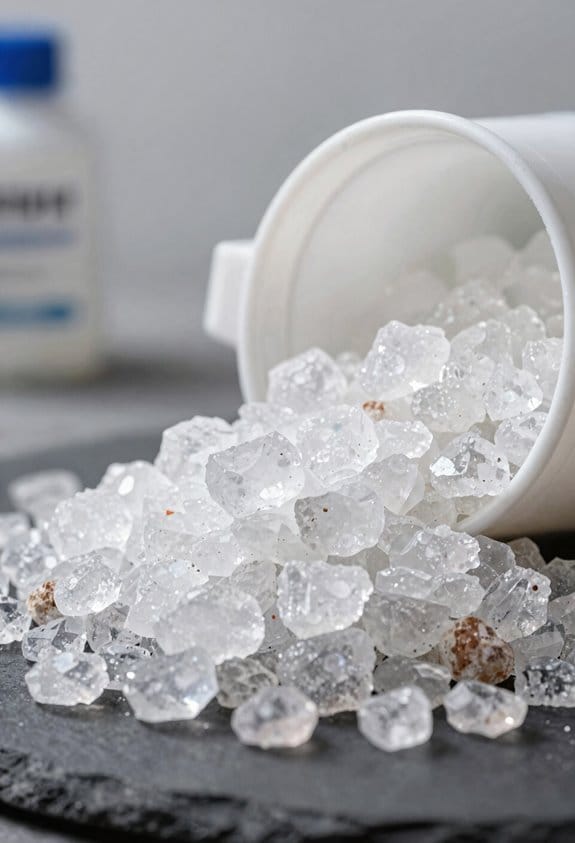
Rock salt emerges as the most economical choice when you’re looking to minimize upfront costs on water softener maintenance, since it’s mined directly from underground salt deposits and requires minimal processing compared to other options. However, this affordability comes with tradeoffs. Rock salt contains higher impurity levels, which leads to sediment and mineral accumulation within your brine tank over time. This impurity buildup means you’ll need to perform maintenance frequency checks more regularly than with purer salt varieties. While rock salt works adequately for moderate water hardness levels, the increased cleaning demands and tank maintenance can eventually offset initial savings. If your water hardness exceeds moderate levels or you prefer minimal upkeep, investing in purer salt alternatives may prove more practical long-term.
Recommended Products

PROTECTS PLUMBING AND APPLIANCES FROM HARD WATER SCALE WITH ZERO WATER WASTE FILTERS DIRT, SAND, SILT, CLAY, RUST, AND OTHER DEBRIS WITH REUSABLE SEDIMENT FILTER CARTRIDGE CAN BE USED FOR HOMES WITH UP-TO 5 BATHROOMS EASY INSTALLATION, LOW MAINTENANCE 120-DAY SATISFACTION GUARANTEE

Salt-Free Scale Prevention & Healthy Minerals Retention: Our Whole House Salt-Free Water Softener utilizes an advanced ion exchange resin to effectively inhibit scale formation throughout your home's plumbing and appliances. Unlike traditional softeners, it smartly retains beneficial calcium and magnesium minerals in your water, providing scale-free protection without removing healthy elements
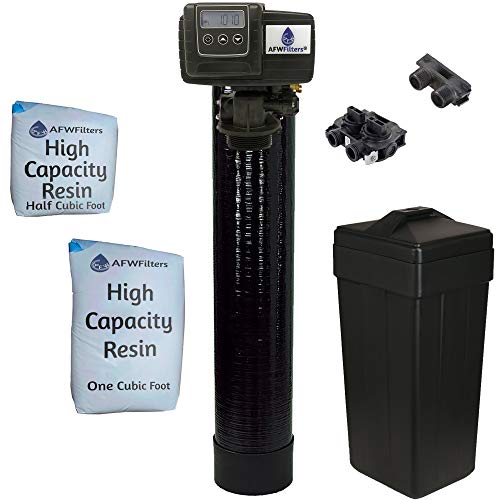
Can be used on any kind of water supply to remove hard water and other elements from your water
Solar Salt: Fewer Impurities, Slightly Higher Cost
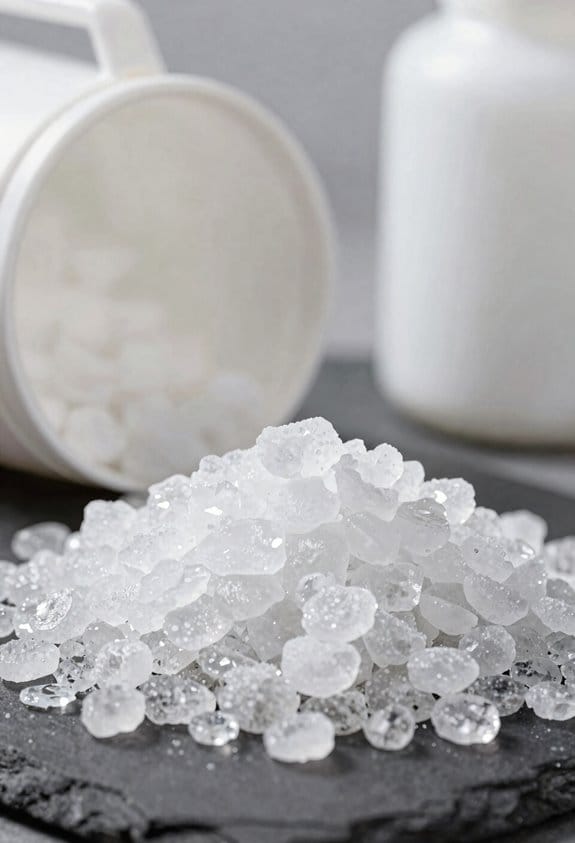
If you’re willing to spend a bit more than rock salt but want markedly fewer impurities in your water softener system, solar salt offers a practical middle ground. I’d recommend considering this option because the manufacturing process—evaporating seawater using natural sunlight—produces cleaner crystals with minimal sediment. You’ll find solar salt available in both crystal and pellet forms, each dissolving efficiently in your brine tank. The reduced impurities mean less maintenance work for you overall. Additionally, the environmental impact is favorable since it’s naturally derived without intensive mining operations. While it costs slightly more than rock salt, solar salt’s improved purity makes it ideal for households with moderate water hardness, providing better performance without the premium price of evaporated salt.
Evaporated Salt: Premium Purity for High-Efficiency Systems
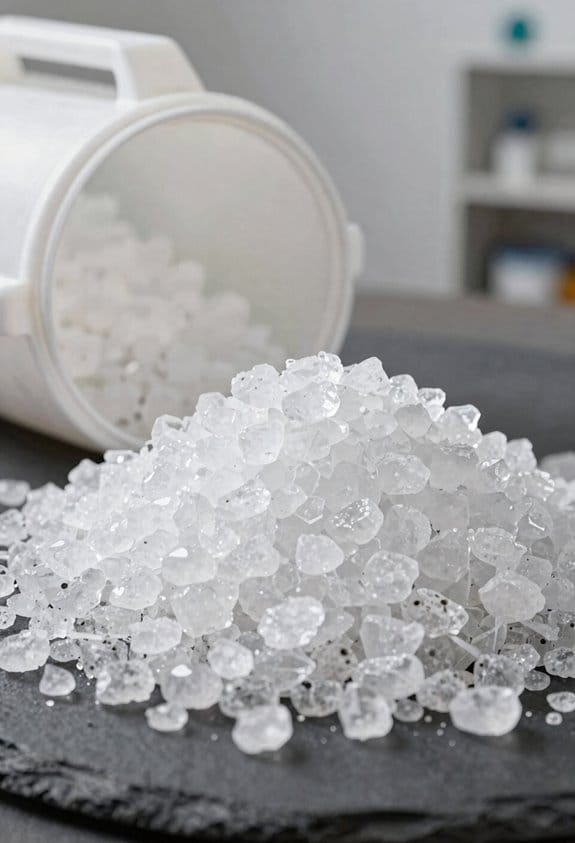
For those seeking the highest purity level available in water softener salt, evaporated salt represents the top tier option. I’d recommend this choice if you own a high-efficiency water softening system, since evaporated salt typically contains 99.6% or higher sodium chloride purity.
The evaporated benefits become apparent through reduced residue and fewer clogs in your brine tank, meaning you’ll spend less time maintaining equipment. Created by heating saltwater to remove moisture, this production method eliminates most impurities that other salt types contain.
Purity maintenance matters markedly for system longevity. Because evaporated salt dissolves completely and leaves minimal buildup, your softener’s regeneration efficiency improves substantially. While it costs more than rock or solar salt, the decreased cleaning requirements and enhanced performance justify the investment for demanding applications.
Recommended Products
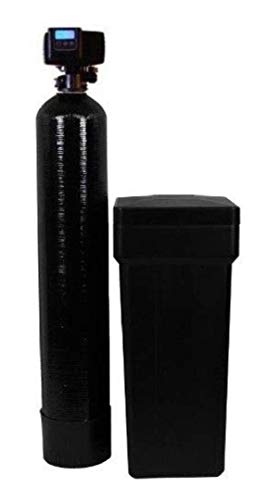
High flow whole house water softener for larger homes

Aquasana SimplySoft 40,000 Grain Water Softener Base Tank & Cabinet System is ideal for homes with up to 5 people and 4 bathrooms. This system comes with a 5/10-Year Limited Warranty so you can be confident in your purchase. Call 866-662-6885 for customer service and installation support.

Perfect for Families: Designed for households of 1–4 people battling hard water. The EcoPure EP31 treats up to 31,000 grains to protect your home from mineral buildup, stains, and scale damage
Potassium Chloride: The Low-Sodium Alternative
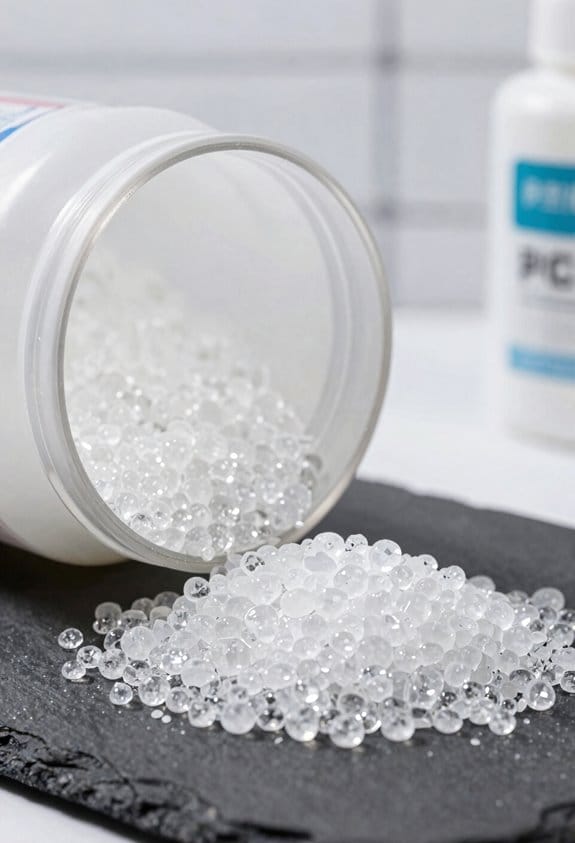
Most water softener systems use sodium chloride, but potassium chloride offers a meaningful alternative if you’re watching your sodium intake or concerned about environmental impact. Since potassium chloride contains no sodium, it delivers significant low sodium benefits for people managing dietary restrictions or hypertension. Additionally, using potassium chloride reduces environmental impact by eliminating sodium discharge into wastewater systems, which can harm aquatic ecosystems and soil quality.
However, potassium chloride has drawbacks worth considering. It’s approximately 30% less efficient than sodium chloride, requiring higher dosages and more frequent regeneration cycles. The product costs substantially more and may harden in freezing temperatures, complicating maintenance. Despite these limitations, potassium chloride remains an excellent choice for health-conscious households prioritizing reduced sodium consumption and environmental responsibility.
Recommended Products

Bulk Purchase: 6 bags of high-quality water softener salt crystals, with each bag weighing 40 lbs.

Sodium chloride tablets may be used to replace the sodium lost from the body and thereby return sodium chloride levels to normal.

240 lbs Total Supply (6 x 40 lb Bags) – Long-lasting value pack designed to keep your water softener running efficiently with fewer refills.
Salt Forms: Why Pellets Beat Crystals (And When They Don’t)
Whether you’ve chosen sodium chloride for efficiency or potassium chloride for health reasons, your next decision involves selecting the right salt form, since water softener salt comes in several varieties that affect how well your system operates and how much maintenance you’ll need to perform. Pellets offer superior dissolution rate and reduce dust compared to crystals, making them ideal for most households. Their compact shape minimizes bridging, where salt forms an arch above brine water. However, pellet maintenance requires occasional monitoring to prevent clumping in humid conditions. Crystals dissolve quickly but create more dust and sediment. Cubes and blocks suit high-efficiency systems. Your choice depends on climate, system type, and how frequently you’re willing to inspect your brine tank.
Salt Purity and Tank Life: What You Actually Need to Know
After you’ve selected your salt form, the purity level of that salt becomes one of the most important factors determining how long your water softener’s brine tank will actually last. Higher purity salts, like evaporated salt at 99.6% pure, dissolve completely and leave minimal residue behind. Lower purity options such as rock salt contain more impurities that accumulate as sediment, increasing tank corrosion over time. This buildup forces your system to work harder during regeneration cycles. When you choose purer salt, you’ll notice reduced maintenance frequency and fewer cleaning sessions needed. Evaporated salt minimizes clogs and extends your tank’s lifespan markedly. Though premium salts cost more initially, they ultimately save you money by reducing repairs and replacement costs associated with corroded, damaged tanks.
Do You Have Iron or Rust? Specialty Salt Solutions
If your water contains iron or rust deposits, selecting the right salt becomes even more critical than general purity concerns. I’d recommend considering specialty salts formulated specifically for iron removal, as they’re designed to handle these challenging situations more effectively than standard options.
Rust treatment salts contain additives that prevent iron buildup within your water softener’s brine tank, which can cause expensive damage over time. These specialty formulations work by inhibiting rust formation during the regeneration process, extending your system’s lifespan markedly.
Products labeled “Rust Defense” or “Iron Defense” offer targeted solutions for high-iron water conditions. While they cost more than conventional salt, their iron removal capabilities protect your equipment investment and maintain your softener’s performance at peak levels, making them worthwhile for affected households.
Recommended Products

Cleaner, Healthier Water from Every Tap in Your Home – Specially designed for well water. High-performance water filter system for great-tasting water, improved air quality, healthier hair & skin, and protected pipes & appliances

Salt-Free, Citrus-Based Softening: Uses CitraCharge technology to soften water without salt while retaining essential minerals, preventing scale buildup, and avoiding the slick feel of traditional salt-based systems.

AFWFilters Platinum air injection system to remove the highest levels of iron and sulfur from your water without using chemicals or salt. Just uses air and your water.
Match Salt to Your Water Hardness Level
Your water hardness level directly determines which salt type will serve your softener most effectively, so understanding this measurement becomes essential before making a purchase. For moderate hardness levels, rock salt or solar salt works well, though rock salt requires higher maintenance frequency due to impurities that accumulate in your tank. If you’re dealing with harder water, evaporated salt becomes the better choice because its superior purity minimizes sediment buildup and reduces your maintenance frequency considerably. Potassium chloride suits those with sodium restrictions, though it’s less efficient and demands dosage adjustments. Test your water hardness first, then match the appropriate salt type to your specific needs and equipment capabilities for peak softener performance.
Where to Buy and What Prices to Expect
Where can you find water softener salt, and what should you expect to pay? You’ll discover water softener salt at local retailers like home improvement stores, hardware shops, and grocery stores, where rock salt typically costs $5-$8 per bag. Online marketplaces such as Amazon and Walmart offer broader selection and competitive pricing, often ranging from $4-$12 depending on type and quantity. Evaporated salt commands premium prices, usually $10-$15 per bag due to its purity. Bulk purchasing directly from suppliers reduces per-unit costs markedly. Solar salt falls between rock and evaporated options, averaging $7-$11. Potassium chloride alternatives cost 20-30% more than sodium-based options. Shopping around between retailers helps you find better deals while matching salt type to your water hardness needs.
Recommended Products

STOP SCALE BUILDUP: HydroFLOW’s technology prevents scale from forming in your home’s water systems, keeping your faucets and shower nozzles running smoothly and efficiently.

[Revolutionary Water Treatment] Experience unparalleled water quality enhancement with iSpring EDV2 electronic descaler. Say goodbye to hard water woes without resorting to chemicals, salt, or tedious maintenance. Witness a noticeable improvement in just 12 weeks.

F125050000 4PK WTR Soft Salt Bar - Quantity 1
Frequently Asked Questions
How Often Should I Replace the Salt in My Water Softener Tank?
I’d say your salt tank’s a thirsty beast demanding regular feeding. I recommend monthly checks and seasonal adjustments based on your water hardness, household size, and usage patterns to keep your softener running smoothly.
Can I Mix Different Types of Salt in My Softener System?
I’d recommend against mixing granulated rock salt with blending pellet block varieties in your softener. Different dissolving rates can cause bridging and reduce efficiency. Stick with one type for peak performance.
What Signs Indicate My Water Softener Needs Salt Replenishment?
You’ll notice your water softener needs salt when you see a low level in the tank or detect salt bridging—a hardened crust that prevents proper dissolution. Hard water returning also signals depletion.
Does Water Softener Salt Expire or Lose Effectiveness Over Time?
Water softener salt doesn’t expire like milk does, but I’ll tell you it can lose its punch over time. Extended shelf life depends on storage conditions—moisture and humidity cause performance degradation, reducing its softening effectiveness gradually.
How Do I Know Which Salt Type Is Compatible With My System?
I’d recommend checking your softener’s manual for resin compatibility requirements. Most systems work with any salt type, but I verify brine concentration needs and crystal size since pellets won’t bridge like crystals do.