

Hard and soft water differ in dissolved minerals, mainly calcium and magnesium. Hard water contains these minerals, which build up as limescale in pipes and appliances, requiring more maintenance. Soft water has had these minerals removed or reduced, protecting your plumbing and extending appliance life. However, the choice involves tradeoffs: hard water may taste better and provide beneficial minerals, while softened water sometimes contains added sodium. Understanding your water’s hardness level helps you decide whether treatment’s benefits justify the costs and potential drawbacks you’ll discover next.
Key Takeaways
- Hard water contains dissolved calcium and magnesium minerals; soft water has most hardness minerals removed or reduced through treatment.
- Hard water causes limescale buildup in pipes and appliances, reducing efficiency; soft water prevents deposits and extends appliance lifespan.
- Hard water leaves mineral residue on skin and hair, causing dryness; soft water rinses cleanly, preserving natural oils.
- Hard water reduces soap’s cleaning ability, requiring more product; soft water lathers easily and cleans more effectively.
- Softening systems use ion exchange, reverse osmosis, or crystallization; costs range from $1,500–$3,000 with ongoing maintenance and salt replacement.
What Makes Water Hard or Soft: Calcium, Magnesium, and Minerals
Water’s hardness or softness depends on the minerals dissolved within it, primarily calcium and magnesium ions that accumulate as water travels through soil and rock. These minerals enter water naturally through geological sources like limestone and chalk deposits. When rainwater seeps underground, it becomes slightly acidic and dissolves these minerals through carbonate solubility, a chemical process that increases water hardness. I should explain that water hardness gets measured in milligrams per liter of calcium carbonate equivalent, ranging from 0–60 for soft water to 181+ for very hard water. Hard water also may contain aluminum, barium, zinc, and iron, depending on the rocks it encounters. Understanding these mineral sources helps you recognize why your water’s quality varies by location and geology.
How Hard Water Clogs Pipes and Ruins Appliances
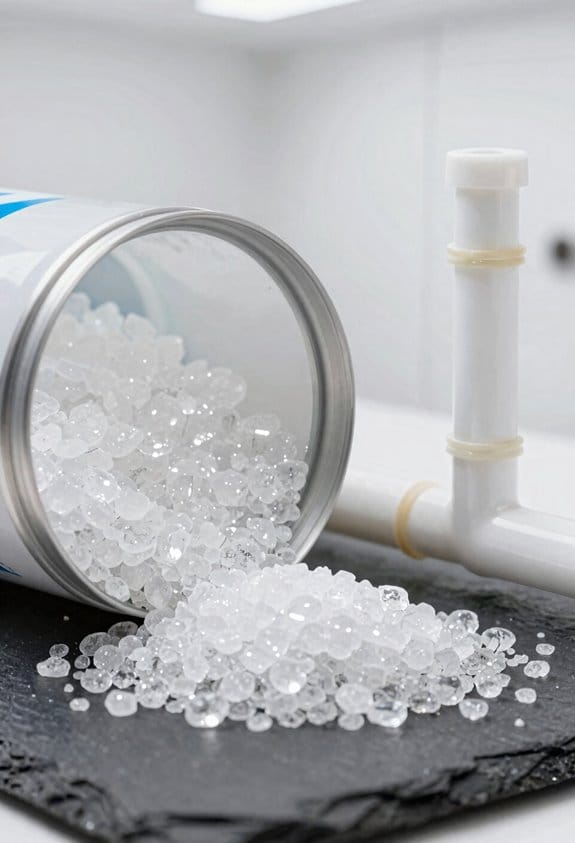
Mineral buildup from hard water creates a significant problem inside your home’s plumbing system and appliances, accumulating over time in ways you can’t always see. When calcium and magnesium deposits form, they create limescale—a hard, crusty substance that narrows pipes and reduces water flow. This mineral erosion process affects your water heater, washing machine, and dishwasher, forcing them to work harder and wear out faster. Over time, scale removal becomes necessary maintenance, requiring professional help or chemical treatments. Without intervention, clogged pipes can lead to costly repairs or complete system replacement. Soft water prevents these deposits from forming, protecting your plumbing infrastructure and extending appliance lifespan markedly, ultimately saving you money on maintenance and replacements.
Recommended Products

The WECO Backwashing filter with KL/OZ is a specialized Point-Of-Entry (POE) system designed for municipal and well water supplies. Utilizes iron reduction media consisting of manganese dioxide (MnO2) coated onto naturally mined ZEOSORB. Lightweight filtration media with various functions and properties for water treatment and remediation.

High removal capacity of iron, manganese, hydrogen sulfide. Removes suspended solids and turbidity.

✅𝗘𝗙𝗙𝗜𝗖𝗜𝗘𝗡𝗧 𝗪𝗔𝗧𝗘𝗥 𝗦𝗢𝗙𝗧𝗘𝗡𝗜𝗡𝗚: Our WECO UXC-1665 water softener system is designed to prevent mineral scale buildup on sinks, faucets, shower doors, and plumbing fixtures. This compact water softener reduces the need for frequent scrubbing and cleaning, making maintenance easier for residential and commercial spaces.
Why Hard Water Dries Out Skin and Hair
When you wash your skin or hair with hard water, the minerals dissolve into the water instead of rinsing away completely, and this mineral residue leaves a film on your skin and scalp. This residue buildup creates a barrier formation that prevents moisture from penetrating your skin and hair effectively. Since calcium and magnesium accumulate on your surface, your skin feels tight and dry, while your hair appears dull and lifeless.
Hard water also reduces soap’s cleaning ability, so you need more shampoo or body wash to create adequate lather. This extra soap can further irritate and dry out your skin. Soft water, by contrast, rinses away completely without leaving mineral deposits. Your skin retains its natural oils, and your hair becomes softer and more manageable.
Recommended Products

Rainfall 9 inch shower head angle adjustable and height adjustable handheld three spray setting ,Use rain shower head and multi-function handheld shower spa at home

Mineral Mixture (Calcium Sulfide, Zinc, and Copper): Helps to reduce free chlorine, and remove hydrogen sulfide (rotten egg smell), iron oxide (rust water), dirt, sediment, and odors.

HEIGHT ADJUSTABLE SHOWER HEAD SOLID BRASS SHOWER COLUMN: Made column itself is made of sturdy solid brass and finished in an elegant Brushed Nickel, once this column is installed, it will complement any bathroom design. You won't have to modify your current in-wall plumbing to do your installation
Hard Water vs. Soft Water: The Taste Difference
Beyond how hard water affects your skin and hair, you might’ve noticed that it also changes how your drinking water tastes. Hard water contains dissolved minerals like calcium and magnesium, which influence your mineral perception of what water should taste like. While many people assume hard water tastes worse, the minerals actually improve flavor by acting as taste differentiators. Your taste preference likely depends on what you’ve grown accustomed to drinking. Soft water, by contrast, tastes noticeably different because these minerals are removed. Artificially softened water may taste slightly salty due to sodium or salt replacement used during the softening process. Neither option objectively provides better or worse taste—it’s entirely based on personal preference and familiarity.
Are Hard Water Minerals Safe to Drink?
Since you’ve learned how hard water affects your appliances and personal care, you might wonder whether drinking it poses any health risks. The minerals in hard water, primarily calcium and magnesium, aren’t inherently harmful to your health. In fact, most added minerals from hard water are beneficial for your body, similar to bottled minerals many people purchase intentionally. These trace elements support bone health and other bodily functions. However, excessive magnesium from hard water may cause digestive issues resembling a laxative effect in some cases. Soft water, conversely, often contains higher sodium concentrations from water softening systems. Currently, no clear scientific consensus exists on whether hard or soft water is better for drinking, so either option remains generally safe for most people.
How Water Softening Systems Remove Minerals
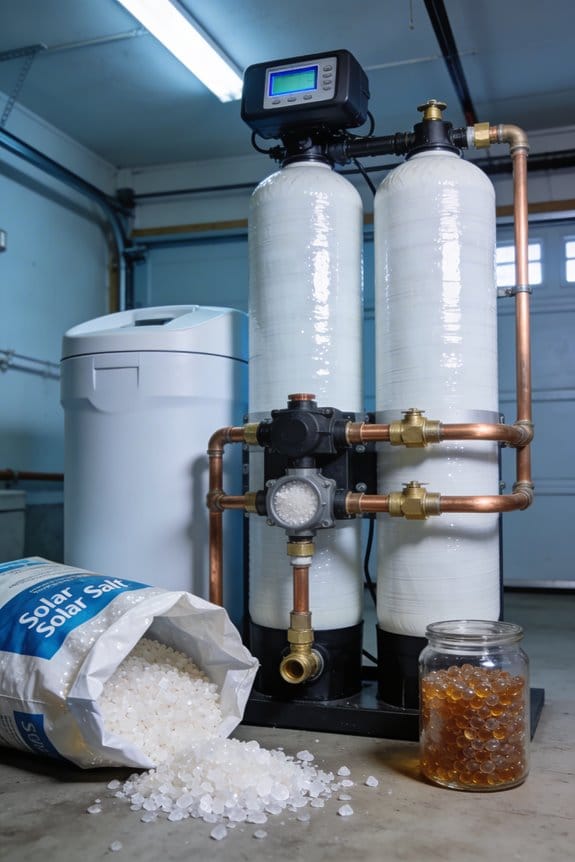
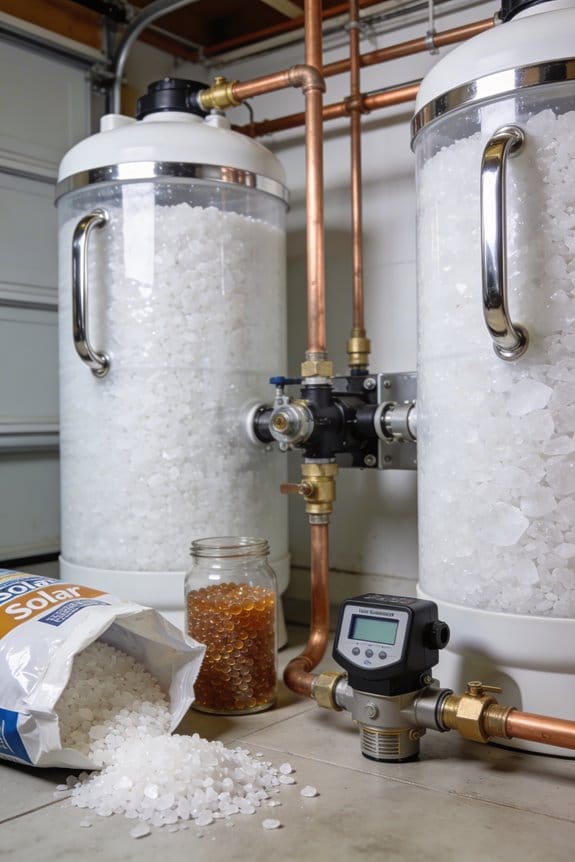
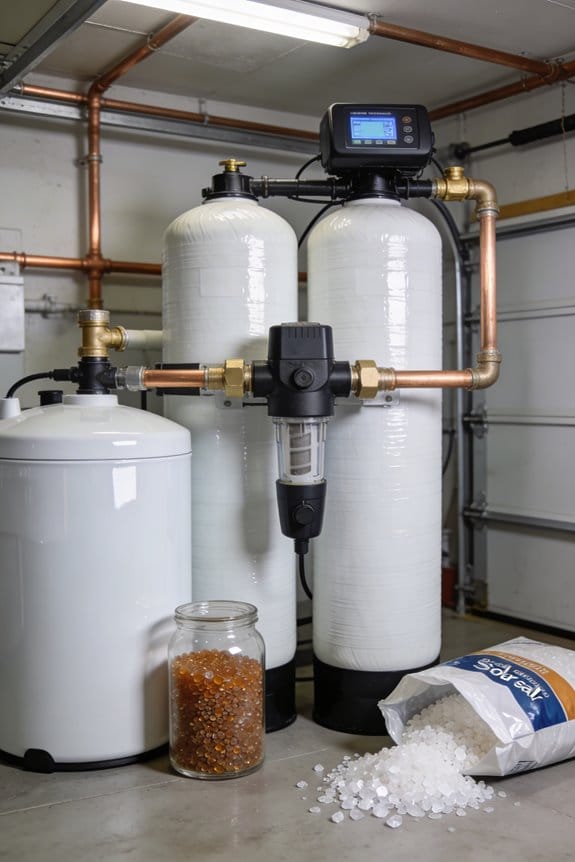
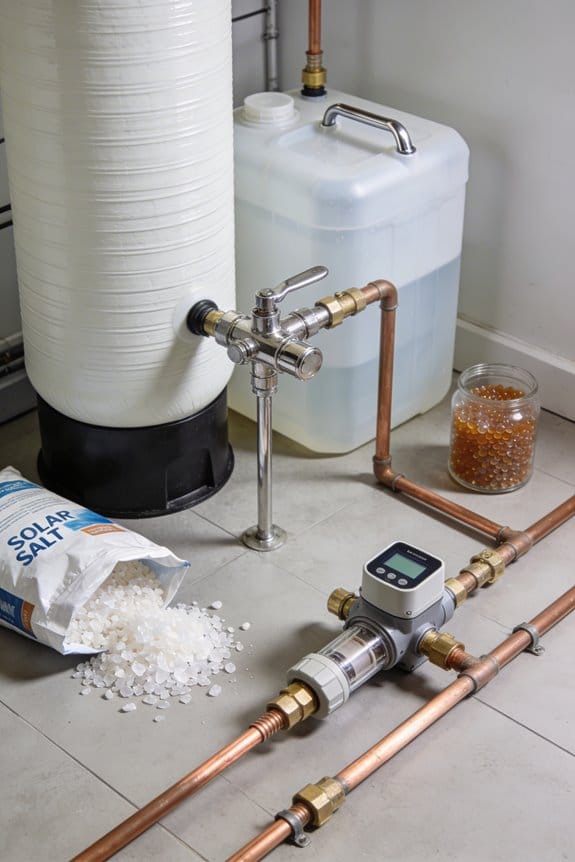
Water softening systems work by using a process called ion exchange to remove the minerals that make water hard. In this method, resin beads inside the system trap calcium and magnesium ions as water flows through them. When these beads become saturated with minerals, they need regeneration, which involves flushing them with a sodium or potassium solution to rinse away the trapped minerals. Some advanced systems use template assisted crystallization, an alternative technique that converts minerals into harmless crystals instead of removing them entirely. Both approaches effectively reduce hardness, though each has different maintenance requirements. Ion exchange remains the most common residential softening method because it’s reliable and efficient at producing noticeably softer water for household use.
Recommended Products

Point-Of-Entry (POE) whole house residential/commercial hydrogen sulfide and iron removal system for community and well water supplies.

Complete Twin tank water softener provides continuous soft water

Delivers cleaner, smoother water throughout your entire home, enhancing everyday moments from showering and cooking to drinking and cleaning
The Sodium Tradeoff in Softened Water
While ion exchange softening systems effectively remove hard minerals, they introduce a significant trade-off that you should understand before installing one in your home. Traditional water softeners use sodium chloride to regenerate resin beads, which means softened water contains elevated sodium intake levels. This matters because excessive sodium consumption contributes to high blood pressure and other health concerns, especially for people monitoring their dietary intake.
However, salt substitution options exist. Potassium-based systems provide an alternative to sodium-based softening, though they typically cost more. If you’re concerned about sodium levels, you can install a potassium chloride system instead, which effectively softens water without adding sodium to your drinking supply. Consider your household’s health needs when choosing between these softening methods.
Can Soft Water Corrode Your Plumbing?
As counterintuitive as it might seem, the very process that protects your appliances from mineral buildup can actually damage your pipes. Soft water lacks the minerals that create protective coatings inside metal pipes, leaving them vulnerable to corrosion. Without this natural mineral barrier, water can interact directly with pipe materials, causing pipe pitting, which creates tiny holes and weakens structural integrity.
This corrosion risk depends on several factors, including your pipe material, water pH levels, and your home’s plumbing age. Older metal pipes face greater vulnerability than newer installations. If you’re concerned about potential damage, you can install a corrosion control system or use a potassium-based water softener instead of sodium-based alternatives. Testing your water’s pH and consulting a plumber helps determine whether your specific situation requires additional protection measures.
Hard Water vs. Soft Water: Which Should You Choose?
How do you know whether hard water or soft water is right for your home? The answer depends on your specific circumstances and priorities. If you’re concerned about energy efficiency and appliance warranties, consider that hard water causes mineral buildup, reducing your water heater’s performance and potentially voiding warranties. Soft water prevents limescale accumulation, extending appliance life and improving efficiency. However, softening systems require maintenance and increase sodium levels. I’d recommend testing your water hardness first. For most households, moderate hard water poses minimal problems, while those with very hard water may benefit from softening. Ultimately, balancing appliance protection against system costs and water quality preferences helps you make the best choice for your situation.
Recommended Products

THIS KIT ONLY HAS MY GARDEN POOL AQUARIUM AND TERRARIUM TEST STRIPS FOR AQUARIUM TESTING, DOES NOT HAVE 4335 DISKS WHICH ARE REQUIRED FOR THIS DEVICE TO TEST AQUARIUMS PROPERLY. WE ONLY HAVE 4320 DISKS AND TEST STRIPS IN THE BUNDLE

The information below is per-pack only

Water Softening Costs and Alternatives to Consider
Installing a water softening system requires careful consideration of upfront expenses and long-term maintenance costs, which can range markedly depending on the system type and your home’s water volume. Installation costs typically run between $1,500 and $3,000 for traditional ion-exchange systems, while maintenance involves regular salt replacements and occasional repairs.
If you’re concerned about expenses or environmental impact, eco alternatives exist. Reverse osmosis systems filter minerals without adding sodium, though they waste water during operation. Magnetic or electronic descalers claim to prevent limescale without removing minerals, though scientific evidence remains limited. Chelation filters bind minerals chemically, offering another option.
Before choosing, evaluate your specific water hardness level, budget constraints, and household needs to determine whether a full softening system justifies the investment compared to alternative solutions.
Recommended Products
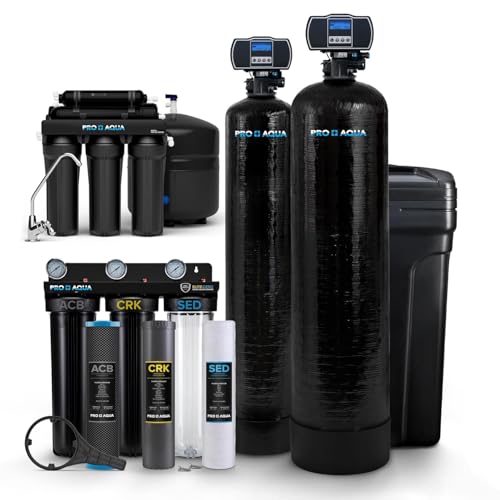
5 STAGE ULTIMATE PROTECTION: Specifically designed to provide unmatched filtration performance for well water. This whole house filtration package will provide safe water for your entire home and remove many contaminants found in well water as well as hardness.

【 SUITABLE FOR 1-3 BATHROOMS 】Ideal for small to medium households, this powerhouse duo of filter and conditioner provides high quality filtered water with a high flow rate of 20 GPM. Experience safe, soft, and odor-free water throughout your entire home.

KDF 85 Filtration: Removes TDS, Sediments, and Bad Taste from Water
Frequently Asked Questions
Does Hard Water Affect the Effectiveness of Cleaning Products Like Laundry Detergent?
Yes, hard water markedly reduces detergent effectiveness. You’ll need increased detergent dosing because minerals interfere with soap’s cleaning action. Additionally, residue buildup accumulates on fabrics, diminishing results over time.
How Often Do Water Softening Systems Need Maintenance and Regeneration Cycles?
I’d recommend checking your system’s cycle frequency monthly, though it typically regenerates every few days to weeks depending on water hardness and usage. Your filter lifespan usually lasts 5-10 years with proper maintenance.
Can You Drink Rainwater, and Does It Become Hard Water Underground?
You can drink rainwater initially, but I’d advise caution regarding rainwater safety. As it seeps underground, groundwater mineralization transforms it into hard water through mineral absorption from rocks and soil.
What Minerals Besides Calcium and Magnesium Are Found in Hard Water?
I’ve unearthed a treasure trove of minerals in hard water beyond calcium and magnesium. You’ll find aluminum, barium, zinc, and iron content lurking in your pipes. Silica particles also hitchhike through your water supply.
Is Potassium-Based Water Softening Better Than Sodium-Based Softening Systems?
I’d say potassium-based systems offer clearer potassium benefits since they don’t increase sodium levels during ion exchange. However, they’re typically more expensive, so your choice depends on your budget and sodium concerns.