

Hard water contains minerals like calcium and magnesium that crystallize when heated, forming scale deposits on your heater’s elements. This mineral buildup acts as an insulating barrier, trapping heat against the element instead of warming your water efficiently. Your heater must work longer and harder to reach desired temperatures, increasing energy consumption by 24–34%. Even thin scale layers reduce efficiency markedly; a quarter-inch of buildup can slash efficiency by 40%. Understanding these mechanisms reveals why prevention and maintenance become essential investments in your home’s performance.
Key Takeaways
- Mineral scale acts as an insulating thermal barrier, trapping heat against heating elements instead of warming water efficiently.
- Even thin scale layers significantly reduce heat transfer; 1/16 inch causes 12% efficiency loss and 1/2 inch causes 60–70% loss.
- Scale buildup forces heating elements to work harder and longer, increasing overall energy consumption by 24–34%.
- Hard water with 26 grains/gallon produces nearly three times more scale than 10 grains/gallon, compounding efficiency problems.
- Regular flushing and descaling restore thermal efficiency by removing sediment and mineral deposits coating interior surfaces.
What Hard Water Does to Your Water Heater
Hard water doesn’t just affect your skin or appliances—it actually damages your water heater from the inside out. When water heats up, minerals like calcium and magnesium separate from the water and form rock-hard deposits called scale. These accumulate on heating elements, tank walls, and pipes, creating thick layers over time. The buildup settles at your tank’s bottom as sediment. The harder your water is, the faster this happens. For example, water with 26 grains per gallon produces nearly three times more scale than water with 10 grains per gallon. This mineral coating blocks heat transfer, forcing your heater to work longer and harder to warm your water, which increases energy consumption markedly.
How Mineral Scale Accumulates Inside Your Tank
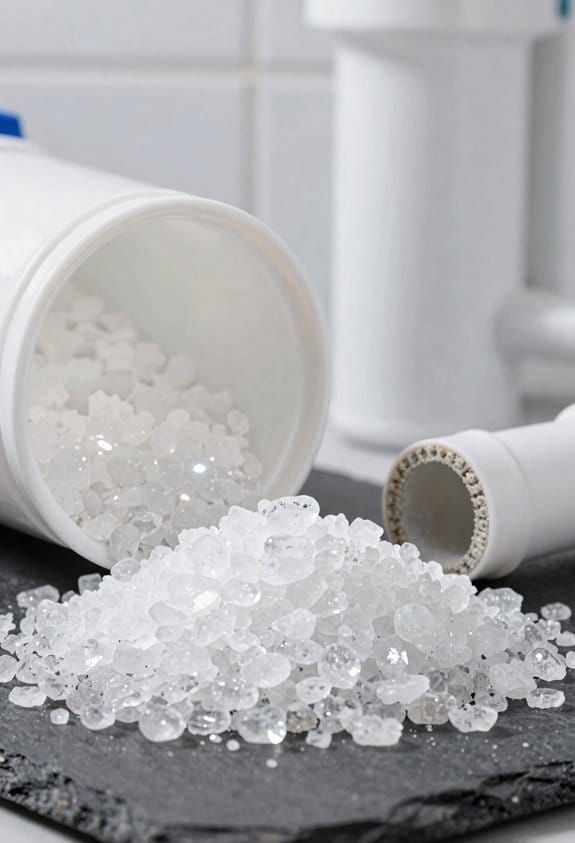
When you turn on your hot water tap, calcium and magnesium minerals build up inside your water heater in a process that happens gradually but consistently. These minerals don’t dissolve in hot water; instead, they crystallize and settle at the tank’s bottom, creating layers of sediment. As hot water circulates, this mineral layering intensifies, with each heating cycle depositing additional deposits. Over time, sediment migration occurs as particles shift and compact, forming thick, rock-hard accumulations. The harder your water is, the faster this buildup happens. For example, water with 26 grains per gallon creates nearly three times more scale than water with 10 grains. Without regular flushing, these deposits eventually coat your heating elements and tank walls, markedly compromising your system’s performance and efficiency.
Why Scale Blocks Heat Transfer and Wastes Energy
As mineral deposits accumulate and harden inside your water heater, they create a significant problem beyond just taking up space: they act as an insulating barrier that prevents heat from transferring efficiently from the heating element to your water. This thermal barrier forces your heating element to work harder and longer to reach your desired water temperature. The insulation buildup traps heat against the element itself rather than allowing it to warm the water surrounding it. Think of it like wrapping a blanket around your heater—the heat can’t escape where it’s needed most. This inefficiency means your system consumes considerably more energy, raising your utility bills while delivering the same hot water you’d normally receive with a clean tank.
The True Cost: 24–34% Higher Energy Bills
The mineral deposits that accumulate in your water heater don’t just reduce efficiency—they directly increase what you’ll pay on your energy bill each month. Studies show that scale buildup causes 24-34% higher energy consumption, meaning your heating system works harder and longer to warm water. A mere 1/8 inch of scale raises costs 25-30%, while 1/2 inch can increase bills by 60-70%. Beyond your wallet, this increased energy use expands your carbon footprint markedly. When your water heater operates inefficiently, it burns more gas or electricity to compensate for heat loss. Understanding this billing impact helps you recognize why addressing hard water through softening systems becomes a worthwhile investment rather than an unnecessary expense.
Recommended Products

Exclusive "Tank-in-Tank" Technology
ALL-IN-ONE BARISTA - With bean-to-cup brewing and a built-in burr grinder, the Dinamica Espresso Machine produces cafe-quality beverages like espresso, long espresso, drip style coffee, and even iced coffee at the push of a button

Water Conditioner Replacement Tank - Replacement conditioner tank for the Rhino 1,000,000 Gallons, Rhino 600,000 Gallons, and OptimH2O systems to protect from scale buildup. For use with the following systems: WH-1000, EQ-1000, EQ-600, and EQ-OPTM.
How Scale Thickness Destroys Efficiency
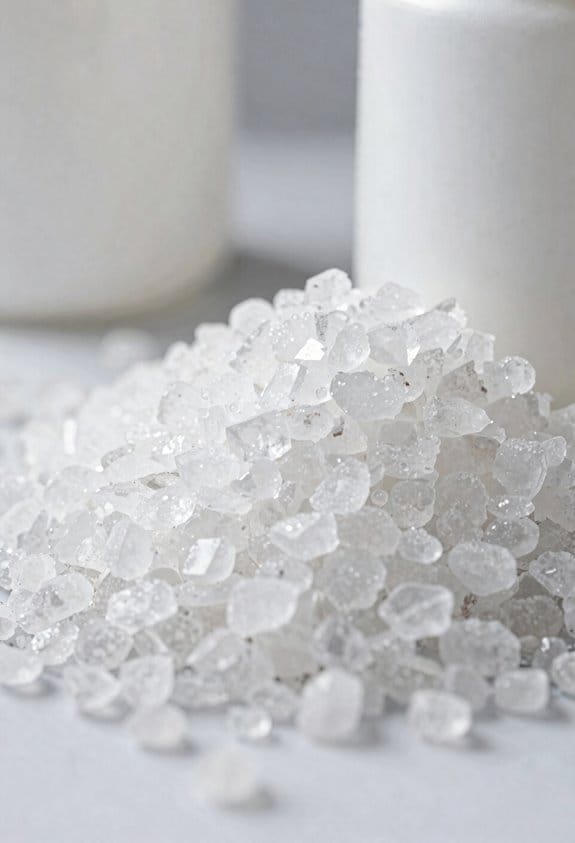
Even paper-thin layers of mineral scale can dramatically compromise your water heater’s ability to transfer heat efficiently, and understanding exactly how this happens reveals why prevention matters so much. Just 1/16 inch of scale causes a 12% efficiency loss, while 1/4 inch reduces efficiency by 40%. This happens because scale acts as a thermal barrier, preventing heat from moving effectively from the heating element to your water. The thicker the buildup, the more your heater must work harder and longer to reach desired temperatures. Additionally, uneven scale distribution creates hot spots that cause acoustic resonance and stress on components. Even minimal accumulation matters greatly—every quarter inch represents substantial energy waste and increased operating costs you’ll notice on your monthly bills.
Why Scale Causes Heating Elements to Fail
When mineral scale builds up on your water heater’s heating elements, it creates a dangerous cycle that eventually destroys them. The scale acts as an insulating barrier, preventing heat from transferring efficiently to the water. Your heating element must work harder and longer to reach the desired temperature, causing element overheating. This constant strain forces the element to operate at dangerously high surface temperatures, which accelerates its deterioration. Additionally, the extreme heat can cause electrical arcing—a dangerous jumping of electricity across the mineral deposits—further damaging the element’s internal components. Over time, this combination of overheating and electrical stress weakens the element until it fails completely. Without regular maintenance or water softening, you’ll face premature replacement costs and potential safety hazards.
Hard Water Cuts Water Heater Lifespan in Half
Hard water doesn’t just damage individual components—it systematically reduces your water heater’s entire lifespan, cutting what should be 12-15 years of service down to just 6-8 years. The cumulative stress from scale buildup creates multiple failure mechanisms simultaneously. Electric heating elements fail faster from constant overheating, while gas units experience accelerated oxidation. Sediment accumulation forces your system to work harder, triggering premature breakdowns that necessitate frequent replacements.
This shortened lifespan creates warranty concerns, since many manufacturers won’t cover damage caused by hard water deposits. Replacement costs mount quickly when you’re installing new units every 6-8 years instead of enjoying the expected 12-15 year service life. Water softeners prevent this deterioration, protecting your investment substantially.
Recommended Products

E.Sybox is an integrated electronic water booster system for domestic and residential use

Dual alternating tanks never run out of soft water

ADVANCED FILTER MEDIA - This whole house water filter system utilizes premium KDF55 and high-quality coconut shell activated carbon to effectively remove chlorine, lead, heavy metals, PFAS, chloramine, radon, herbicides, and more.
Early Warning Signs of Scale Buildup
You’ll typically notice several telltale signs before scale damage becomes severe enough to require replacement, and recognizing these early indicators can help you take action before your water heater fails completely. If your showerheads feel fuzzy from mineral deposits or you experience reduced flow from faucets, scale’s already accumulating inside your tank and pipes. You might also hear popping or rumbling noises as sediment settles at the bottom, creating hot spots that cause overheating. Discolored or cloudy water suggests mineral precipitation. If your water takes longer heating or you’re adjusting the thermostat higher than usual, your heater’s working harder against scale buildup. Addressing these warning signs early through flushing or water softening prevents costly repairs and extends your system’s lifespan considerably.
Recommended Products

Professional-Grade Durability - The tankless water heater flush kit is crafted from premium forged LF brass for strength and leak prevention, ensures long-term safety, reliability.

TECHNOLOGICALLY ADVANCED DESIGN - SwimJoy's technologically advanced design makes it one of the most durable, efficient, & longest-lasting solar pool heating systems available.
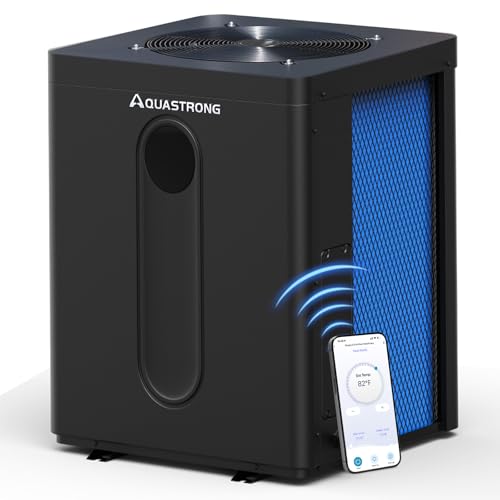
Upgraded Top Air Flow Design: Aquastrong Top Discharge pool heat pump efficiently covers the heating needs of most above-ground pools. Unlike traditional side-vent models, the top vent design frees you from space limitations, making it perfect for tight areas. Built for greater efficiency and long-lasting durability, it delivers reliable heating even in compact installations.
Water Softening: Stop Scale Before It Starts
The most effective way to prevent scale buildup is installing a water softening system before minerals ever reach your water heater. Water softeners use ion exchange technology, which replaces calcium and magnesium ions with sodium ions, effectively removing hardness from your water supply. This process prevents minerals from precipitating inside your heater, pipes, and appliances. Some homeowners also consider magnetic treatment, though ion exchange remains the more proven solution. By treating water at the source, you eliminate the root cause of scale formation rather than addressing damage afterward. A softening system protects your water heater’s heating elements, extends its lifespan from 6-8 years back to 12-15 years, and maintains peak efficiency, ultimately saving you significant money on energy costs and repairs.
Recommended Products

The WECO Backwashing filter with KL/OZ is a specialized Point-Of-Entry (POE) system designed for municipal and well water supplies. Utilizes iron reduction media consisting of manganese dioxide (MnO2) coated onto naturally mined ZEOSORB. Lightweight filtration media with various functions and properties for water treatment and remediation.

High removal capacity of iron, manganese, hydrogen sulfide. Removes suspended solids and turbidity.

✅𝗘𝗙𝗙𝗜𝗖𝗜𝗘𝗡𝗧 𝗪𝗔𝗧𝗘𝗥 𝗦𝗢𝗙𝗧𝗘𝗡𝗜𝗡𝗚: Our WECO UXC-1665 water softener system is designed to prevent mineral scale buildup on sinks, faucets, shower doors, and plumbing fixtures. This compact water softener reduces the need for frequent scrubbing and cleaning, making maintenance easier for residential and commercial spaces.
Flushing and Descaling: Reclaim Lost Efficiency
While water softening prevents scale from forming in the first place, existing deposits already coating your heater’s interior require active removal through flushing and descaling—processes that can restore much of the efficiency you’ve lost to mineral buildup.
Flushing your water heater annually removes sediment that accumulates at the tank bottom, improving heat transfer and reducing strain on heating elements. For more stubborn buildup, chemical descalers break down hardened mineral deposits effectively. Vinegar rinses offer a gentler alternative for lighter scale, using acetic acid to dissolve calcium carbonate without harsh chemicals. Both methods restore thermal efficiency, though descaling works best when combined with regular maintenance. By addressing existing scale promptly, you’ll extend your heater’s lifespan and recover lost heating performance.
Recommended Products

PROFESSIONAL STRENGTH DESCALER – Concentrated liquid formula dissolves calcium, lime scale, rust, and mineral deposits that reduce system efficiency. Helps restore heat transfer and improve equipment performance.

100% BIODEGRADABLE WITHOUT NEUTRALIZATION!

APPLICATION: Calci-Free is an efficient chemical descaler specifically formulated for tankless water heaters found in residential and commercial applications
Frequently Asked Questions
What Water Hardness Levels Typically Cause Noticeable Efficiency Loss in Water Heaters?
I’ve found that water hardness above 10 grains per gallon noticeably affects your water heater’s efficiency. Higher levels damage household appliances and worsen drinking taste, making softening systems worthwhile investments for most homes.
How Quickly Does Scale Buildup Occur in Hard Water Areas?
Scale buildup accelerates dramatically in hard water areas—you’ll notice reduced heat transfer within months. The mineral deposits cause pipe corrosion and insulation effects that worsen rapidly, particularly with higher hardness levels exceeding 10 grains per gallon.
Can Scale Damage Be Reversed, or Is Replacement Necessary?
You’d think you’re stuck replacing it, but I’ve found preventive maintenance through descaling offers repair options that can restore efficiency. However, severe damage often demands replacement rather than salvaging compromised components.
Which Is More Affected by Scale: Tankless or Traditional Tank Water Heaters?
Tankless units face greater vulnerability to scale buildup since deposits clog their compact heating coils rapidly. Traditional tanks show more resilience; I’d say their larger surface areas distribute sediment differently, allowing longer operational life before critical failure occurs.
What’s the Difference in Scale Formation Between 26 and 10 Grains per Gallon?
At 26 grains per gallon, you’ll see 2.6 times more scale than at 10 grains. The higher mineral density accelerates crystal morphology changes, meaning deposits form faster and thicker on your heater’s surfaces.