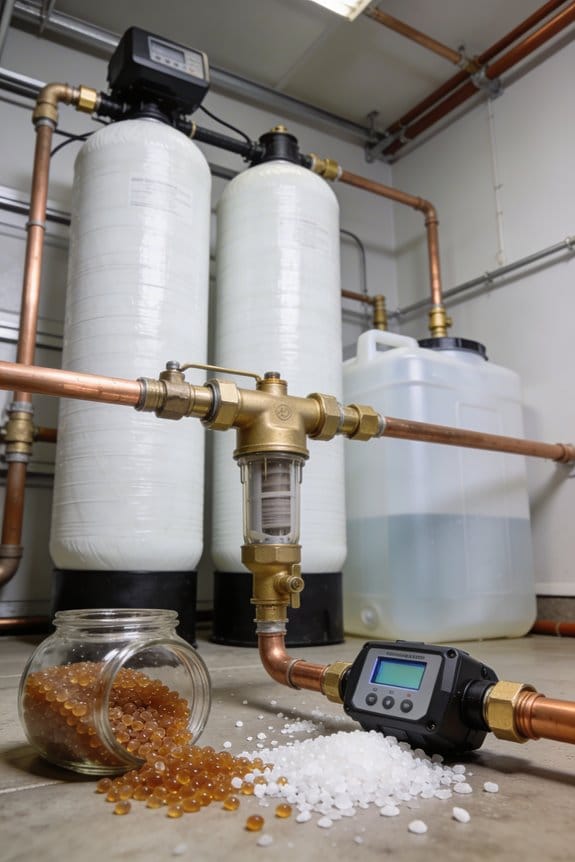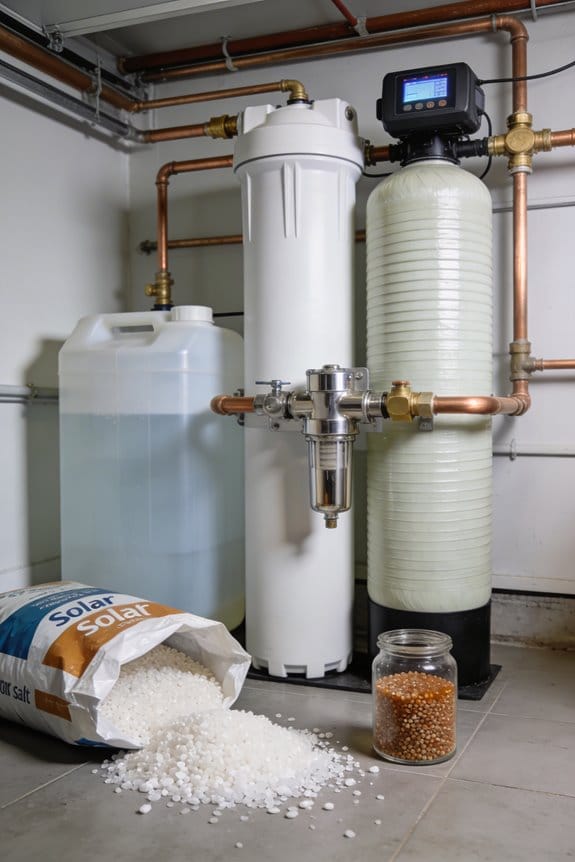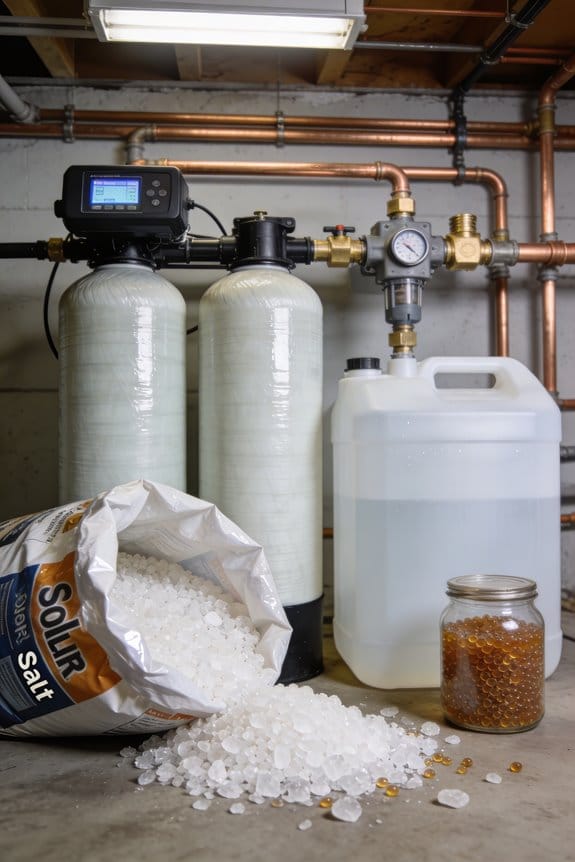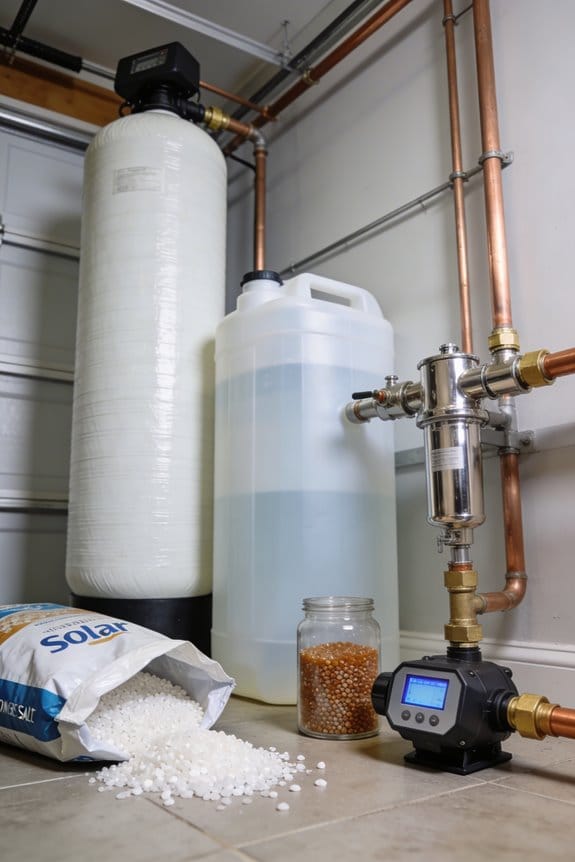
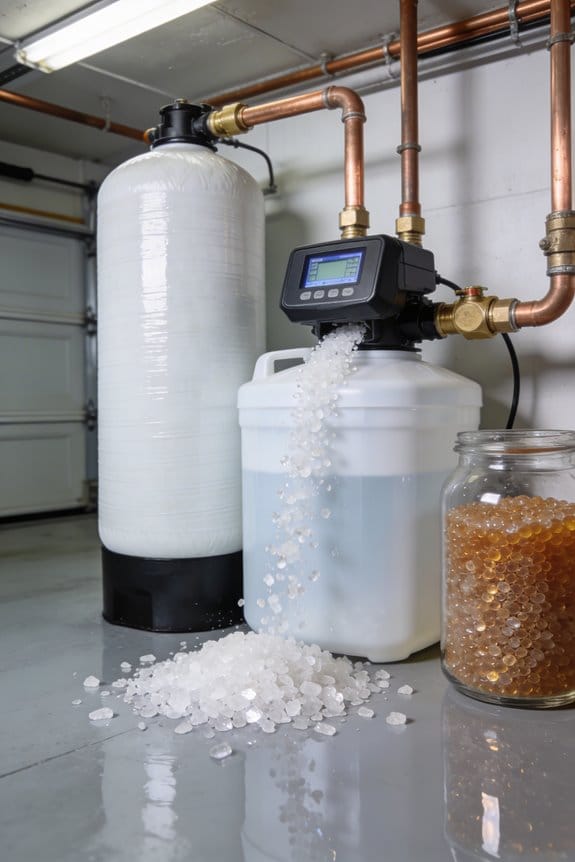

A salt bridge is a hardened crust blocking your brine tank, preventing the salt-water contact needed for softening. You can break it using a long wooden broom handle or PVC pipe—gently poking holes through the crust without forcing the tool. Wear gloves and eye protection, then manually stir remaining salt to restore water contact. Stop adding new salt until it’s resolved. Prevention matters most: use quality salt, maintain proper tank levels, and inspect monthly. Understanding what causes bridges helps you avoid them long-term.
Key Takeaways
- Use a long wooden broom handle or PVC pipe to gently break through the hardened salt crust without forcing it.
- Carefully poke multiple holes through the crusty layer, working in sections to avoid tank damage.
- Wear gloves and eye protection while breaking the bridge to prevent salt crystal injuries.
- Manually stir remaining salt to ensure water contact and restore brine solution formation.
- Call professional service if the bridge is extremely thick or DIY attempts repeatedly fail.
What Is a Salt Bridge and Why It Stops Your Softener
When your water softener stops working properly, a salt bridge might be the culprit, and understanding what it is can help you fix the problem. A salt bridge is a hardened crust that forms across your brine tank, creating a solid barrier between salt and water. This blockage prevents the water chemistry necessary for regeneration cycles from occurring. During normal operation, water should dissolve salt to create brine solution, which recharges resin beads that remove hardness minerals. When a bridge forms, this process stops entirely. The resin can’t perform its job, so calcium and magnesium minerals pass through to your taps, resulting in hard water. Your softener effectively becomes ineffective until you break up the bridge and restore proper salt-water contact.
Five Signs Your Water Softener Has a Salt Bridge
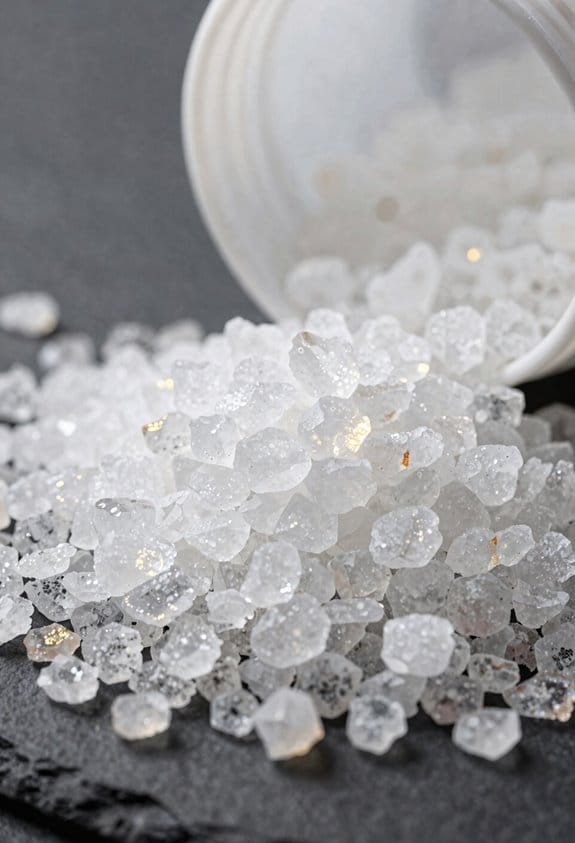
Since salt bridges form gradually inside your brine tank where you can’t see them directly, knowing what symptoms to watch for is essential to catching the problem early. You’ll notice your water becoming suddenly cloudy or hard again, even though your softener recently worked well. Your system will stop consuming salt while the tank level remains unchanged, a clear indicator something’s blocking contact between salt and water. You might see mineral scaling on faucets and showerheads, and sensor alerts may signal regeneration failures. If your resin beads aren’t recharging, they can’t remove calcium and magnesium from your water supply. These warning signs tell you a salt bridge has formed and needs immediate attention to restore proper softening.
Why Salt Bridges Form: Understanding the Root Causes
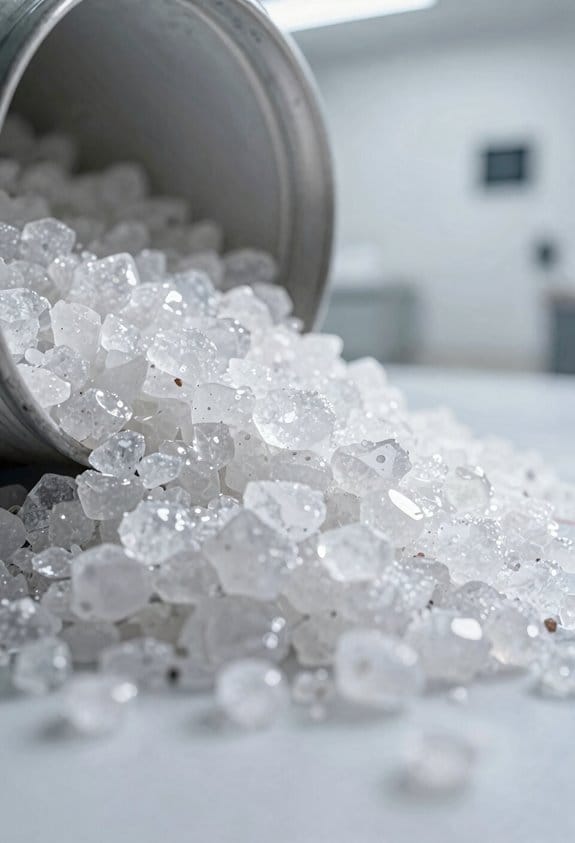
Understanding what causes salt bridges to form is the key to preventing them from disrupting your water softener’s performance. Salt bridges develop when dry salt crystals merge together, creating a hard crust that blocks water from reaching the salt below. This happens primarily due to two environmental factors: storage humidity and improper salt composition. When you store salt in high-humidity conditions, moisture causes crystals to bond and harden. Additionally, using low-quality salt with impurities accelerates caking. Overfilling your brine tank beyond two-thirds capacity worsens the problem by increasing salt exposure to moisture. Mixing different salt types or sizes also contributes to bridge formation. Understanding these root causes helps you select appropriate salt, maintain proper storage conditions, and avoid overfilling your tank.
How to Break the Salt Bridge (Tools and Steps)
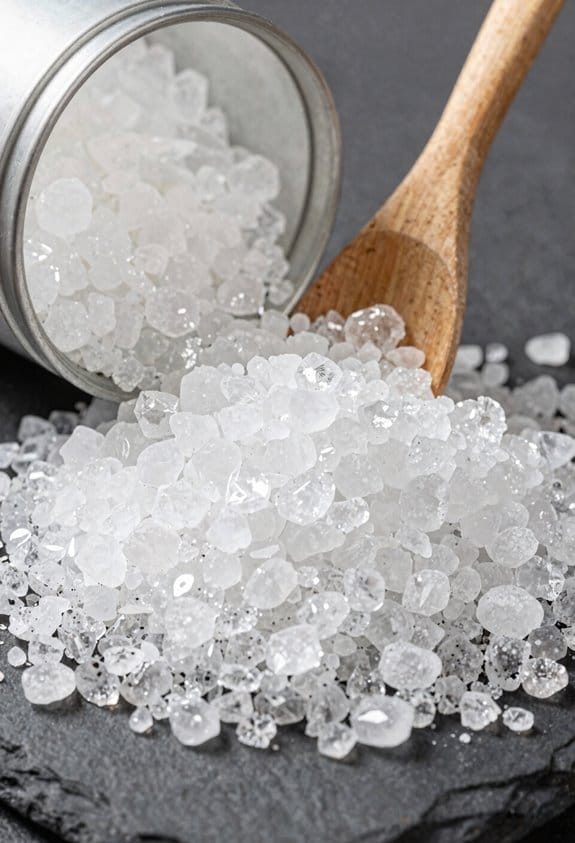
Once you’ve identified a salt bridge in your water softener, you’ll need to break it up before the system can resume normal operation. I recommend using a long wooden broom handle as your primary tool, as it effectively breaks the hardened crust without damaging the tank. When applying safety precautions, wear gloves and eye protection since salt crystals may scatter during the process.
Gently push the handle through the salt surface, working in sections if the bridge is particularly large. Avoid metal tools, which can puncture or scratch the tank interior. Alternative tools like PVC pipes work similarly well. After breaking the crust, manually stir the remaining salt to make certain water makes contact with all deposits, allowing proper dissolution and brine solution formation.
Recommended Products


Wooden handles - 20 Pack

Smooth Lacquered Finish: The hardwood handle features a smooth lacquered coating, ensuring a comfortable grip while preventing splinters during use.
Choose Premium Salt: Your First Line of Defense

Most salt bridge problems can be prevented before they start, and the quality of salt you choose plays a critical role in that prevention. I’d recommend investing in high-quality softening salt specifically designed for water softeners, as it resists caking and bridge formation far better than low-grade alternatives. Premium salt contains fewer impurities that contribute to crystal merging and hardening.
When you’re selecting salt, check the manufacturer’s recommendations for your specific system. Store your salt in dry conditions away from excess moisture, since storage conditions directly impact how salt behaves in your brine tank. Keeping salt in a cool, dry location prevents premature moisture absorption that triggers crystal bonding before the salt even reaches your tank.
Recommended Products

Perfect for Families: Designed for households of 1–4 people battling hard water. The EcoPure EP31 treats up to 31,000 grains to protect your home from mineral buildup, stains, and scale damage

STOP SCALE BUILDUP: HydroFLOW’s technology prevents scale from forming in your home’s water systems, keeping your faucets and shower nozzles running smoothly and efficiently.

[Revolutionary Water Treatment] Experience unparalleled water quality enhancement with iSpring EDV2 electronic descaler. Say goodbye to hard water woes without resorting to chemicals, salt, or tedious maintenance. Witness a noticeable improvement in just 12 weeks.
Monthly Maintenance Habits to Keep Bridges From Returning
Regular maintenance of your brine tank every month is one of the most effective ways to prevent salt bridges from forming again after you’ve broken one. I recommend performing routine inspections by checking your salt level and visually examining the surface for any signs of caking or crust formation. During these inspections, gently rake the salt with a wooden tool to keep crystals loose and guarantee water penetration. Additionally, seasonal adjustments help you account for humidity changes throughout the year; lower the salt level slightly during humid months when bridging risk increases. By dedicating just fifteen minutes monthly to these preventive tasks, you’ll maintain proper salt contact with water and keep your softener functioning efficiently without experiencing future salt bridge problems.
Recommended Products

PROTECTS PLUMBING AND APPLIANCES FROM HARD WATER SCALE WITH ZERO WATER WASTE FILTERS DIRT, SAND, SILT, CLAY, RUST, AND OTHER DEBRIS WITH REUSABLE SEDIMENT FILTER CARTRIDGE CAN BE USED FOR HOMES WITH UP-TO 5 BATHROOMS EASY INSTALLATION, LOW MAINTENANCE 120-DAY SATISFACTION GUARANTEE

F125050000 4PK WTR Soft Salt Bar - Quantity 1

BULK VALUE: Six 40-pound bags of water softener salt pellets for extended supply and convenience
Common Mistakes That Create Salt Bridges
While salt bridges often form due to environmental factors beyond your immediate control, many people inadvertently create them through everyday choices about how they maintain their water softener. One common mistake involves mixing salts of different types or sizes, which disrupts how crystals bond together and accelerates caking. Another frequent error centers on improper storage of salt bags near the brine tank, exposing them to moisture before use. Overfilling your tank beyond the recommended two-thirds capacity also contributes notably to bridge formation. Additionally, selecting low-quality salt containing impurities increases the likelihood of crystallization problems. By being intentional about salt selection, storage practices, and tank capacity management, you’ll substantially reduce the chances of experiencing salt bridge issues in your softening system.
When Salt Bridges Require Professional Removal
Although most salt bridges can be broken with simple tools like a wooden broom handle, certain situations demand professional intervention to protect your water softener and restore its function safely. If you’ve repeatedly tried breaking the bridge without success, the crust may be extremely thick or your tank could have structural damage. Additionally, warranty considerations matter greatly here. Attempting aggressive removal methods might void your manufacturer’s warranty, leaving you responsible for costly repairs. Professional technicians possess specialized equipment and expertise to handle stubborn bridges without risking tank integrity. They can also identify underlying issues causing bridge formation, such as faulty controls or design problems. When DIY methods fail or your warranty’s at stake, calling a professional becomes the prudent choice for protecting your investment.
Recommended Products

Complete Twin tank water softener provides continuous soft water

EASILY WIPE AWAY SCALE: HydroFlow’s advanced technology electronically treats water to prevent minerals from binding to pipes, water heaters, faucets, etc. While it does not prevent the white stuff/scale, the HydroFlow unit prevents the minerals from binding to your pipes and faucets making clean up a simple wipe.

【 PERFECT FOR LARGE HOUSEHOLDS】 Ideal for 6-8 people with up to 6 bathrooms on city, municipal, and well water sources, this heavy-duty whole house water softener system delivers ultra-soft water to every tap.
High-Humidity Environments: Special Prevention Strategies
Managing moisture in areas with high humidity presents unique challenges for water softener owners, since excess moisture accelerates salt bridge formation by causing salt crystals to absorb water vapor and bond together. I recommend implementing humidity control strategies to protect your brine tank. Installing ventilation upgrades, such as exhaust fans or dehumidifiers near your water softener, markedly reduces ambient moisture levels. You should aim to maintain humidity below sixty percent in the surrounding area. Consider positioning your softener in a well-ventilated space, away from direct moisture sources like laundry rooms or bathrooms. Additionally, regularly inspect your brine tank for early signs of salt clumping. These proactive measures substantially decrease salt bridge formation risk and extend your system’s operational efficiency.
Recommended Products

The Ultra Series MD33 is the first true in-wall dehumidifier designed to drain directly into a hub-drain or plumbing line making it truly a hands-off dehumidification system

Powerful Moisture Removal: Capable of removing up to 310 PPD (pints per day) at saturation and 165 PPD at AHAM conditions, while only consuming 10.5A of power. With a COP of 2.9 L/Kwh, this dehumidifier offers a super-efficient moisture removal solution for large spaces and restoration jobs.

180 PINTS CAPACITY AND WIDE COVERAGE: This LGR dehumidifier removes up to 180 pints of moisture per day under 95°F, 90% RH conditions, effectively covering areas up to 3000 sq. ft. Ideal for basements, garages, scientific research facilities, commodity storage, and underground engineering.
Frequently Asked Questions
How Long Does It Typically Take to Dissolve a Salt Bridge After Breaking It?
After I break up a salt bridge, I’ve found the dissolution rate typically takes 24-48 hours. Water temperature effects matter markedly—warmer water dissolves it faster, while cold conditions slow the process considerably.
Can a Salt Bridge Reform Immediately After Being Broken Apart?
Yes, I’ve found salt recrystallization can happen quickly if you don’t address underlying causes. Brine stratification and humidity issues may reform bridges within days. I’d recommend preventing reformation by maintaining proper tank levels and using quality salt consistently.
Is It Safe to Use a Pressure Washer to Break Salt Bridges?
I’d never recommend it—using a pressure washer could blast your tank apart like dynamite. High pressure damages the tank’s structural integrity and risks water damage. Stick to gentle wooden tools; they won’t compromise brine injection systems or cause costly repairs.
What’s the Difference Between a Salt Bridge and Normal Salt Caking?
I’d say salt caking’s surface-level crystalline formation from moisture migration, while a salt bridge is a solid blockage spanning your entire tank diameter. A bridge completely stops brine creation; caking doesn’t fully prevent water contact.
How Much Does Professional Salt Bridge Removal Usually Cost Homeowners?
I’d tell you that professional salt bridge removal typically costs $100-$300, depending on your location and contractor. Service fees vary, and you’ll often pay an inspection cost before they quote the removal work itself.