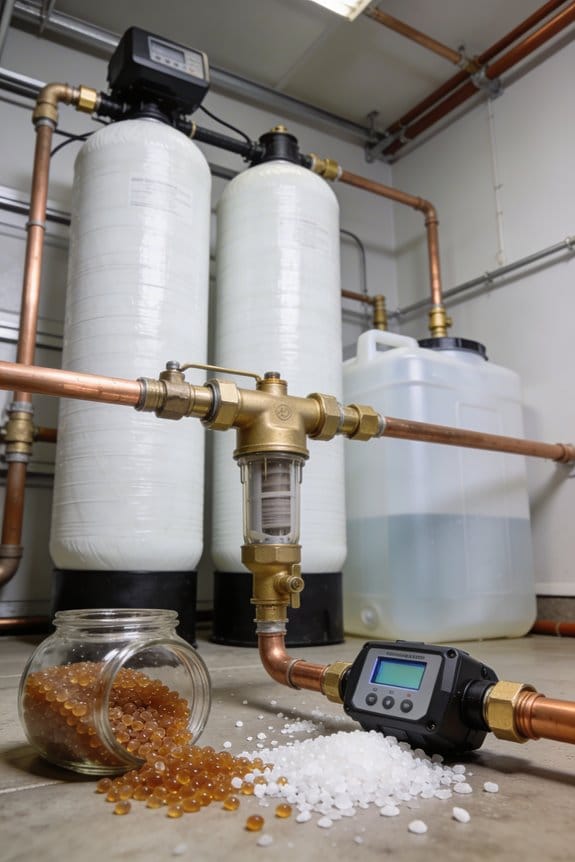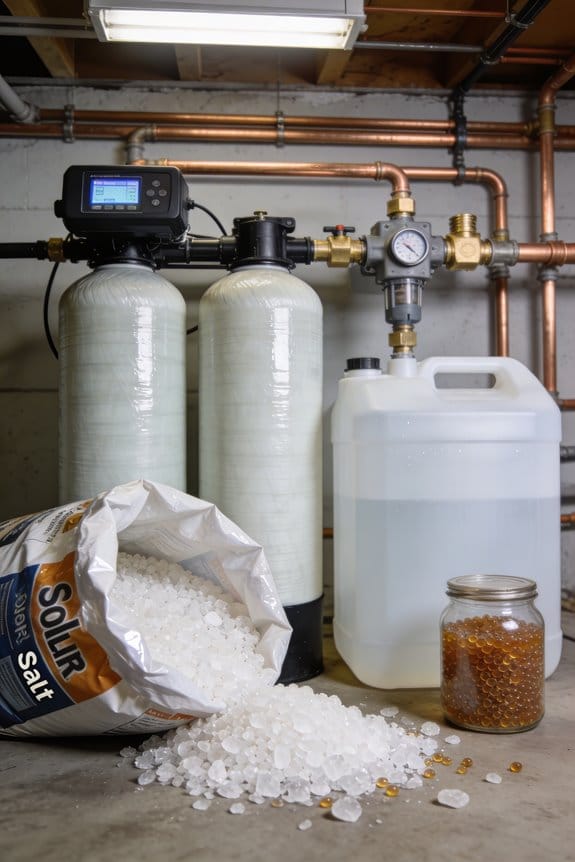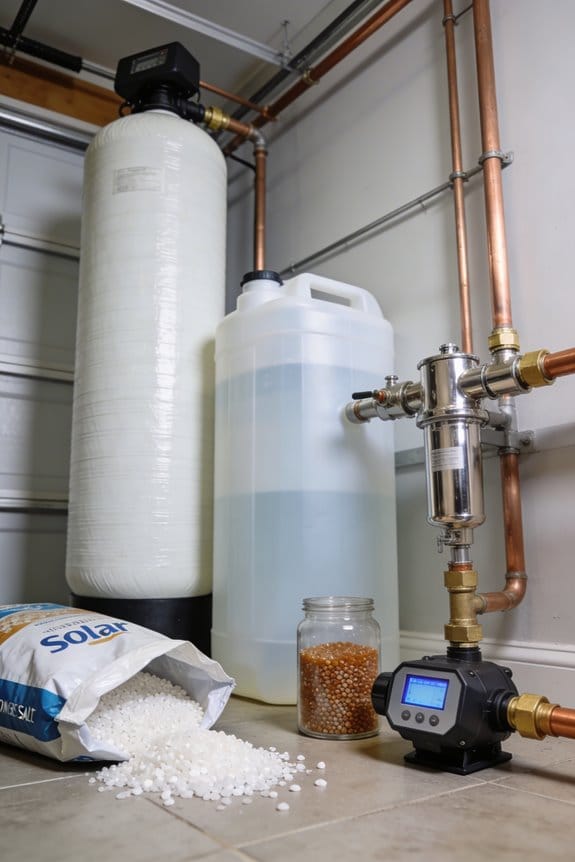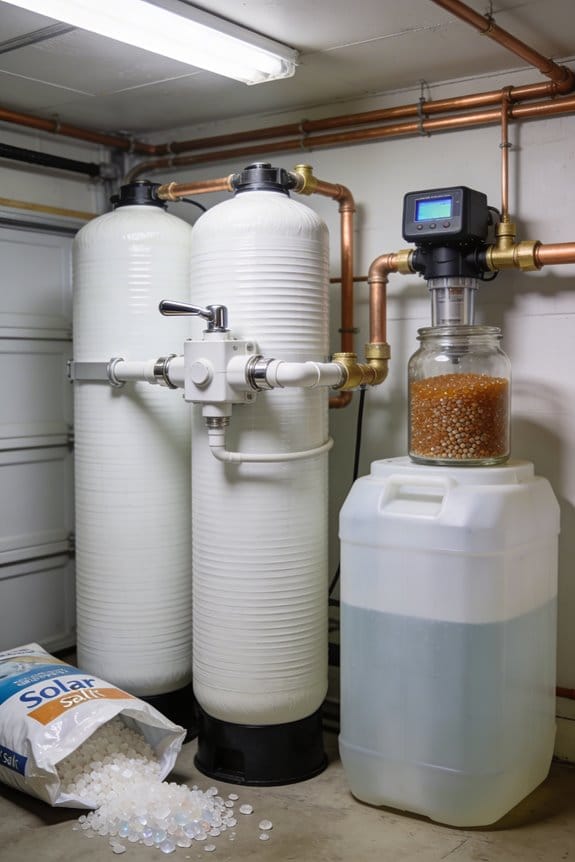
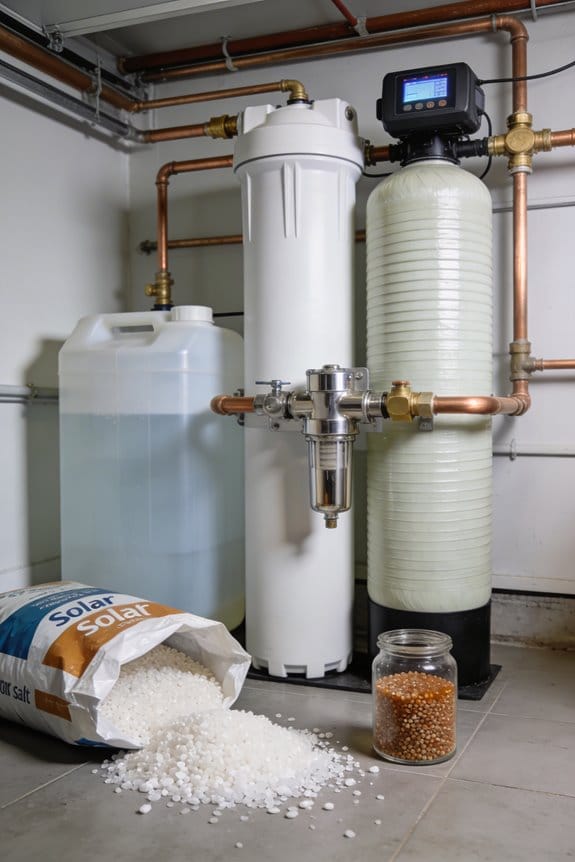

Salt mushing occurs when salt crystals break down and bond into a thick, cement-like sludge at your brine tank’s bottom, blocking your softener from drawing the salt it needs. This happens due to low-quality salt, humidity, temperature changes, or overfilling. When mushing develops, your softener can’t regenerate properly, leaving you with hard water despite a full tank. Clogged brine lines and corroded pipes follow, damaging your system’s components and shortening its lifespan markedly.
Key Takeaways
- Salt mushing is a thick, sludgy mass forming at brine tank bottom from partially dissolved or recrystallized salt particles that fail to dissolve properly.
- Low-quality salt with impurities, high humidity, temperature fluctuations, and overfilling the brine tank accelerate salt mushing formation and crystalline clumping.
- Mushing prevents adequate brine draw, blocks intake valves and brine lines, and stops the softener from delivering soft water during regeneration.
- Prolonged mushing causes incomplete salt dissolution, mineral buildup in pipes, corroded fixtures, and shortened lifespan of resin and mechanical components.
- Prevent mushing by using high-purity pellet salt, inspecting monthly, maintaining consistent temperatures, avoiding overfilling, and scheduling regular regeneration cycles.
What Is Salt Mushing?
Within your water softener’s brine tank, a problematic condition called salt mushing can develop when dissolved salt recrystallizes into a thick, sludgy mass at the bottom of the tank. This cement-like sludge forms when salt particles break down but fail to fully dissolve, instead creating hardened granules that clump together. The crystalline morphology of these particles changes due to temperature fluctuations and humidity, causing them to bond into dense masses. Chemical stability becomes compromised as loose salt crystals lose their ability to maintain proper solution composition. High levels of insoluble impurities from low-quality salt contribute markedly to this thick, gooey sludge accumulation, interrupting your water softener’s normal function and preventing effective brine production during regeneration cycles.
Hard Water and Tank Damage: First Signs Something’s Wrong

When salt mushing develops in your brine tank, the immediate consequence isn’t always obvious, but you’ll eventually notice that your water softener stops delivering the soft water you’ve come to expect. You might first spot hard water signs like spotty dishes or filmy shower doors, which indicate the softener isn’t removing minerals effectively. Your fixtures may show corroded surfaces from untreated hard water exposure. Additionally, you’ll observe reduced flow from your taps as mineral buildup accumulates in pipes and appliance lines. The brine tank appears full, yet your system fails to soften water during regeneration cycles. These warning signs suggest salt mushing is blocking the intake valve, preventing proper brine solution creation. Addressing this issue promptly prevents further system damage and restores your water quality.
Why Low-Quality Salt Causes Mushing

Because most water softener salt contains various impurities mixed in with the actual sodium chloride crystals, choosing the right type of salt is essential to preventing mushing in your brine tank. Low-quality salt often fails to meet strict manufacturing standards, allowing dirt and insoluble minerals to remain in the product. When you use salt below 99.9% purity, these contaminants accumulate at your tank’s bottom, creating thick sludge that blocks crucial components. Impurity sourcing varies depending on where salt’s extracted and how it’s processed. Rock salt, for instance, contains markedly more impurities than evaporated pellet salt. By selecting high-purity evaporated salt that meets established manufacturing standards, you’ll dramatically reduce mushing risk and maintain your softener’s peak performance.
Recommended Products

PROTECTS PLUMBING AND APPLIANCES FROM HARD WATER SCALE WITH ZERO WATER WASTE FILTERS DIRT, SAND, SILT, CLAY, RUST, AND OTHER DEBRIS WITH REUSABLE SEDIMENT FILTER CARTRIDGE CAN BE USED FOR HOMES WITH UP-TO 5 BATHROOMS EASY INSTALLATION, LOW MAINTENANCE 120-DAY SATISFACTION GUARANTEE

Perfect for Families Large or Small: Designed for households of 1–5+ people dealing with hard water. The EcoPure EP42 treats up to 42,000 grains and removes up to 11 ppm of clear water iron, protecting your entire home from scale buildup and stains

Salt-Free Scale Prevention & Healthy Minerals Retention: Our Whole House Salt-Free Water Softener utilizes an advanced ion exchange resin to effectively inhibit scale formation throughout your home's plumbing and appliances. Unlike traditional softeners, it smartly retains beneficial calcium and magnesium minerals in your water, providing scale-free protection without removing healthy elements
Temperature Fluctuations and Humidity: How Climate Triggers Buildup

While selecting high-purity salt addresses one major cause of mushing, I’d like to show you how your home’s climate can trigger buildup even when you’re using quality salt. Temperature fluctuations cause salt solubility to change dramatically, meaning dissolved salt recrystallizes when water cools unexpectedly. High humidity worsens this problem by creating moisture that makes salt particles clump together, similar to how sugar hardens in humid conditions. Rapid temperature swings between seasons accelerate this process considerably. Proper climate control and humidity management in your basement or utility room help prevent these conditions. Maintaining consistent temperatures and controlling moisture levels protects your softener from mushing, regardless of salt quality. Monitor your home’s environment carefully to support peak system performance.
Overfilled Water Levels and Loose Salt Pellets

Beyond climate control, the physical management of your brine tank plays an equally important role in preventing salt mushing. When you fill your brine tank past the halfway mark, you’re creating conditions that encourage uneven salt dissolution. The excess water can’t properly dissolve all the salt crystals, leaving some to settle and recrystallize into sludge.
Similarly, loose pellets compound this problem. When salt pellets aren’t firmly compacted in your tank, they revert to tiny crystals that bond together into thick, gummy masses. These loose pellets lack the structural integrity needed to maintain proper dissolution rates.
To prevent mushing, maintain your water level below the halfway point and make certain your salt pellets are tightly compacted when you refill your tank.
Inspect Your Brine Tank for Salt Mush
Regular inspection of your brine tank is one of the most effective ways to catch salt mushing before it damages your water softener’s performance. When you refill salt, look for a thick sludge layer at the tank bottom, which indicates mush formation. You might also notice an unusual brine odor, suggesting bacterial growth in stagnant solution. Check the tank walls for signs of tank corrosion, which can worsen mush problems. Manually scoop the sludge to assess its thickness and texture; heavy, cement-like deposits confirm mushing. If you find mush, you’ll need to empty and clean the entire tank. Regular monthly inspections help you identify problems early, preventing system damage and maintaining consistent water softening throughout your home.
Recommended Products

Rust Out chemically removes iron and rust buildup that coats the resin bed and fouls the water softener
Restores water softener efficiency and flow rates

UNIVERSAL SYSTEM COMPATIBILITY – Fits most household water softener units, allowing effective upkeep across various brine tank and brine well configurations for reliable operation, improved efficiency, and consistent softening performance.
How to Clean Out the Sludge (Step-by-Step)
Once you’ve identified salt mush in your brine tank through inspection, you’ll need to remove it completely to restore your water softener’s function. Start by turning off your water supply to prevent complications during cleaning. Put on protective gloves to shield your hands from salt and any residual chemicals in the tank.
Use the bucket method to manually scoop out the heavy sludge, working carefully to extract all accumulated deposits. Empty the entire tank contents, then scrub the interior surfaces with soap and warm water, ensuring you remove all salty residue. Rinse thoroughly until no soap or salt remains. Once clean and dry, refill with fresh, high-purity salt and run a regeneration cycle to restore normal operation.
Restore Your Softener’s Regeneration Cycle
After you’ve cleaned out the salt mush and refilled your brine tank with fresh, high-purity salt, your water softener needs to complete a regeneration cycle to resume normal operation. I recommend manually initiating a regeneration cycle through your softener’s control panel to jumpstart the process. During regeneration, the brine pump draws salt solution from your tank, flushing it through the resin beads to restore their softening capacity. This cycle typically takes several hours, during which your softener won’t produce soft water. Monitor the control valves to make sure they’re directing water flow correctly through the system. Once regeneration completes, your softener should resume normal function, effectively removing hardness minerals from your water supply and delivering the soft water your household needs.
Recommended Products

High removal capacity of iron, manganese, hydrogen sulfide. Removes suspended solids and turbidity.

ADVANCED FILTER MEDIA - This whole house water filter system utilizes premium KDF55 and high-quality coconut shell activated carbon to effectively remove chlorine, lead, heavy metals, PFAS, chloramine, radon, herbicides, and more.

Complete Twin tank water softener provides continuous soft water
Prevent Salt Mushing With High-Purity Salt and Maintenance
The most effective way to avoid salt mushing altogether is to use high-purity evaporated salt at 99.9% purity, which contains far fewer insoluble impurities that accumulate in your brine tank and cause sludge formation. Your salt selection directly impacts your softener’s longevity and performance.
Pellet salt typically outperforms rock salt because it dissolves more completely and leaves minimal residue. Beyond choosing quality salt, establish a maintenance schedule that includes monthly brine tank inspections. Keep water levels below the halfway mark to guarantee even dissolution, and check for sludge buildup during routine refills. Regular cleaning prevents deposits from hardening into thick masses that clog your system.
These preventive measures protect your investment and maintain consistent water softening throughout your home.
Recommended Products

Compact design for space-saving installation: The one-tank compact design of the iSpring WCS50KG whole house water softener helps save valuable space in your home, making it easier to install in tight or limited areas. The system is designed for indoor installation and is intended for cold water supply only. It features an inlet/outlet connector with the options of 1" or ¾" NPT, providing flexibility and compatibility with different plumbing setups.
High flow whole house water softener for larger homes

💧【 PERFECT FOR 6+ BATHROOMS 】Rated to Treats up to 72,000 grains of hardness, this professional grade water softener delivers ultra-softened water to every outlet in your home.
Frequently Asked Questions
Can Salt Mushing Permanently Damage My Water Softener’s Resin Beads or Internal Components?
I’ll tell you directly: while salt mushing won’t immediately destroy your resin beads, prolonged exposure can cause resin degradation and component corrosion, potentially requiring expensive internal replacements if you don’t address it quickly.
How Often Should I Inspect My Brine Tank to Catch Salt Mushing Before It Causes Problems?
I’d recommend monthly brine inspections to catch salt buildup early. You’ll want to check during refills, looking for sludge at the tank bottom. Regular monitoring prevents mushing from blocking your softener’s function.
Is Pellet Salt Always Better Than Rock Salt, or Are There Exceptions to This Rule?
Pellet salt’s advantages—like lower impurities and better dissolution—make it superior for most systems. However, regional exceptions exist where rock salt’s lower cost justifies occasional mushing risks in certain climates.
Can I Use Table Salt or Pool Salt in My Water Softener Brine Tank Instead?
No, I’d strongly advise against it. Table salt’s additives’ll clog your system, while pool salt contains impurities that cause mushing. Stick with high-purity evaporated pellet salt—your softener’ll thank you.
How Long Does It Typically Take Salt Mushing to Develop After Poor Maintenance Begins?
I’ve found that salt mushing typically develops within weeks to a few months of poor maintenance. You’ll notice salt crusting and brine stratification forming as dissolved salt recrystallizes. Regular inspections help you catch it early before it becomes problematic.