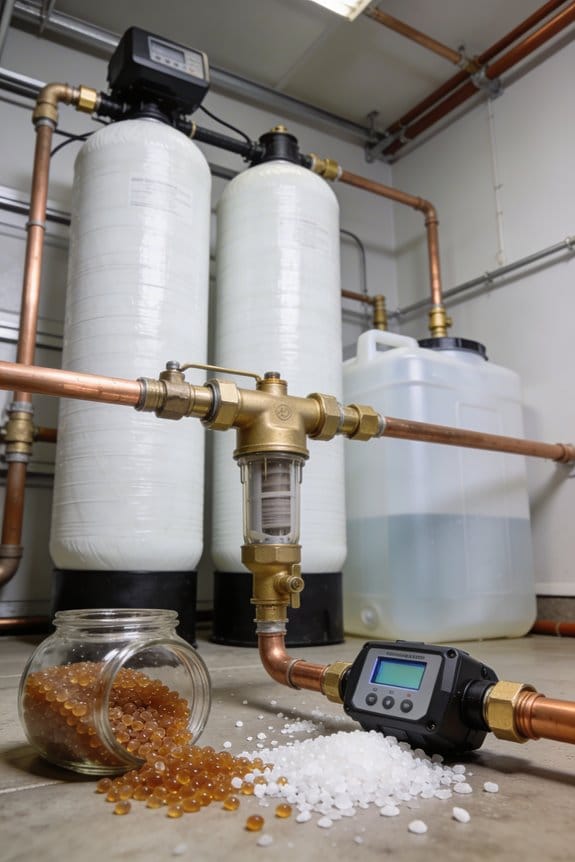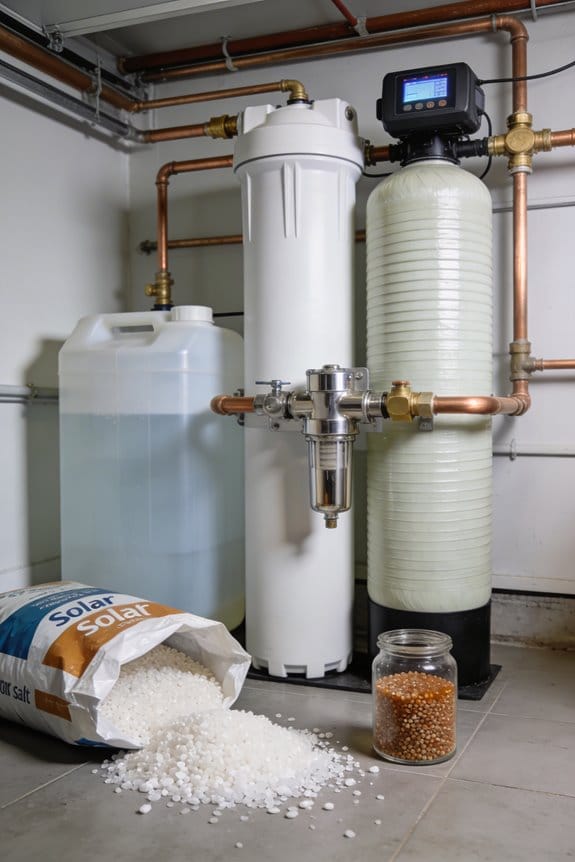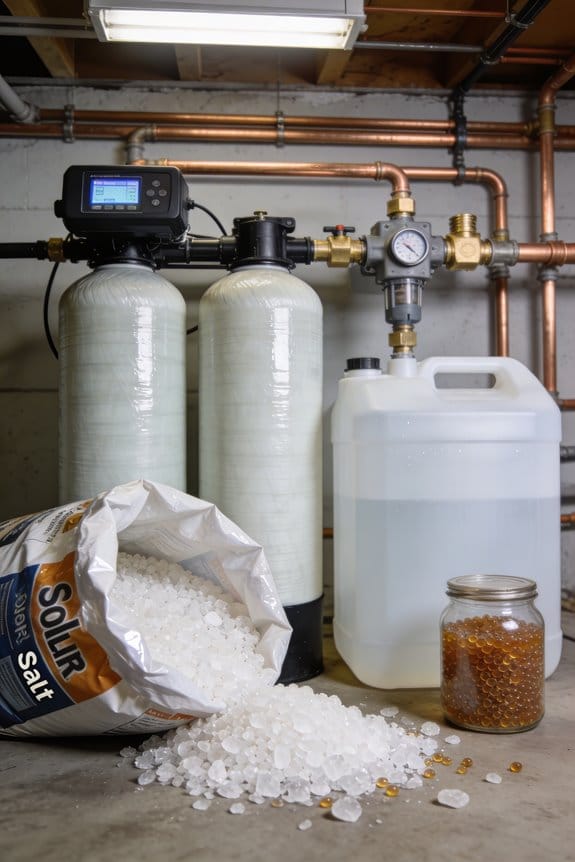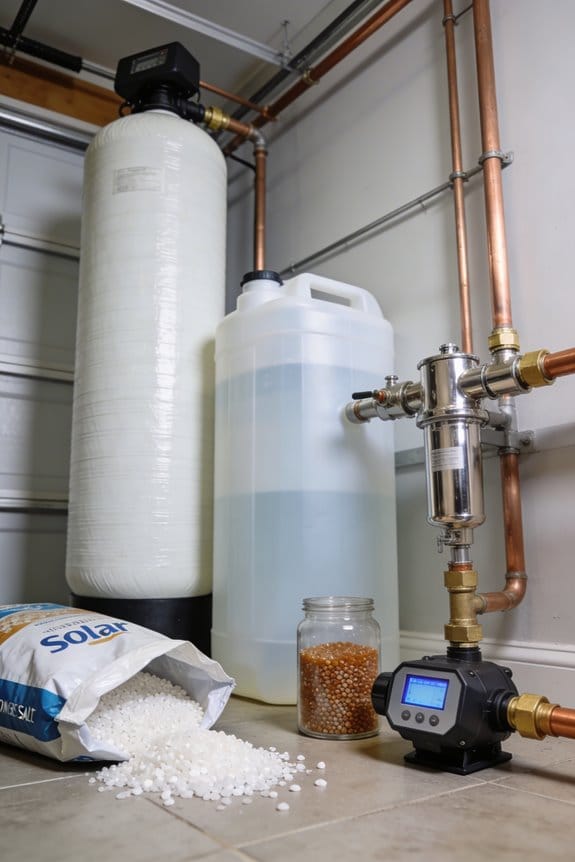
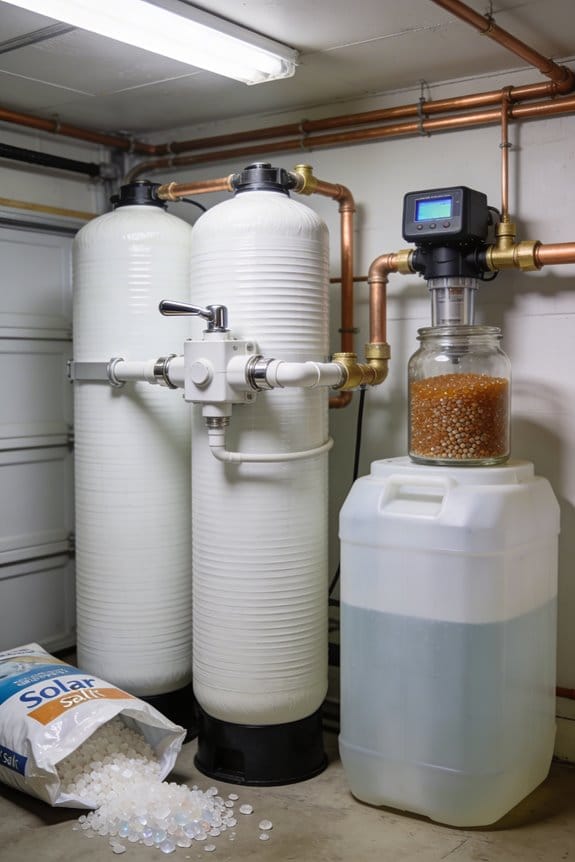

Single-tank softeners use one resin tank that goes offline for 1–2 hours during regeneration, leaving you without soft water temporarily. Twin-tank systems have two tanks that alternate, so one regenerates while the other keeps supplying soft water continuously. Twin-tank units use 20–30% less salt and water annually, which offsets their higher upfront cost within 2–5 years. Single-tanks work well for small households, while twin-tanks suit larger families or high-usage homes needing uninterrupted soft water access. Understanding which fits your household will help you make the best choice.
Key Takeaways
- Single-tank systems go offline during regeneration; twin-tank systems maintain continuous soft water supply with alternating tank operation.
- Twin-tank systems use 20–30% less salt and water annually, offsetting higher purchase costs within 2–5 years.
- Single-tank softeners suit small households (2–4 people) with moderate water usage and limited space requirements.
- Twin-tank systems prevent downtime during peak usage and provide emergency backup if one tank requires servicing.
- Single-tank installations require fewer connections and fit compact spaces; twin-tank systems need more room but eliminate soft water gaps.
How Single-Tank and Twin-Tank Water Softeners Work
While both single-tank and twin-tank water softeners accomplish the same goal—removing hard water minerals from your water supply—they do it in fundamentally different ways that affect how often you’ll have soft water available. In a single-tank system, one resin tank handles both softening and regeneration sequentially, meaning the unit goes offline during the cleaning cycle. Twin-tank systems operate differently: while one tank softens your water, the other undergoes resin maintenance simultaneously. This alternating approach creates distinct flow dynamics between the two designs. Understanding these operational differences helps you recognize why single-tank systems experience service interruptions while twin-tank models deliver continuous soft water throughout the regeneration process.
The Core Difference: Tank Configuration and Downtime

The real difference between single-tank and twin-tank systems comes down to how they’re built and what that means for your home’s water supply. Single-tank softeners have one resin tank that goes offline during regeneration, leaving you without soft water for 1-2 hours. Twin-tank systems feature two resin tanks working alternately, so one regenerates while the other supplies soft water continuously. This fundamental difference affects your maintenance scheduling markedly. With single-tank models, you’ll need to plan regeneration cycles carefully, often scheduling them at night. Twin-tank systems offer emergency backups—if one tank needs servicing, the other keeps running. For households with high water usage or those needing reliable soft water around the clock, this distinction becomes critically important.
Regeneration Cycles: Where Single and Twin Systems Diverge

Understanding how regeneration cycles work is key to choosing the right water softener for your needs, since this process directly impacts your access to soft water and your system’s overall efficiency. Single-tank systems regenerate offline, meaning you’ll experience 1-2 hours without soft water. These systems typically use timer-based scheduling or demand-activated regeneration, often programmed for nighttime cycles. Twin-tank systems work differently—while one tank actively softens your water, the other regenerates simultaneously, ensuring you never lose soft water access. Regeneration timing matters markedly because it affects salt consumption and water waste. Twin-tank systems optimize brine concentration levels by regenerating only when needed, reducing annual salt usage by 20-30% compared to single-tank models that follow fixed schedules regardless of actual water hardness.
Total Cost of Ownership: Salt, Water, and Long-Term Savings

When you’re evaluating water softeners, the upfront price tag tells only part of the story—you’ll want to take into account what you’ll spend on salt, water, and maintenance over the system’s lifetime to make a truly informed decision. Single-tank systems cost less initially but waste 1,500–3,000 gallons annually through inefficient regeneration cycles. Twin-tank systems use 20–30% less salt and water yearly, offsetting their higher purchase price within 2–5 years. Maintenance costs remain comparable between models, though twin-tank durability often extends system lifespan. When resale value matters, twin-tank systems appeal to future homeowners seeking efficiency. Calculate your household’s water consumption and local salt prices to determine which system delivers genuine long-term savings.
Recommended Products

✅𝗘𝗙𝗙𝗜𝗖𝗜𝗘𝗡𝗧 𝗪𝗔𝗧𝗘𝗥 𝗦𝗢𝗙𝗧𝗘𝗡𝗜𝗡𝗚: Our WECO UXC-1665 water softener system is designed to prevent mineral scale buildup on sinks, faucets, shower doors, and plumbing fixtures. This compact water softener reduces the need for frequent scrubbing and cleaning, making maintenance easier for residential and commercial spaces.

Complete Twin tank water softener provides continuous soft water

64k Digital Dual Tank Alternating IRON PRO Water Softener with Fleck 9100SXT
Single-Tank: Best for Small Households

Single-tank water softeners frequently work best for smaller households that use moderate amounts of water daily, because these systems provide reliable softening without requiring much space or a large upfront investment. Their compact footprint makes them ideal for homes with limited installation space, fitting easily in basements, laundry rooms, or utility closets. Budget friendly maintenance costs keep operating expenses manageable throughout the system’s lifespan. Single-tank models handle typical daily water demands efficiently, typically requiring regeneration only a few times weekly. For families of two to four people without excessive water usage, these softeners deliver consistent performance without the complexity or expense of twin-tank alternatives. The straightforward design guarantees straightforward operation and minimal ongoing care requirements.
Recommended Products

PROTECTS PLUMBING AND APPLIANCES FROM HARD WATER SCALE WITH ZERO WATER WASTE FILTERS DIRT, SAND, SILT, CLAY, RUST, AND OTHER DEBRIS WITH REUSABLE SEDIMENT FILTER CARTRIDGE CAN BE USED FOR HOMES WITH UP-TO 5 BATHROOMS EASY INSTALLATION, LOW MAINTENANCE 120-DAY SATISFACTION GUARANTEE

Platinum Air Injection with Filox (Mang-Ox) media for highest removal capabilities

24/7 Soft Water Availability: Twin-tank system featuring the new Fleck 9100 valve ensures customers benefit from soft water 24 hours a day, 7 days a week
Twin-Tank: Best for High-Usage Homes
Twin-tank water softeners excel in high-usage homes because they maintain a continuous supply of soft water without service interruptions, which I find particularly valuable when considering households with four or more people or those with substantial daily water demands. While one tank actively softens your water, the other regenerates in the background, ensuring you’ll never experience downtime or hard water at your tap. High demand households benefit greatly from this design because it eliminates the risk of running out during peak usage times. You’ll notice no pressure drops when appliances run simultaneously, and you’ll use approximately 20-30% less salt and water annually compared to single-tank systems. Though the initial investment is higher, the efficiency gains typically pay for themselves within 2-5 years.
Recommended Products

Dual alternating tanks never run out of soft water
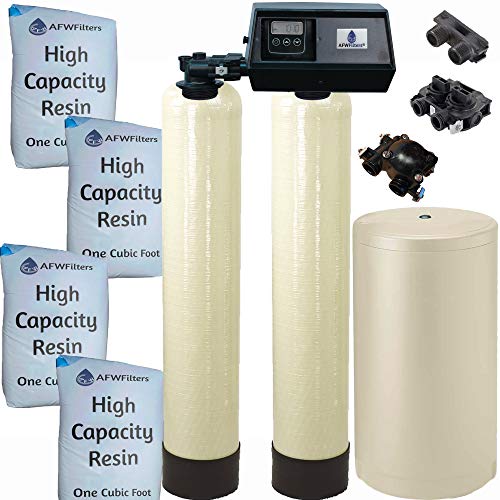
Dual alternating tanks never run out of soft water
Dual alternating tanks never run out of soft water
Space and Setup: What Your Home Needs
Because your home’s layout directly influences which water softener system works best for you, understanding your available space and installation requirements is essential before making a purchase decision. Single-tank systems offer a compact footprint, fitting easily into utility closets, basements, or laundry rooms where space is limited. Their simpler design requires fewer connections, providing installation flexibility in homes with challenging layouts. Twin-tank systems demand substantially more room since they need two resin tanks positioned side by side, plus the shared brine tank. If your home lacks adequate space, a single-tank softener becomes the practical choice. However, if you can accommodate the larger footprint, twin-tank systems eliminate downtime concerns while delivering continuous soft water throughout your household.
Recommended Products
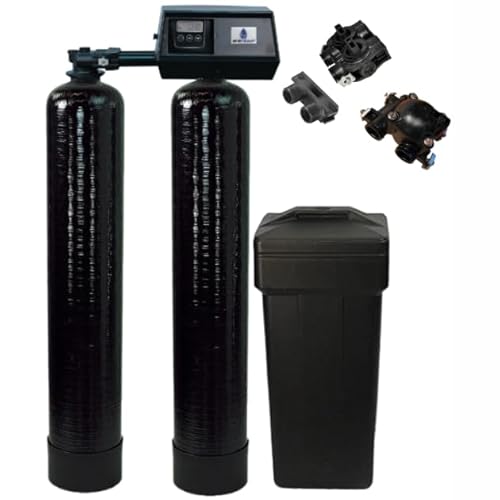
The AFWFilters Complete Twin Tank Water Softener is an innovative solution designed to ensure a constant supply of soft water. Unlike traditional single-tank systems, this twin-tank design allows for one tank to undergo the regeneration process while the other continues to provide soft water. This means you’ll never experience a downtime in soft water availability, making it ideal for households with high water usage or those who simply want the convenience of uninterrupted service.

Compact design for space-saving installation: The one-tank compact design of the iSpring WCS50KG whole house water softener helps save valuable space in your home, making it easier to install in tight or limited areas. The system is designed for indoor installation and is intended for cold water supply only. It features an inlet/outlet connector with the options of 1" or ¾" NPT, providing flexibility and compatibility with different plumbing setups.

Water softener & iron filter, all in one! High flow for whole house use!
Which Water Softener Fits Your Home?
After considering your home’s physical layout and installation requirements, you’ll want to evaluate which system actually fits your lifestyle and water usage patterns. If you’re a small household with moderate water consumption, a single-tank softener works well and costs less upfront. However, if your family uses significant water daily or you can’t tolerate service interruptions, a twin-tank system is worth the investment. Consider your maintenance schedules too—single-tank systems need more frequent salt refills, while twin-tank models regenerate on demand. Water testing helps determine your hardness level, which influences regeneration frequency. High-hardness water benefits from twin-tank efficiency. Ultimately, match the system’s capacity and regeneration method to your actual usage patterns for peak performance and cost savings.
Recommended Products

Complete Twin tank water softener provides continuous soft water. Ships Loaded
Fleck 9100 SXT Digital Metered Dual Tank Control Valve for 24/7 Soft Water

48k Digital Dual Tank Alternating IRON PRO Water Softener with 9100SXT
Frequently Asked Questions
How Often Should I Add Salt to My Water Softener’s Brine Tank?
I’d recommend checking your brine tank monthly for salt frequency. You’ll want to maintain it at least three-quarters full. Regular brine monitoring prevents regeneration failures and makes certain your softener works efficiently year-round.
Can I Switch From a Single-Tank to a Twin-Tank System Later?
Yes, you can upgrade to a twin-tank system, but I’d recommend considering retrofit considerations and installation costs first. You’ll likely need plumbing modifications, which makes upgrading more expensive than initial installation.
What Water Hardness Levels Require a Twin-Tank Over Single-Tank System?
Like a single bridge buckling under constant traffic, single-tanks falter with high capacity mineral loading. I’d recommend twin-tanks for hardness exceeding 25 GPG in continuous demand scenarios where you can’t afford downtime.
How Long Do Resin Beads Typically Last Before Replacement?
Resin beads typically last 10-15 years with proper maintenance. You’ll notice resin longevity depends on water quality and regeneration frequency. Bead degradation accelerates with high iron content or chlorine exposure, requiring earlier replacement.
Are There Warranty Differences Between Single-Tank and Twin-Tank Models?
I’ve found that warranties vary considerably between models rather than by type. Twin-tank units typically offer longer coverage periods and better warranty transferability, while single-tank warranties often include prorated coverage options.