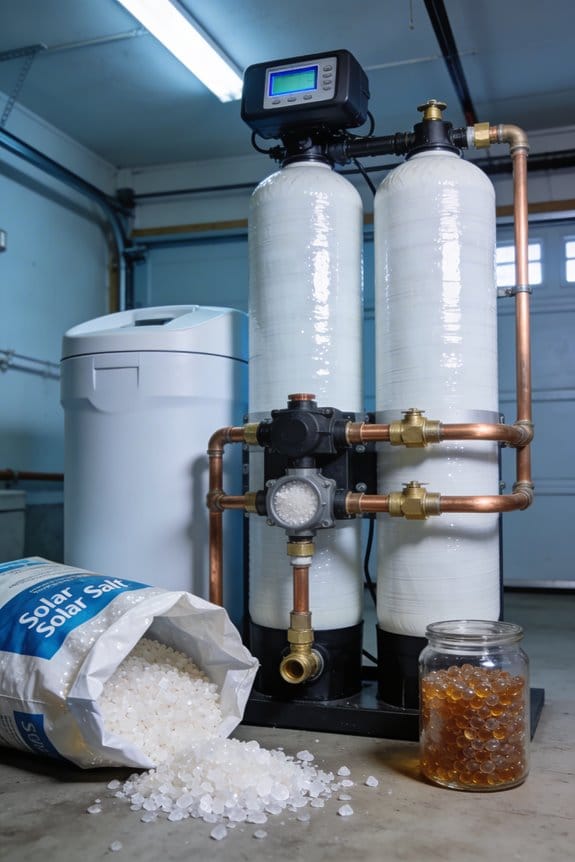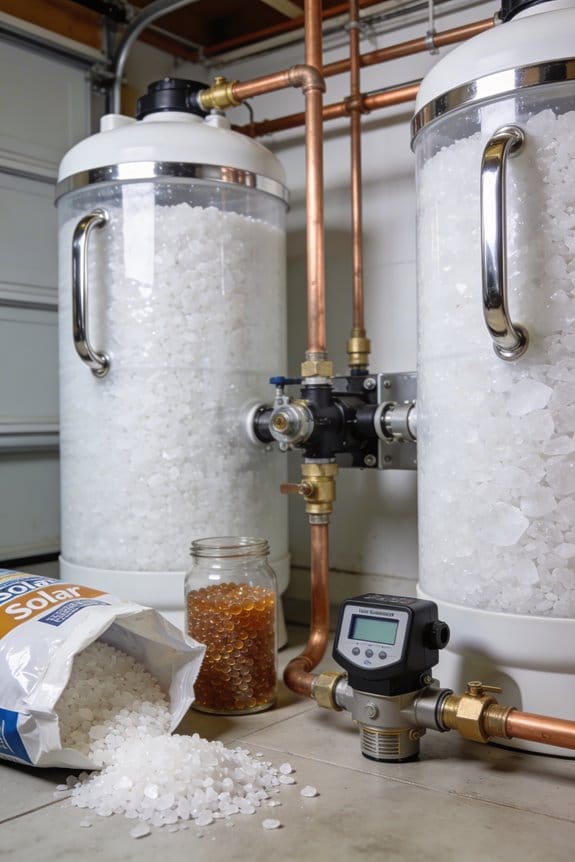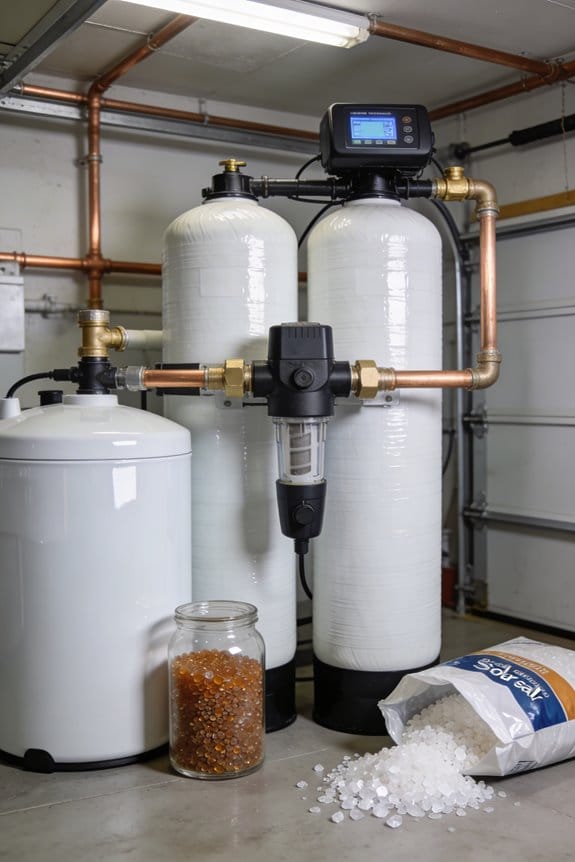
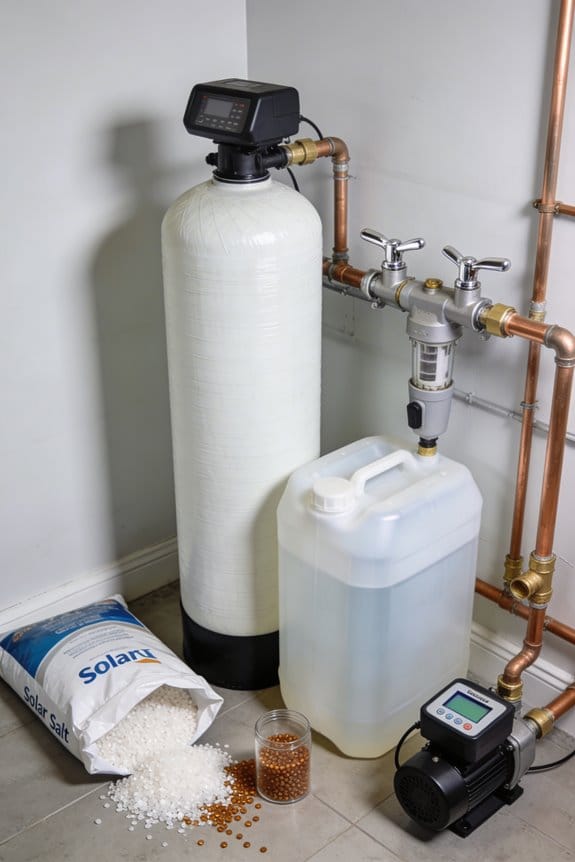

Inside your water softener tank, millions of tiny resin beads attract hard minerals like calcium and magnesium through electrostatic force. As hard water flows downward through the tank, these positively charged minerals swap places with sodium ions coating the beads’ surfaces. This ion exchange process continues until the beads become saturated with hardness minerals and lose their softening power. When saturation occurs, your softener automatically triggers regeneration—a cleaning cycle using salt brine to flush out trapped minerals and recharge the beads. Understanding these stages reveals how your system maintains soft water consistently.
Key Takeaways
- Negatively charged resin beads attract positively charged calcium and magnesium ions from hard water through electrostatic forces.
- Calcium and magnesium ions swap places with sodium ions on bead surfaces via ion exchange mechanism.
- Hardness minerals form stronger bonds with resin than sodium due to their higher positive charge strength.
- Softened water exits the tank as displaced sodium ions enter the water stream during exchange process.
- Resin beads gradually saturate with hardness minerals until regeneration becomes necessary to restore softening capacity.
How Hard Water Minerals Attach to Resin Beads
Picture millions of tiny beads packed inside your water softener tank, each one working like a microscopic magnet to grab unwanted minerals from your water. These beads start their job already charged with sodium ions, which makes them negatively charged overall. When hard water containing calcium and magnesium flows down through the tank, something remarkable happens: electrostatic attraction pulls those positively charged mineral ions directly to the resin beads’ surface.
The bead pore structure, incredibly small and intricate, provides plenty of space for minerals to settle in. As water percolates through the bed, calcium and magnesium ions swap places with sodium ions through ion exchange. This process continues until the beads become saturated with minerals and can’t attract anymore, triggering your softener’s regeneration cycle.
Recommended Products

Upgraded Large Light Commercial 18x40 round brine tank w/safety float

Perfect for homes with 4 to 6 bathrooms and up to 7 family members, who desires softened water and clean, chemical-free water for the whole family.

Reduces hardness in the water, eliminates scale, spot build up for the entire home and combat the high iron issue at up to 10 ppm and removes red stain buildup.
Why Calcium and Magnesium Trade Places With Sodium

Because calcium and magnesium ions carry a stronger positive charge than sodium ions, they’re naturally attracted to the negatively charged resin beads more forcefully. This principle, called ion selectivity, determines which minerals the resin prioritizes capturing. The electrostatic attraction between the hardness minerals and resin beads is simply stronger than sodium’s pull.
When hard water flows through the tank, calcium and magnesium ions effectively bump sodium ions off the resin beads. The hardness minerals form more powerful chemical bonds with the negatively charged surface, so they displace the sodium that was originally there. This exchange process continues until the resin becomes saturated with minerals. Understanding this trade-off helps explain why your water softener eventually needs regeneration—the beads must be recharged with sodium to restart the exchange cycle.
Recommended Products

AutoSense AI Demand Control: Automatically regenerates only when needed, delivering powerful soft water performance while using less salt than demand-based 40,000 grain systems

Replace your old Water Softening Tank instead of dealing with the mess and struggle of replacing just the media
Replace your old Water Softening Tank instead of dealing with the mess and struggle of replacing just the media
When Saturation Signals Your Softener Needs Regeneration

As those hardness minerals continually displace sodium ions from your resin beads, you’re witnessing a process that can’t continue indefinitely. Eventually, your beads become saturated, meaning they’ve captured as many calcium and magnesium ions as they can hold. Your control valve monitors this saturation through low salinity detection, which identifies when sodium levels drop markedly. When saturation occurs, your softener can’t effectively remove hardness anymore, so regeneration must begin. Some systems use a timer based override as a backup trigger, initiating the cleaning cycle at predetermined intervals. This automated response guarantees your water stays soft and your resin beads get recharged with fresh sodium ions, restoring full softening capacity.
Recommended Products

Complete Twin tank water softener provides continuous soft water

DIY install with supplemental instructions by AFW Filters on USB

💧 Perfectly designed for 4-6 bathrooms homes, the Aquasure Signature Series is the professional grade Whole House Water system that delivers high quality filtered, ultra-softened water to every outlet throughout your entire home. No need for manual regeneration, backwash, draining, this system automatically regenerates and backwash, making it cost efficient and easy to maintain.
The Backwash, Brine, and Rinse Steps That Restore Capacity

Once your water softener’s resin beads become saturated with hardness minerals, the regeneration process kicks into gear through three essential stages: backwash, brine, and rinse. During backwash, water flows upward through the tank, dislodging accumulated debris and particles trapped in the resin bed. Next, the control valve timing initiates the brine cycle, where concentrated salt solution from your brine tank enters and displaces calcium and magnesium ions clinging to the beads. This brine disposal removes trapped hardness minerals effectively. Finally, the rinse stage forces fresh water downward, clearing remaining brine and minerals while recharging beads with sodium ions. This three-stage cycle restores your softener’s capacity, preparing it to handle hard water again.
Recommended Products

High removal capacity of iron, manganese, hydrogen sulfide. Removes suspended solids and turbidity.

Dual alternating tanks never run out of soft water

ADVANCED FILTER MEDIA - This whole house water filter system utilizes premium KDF55 and high-quality coconut shell activated carbon to effectively remove chlorine, lead, heavy metals, PFAS, chloramine, radon, herbicides, and more.
What Happens During the Final Rinse and Recharge
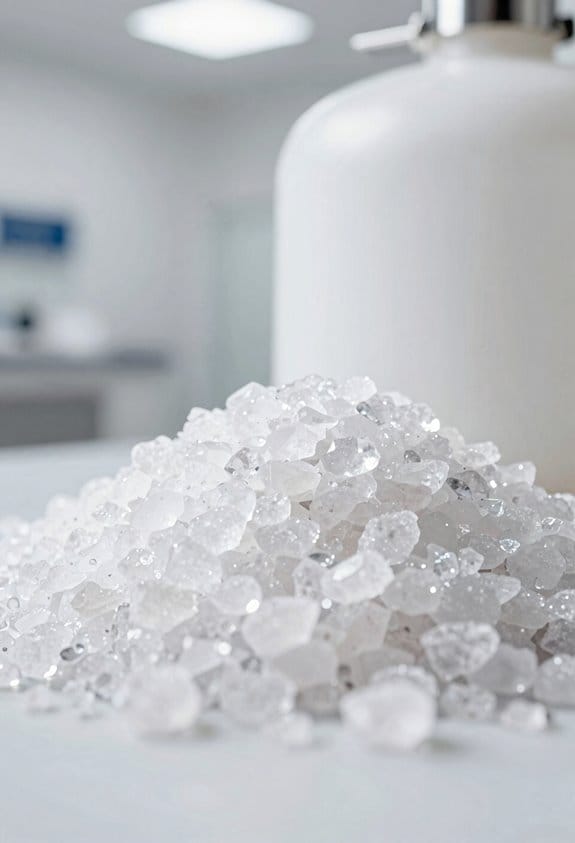
After the brine solution finishes its work removing hardness minerals from the resin beads, your water softener enters its final and vital stage: the rinse and recharge cycle. During this phase, fresh water flows rapidly through the tank, washing away remaining brine and displaced minerals. This flow stabilization step guarantees that no salt residue remains trapped in the resin bed. As the rinse completes, the sodium concentration within the beads gradually increases, restoring their original charge. The beads become fully recharged with sodium ions, preparing them to capture more calcium and magnesium minerals when your softener returns to service mode. This recharge process is essential for maintaining your system’s ongoing effectiveness in treating hard water.
Recommended Products

High-Performance 7 percent Cross-Link Water Softener Resin: This premium-grade polystyrene sulphonate cation exchange resin delivers rapid ion exchange, strong acidity, superior durability, high efficiency, enhanced performance, extended lifespan, and reliable consistency for use in residential, commercial, and industrial water softening systems across all pH levels.
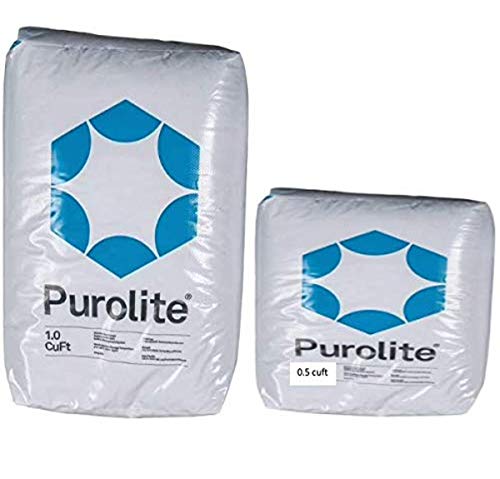
1.5 cuft of Purolite C100E resin (for 48k systems)

1.5 cuft of Purolite C100E resin (for 48k systems) plus funnel for easy refilling
Frequently Asked Questions
How Often Should I Add Salt to My Water Softener Tank?
I’d check your tank monthly during maintenance—like a telegraph operator monitoring signals. You’ll add salt every few weeks, depending on your water hardness and salt types you’re using for regeneration cycles.
Can a Water Softener Remove Iron and Other Minerals Besides Hardness?
Yes, I can tell you that water softeners capture iron and other minerals like manganese alongside hardness. However, iron filtration and manganese removal work best when levels aren’t excessive, requiring occasional maintenance.
Is the Sodium in Softened Water Safe for Drinking and Cooking?
Like a trade-off at a crossroads, softened water’s sodium is generally safe, though I’d monitor your sodium taste preferences and dietary considerations, especially if you’re sodium-sensitive or have health restrictions.
What Water Hardness Levels Require a Water Softener for Home Use?
I’d recommend you consider a softener when your water exceeds 1 GPG hardness. Moderate hardness around 60-120 mg/L typically benefits from treatment, though seasonal variation in your groundwater may affect when you’ll actually need one.
How Long Does a Complete Regeneration Cycle Typically Take to Finish?
I’d say a complete regeneration cycle typically takes two to eight hours, depending on your system’s size and settings. The resin cleaning process—including backwash, brine injection, and final rinse—determines cycle timing for peak softener performance.