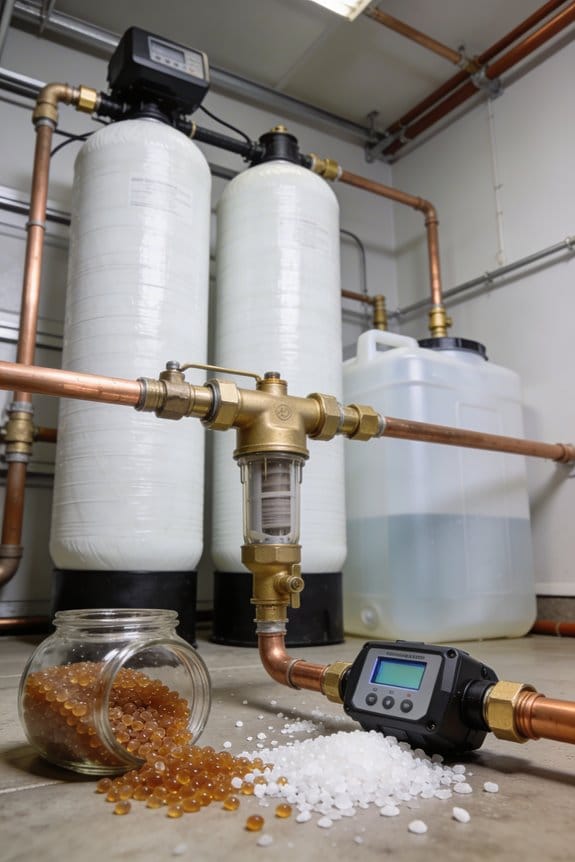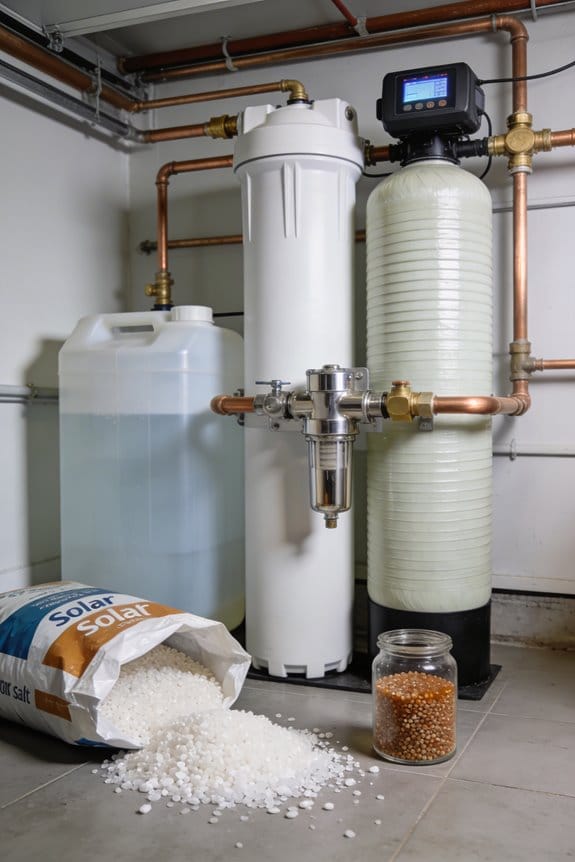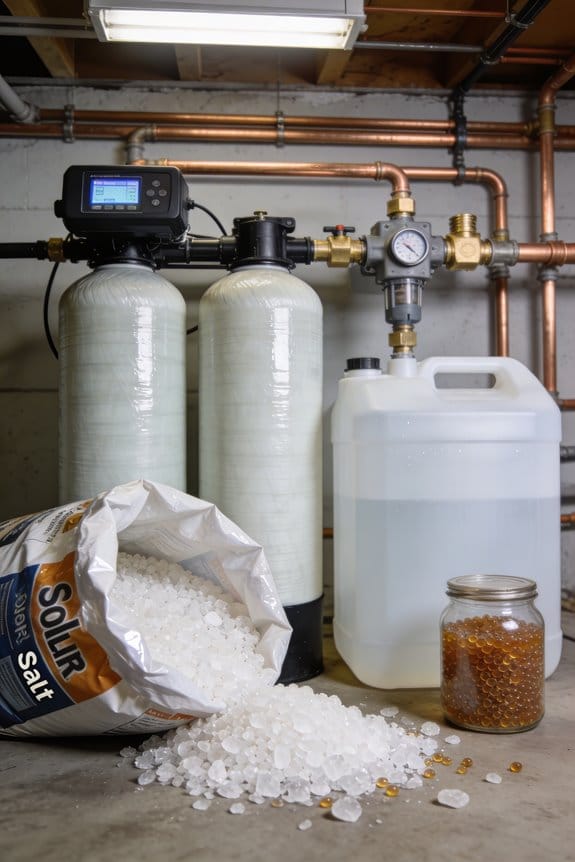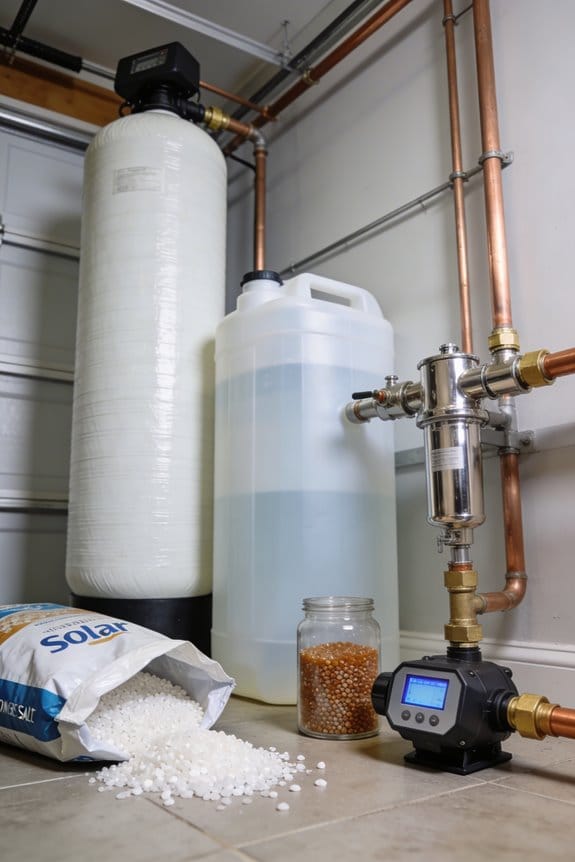
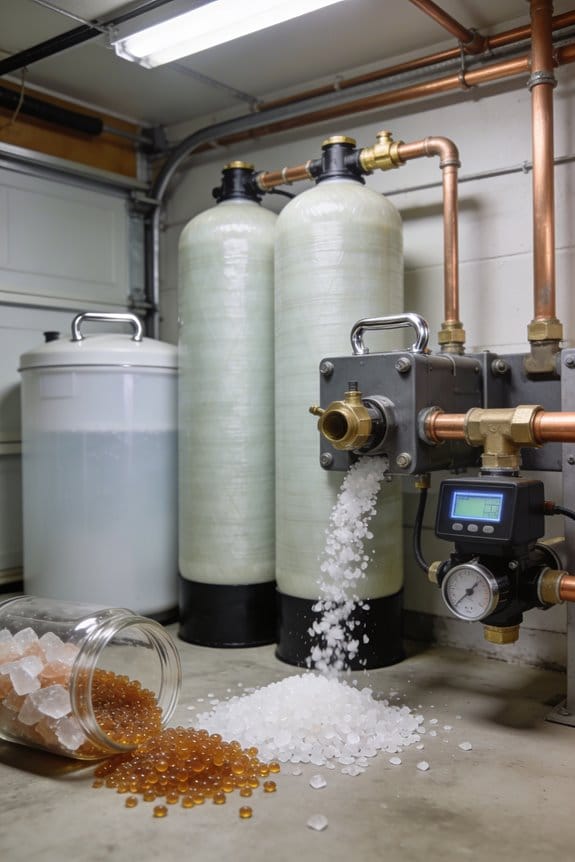

Whether you need a pre-filter depends on your water’s actual contaminants. Well water almost always requires one due to higher sediment and rust, while municipal water generally needs testing first. If you notice discoloration, cloudiness, staining, or odd smells, a pre-filter is essential. It removes sediment, iron, and chemicals that damage your softener’s resin bed, preventing costly repairs. Installing the right filter type upstream protects your system’s longevity and efficiency markedly.
Key Takeaways
- Well water almost always needs pre-filtration; municipal water requires testing to determine necessity.
- Pre-filters protect softeners by removing sediment, rust, iron, and chlorine that damage resin.
- Visible discoloration, cloudiness, staining, or odors indicate your water needs pre-filtration.
- Choose filter type based on contaminants: mechanical for sediment, carbon for chemicals and odors.
- Replace sediment filters every 3–6 months and carbon filters every 6–12 months for optimal protection.
Signs Your Water Needs Pre-Filtration
If you’ve noticed discoloration, cloudiness, or an unusual smell coming from your tap water, your water likely needs pre-filtration before it reaches your water softener. Visible signs like cloudy discharge from your faucets indicate suspended particles that can damage your softener’s resin bed. Faucet staining, whether reddish, brownish, or orange, suggests iron or rust contamination requiring mechanical filtration. Similarly, sediment buildup in your sink strainers signals sand or silt presence. If your water smells like rotten eggs, hydrogen sulfide requires carbon filtration. Well water users especially should watch for these indicators, as groundwater commonly contains these contaminants. Municipal water that appears hazy or leaves residue also warrants testing. Addressing these signs early protects your softener investment and improves water quality throughout your home.
Pre-Filter Necessity: Well Water vs. Municipal Water
Whether your home draws water from a private well or a municipal supply determines how critical a pre-filter becomes for your water softening system. Well water typically requires pre-filtration because groundwater contains higher levels of sediment, rust, and organic matter that can damage your softener’s resin bed. Municipal water, governed by Wellhead Regulations and quality standards, generally contains fewer contaminants, though utility comparisons reveal regional differences in water treatment. If your municipal supply appears cloudy or leaves stains, a pre-filter still benefits your system. I’d recommend testing your water first to identify specific contaminants. This analysis guides whether you need mechanical filtration for sediment or activated carbon for chemical removal, ensuring your softener operates efficiently regardless of your water source.
Recommended Products

💧 Perfectly designed for 1-2 bathrooms homes, the Aquasure Signature Series is the professional grade Whole House Water system that delivers high quality filtered, ultra-softened water to every outlet throughout your entire home. No need for manual regeneration, backwash, draining, this system automatically regenerates and backwash, making it cost efficient and easy to maintain

【 DESIGNED FOR 3-4 BATHROOMS 】 This 5-in-1 water treatment system treats up to 48,000 grains of hardness and includes a water softener, conditioner, pleated sediment filter, UV light, and reverse osmosis system for the ultimate level of softened water, purity, and protection against contaminants. Ideal for city, municipal, or well water sources.

💧 【 PERFECT FOR 4-6 BATHROOMS 】Rated to treat 64,000 Grains of hardness, this is the professional grade Whole House Water system that delivers high quality filtered, ultra-softened water to every outlet throughout your entire home.
When Do You Actually Need a Pre-Filter?
Knowing your water source is the first step, but identifying the actual contaminants in your water tells you whether a pre-filter will genuinely help your softening system. I’d recommend testing your water to reveal sediment, rust, or organic matter that could damage your softener’s resin bed. Seasonal fluctuations matter too—spring runoff might introduce more sediment, requiring temporary or permanent pre-filtration. Your usage patterns also factor in; high water consumption increases the likelihood of contaminant buildup. If you see visible discoloration, cloudiness, or staining in your tap water, a pre-filter becomes essential. Well water almost always needs one, while municipal water requires testing first. Don’t assume you need protection—confirm it through analysis.
Recommended Products
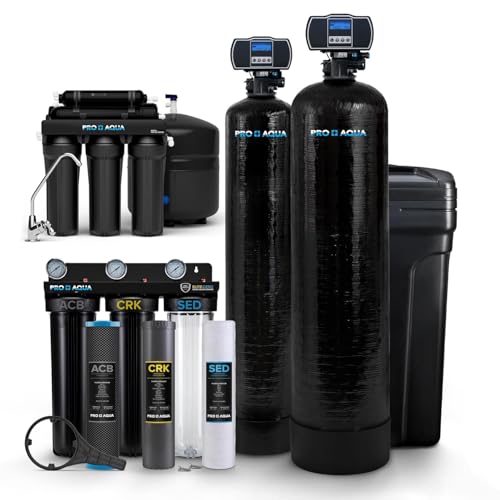
5 STAGE ULTIMATE PROTECTION: Specifically designed to provide unmatched filtration performance for well water. This whole house filtration package will provide safe water for your entire home and remove many contaminants found in well water as well as hardness.

【 DESIGNED FOR 4-6+ BATHROOMS 】This bundle includes our Salt-Free Conditioner, a Fortitude Pro Water Treatment System and a Pleated Sediment Pre-Filter, providing salt-free water for the entire house. Safeguard your plumbing and appliances from scale build-up without the need for electricity or salt.

NSF Certified to remove PFOS, PFOA, Lead, Cysts, Chlorine and Chloramine
What Contaminants a Pre-Filter Removes
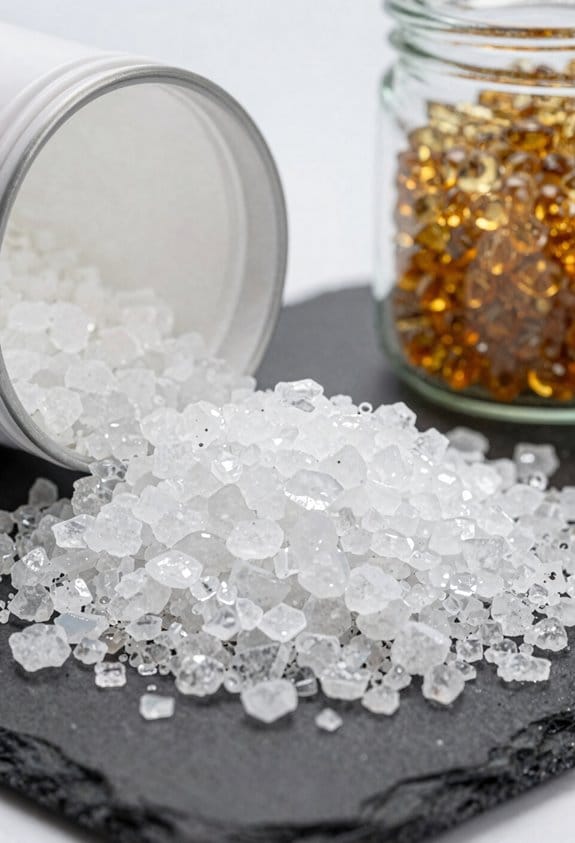
A pre-filter acts like a gatekeeper for your water softener, stopping unwanted materials before they cause damage downstream. I’ll explain what it traps so you understand its value.
Pre-filters remove sediment, sand, rust, and suspended particles that mechanical filtration captures effectively. They also reduce heavy metals like iron and manganese, which discolor water and harm your softener’s resin. Beyond particles, activated carbon pre-filters eliminate chlorine and chloramines affecting taste and odor.
Some advanced pre-filters provide microbial removal through ultrafiltration membranes, blocking bacteria and viruses without stripping beneficial minerals. They also trap organic substances, industrial waste, clay, and silt—contaminants your softener simply can’t handle.
How Pre-Filters Protect Your Water Softener
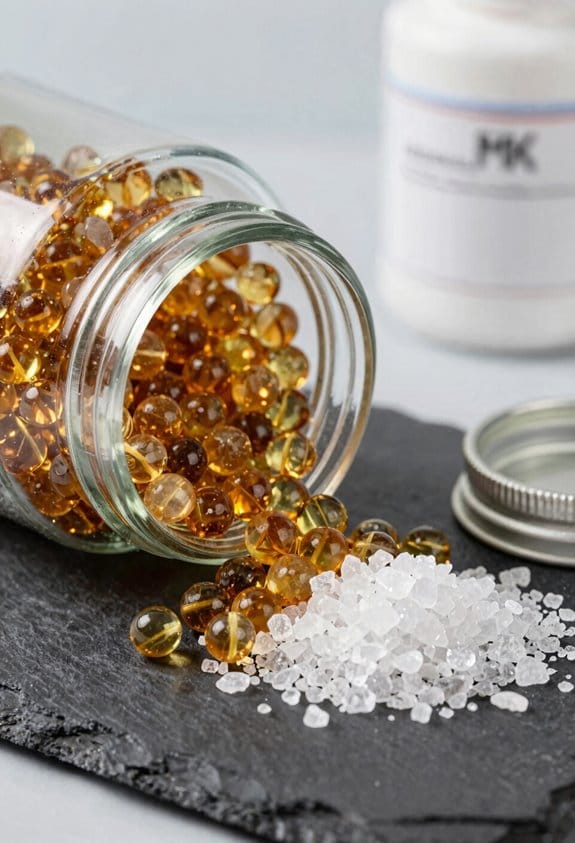
Installing a pre-filter upstream of your water softener gives your system a crucial layer of defense against damage and premature failure. When sediment, rust, and organic matter bypass the pre-filter, they accumulate on the resin bed, causing fouling that reduces softening effectiveness. This buildup forces your softener to work harder, shortening its lifespan markedly. A pre-filter maintains flow optimization by preventing pressure drops that occur when particles clog internal components. By trapping contaminants before they reach your softener, you’re protecting the resin protection that makes ion exchange possible. This preventive approach saves you money on costly repairs and resin replacements, ensuring your system operates at peak efficiency for years. Regular pre-filter maintenance keeps everything running smoothly.
Pick the Right Pre-Filter Type for Your Water
Now that you understand how pre-filters shield your softener from damage, selecting the right type becomes your next step in protecting your water quality. I’d recommend considering your specific water contaminants first, since different filters target different problems. Mechanical filters work best for sediment and rust, while activated carbon handles chlorine and odors. Your budget considerations matter too—sediment filters cost less initially than replacing damaged softener components later. Check media compatibility with your water’s unique composition by getting it tested. A professional can match your water’s needs with the appropriate filter micron size, whether coarse or fine. This targeted approach guarantees you’re investing wisely while maximizing your softener’s protection and lifespan.
Recommended Products

Perfect for homes with 5 to 6 bathrooms and up to 6 family members, who desire softened water and clean, chemical-free water for the whole family.

【 DESIGNED FOR 3-4 BATHROOMS 】This 4-in-1 water treatment system bundle combines a water softener, pre-filter, UV light, and a reverse osmosis system to provide the highest level of water purity and protection against contaminants. Ideal for city, municipal, or well water sources, it's rated to treat up to 48,000 grains of hardness.
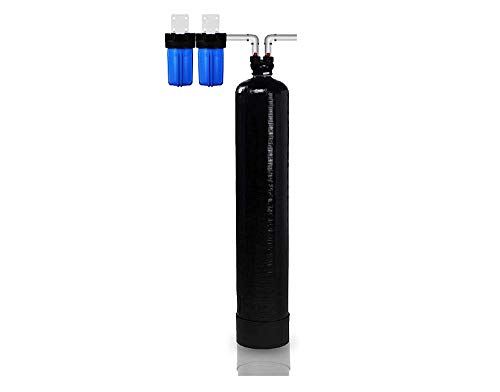
NO lime scale build-up on pipes, fixtures or appliances and can even remove existing scale in some cases! Designed for 3-6 bathrooms homes with 15 gallons/minute flow rate - effectively prevents scale buildup and prolongs lifespan of pipes and home appliances without the use of harsh chemicals or salt.
Installation and Placement Best Practices
Since proper placement determines how effectively your pre-filter protects your water softener, you’ll want to install it upstream—meaning before the water reaches your softener in your whole-house system. I recommend consulting a water treatment professional, because they’ll assess your pipe routing and guarantee correct positioning at your main water line entry point.
Install bypass valves alongside your pre-filter, allowing you to service or replace cartridges without shutting down your entire system. Position the pre-filter as close as possible to where water enters your home, minimizing contaminant travel through exposed pipes. This upstream placement guarantees sediment, rust, and other particles never reach your softener’s resin bed. Proper installation protects your investment and maintains consistent water quality throughout your household.
Recommended Products

Advanced Chlorine Removal: WECO Backwashing filter with KDF-55 eliminates chlorine in municipal water, ensuring clean, odor-free drinking and shower water.

Automatic Water Distiller: Durastill makes the most popular automatic water distillers made in the USA. Model 3040 is the deluxe version of a 8 gallon per day distiller with 10 gallon reserve tank, with features including casters and a level gauge.

Cleaner, Healthier Water from Every Tap in Your Home – Specially designed for well water. High-performance water filter system for great-tasting water, improved air quality, healthier hair & skin, and protected pipes & appliances
Pre-Filter Maintenance and Long-Term Savings
Because pre-filters trap sediment, rust, and other contaminants before they reach your softener, you’ll need to maintain them regularly to keep them working effectively. I’d recommend checking your replacement schedules based on water quality and filter type, since sediment buildup reduces flow and efficiency. Most sediment filters need replacing every three to six months, while carbon filters last six to twelve months depending on usage.
Though replacement cartridges cost between twenty and fifty dollars, they’re markedly cheaper than repairing a damaged softener resin bed. When you calculate lifetime costs, investing in routine pre-filter maintenance prevents expensive softener repairs and extends system longevity. Regular filter changes also maintain water pressure and quality throughout your home, protecting appliances from sediment damage that’d cost far more than preventative care.
Recommended Products

The WECO Backwashing filter with KL/OZ is a specialized Point-Of-Entry (POE) system designed for municipal and well water supplies. Utilizes iron reduction media consisting of manganese dioxide (MnO2) coated onto naturally mined ZEOSORB. Lightweight filtration media with various functions and properties for water treatment and remediation.
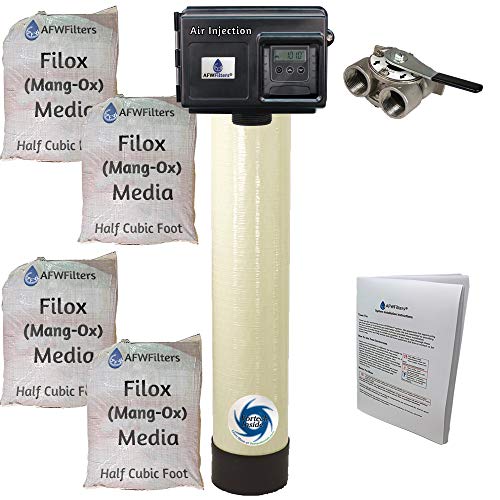
DIY install with supplemental instructions by AFWFilters

ADVANCED FILTER MEDIA - This whole house water filter system utilizes premium KDF55 and high-quality coconut shell activated carbon to effectively remove chlorine, lead, heavy metals, PFAS, chloramine, radon, herbicides, and more.
Frequently Asked Questions
How Often Should I Replace My Pre-Filter Cartridge?
I’d say you’re looking at replacing your cartridge every three to six months, though I’ve seen filter lifespans shrink dramatically with heavy sediment buildup. Your water’s condition dictates everything—test it regularly.
Can a Pre-Filter Remove All Water Hardness Minerals?
No, I can’t remove hardness minerals with a pre-filter alone. You’ll need ion exchange or lime softening methods. Pre-filters tackle sediment and contaminants, while softeners handle calcium and magnesium minerals specifically.
What Is the Average Cost of a Pre-Filter System?
A pre-filter’s your home’s first line of defense. I’d say installation cost runs $300–$800, with maintenance cost around $50–$150 yearly for cartridge replacements, depending on your water quality needs.
Will a Pre-Filter Reduce Water Pressure in My Home?
I’d say a well-maintained pre-filter won’t noticeably reduce your water pressure. However, if it gets clogged with sediment, you’ll notice flow restriction. I recommend checking your pressure gauge regularly to monitor any changes.
Can I Install a Pre-Filter Myself or Need a Professional?
I’d recommend getting a professional unless you’re plumbing-experienced. DIY considerations include potential warranty implications—improper installation may void your softener’s coverage. A pro guarantees proper positioning upstream and correct connections.