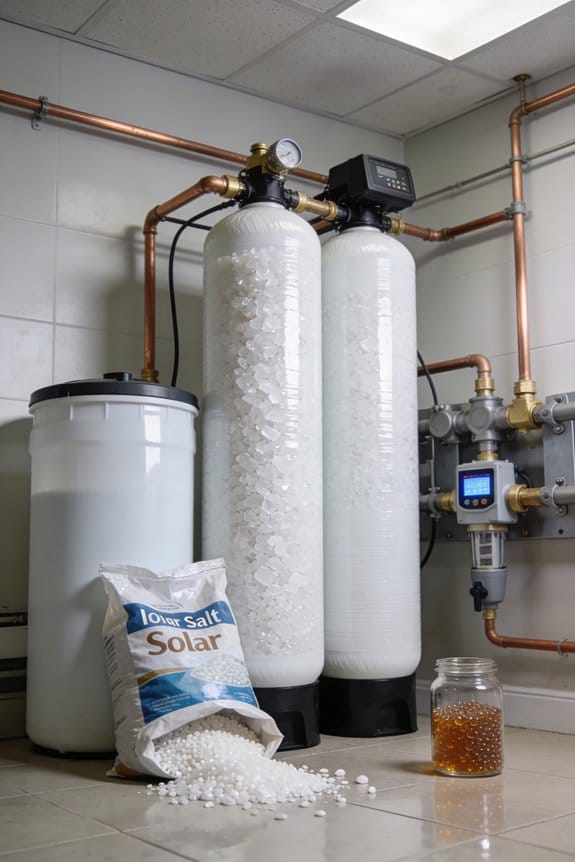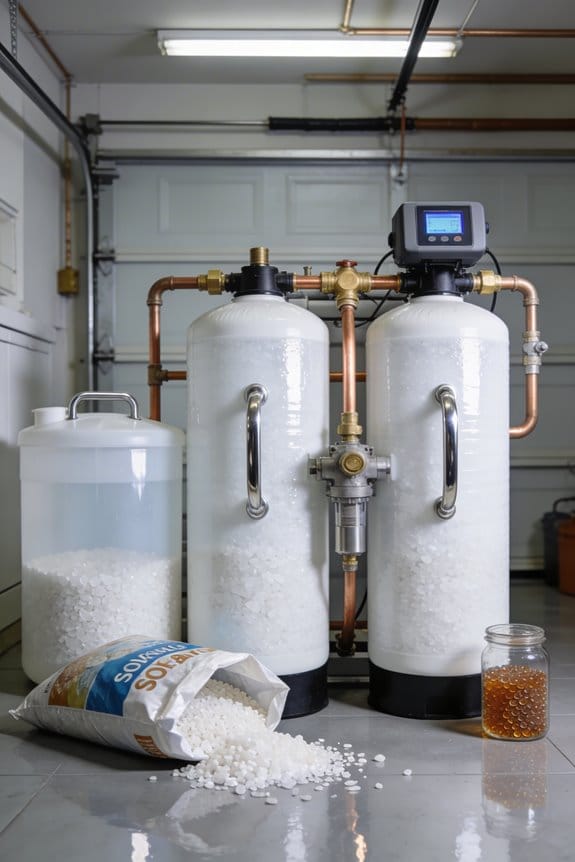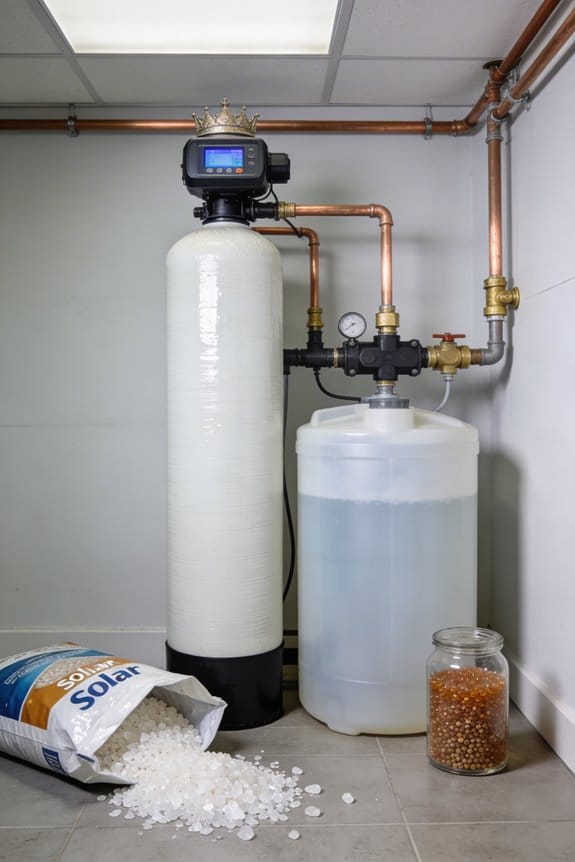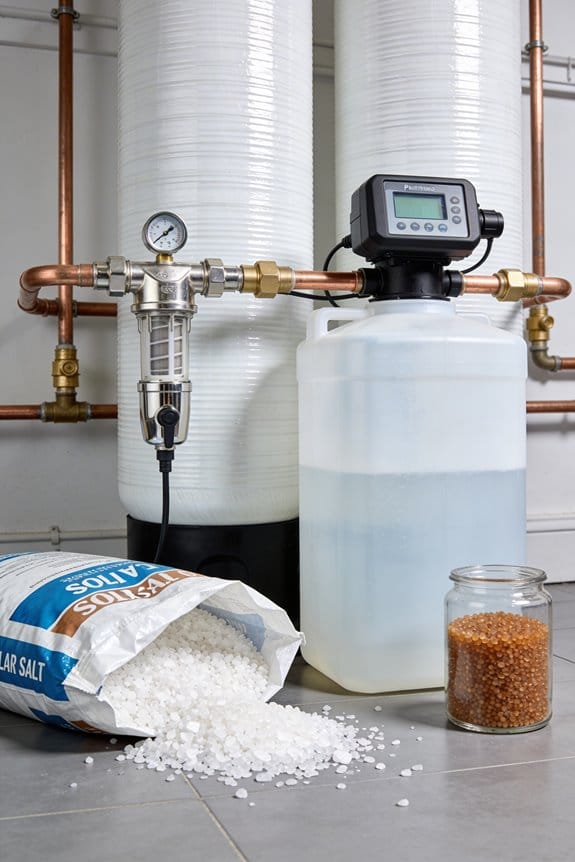
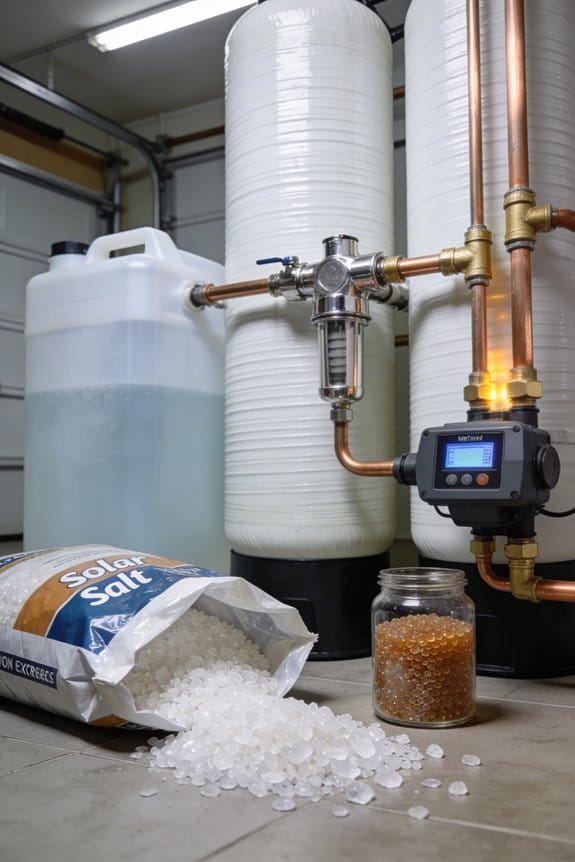

I’ll help you choose the best softener salt for your needs. Rock salt costs less upfront but requires frequent tank cleaning due to impurities. Solar salt balances affordability with reduced maintenance, making it ideal for most households. Evaporated salt reaches 99.9% purity, minimizing buildup and extending your system’s life, though it costs more. Your water hardness level matters most—very hard water above 180 mg/L calls for evaporated salt’s superior performance. Understanding each option’s maintenance demands and long-term expenses reveals which investment truly saves you money.
Key Takeaways
- Rock salt costs least upfront but requires frequent maintenance; solar and evaporated salts offer better long-term value.
- Evaporated salt (99.9% purity) minimizes residue and maintenance; ideal for very hard water over 180 mg/L.
- Solar salt balances moderate cost with reduced buildup; suits most households with eco-conscious preferences and moderate hardness.
- Higher purity salts dissolve better, create less sludge, and extend resin lifespan compared to impurity-laden rock salt.
- Match salt type to water hardness: rock salt for low hardness budgets, solar for moderate hardness, evaporated for severe hardness.
Why Salt Purity Matters to Your Softener
When you’re choosing salt for your water softener, you might think all salt works the same way, but the purity level actually makes a significant difference in how well your system performs. Higher purity salt contains fewer impurities, which means less residue accumulates in your brine tank. This directly affects your resin lifespan because impurities create hard crusts that disrupt the softening process and force your resin to work harder. Rock salt, ranging from 78–95% purity, leaves more buildup than solar salt at 85–99%, while evaporated salt reaches 99.9% purity. Understanding salt composition helps you make smarter decisions. Lower impurity levels mean reduced maintenance, extended equipment life, and consistent water softening performance over time.
Rock Salt: The Budget Option and Its Hidden Costs

Rock salt typically seems like the obvious choice when you’re looking at water softener options, since it costs substantially less than solar or evaporated alternatives. However, the initial savings come with significant drawbacks. Rock salt contains impurities like calcium sulfate, which accumulate as sludge in your brine tank. This requires frequent cleaning and maintenance that other salt types don’t demand. Beyond your system, rock salt’s mining impacts and environmental footprint deserve consideration. The extraction process disturbs landscapes and consumes resources. Additionally, these impurities cause salt bridges—hard crusts that prevent proper brine formation—and reduce your softener’s efficiency. Over time, you’ll spend more on repairs and maintenance than you’d save initially, making rock salt a false economy for most households.
Recommended Products

PROTECTS PLUMBING AND APPLIANCES FROM HARD WATER SCALE WITH ZERO WATER WASTE FILTERS DIRT, SAND, SILT, CLAY, RUST, AND OTHER DEBRIS WITH REUSABLE SEDIMENT FILTER CARTRIDGE CAN BE USED FOR HOMES WITH UP-TO 5 BATHROOMS EASY INSTALLATION, LOW MAINTENANCE 120-DAY SATISFACTION GUARANTEE

Perfect for Families Large or Small: Designed for households of 1–5+ people dealing with hard water. The EcoPure EP42 treats up to 42,000 grains and removes up to 11 ppm of clear water iron, protecting your entire home from scale buildup and stains

Salt-Free Scale Prevention & Healthy Minerals Retention: Our Whole House Salt-Free Water Softener utilizes an advanced ion exchange resin to effectively inhibit scale formation throughout your home's plumbing and appliances. Unlike traditional softeners, it smartly retains beneficial calcium and magnesium minerals in your water, providing scale-free protection without removing healthy elements
Solar Salt: The Balanced Choice for Most Households
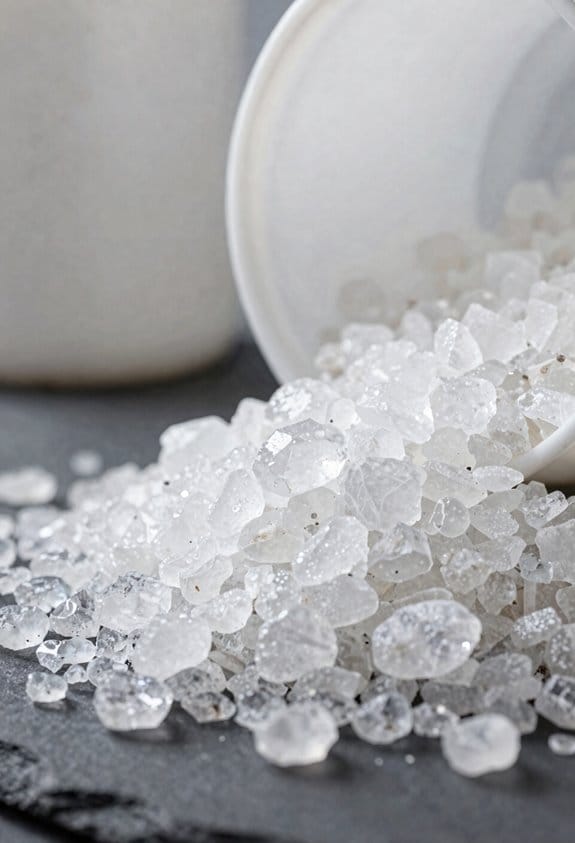
If you’re looking for a middle ground between rock salt’s maintenance headaches and evaporated salt’s premium price tag, solar salt offers a practical solution that works well for most households. Created through natural seawater evaporation in shallow ponds, solar salt achieves 85–99% purity while maintaining eco-friendly sourcing practices. This method uses sun and wind energy, reducing environmental impact compared to mined alternatives.
Solar salt’s pellet dissolution rates exceed rock salt markedly, meaning your softener processes it more efficiently with less residue buildup. You’ll need annual cleaning rather than frequent maintenance, extending your system’s lifespan substantially. The moderate cost sits between budget rock salt and premium evaporated options, making it ideal for standard systems and eco-conscious users managing moderate water hardness.
Recommended Products

Bulk Purchase: 6 bags of high-quality water softener salt crystals, with each bag weighing 40 lbs.

F125050000 4PK WTR Soft Salt Bar - Quantity 1

240 lbs Total Supply (6 x 40 lb Bags) – Long-lasting value pack designed to keep your water softener running efficiently with fewer refills.
Evaporated Salt: Premium Performance for Hard Water

For the most demanding water softening situations, evaporated salt consistently delivers superior performance through its exceptional purity and efficiency. I’d recommend this type when you’re dealing with very hard water exceeding 180 mg/L calcium carbonate, since it dissolves completely with minimal residue left behind.
The evaporated benefits include preventing salt bridges, reducing system clogs, and requiring minimal maintenance compared to other options. You’ll appreciate how effectively it works in high-efficiency softeners without causing buildup problems.
Regarding pellet storage, evaporated salt forms into convenient pellets that resist clumping even in humid environments, making them easier to handle and store than alternatives. While the higher cost requires a larger upfront investment, the reduced maintenance demands and superior performance justify the expense for households with severe water hardness issues.
Recommended Products

BULK VALUE: Six 40-pound bags of water softener salt pellets for extended supply and convenience

High Efficiency: Magnesium chloride is renowned for its ability to melt ice quickly, even at temperatures as low as -15°F. This makes it one of the most effective de-icing products available, ensuring your surfaces remain clear and safe.
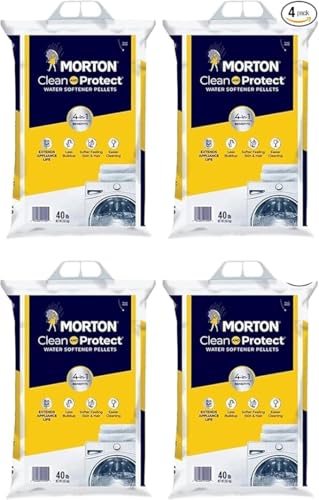
4 Bags of Clean and Protect, 160lbs total. Enhanced Cleaning Benefits: Softer water makes dishwashing more effective and leaves your hair and skin feeling softer and smoother after bathing. Protects Pipes and Appliances: Specially formulated to prevent hard water buildup, extending the life and efficiency of your appliances and plumbing system. Minimizes Maintenance: Reduces the negative effects of hard water, leading to fewer maintenance issues and improved appliance performance in your home. User-Friendly Design: Comes in a 40 lb. bag with a sturdy handle and an easy-tear opening for effortless lifting, carrying, and pouring.
Your Water Hardness Level: The Real Deciding Factor

Your water hardness level determines which salt type will work best for your softener, since different salts perform most effectively at different hardness ranges. I’d recommend household testing first to establish your decision threshold. If your water contains moderate hardness, solar or evaporated pellets work well. However, when hardness exceeds 180 mg/L calcium carbonate, evaporated salt becomes essential for peak performance. Rock salt suits lower hardness levels where affordability matters more than purity, though it requires frequent maintenance. The grain size of your chosen salt also affects dissolution rates and system efficiency. Understanding your specific water hardness guarantees you’ll select the salt type that balances cost, maintenance needs, and softening effectiveness for your household’s requirements.
Salt Type Maintenance: What Your System Demands
Choosing the right salt type means accepting different maintenance responsibilities, since each variety leaves behind varying amounts of residue that affects how often you’ll need to clean your softener. Rock salt demands the most attention, requiring regular brine tank cleaning because impurities create hard crusts that disrupt the system. Solar salt needs less frequent maintenance, though annual cleaning remains advisable for peak performance. Evaporated salt minimizes both clogs and buildup, making it the lowest-maintenance option overall. When storing salt seasonally, consider humidity control to prevent clumping, especially with evaporated varieties. Pellet handling becomes easier with purer salts since they dissolve more completely. Your commitment level to maintenance should directly influence which salt type you select for your water softener.
Balancing Performance and Budget: When Premium Salt Pays Off
While maintaining your softener requires different levels of effort depending on salt choice, the real question becomes whether spending more upfront on premium salt actually saves you money over time. Evaporated salt costs more initially, but its high purity means fewer system cleanings and longer equipment lifespan. Rock salt remains cheapest, yet frequent maintenance and potential repairs offset savings. Solar salt occupies the middle ground, offering better long-term savings than rock salt without evaporated salt’s premium price. Consider environmental tradeoffs too—solar salt production uses natural resources sustainably, while rock salt mining impacts landscapes. For very hard water exceeding 180 mg/L calcium carbonate, evaporated salt’s efficiency justifies higher costs through reduced water waste and energy consumption. Your budget and water hardness determine the smartest choice.
Recommended Products
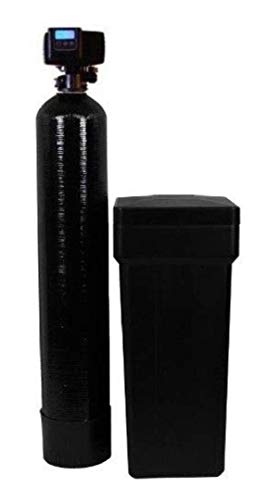
High flow whole house water softener for larger homes

Aquasana SimplySoft 40,000 Grain Water Softener Base Tank & Cabinet System is ideal for homes with up to 5 people and 4 bathrooms. This system comes with a 5/10-Year Limited Warranty so you can be confident in your purchase. Call 866-662-6885 for customer service and installation support.
Perfect for Families: Designed for households of 1–4 people battling hard water. The EcoPure EP31 treats up to 31,000 grains to protect your home from mineral buildup, stains, and scale damage
Choosing the Right Water Softener Salt for Your Home
After weighing performance against budget, the next step involves matching a salt type to your specific household conditions. Your salt selection depends on understanding your home chemistry, particularly your water hardness level and system type.
If you’re managing moderate hardness with a standard softener, solar salt offers excellent balance between cost and performance. For very hard water exceeding 180 mg/L calcium carbonate, evaporated salt‘s high purity justifies the premium price. Rock salt works best when budget constraints matter most and you’re willing to perform regular maintenance.
Consider your lifestyle too. Heavy water use or frequent cleaning cycles favor evaporated salt’s efficiency. Eco-conscious households benefit from solar salt’s natural production method. Ultimately, matching salt type to your water conditions and maintenance tolerance guarantees optimal softener performance and longevity.
Recommended Products

STOP SCALE BUILDUP: HydroFLOW’s technology prevents scale from forming in your home’s water systems, keeping your faucets and shower nozzles running smoothly and efficiently.

[Revolutionary Water Treatment] Experience unparalleled water quality enhancement with iSpring EDV2 electronic descaler. Say goodbye to hard water woes without resorting to chemicals, salt, or tedious maintenance. Witness a noticeable improvement in just 12 weeks.

morton clean and protect 40 lbs (6 pack) - 240 lbs
Frequently Asked Questions
Can I Mix Different Salt Types in My Water Softener Brine Tank?
I wouldn’t recommend mixing salt types in your brine tank—like using a telegraph in today’s age, it’s outdated practice. Cross contamination concerns arise, potentially damaging your resin bed. Each salt type’s distinct purity levels create incompatible chemical reactions.
How Often Should I Check My Salt Tank Level Regardless of Salt Type?
I’d recommend checking your salt tank monthly, though biweekly inspections work better if you’re a heavy water user. This prevents your softener from running dry and guarantees consistent performance regardless of which salt type you’re using.
What’s the Shelf Life of Evaporated, Solar, and Rock Salt Before Degradation?
I’ll tell you that all three salt types—evaporated, solar, and rock—maintain their shelf longevity indefinitely when you store them in dry conditions. Humidity’s your main enemy for degradation.
Does Salt Type Affect the Frequency of Water Softener Regeneration Cycles?
You’d think salt type doesn’t matter, but I’m telling you it does. Purer salts like evaporated enable efficient ion exchange, reducing regeneration timing. You’ll find water hardness determines cycle frequency, though higher-purity options minimize regeneration cycles needed overall.
Are There Regional Availability Differences Affecting Which Salt Type I Can Purchase?
Yes, regional availability markedly impacts your salt choices. Supply chains, import restrictions, and climate impacts vary by location. I’d recommend checking local distributors to see which types—rock, solar, or evaporated—they consistently stock.