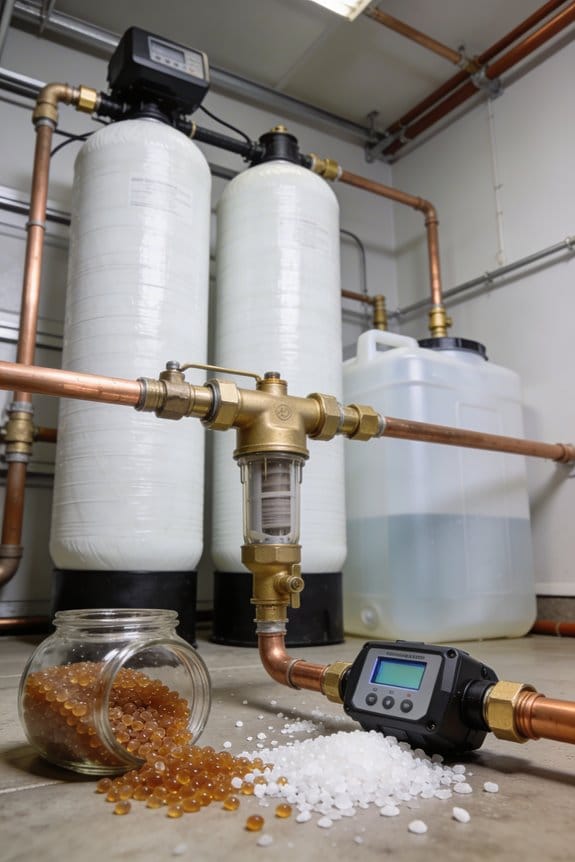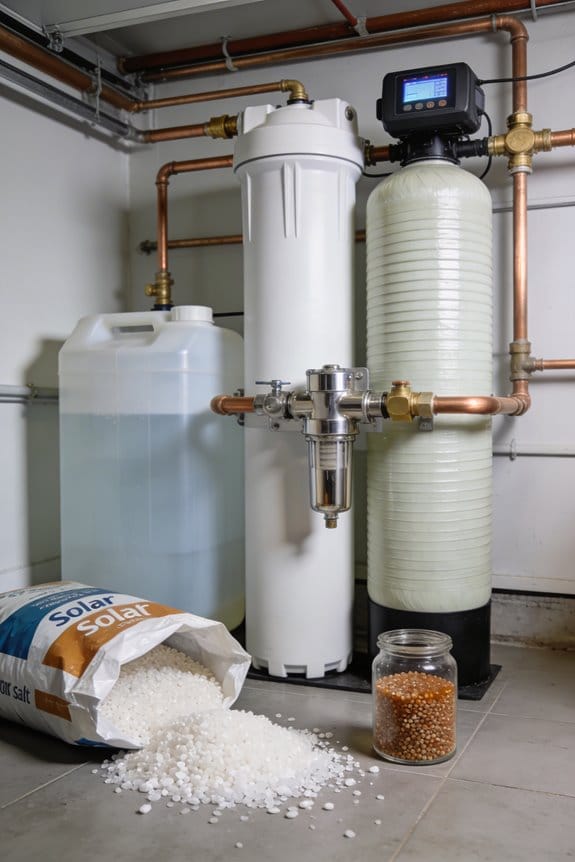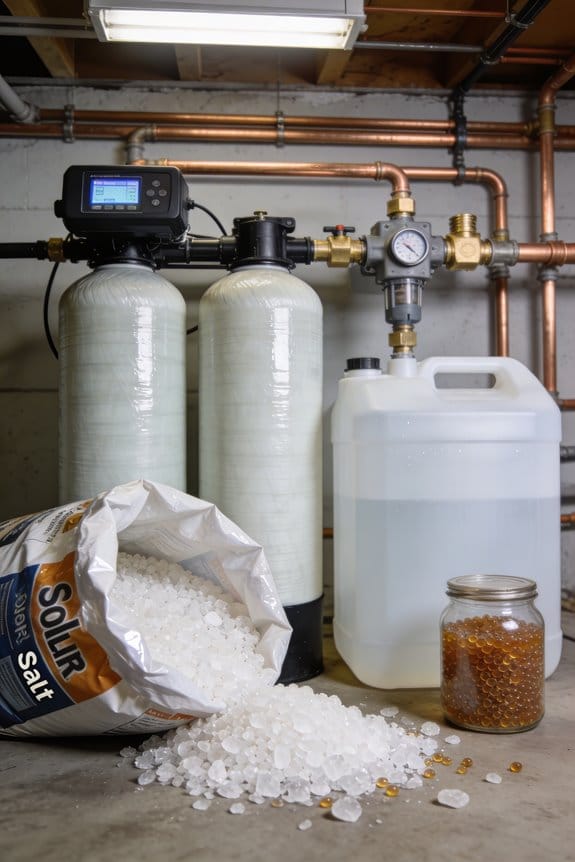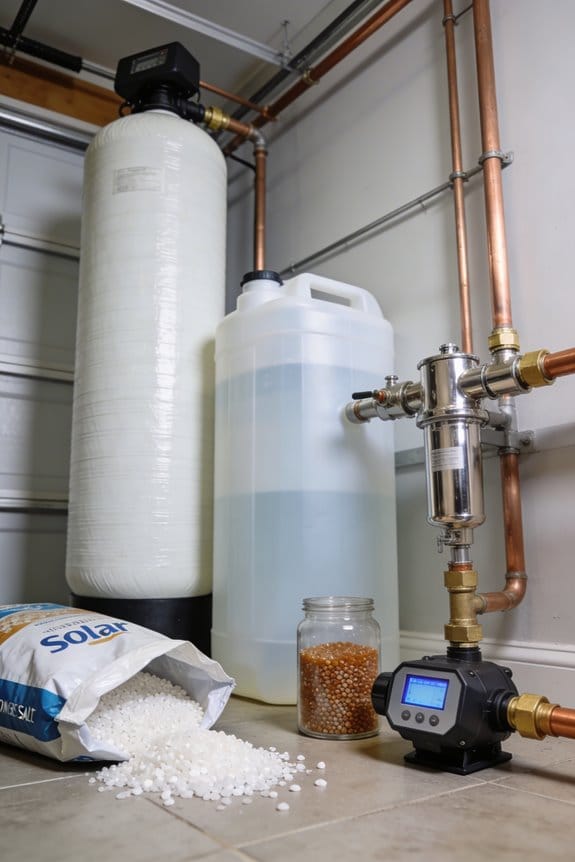
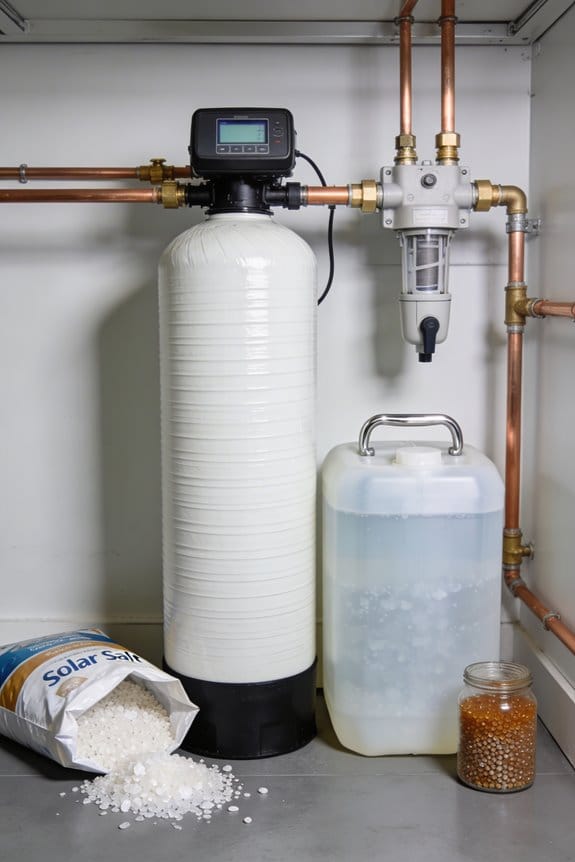

Water softeners detect saturation through two primary methods. Demand-initiated systems use flow meters and sensors to monitor your water usage and hardness levels, triggering regeneration only when the resin becomes saturated with minerals. Time-based softeners, conversely, regenerate on a fixed schedule—typically every one to three days—regardless of actual water consumption. Both methods restore the resin’s ion-exchange capacity by flushing trapped minerals and recharging with sodium. Understanding which system you own helps explain your softener’s regeneration patterns and salt consumption rates.
Key Takeaways
- Water softeners use flow meters to track water consumption and predict when resin capacity will become exhausted.
- Timer-based systems regenerate on preset schedules, typically every 1–3 days, regardless of actual water usage patterns.
- Smart sensors detect hardness levels in output water to signal mineral breakthrough and trigger regeneration automatically.
- Electronic controls combine sensor and meter data with predictive algorithms to optimize regeneration timing and conserve resources.
- Regeneration restores resin by flushing trapped minerals and recharging with sodium from the brine tank.
How Do Water Softeners Know When to Regenerate?
Water softeners regularly need to know when their resin beads have accumulated enough hardness minerals to stop working effectively, and they’ve got a few different methods for figuring this out. Your system uses resin monitoring to track when sodium ions get replaced by calcium and magnesium through mineral displacement. Some softeners rely on demand-initiated regeneration, which monitors your water usage with a flow meter and calculates remaining capacity based on hardness levels. Others use time-based regeneration that triggers cycles on fixed schedules, typically every few days. Additionally, sensor technology detects hardness levels in your output water, while electronic controls predict saturation from your usage patterns. These different approaches guarantee your softener regenerates at the right moment, maintaining effective water softening throughout your home.
Demand-Initiated Regeneration: Regenerating Only When Needed
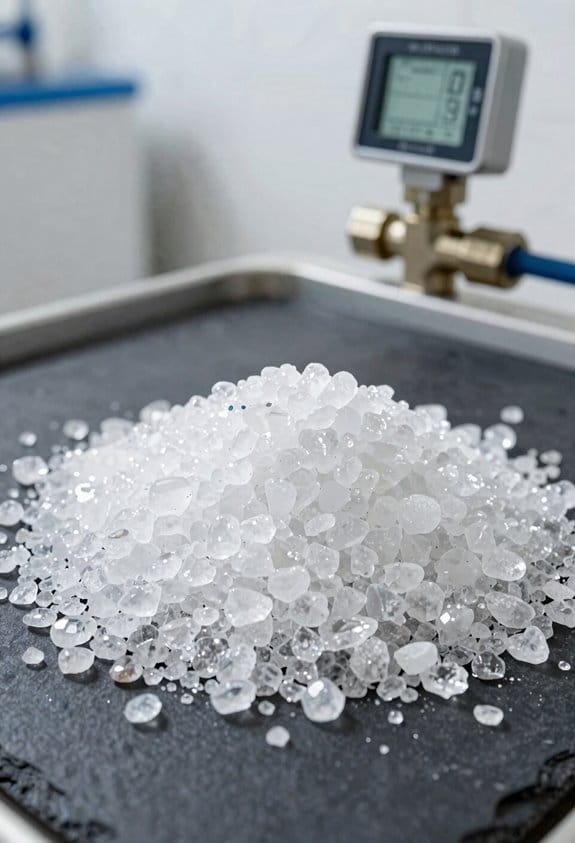
Most water softeners don’t regenerate on a fixed schedule, but instead wait until they’ve actually processed enough water to justify the cycle, which is where demand-initiated regeneration comes in. This method tracks your daily water consumption through a flow meter, calculating how much capacity your resin’s got left. When the system predicts the resin will soon become saturated based on your usage patterns, it triggers regeneration automatically. This approach offers significant advantages: it conserves both salt and water compared to timed methods, since you’re only regenerating when necessary. By monitoring your household’s unique water consumption, demand-initiated systems adjust their frequency during high-demand periods, ensuring optimal salt efficiency and reducing waste.
Recommended Products
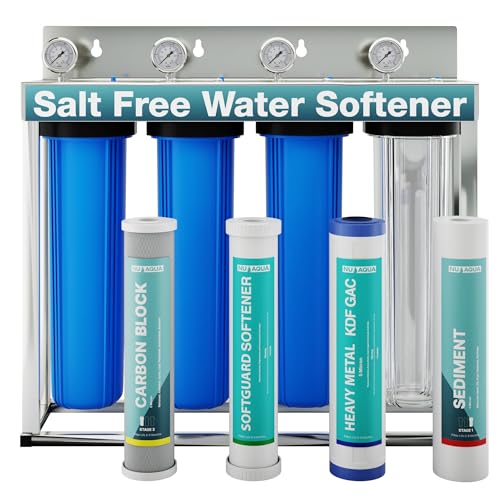
SALT FREE SOFTENING TECHNOLOGY: The NU Aqua Whole House Water Filter System utilizes advanced scale prevention media to reduce hard water buildup without using salt, protecting plumbing and appliances while preserving beneficial minerals like calcium and magnesium.

【 PERFECT FOR LARGE HOUSEHOLDS】 Ideal for 6-8 people with up to 6 bathrooms on city, municipal, and well water sources, this heavy-duty whole house water softener system delivers ultra-soft water to every tap.

Perfect for Families Large or Small: Designed for households of 1–5+ people dealing with hard water. The EcoPure EP42 treats up to 42,000 grains and removes up to 11 ppm of clear water iron, protecting your entire home from scale buildup and stains
Time-Based Regeneration: The Fixed-Schedule Method
Unlike demand-initiated systems that respond to your actual water usage, time-based regeneration operates on a preset clock that triggers the cycle regardless of how much water you’ve consumed. Your softener regenerates on a fixed schedule, commonly every one to three days, often programmed for nighttime maintenance at 2 a.m. to minimize disruption to your household.
This approach guarantees your resin gets restored regularly, even if it isn’t fully exhausted. However, scheduled drawbacks exist. You’ll waste salt and water on unnecessary regenerations during low-usage periods, and you might run out of soft water if consumption spikes unexpectedly. The complete cycle typically finishes within two hours, concluding by 4 a.m. Time-based systems offer simplicity and reliability, though they’re less efficient than demand-initiated alternatives.
Recommended Products

💧【 IDEAL FOR 4-6 BATHROOMS 】The Aquasure Harmony Series is engineered to handle up to 70,000 grains of hardness by removing skin damaging hard minerals like calcium and magnesium, providing professional-grade softened water to every outlet throughout your home.
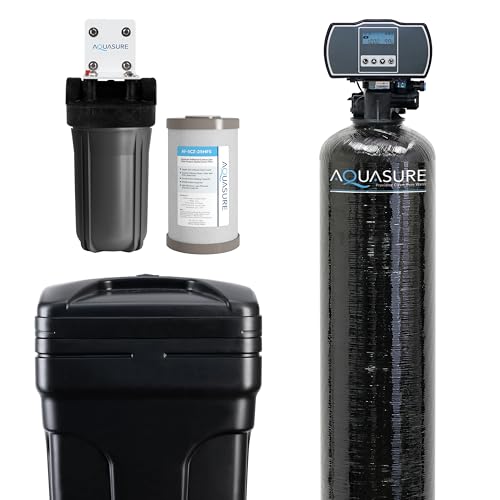
💧【 PERFECTLY DESIGNED FOR 3-4 BATHROOMS 】The Aquasure Harmony Series professional grade whole house water softener is rated to treat 50,000 grains of water hardness, removing skin damaging hard minerals like calcium and magnesium that clog up the skin pore and causes irritation.

INDUSTRY-LEADING 0.2 MICRON PROTECTION. Our two-stage filter system, with best-in-class 0.2-micron protection against contaminants – better than all other in -line, single or dual canister RV water filter systems on the market.
Why Resin Saturation Forces Regeneration?

Regardless of whether your softener runs on a fixed schedule or waits for demand signals, the underlying reason regeneration happens centers on resin saturation—a process you need to understand to see why your system can’t soften water indefinitely. Inside your softener tank, tiny resin beads perform ion exchange, trading sodium ions for calcium and magnesium minerals in your water. Over time, these beads become saturated, meaning they’ve accumulated so many hardness minerals that they can’t exchange ions effectively anymore. When bead fouling occurs—when minerals completely coat the resin surface—your softener stops working. Regeneration restores the beads by flushing away trapped minerals and recharging them with fresh sodium ions, enabling continued softening performance.
How Meters and Sensors Trigger Smart Regeneration?
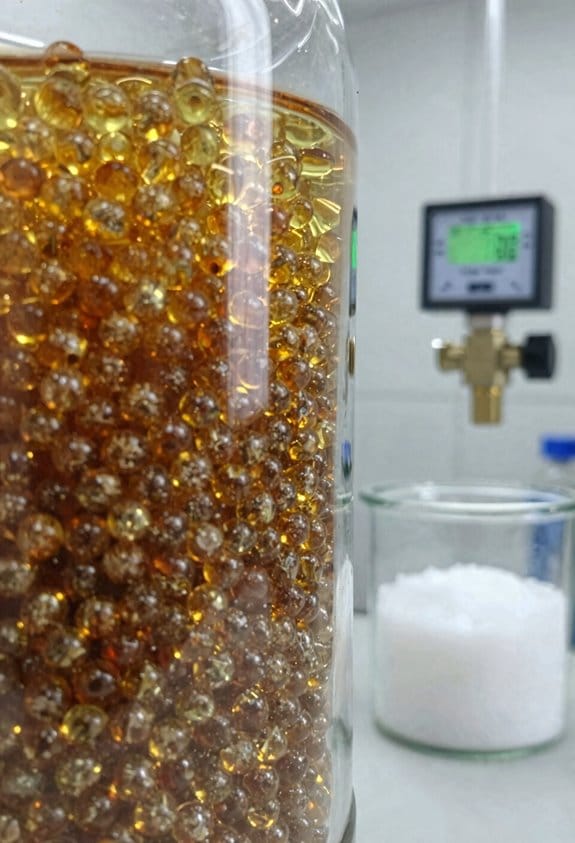
While resin saturation remains the fundamental reason regeneration must occur, the timing of when you regenerate depends heavily on technology that monitors your water usage and quality in real time. Flow meters track gallons passing through your system, calculating remaining resin capacity against your water’s hardness levels. Smart sensors measure output water quality directly, detecting when mineral breakthrough occurs. These devices feed data to electronic controls using predictive algorithms, which forecast when saturation will happen based on your consumption patterns. Rather than regenerating on fixed schedules, your system adjusts frequency automatically, ensuring you regenerate only when necessary. This targeted approach conserves both salt and water markedly compared to timer-based methods.
Recommended Products

Platinum Air Injection with Filox (Mang-Ox) media for highest removal capabilities

Platinum Air Injection with Filox (Mang-Ox) media for highest removal capabilities

64k Digital Dual Tank Alternating IRON PRO Water Softener with Fleck 9100SXT
When Does Your Softener Regenerate on an Empty Tank?
Smart meters and sensors give you remarkable control over when regeneration happens, but they can’t function without one critical resource: salt in your brine tank. When your tank becomes empty, your softener can’t complete its regeneration cycle, regardless of how sophisticated your system’s technology is. Most modern softeners have a backup manual override feature that lets you initiate regeneration by hand if needed. However, without salt available, you’re essentially stuck. Your resin beads will continue accumulating hardness minerals until they’re completely saturated. At that point, your water won’t soften anymore. That’s why checking your brine tank regularly matters so much. Keeping adequate salt levels guarantees your meter or sensor can actually trigger regeneration when your resin nears exhaustion.
Recommended Products

Dual alternating tanks never run out of soft water

EASILY WIPE AWAY SCALE: HydroFlow’s advanced technology electronically treats water to prevent minerals from binding to pipes, water heaters, faucets, etc. While it does not prevent the white stuff/scale, the HydroFlow unit prevents the minerals from binding to your pipes and faucets making clean up a simple wipe.

Complete Twin tank water softener provides continuous soft water. Ships Loaded
Is Your Water Softener Regenerating Too Often?
If your water softener regenerates several times a week or even daily, you’re likely wasting salt and water on unnecessary cycles. Excessive cycles indicate a problem that needs investigation. Your system might be set to regenerate on a fixed schedule that doesn’t match your actual water usage, causing it to run when the resin isn’t fully saturated. Check your timer settings first—they may need adjustment to reflect your household’s consumption patterns. Demand-initiated systems prevent this issue by tracking water volume instead of following preset times. If you’ve recently increased water usage or discovered a leak, that could trigger more frequent regeneration. Salt waste becomes costly over time, so examining your regeneration frequency helps optimize both performance and expenses.
Recommended Products

Aquasana SimplySoft 60,000 Grain Water Softener Base Tank & Cabinet System is ideal for larger homes of 5+ people and 4+ bathrooms and those seeking enhanced performance. This system comes with a 5/10-Year Limited Warranty so you can be confident in your purchase. Call 866-662-6885 for customer service and installation support.
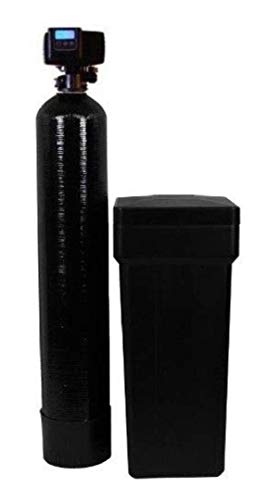
High flow whole house water softener for larger homes
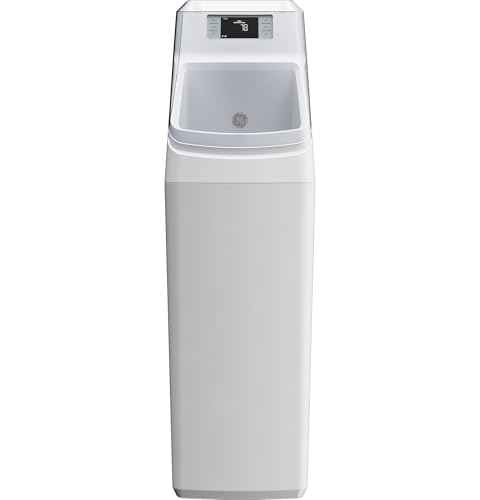
Experience the Difference of Softer Water - With this water softener, you can eliminate soap scum, have softer hair and skin, prevent plumbing damage, extend appliance life, have spotless dishes, and overall better-quality water to your whole house. This 30,000 grain softener accommodates households of up to 6 people.
Frequently Asked Questions
Can I Manually Trigger Regeneration on My Water Softener if Needed?
Yes, you can manually trigger regeneration on your water softener. Most systems have an emergency override button or manual regeneration option on the control panel, allowing you to start the cycle immediately whenever needed.
How Much Salt Does a Typical Regeneration Cycle Consume?
You’ll typically use 2-5 pounds of salt per cycle, though I’ve found salt usage varies based on your brine concentration and water hardness levels. Higher concentrations demand more salt but regenerate less frequently.
What Happens to Water Quality During the Regeneration Process?
During regeneration, I’ve noticed your water quality temporarily declines as mineral release occurs and taste changes slightly. You’ll experience harder water briefly until the cycle completes and sodium ions restore softening capacity.
How Long Does a Complete Regeneration Cycle Actually Take?
Your softener’s cycle duration typically spans two hours, though it feels instant to you. I’d say the brining takes longest, while multiple rinse stages work quickly to flush minerals and restore your water’s softness efficiently.
Can I Adjust the Regeneration Schedule on My Existing Softener?
Yes, you can adjust timer settings on most softeners through the control panel. For demand-initiated systems, I’d recommend consulting your manual or a technician, as valve replacement might be necessary for significant modifications.