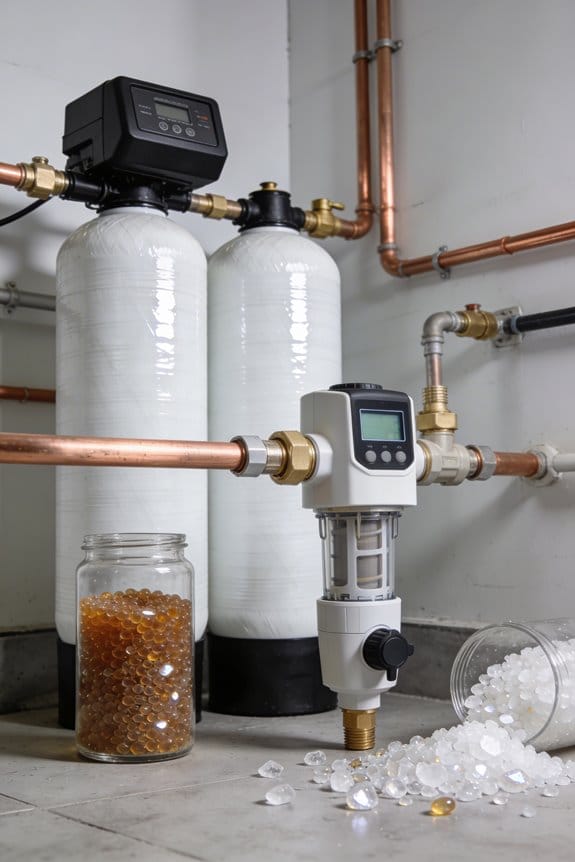

Iron and manganese damage your softener resin by oxidizing into particles that coat the beads and block ion exchange sites where hardness removal happens. These oxidized layers resist standard backwashing and create stubborn buildup that reduces your softener’s capacity, forcing more frequent regenerations. Higher pH levels and oxygen exposure accelerate this fouling process. When iron concentrations exceed 5 mg/L, breakthrough becomes likely, and you’ll notice reduced flow, hard water return, and rusty discoloration. Understanding what causes this damage reveals practical solutions.
Key Takeaways
- Oxidized iron and manganese coat resin beads, blocking ion exchange sites and reducing softening capacity rapidly.
- Dissolved oxygen and pH below 6.7 accelerate oxidation, causing rust particles to adhere to resin surfaces.
- Iron concentrations above 5 mg/L cause breakthrough; fouling signs include reduced flow and brown discharge.
- Pre-treatment filtration removes oxidized iron upstream; acid cleaners and chelating agents dissolve moderate deposits during regeneration.
- Extensive fouling may require replacement if cleaning costs approach replacement expenses or resin structure is destroyed.
How Iron and Manganese Fouling Damages Softener Resin
When iron and manganese enter your water softener, they don’t behave like the calcium and magnesium hardness minerals that the system’s designed to remove. Instead, these metals oxidize and coat your resin beads, which blocks the ion exchange sites where softening happens. This iron deposition creates a stubborn layer that prevents the resin from functioning properly. Additionally, resin abrasion occurs as oxidized particles scratch and wear down the bead surface, further damaging its ability to exchange ions. The iron effectively plates onto the beads permanently, resisting removal through standard backwashing. Because iron’s heavier than calcium, it settles deep within the resin structure, where it lodges and hardens over time. Without frequent cleaning or specialized resin cleaners, this fouling eventually destroys your softener’s effectiveness entirely.
Why Oxidized Iron Clogs Resin Sites

Because oxidized iron forms a chemical coating on resin beads, it permanently blocks the ion exchange sites where softening occurs. When dissolved iron oxidizes—often from exposure to oxygen or chlorine—it transforms into rust particles that adhere to the resin surface. This oxidized bridging creates a barrier that prevents calcium and magnesium ions from reaching active exchange sites, a problem called site masking. Unlike dissolved iron, which the resin can theoretically exchange, oxidized iron won’t participate in the ion exchange process at all. Instead, it hardens into a stubborn layer that standard backwashing can’t remove. Once oxidized iron coats the beads, your softener loses capacity rapidly, requiring more frequent regenerations or complete resin replacement.
What pH and Oxygen Levels Trigger Fouling?
Two environmental factors work together to determine whether your water softener’s resin will foul with iron and manganese: pH and dissolved oxygen. Your water needs a pH greater than 6.7 to keep iron and manganese dissolved, which prevents them from oxidizing into solid particles that clog resin sites. When pH drops below this threshold, dissolved iron converts to oxidized forms that stick to resin beads permanently. Oxygen limits also matter appreciably. If your raw water contacts air or oxygen before reaching the softener, iron oxidizes quickly, creating rust that damages resin capacity. You’ll want to minimize oxygen exposure during water transport and storage. Together, these pH thresholds and oxygen limits determine whether fouling occurs.
When Iron Levels Exceed Your Softener’s Capacity
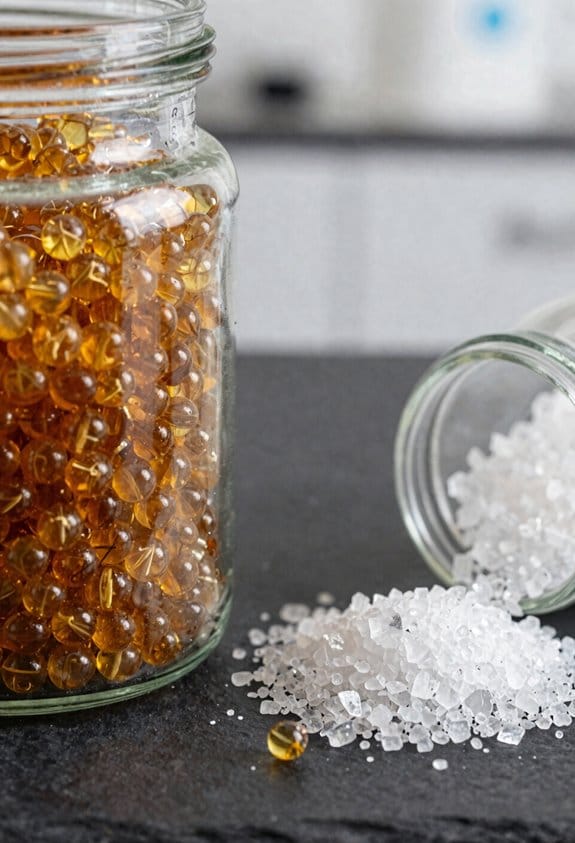
Your water softener has limits on how much iron it can handle before the resin becomes overwhelmed and stops working effectively. When iron levels exceed approximately 5 mg/L, you’ll likely experience iron breakthrough, which means iron passes through into your treated water despite the softener running normally. High iron concentrations cause the resin beads to foul rapidly, reducing their capacity to exchange ions. This fouling also decreases salt efficiency because you’ll need more frequent regenerations to clean the resin, wasting both salt and water. If your iron levels consistently exceed your softener’s capacity, the resin may suffer permanent damage. Installing pre-filtration or choosing alternative treatment methods like catalytic oxidation becomes necessary before the softener to protect your system.
Recommended Products

The WECO Backwashing filter with KL/OZ is a specialized Point-Of-Entry (POE) system designed for municipal and well water supplies. Utilizes iron reduction media consisting of manganese dioxide (MnO2) coated onto naturally mined ZEOSORB. Lightweight filtration media with various functions and properties for water treatment and remediation.

High removal capacity of iron, manganese, hydrogen sulfide. Removes suspended solids and turbidity.

Point-Of-Entry (POE) whole house residential/commercial hydrogen sulfide and iron removal system for community and well water supplies.
Signs Your Resin Is Fouled Before Permanent Damage
Detecting fouling early can save your water softener from serious, irreversible damage, so I’ll walk you through the warning signs that indicate your resin needs attention before it’s too late. Watch for reduced flow from your taps, which happens when iron particles block resin bed passages. You’ll notice brown discharge during regeneration cycles, indicating oxidized iron coating the beads. If your water tastes or smells like rust despite softening, fouling’s progressing. Check your softener’s pressure gauge for higher readings than normal, suggesting blockage. Hard water returning unexpectedly signals capacity loss. These symptoms mean your resin’s exchange sites are compromised, though still recoverable with proper cleaning.
Cleaners That Strip Iron From Resin
Once you’ve identified fouling in your water softener’s resin bed, chemical cleaners become essential tools for restoring its ion-exchange capacity, and I’ll explain which ones work best and how they function. Acid cleaners, particularly phosphoric acid, dissolve iron deposits that’ve accumulated on resin beads. They work by breaking chemical bonds holding iron particles in place. Chelating agents like sodium hydrosulfite offer another approach, surrounding iron molecules and lifting them from the resin surface. I’d recommend using these cleaners during regular regeneration cycles to prevent permanent damage. The choice between acid cleaners and chelating agents depends on fouling severity. Phosphoric acid handles moderate buildup effectively, while chelating agents excel with stubborn, heavily oxidized iron. Both require proper dilution and contact time for most favorable results.
Recommended Products

COMPLETE PACKAGE - Complete package that includes a whole house Water Softener w/ UPGRADED Purolite C100E US made resin & Upflow Carbon Filtration System. Our package also includes an installation manual and technical support. Silicone lubricant and hardness test strips for the PERFECT install!
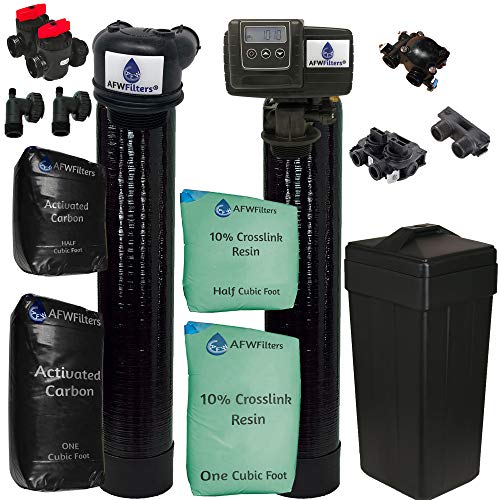
COMPLETE PACKAGE - Complete package that includes a whole house Water Softener w/ UPGRADED 10% resin & Upflow Carbon Filtration System. Our package also includes an installation manual and technical support. AFW Filters water bottle included with system. Water bottle has sanitizer pack, silicone lubricant, and hardness test strips for the PERFECT install!

Powerful Softening: This water softener system reduces over 90% of calcium and magnesium ions from hard water, effectively reducing scale buildup. The 2.12cu. ft. resin can treat up to 64,000 grains of hardness, ideal for small to mid-size households
Why Standard Backwash Can’t Lift Heavy Iron
Standard backwash doesn’t remove iron effectively because iron particles behave differently than the calcium and magnesium hardness minerals that water softeners were designed to lift away. You see, backwash hydraulics rely on upward water flow to suspend and flush particles from the resin bed. However, iron is appreciably heavier than typical hardness minerals, so it resists suspension during standard backwash cycles. Additionally, oxidized iron can plate directly onto resin beads, creating a coating that prevents particle settling into the drain. The backwash flow rate, designed for lighter minerals, proves insufficient to overcome iron’s weight and adhesion properties. This means iron accumulates deeper within the resin bed, progressively fouling the softener beyond what normal regeneration can address.
Prevent Iron Fouling With Pre-Treatment Filtration
Because iron and manganese fouling occurs before water even enters your softener’s resin bed, the most effective prevention strategy is to remove these problematic minerals through pre-treatment filtration. I recommend installing a dedicated filter system upstream of your softener that uses cartridge polishing or media separation techniques to trap oxidized particles before they reach your resin. Turbidity screening captures suspended iron and manganese, preventing them from coating your resin beads. For dissolved iron, catalytic media like Birm oxidizes and removes it efficiently. This two-stage approach protects your investment by keeping your softener’s ion exchange capacity intact. Without pre-treatment filtration, you’ll face frequent regenerations, reduced softening performance, and eventual resin damage that requires expensive replacement.
Recommended Products

The WECO Backwashing filter with KL/OZ is a specialized Point-Of-Entry (POE) system designed for municipal and well water supplies. Utilizes iron reduction media consisting of manganese dioxide (MnO2) coated onto naturally mined ZEOSORB. Lightweight filtration media with various functions and properties for water treatment and remediation.

Advanced Filtration for Common Contaminants: The iSpring WCFM550K system reliably removes common water concerns like iron, manganese, and hydrogen sulfide. It efficiently eliminates up to 12 ppm of iron, preventing discoloration and metallic taste. With a capacity to remove up to 20 ppm of manganese and hydrogen sulfide, it ensures clear, odor-free water. This advanced filtration system promotes better health and enhances the overall water experience, providing households with high-quality water.
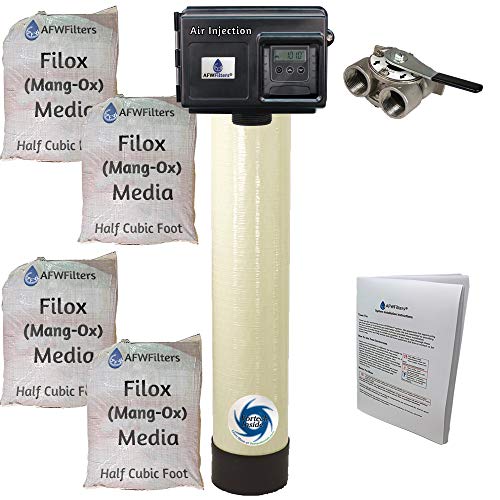
DIY install with supplemental instructions by AFWFilters
How Often to Regenerate With Iron in Your Water
When iron contaminates your water supply, your softener’s regeneration schedule demands adjustment from the standard cycle timing you’d normally follow. I recommend using adjusted cycles rather than waiting for your softener’s timer to trigger automatically. With iron present, you’ll need staggered timing that regenerates more frequently, sometimes every few days instead of weekly intervals. This prevents iron from permanently lodging in your resin pores, which occurs when dissolved iron oxidizes between cycles. By increasing regeneration frequency, you’re actively removing trapped iron before it causes permanent fouling. However, more frequent cycles require special resin cleaners like phosphoric acid during each regeneration to effectively lift oxidized particles. Monitor your water quality consistently; if hardness removal decreases noticeably, your resin’s becoming compromised, signaling you need even more aggressive regeneration schedules or professional cleaning.
Recommended Products

💧【 PERFECTLY DESIGNED FOR 4 OR MORE BATHROOMS 】The Aquasure Harmony Series is the professional grade water softener that delivers ultra-softened water to every outlet throughout your entire home.

High-quality mineral tank for water softener and filter applications, made of durable polyurethane material that resists corrosion and leakage
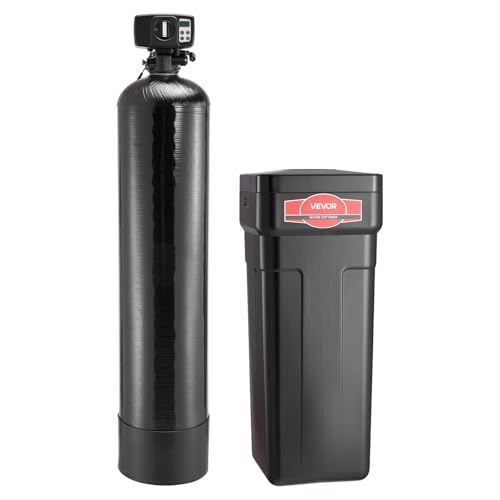
Powerful Softening: This water softener system reduces over 90% of calcium and magnesium ions from hard water, effectively reducing scale buildup. The 1.59cu. ft. resin can treat up to 48,000 grains of hardness, ideal for small to mid-size households
Repair Your Resin or Replace It: Decision Framework
Determining whether to repair or replace your softener’s resin requires you to evaluate several key factors that directly impact both your water quality and long-term costs. Consider the resin’s age, fouling severity, and your cost analysis comparing cleaning expenses against replacement. If your resin’s still under warranty options, cleaning with phosphoric acid or sodium hydrosulfite may be more economical. However, extensive iron buildup that’s destroyed the resin’s structure typically necessitates replacement. Evaluate whether frequent regenerations and cleanings justify keeping damaged resin. Generally, if cleaning costs approach replacement expenses, replacing becomes the smarter choice. Check your manufacturer’s warranty options, as some cover fouling damage. Ultimately, this decision hinges on balancing immediate repair costs against long-term performance and water quality outcomes.
Recommended Products

Complete System - 9"x48" resin tank, Riser tube with distributor basket, Fleck 5600SXT Digital Control Head, 1 cubic foot Filter-Ag, Gravel Bed, Bypass connection

HYDROPOWER ULTRA SMALL TANK: Use pure deionized water for professional, streak-free window cleaning. This state-of-the-art filter removes all minerals from tap water by deionization, leaving pure water that does not leave limescale traces on surfaces

For HydroPower Ultra Filter L and LC
Frequently Asked Questions
Can Ion Exchange Softeners Remove Both Ferrous Iron and Manganese Simultaneously?
Yes, I can tell you that ion exchange softeners remove both ferrous iron and manganese simultaneously by exchanging these dissolved ions for sodium on the cation resin, though effectiveness depends on concentrations staying below 2 mg/L combined levels.
What Alternative Treatment Methods Work Best for Oxidized Iron Before Softening?
I’d recommend oxidation pretreatment using chlorine or catalytic filtration with Birm media before your softener. This removes oxidized iron and manganese particles, protecting your resin from fouling and maintaining softening efficiency.
How Does Sodium Hydrosulfite Compare to Phosphoric Acid for Resin Cleaning?
I’d say sodium hydrosulfite works better for chemical reducing dissolved iron, while phosphoric acid excels at pH adjustment. Hydrosulfite’s more aggressive for heavy fouling, but phosphoric acid’s gentler on resin integrity during routine maintenance cycles.
Will Birm or Manganese Greensand Media Eliminate Need for Water Softening?
No, Birm or manganese greensand won’t replace softening—they’re oxidation tools for iron and manganese removal. I’d still need softening for hardness. Your media selection depends on what you’re treating: oxidation importance differs from hardness reduction.
At What Combined Iron and Manganese Levels Does Softener Effectiveness Become Unreliable?
I’d say your softener’s reliability crumbles once you’re hitting 2 mg/L combined iron and manganese—like watching a vacuum cleaner clog. Beyond that iron threshold, the manganese interaction accelerates fouling faster than you can regenerate.