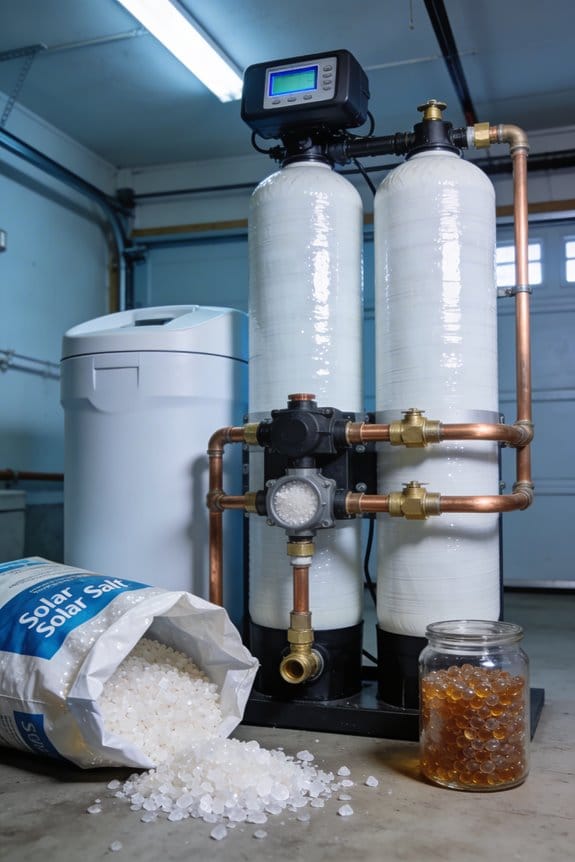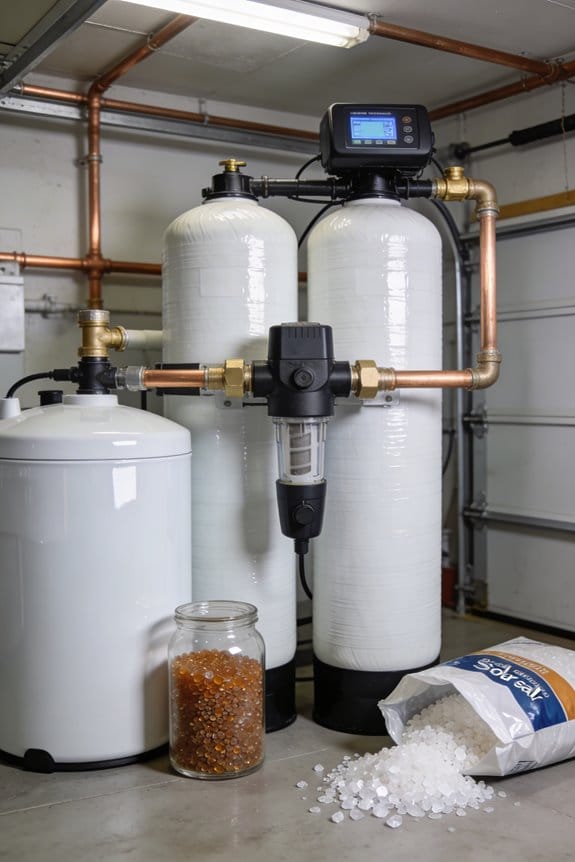
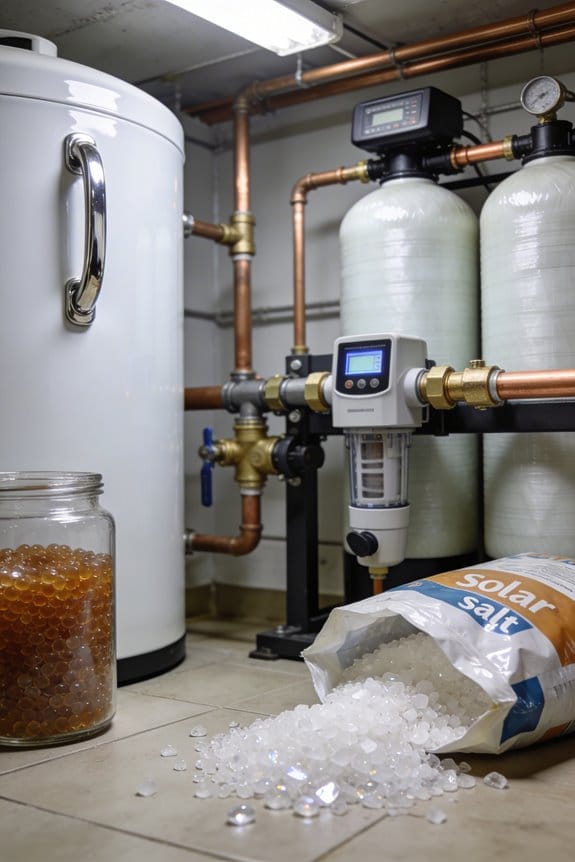

Water softeners add approximately 30 milligrams of sodium per gallon for every grain of hardness in your water. For example, if your water has 15 grains of hardness, you’d get roughly 450 milligrams of sodium per gallon, or about 28 milligrams per 8-ounce glass. While this sounds significant, it’s actually quite small compared to everyday foods—one slice of bread contains more sodium than a quart of softened water. Most people can safely drink softened water, though certain health conditions warrant special consideration.
Key Takeaways
- Water softeners add approximately 30 mg sodium per gallon for every grain of hardness removed.
- A 15-grain hardness water adds roughly 450 mg sodium per gallon or 28 mg per 8-ounce glass.
- Softened water sodium is minimal compared to common foods like bread (115–161 mg) or ketchup (204 mg).
- One quart of 20-grain softened water daily represents less than 7% of the 2,300 mg daily sodium limit.
- Potassium chloride alternatives remove hardness without adding sodium but cost two to three times more than salt.
How Much Sodium Does Water Softening Add?
Water softeners regularly add sodium to your drinking water during the softening process, and understanding how much they add depends on your water’s hardness level. The ion exchange method replaces calcium and magnesium minerals with sodium ions, which softens the water but introduces salt. For every grain of hardness, approximately 30 milligrams of sodium per gallon gets added to your water. If your water measures 15 grains per gallon, you’re receiving roughly 450 milligrams of sodium per gallon, or about 28 milligrams per 8-ounce glass. Sodium testing can determine your exact hardness level, allowing you to calculate precise sodium additions. Most households experience minimal health concerns from this amount, though individuals on sodium-restricted diets should consult their physicians.
Recommended Products
Ensure compliance and effective monitoring with accurate results for over 90 methods across 48 parameters for a range of applications.

THIS KIT ONLY HAS MY GARDEN POOL AQUARIUM AND TERRARIUM TEST STRIPS FOR AQUARIUM TESTING, DOES NOT HAVE 4335 DISKS WHICH ARE REQUIRED FOR THIS DEVICE TO TEST AQUARIUMS PROPERLY. WE ONLY HAVE 4320 DISKS AND TEST STRIPS IN THE BUNDLE

PRECISE CHLORINE MEASUREMENTS – Accurately measures Free Chlorine (0.02–2.00 mg/L Low Range) and Total Chlorine (0.1–8.0 mg/L High Range), providing reliable data for water quality analysis.
Is Softened Water Safe to Drink?
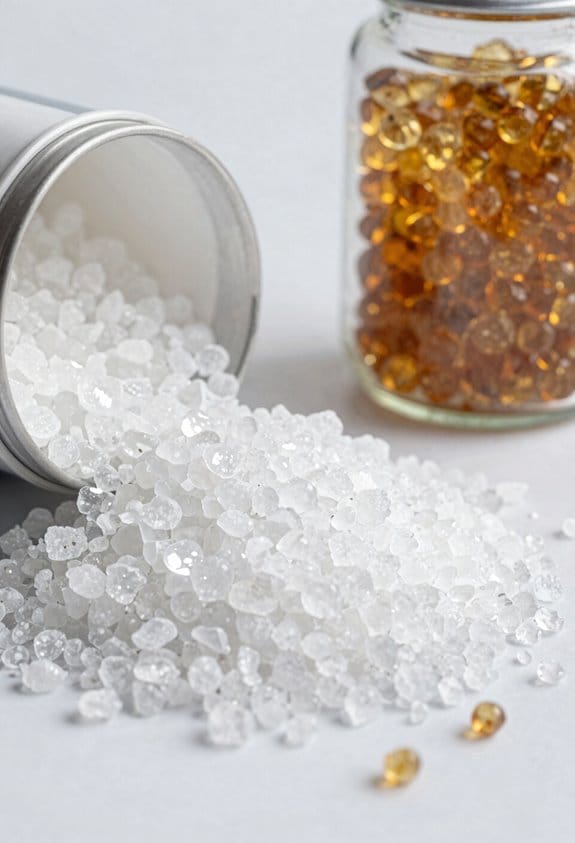
Although softened water contains added sodium from the ion exchange process, it’s generally safe for most people to drink. The sodium levels added during softening are relatively low compared to other dietary sources. For instance, one slice of bread contains more sodium than a quart of softened water from a typical household system.
However, individuals with hypertension or sodium-restricted diets should consult their physicians about appropriate drinking water consumption. Some people report taste concerns with softened water, though this typically relates to the absence of minerals rather than sodium content itself. The mineral balance changes during softening, which affects how water tastes. Those worried about sodium intake can use potassium chloride alternatives in their softening systems instead of traditional sodium chloride.
Recommended Products

Bulk Purchase: 6 bags of high-quality water softener salt crystals, with each bag weighing 40 lbs.

240 lbs Total Supply (6 x 40 lb Bags) – Long-lasting value pack designed to keep your water softener running efficiently with fewer refills.

HIGH-PURITY SODIUM CHLORIDE: Made from all-natural solar salt with no additives, these water softener salt crystals are up to 99.8% pure for reliable, effective water softening.
How Softened Water Sodium Compares to Food
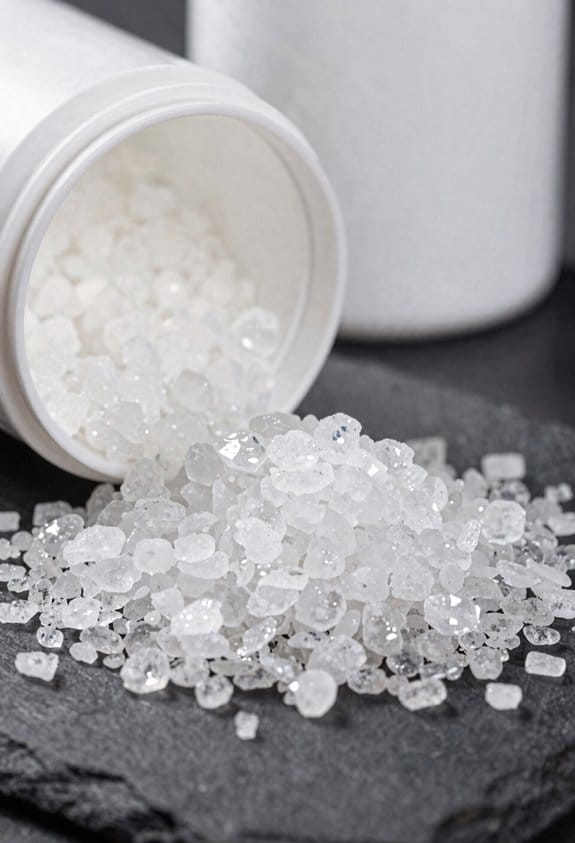
Sodium content in softened water is surprisingly modest when you compare it to everyday foods you probably eat without thinking twice. One slice of bread contains 115–161 mg of sodium, while one tablespoon of catsup contains 204 mg. In dietary context, an 8 oz glass from 15-grain hardened water adds only about 28 mg of sodium. This food comparison reveals that softened water contributes minimal sodium relative to processed foods you consume regularly. Drinking one quart of 20-grain softened water daily represents less than 7% of the recommended 2,300 mg daily limit. When you understand these numbers, softened water appears far less concerning than typical dietary sodium sources. Your drinking water isn’t the primary sodium contributor to your daily intake.
Who Should Limit Their Softened Water Intake?

While most people can safely consume softened water without concern, certain groups should evaluate their intake more carefully or consult their doctors about appropriate consumption levels. Individuals with hypertension or those following sodium-restricted diets need physician guidance before consuming softened water regularly. Pregnant individuals should discuss their water consumption with healthcare providers, since sodium intake during pregnancy requires careful monitoring. Athletes on diet, particularly those limiting sodium for weight management or performance goals, may want to take into account their softened water intake as part of their overall sodium budget. People over fifty, who should consume no more than 1,500 mg of sodium daily according to guidelines, should monitor their softened water consumption alongside other dietary sources. Your doctor can provide personalized recommendations based on your specific health circumstances.
Recommended Products

For any drinking water source: This is a vast informational water quality analysis designed to provide EPA and State certified laboratory testing of private well water, spring water, or tap water.

Chlorine granules for hot tubs and spas

BEST WATER TEST: Tap Score is fast, accurate and easy. Tap Score laboratory test kits are utilized by millions of American homes and businesses every year.
Softened Water and Specific Health Conditions

For people managing specific health conditions, understanding how softened water fits into their daily routine requires looking beyond general guidelines to take into account their individual circumstances. Those with kidney disease face renal considerations that make sodium intake particularly important to monitor, since their bodies can’t regulate sodium as effectively as healthy kidneys do. Similarly, individuals at risk for hyponatremia risk—a condition where sodium levels drop dangerously low—need to be cautious about their water consumption patterns. People with heart disease, high blood pressure, or diabetes should consult their doctors about whether softened water aligns with their treatment plans. Your physician can evaluate your specific condition and recommend whether you’d benefit from alternative softening methods, like potassium chloride systems, or if you should limit softened water consumption altogether.
Recommended Products

Sodium chloride tablets may be used to replace the sodium lost from the body and thereby return sodium chloride levels to normal.

F125050000 4PK WTR Soft Salt Bar - Quantity 1

BULK VALUE: Six 40-pound bags of water softener salt pellets for extended supply and convenience
Switching to Potassium Chloride Softeners
If you’re concerned about sodium intake but still want the benefits of softened water, potassium chloride offers a viable alternative to traditional salt-based systems. Unlike sodium chloride, potassium chloride removes hardness minerals without adding sodium to your drinking water, making it ideal for people with hypertension or sodium-restricted diets.
Potassium benefits include supporting heart health and maintaining healthy blood pressure levels. However, cost comparison reveals that potassium chloride typically costs two to three times more than sodium salt per pound. You’ll also need to replace it more frequently in your system.
Before switching, consult your physician, especially if you have kidney problems or take certain medications that affect potassium levels. Your water softening professional can help determine whether this alternative suits your household’s needs.
Recommended Products
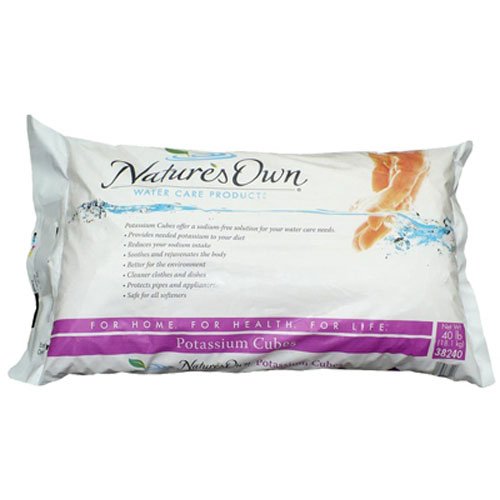
This product adds a great value
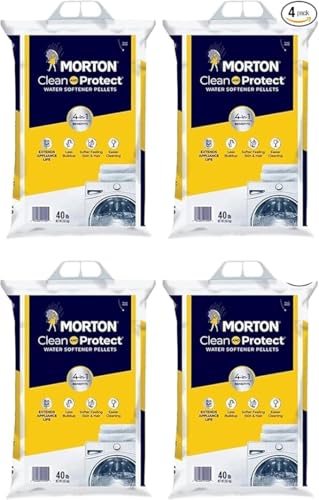
4 Bags of Clean and Protect, 160lbs total. Enhanced Cleaning Benefits: Softer water makes dishwashing more effective and leaves your hair and skin feeling softer and smoother after bathing. Protects Pipes and Appliances: Specially formulated to prevent hard water buildup, extending the life and efficiency of your appliances and plumbing system. Minimizes Maintenance: Reduces the negative effects of hard water, leading to fewer maintenance issues and improved appliance performance in your home. User-Friendly Design: Comes in a 40 lb. bag with a sturdy handle and an easy-tear opening for effortless lifting, carrying, and pouring.
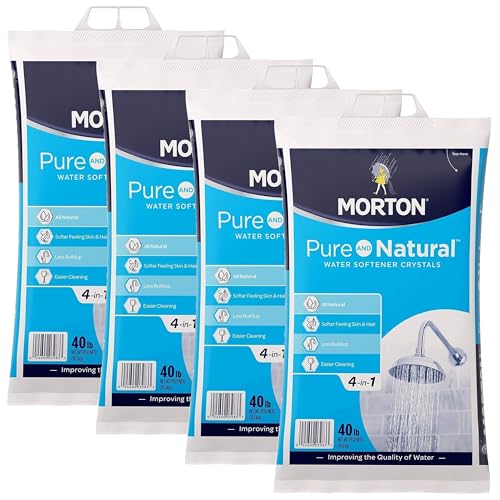
Premium Natural Water Softener - Morton Pure and Natural Water Softener Salt pellets is produced using high-purity, completely natural salt crystals. This premium-quality salt is specifically designed to enhance your water softening system, ensuring better performance and improved water quality throughout your home.
Frequently Asked Questions
How Often Should I Regenerate My Water Softener System?
I’d recommend regenerating your water softener based on your water hardness and household usage. Most systems regenerate every 3–7 days, but I suggest adjusting your cycle timing to match your water consumption and hardness levels for peak efficiency.
What Type of Salt Should I Use in My Water Softening System?
I’d recommend using evaporated salt in your softener. Avoid table salt, rock salt, or non-softener products. If you’re sodium-sensitive, potassium chloride and solar salt are solid alternatives worth considering.
How Much Salt Does an Average Household Water Softener Consume Monthly?
Your average household water softener’s monthly salt usage typically runs about one 40-pound bag, depending on your water’s hardness level and family size. I’d estimate around ten pounds weekly for standard conditions.
How Do I Maintain Proper Salt Levels in My Brine Tank?
I’d recommend you check your brine tank regularly and monitor the float to keep salt levels between one-quarter and one-half full. Don’t let it exceed 4–6 inches from the tank’s top, and I’d use evaporated salt exclusively.
What Water Hardness Levels Are Typical in Minnesota Residential Areas?
Minnesota’s water typically ranges from 6 to 25 grains per gallon, though I’d recommend checking a hardness map for your area since municipal variation’s significant. Most residential zones fall within 7–10 grains.