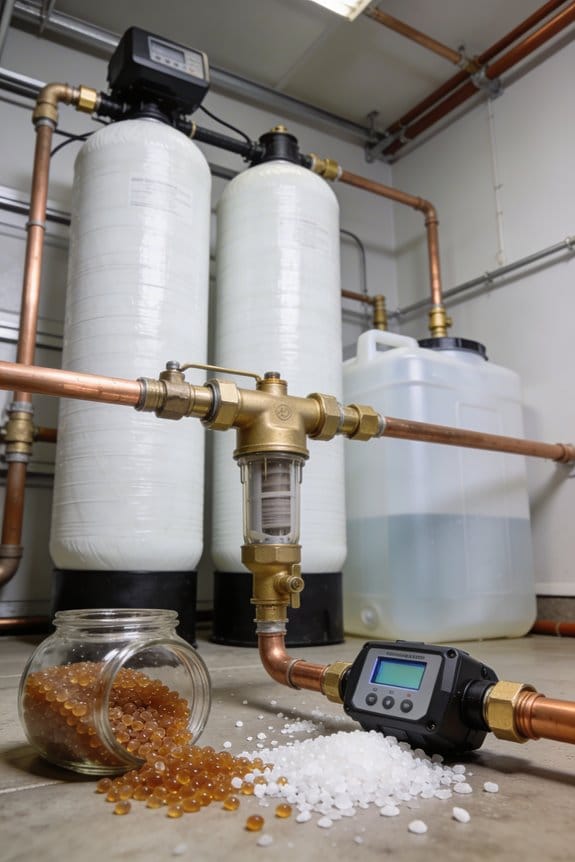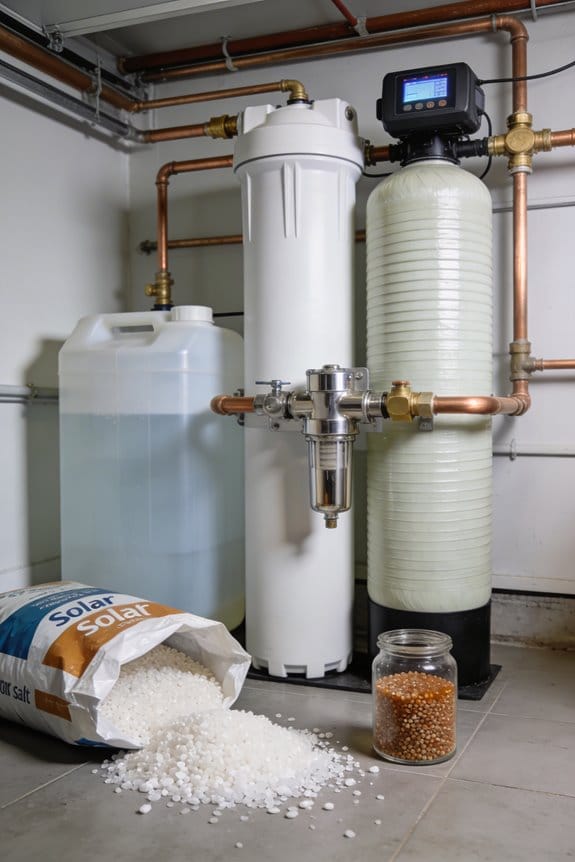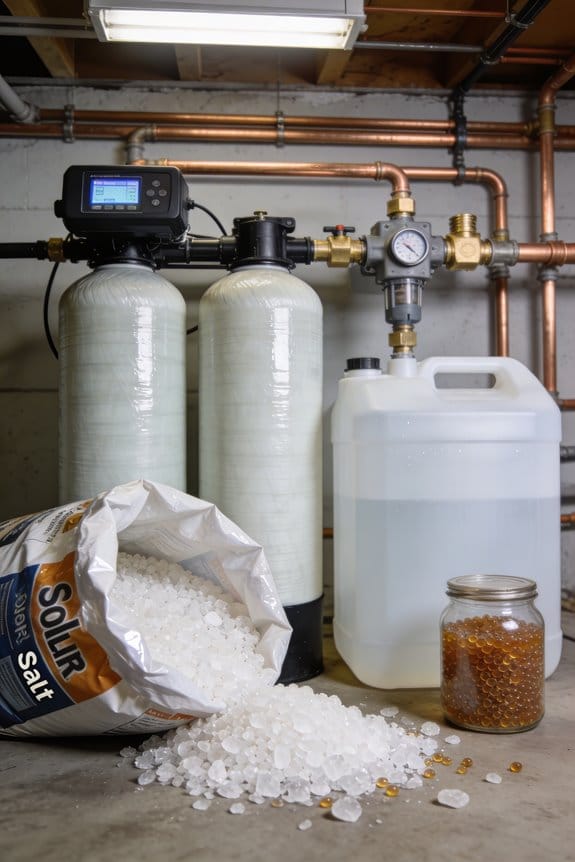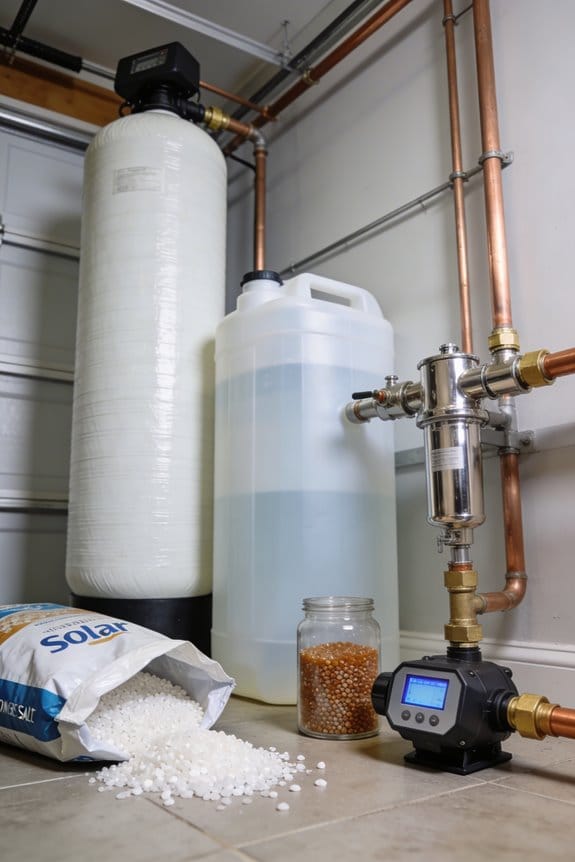
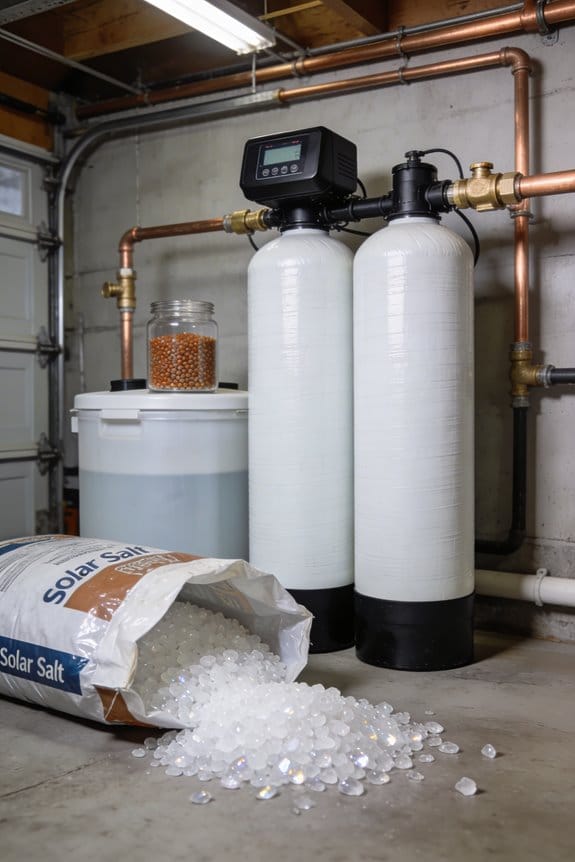

To clean your water softener’s brine tank, start by putting the system in bypass mode and shutting off the water supply. Drain the tank using a submersible pump, then vacuum the bottom to remove residue. Break any salt bridges with a wooden rod, scrub the interior with soapy water, and disinfect using a bleach solution. Rinse thoroughly, reconnect your lines, and refill with fresh salt. Following these steps will restore your system’s efficiency and extend its lifespan markedly.
Key Takeaways
- Prepare by shutting off water and power, then disconnect lines between the softener and brine tank.
- Drain brine tank completely using a submersible pump, then vacuum the bottom to remove salt residue.
- Break salt bridges with a wooden rod, apply warm water to loosen stubborn buildup, and remove crystals.
- Scrub interior with soapy water, rinse thoroughly, then disinfect with bleach solution and rinse completely again.
- Reconnect lines, refill tank with clean water, add new solar salt halfway to three-quarters full, then restart.
Prepare Your Water Softener for Cleaning
Before you begin cleaning your brine tank, you’ll need to prepare your water softener system by following several important steps to guarantee safety and prevent damage. First, put your system in bypass mode according to the manufacturer’s instructions, which stops water from flowing through the softener during cleaning. Next, shut off your water supply and disconnect the power supply to assure safety. Disconnect the lines and hoses connecting the softener to the brine tank. Check salt and water levels to confirm they’re low before starting. Perform a salt inspection to see what type of buildup you’re dealing with. Finally, review your owner’s manual for any specific cleaning directions unique to your model, assuring you follow proper procedures throughout the entire process.
Recommended Products

Dual alternating tanks never run out of soft water

💧 【 PERFECT FOR 4-6 BATHROOMS 】Rated to treat 64,000 Grains of hardness, this is the professional grade Whole House Water system that delivers high quality filtered, ultra-softened water to every outlet throughout your entire home.

Platinum Air Injection with Filox (Mang-Ox) media for highest removal capabilities
Drain and Remove Salt Buildup

Now that your system is prepared, you’ll begin draining the brine tank to remove the accumulated saltwater and buildup inside. I recommend using a submersible pump with a garden hose for efficient drainage, then vacuuming the tank bottom to eliminate residue. When considering salt disposal, you’ll want to avoid pouring brine on grass or plants because of its high sodium content and environmental impact. Next, remove any remaining salt crystals and discard them properly. If you’re using rock salt with insoluble materials, periodic draining helps prevent excessive buildup. For future maintenance, DIY testing of your water hardness can help you choose alternative salts, like solar salt, which minimize residue accumulation and simplify cleaning cycles.
Recommended Products

The LSC1.4S ground drainage Submersible Pump is Tsurumi’s true “puddle sucker”. This pump is effective in removing water from various flat surfaces. With the ability to pump down to the floor, it ensures that even the smallest puddles are pumped dry.

EFFICIENT MULTI-FUNCTIONALITY: Our Aeromixer Synthetic Pro 3/4 HP Submersible Mixing Aerating Pump Bundle combines an aerator pump and a transfer water pump into one system. Our electric water transfer pump bundle handles water transfer, aeration, and nutrient mixing simultaneously. This high-flow submersible water pump streamlines tasks, eliminating the need for separate garden water pumps, water pump for pool draining, and other utility pumps.

The built-in ball float switch allows for hassle-free automatic operation. When water levels rise, the submersible pump activates automatically, and when levels drop, it shuts off. This feature prevents the need for constant pump monitoring.
Remove Salt Bridges and Stuck Residue
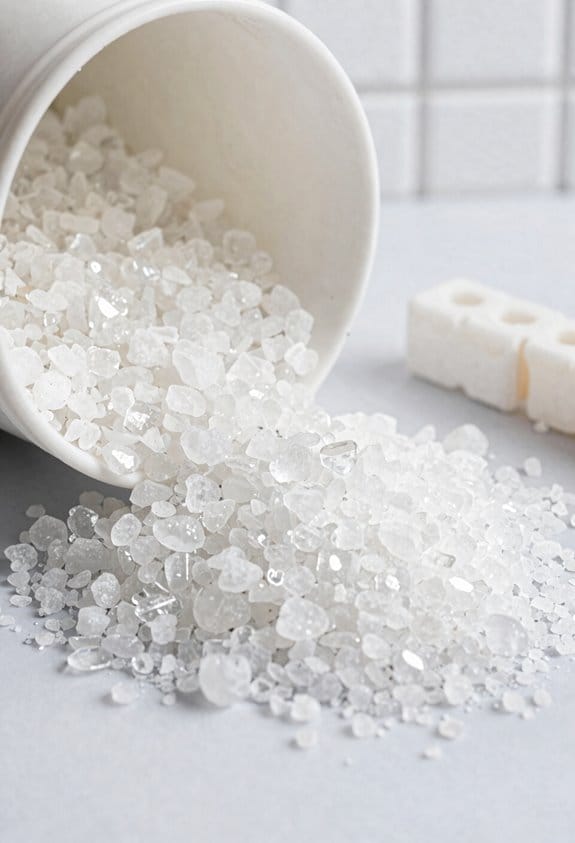
After you’ve drained the tank and removed the loose salt, you’ll likely encounter hardened salt deposits clinging to the bottom and sides, which requires a different approach than simple removal. A salt bridge—a hard crust forming above the water level—prevents proper brine circulation. To break it apart, use a broom handle or wooden rod as your primary mechanical tool, carefully poking and stirring without damaging internal components. For stubborn buildup, connect a hose and apply warm water to loosen the hardened material. Safety precautions include wearing gloves and eye protection when handling salt residue. Prevention methods, such as using higher-purity solar salt and periodic drainage, markedly reduce future bridge formation and simplify maintenance.
Recommended Products

Salt-Free Scale Prevention – The A. O. Smith Descaler reduces scale build up in pipes and plumbing using a salt-free & chemical-free system but does not soften water or remove minerals that cause hardness. No cleaning, backwashing, salt-bags, or electricity required.

F125050000 4PK WTR Soft Salt Bar - Quantity 1

240 lbs Total Supply (6 x 40 lb Bags) – Long-lasting value pack designed to keep your water softener running efficiently with fewer refills.
Clean and Sanitize Inside the Tank
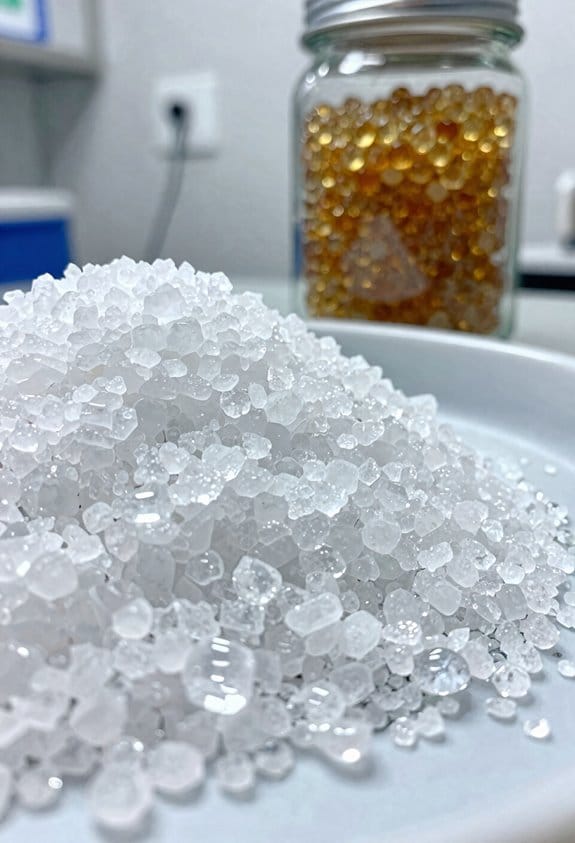
Once you’ve broken up the salt bridges and loosened the stubborn residue, the tank’s interior still needs a thorough cleaning to remove accumulated buildup and bacteria. I’ll mix a few tablespoons of dish soap with one to two gallons of water, then scrub the inside surfaces with a long-handled brush. This process eliminates health risks associated with bacterial growth and mold that can develop in moist environments. After dumping the soapy water, I rinse thoroughly until the water runs clear. For disinfection, I pour two to three gallons of clean water mixed with a quarter cup of household bleach into the tank. I let this solution sit for fifteen minutes, scrub again with the brush, then completely remove all bleach water. Proper environmental disposal means never pouring bleach solutions down drains without dilution.
Recommended Products

HYDROPOWER ULTRA SMALL TANK: Use pure deionized water for professional, streak-free window cleaning. This state-of-the-art filter removes all minerals from tap water by deionization, leaving pure water that does not leave limescale traces on surfaces

[ SOLD BY INDIVIDUAL UNITS ] – Each quantity comes in a separate piece. If you choose 1-Yard with the quantity of 5, you will receive 5 separate 1-Yard pieces. If you choose 2-Yards with the quantity of 5, you will receive 5 separate 2-Yard pieces

A better RO system | Home Master Ultra’s innovative design solves most common problems associated with canister and tankless RO systems
Refill and Restart Your System

With the tank thoroughly cleaned and disinfected, you’re ready to bring your water softening system back online. First, I’ll reconnect the lines between your softener and drain, guaranteeing all connections are secure. Next, I need to take the system out of bypass mode according to the manufacturer’s instructions. Then, I’ll add approximately five gallons of clean water to the brine tank as a base. After that, I’ll fill the tank halfway to three-quarters full with new salt, prioritizing high-quality solar salt to minimize residue buildup. For peak performance, I might consider adding brine additives that enhance system efficiency. Finally, I’ll verify the float valve operates correctly, which controls water levels automatically and guarantees proper system function.
Recommended Products

Complete Twin tank water softener provides continuous soft water

Delivers cleaner, smoother water throughout your entire home, enhancing everyday moments from showering and cooking to drinking and cleaning
Dual alternating tanks never run out of soft water
Frequently Asked Questions
How Often Should I Clean My Water Softener Brine Tank?
I’d recommend cleaning your brine tank annually as part of regular maintenance. However, you’ll want to monitor your salt levels frequently since buildup accumulation varies based on your water hardness and salt type used.
Can I Use Rock Salt Instead of Solar Salt in My Softener?
I’d say yes, you can use rock salt, but it’ll create more residue than solar salt will. While rock salt’s cheaper, I’ve found it requires frequent tank draining for system compatibility and maintenance.
What Should I Do if My Float Valve Stops Working Properly?
If your float valve stops working properly, I’d recommend you replace the valve immediately. You’ll need to put your system in bypass installation mode first, then disconnect power and water supply before removing and installing the new valve.
Is the Brine Water Safe to Dispose of in My Garden?
I’d advise against it. Brine water’s high sodium content damages soil and plants, creating significant garden safety and environmental impact concerns. You’ll want to dispose of it properly instead—away from vegetation.
How Do I Know if My Brine Tank Has a Salt Bridge?
You’ll notice a salt bridge when you see hard crusting at the tank’s bottom with uneven dissolving of salt above it. I’d recommend poking with a broom handle to confirm the hollow space beneath.