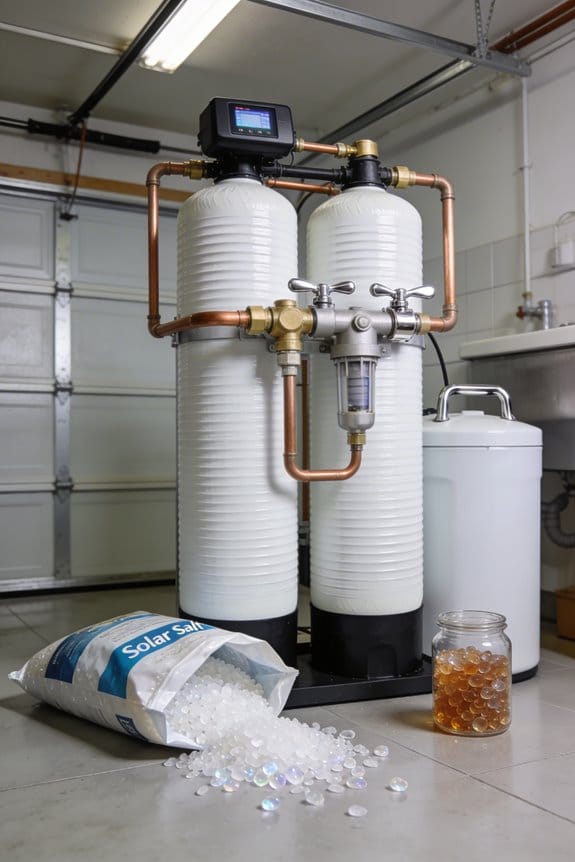

Water hardness across the U.S. depends on underground rock composition where your water originates. The Midwest, Southwest, Texas, and Florida experience the hardest water—often exceeding 15 grains per gallon—because limestone and mineral-rich aquifers dissolve calcium and magnesium into the water supply. Coastal and arid regions face even higher concentrations due to evaporation. Your neighbor’s water may differ markedly based on differing municipal sources and plumbing infrastructure. Understanding your region’s specific hardness level helps determine whether treatment like water softeners becomes necessary for protecting your appliances.
Key Takeaways
- Midwest cities like Indianapolis and Minneapolis experience severe hardness exceeding 12–20 gpg due to limestone deposits.
- Southwest regions (Las Vegas, Phoenix) show increasingly hard water westward, with hardness often surpassing 16 gpg from evaporation.
- Texas cities face 15–20 gpg hardness from limestone aquifers underlying San Antonio, Austin, and surrounding areas.
- Florida’s coastal karst terrain produces high hardness levels, with Tampa reporting up to 17 gpg during dry seasons.
- Neighbor-to-neighbor variations occur from differing water sources, seasonal changes, and plumbing distance, requiring localized testing and treatment.
Water Hardness Classification: What the Numbers Mean
When you’re trying to understand whether your home’s water is hard or soft, you’ll encounter two main measurement systems: grains per gallon (gpg) and parts per million (ppm). These measurement standards help determine water hardness classifications that directly affect your household impact. Soft water measures below 1 gpg, while slightly hard to moderately hard water ranges from 1-7 gpg, with treatment recommended starting at 3.5 gpg. Hard water exceeds 7 gpg and typically requires treatment. Very hard water surpasses 10.5 gpg, and extremely hard water reaches 15 gpg or higher. Understanding these classifications matters because hard water can damage appliances, reduce soap effectiveness, and leave mineral deposits throughout your home, making treatment decisions essential for many households.
Why 85% of American Homes Have Hard Water
Because most of the United States sits on ancient seabeds that left behind extensive limestone deposits, you’re likely dealing with hard water in your home. This geological prevalence explains why 85% of American homes experience hard water problems.
As water travels through soil and rock layers, it dissolves calcium and magnesium minerals—a process called mineral solubility. These minerals enter your water supply naturally through limestone and gypsum weathering. The regions with the highest water hardness, including Indiana, Arizona, and Texas, sit directly atop mineral-rich geological formations.
Your local water hardness depends on your area’s underground rock composition and water sources. Municipal filtration systems can’t remove dissolved minerals effectively, so they remain in your tap water. Understanding this geological foundation helps explain why hard water affects most American households nationwide.
Midwest Hard Water Crisis: Indiana, Minnesota, and Beyond
The Midwest faces some of the nation’s most severe hard water challenges, with Indianapolis and the Twin Cities experiencing hardness levels that far exceed what most Americans encounter in their homes. Indianapolis’s water supply reaches 12-20 gpg, sourced from surface and groundwater creeks laden with calcium, magnesium, and iron salts. Minneapolis draws from the Mississippi River, containing 15+ gpg hardness from mineral accumulation and contaminants. This extreme hardness creates significant challenges for both residential and commercial applications. Agricultural impacts extend beyond households, affecting irrigation systems and livestock operations. Industrial scaling becomes necessary for water treatment facilities managing these mineral-rich supplies. The region’s geological foundation of ancient seabeds deposits continues driving these elevated hardness levels, requiring widespread treatment solutions for residents and businesses alike.
Recommended Products

Heavy-duty home filtration system for Iron, Manganese, Hydrogen Sulfide treatment. Can treat up to 5ppm of Iron with the enhanced ozone feature. Contact us with a water analysis if you need help.

Point-Of-Entry (POE) whole house residential/commercial hydrogen sulfide and iron removal system for community and well water supplies.

High removal capacity of iron, manganese, hydrogen sulfide. Removes suspended solids and turbidity.
Why Southwest Water Is So Hard
As you move westward across the United States, you’ll notice that water becomes increasingly hard, and the Southwest region stands out as having some of the nation’s most mineral-laden supplies. The arid geology of Arizona, Nevada, and California creates conditions where water picks up tremendous amounts of calcium and magnesium. Because rainfall is scarce in these desert areas, water sources rely heavily on groundwater and reservoirs like Lake Mead. Reservoir evaporation concentrates minerals further, making the remaining water even harder. Las Vegas and Phoenix both experience hardness levels exceeding 16 gpg due to these geological factors. California’s most affected cities, including Fort Stockton, contain some of the nation’s hardest water, with hardness levels reaching 1,850 ppm. This combination of desert climate and mineral-rich geology explains the Southwest’s extreme water hardness.
Recommended Products

Delivers cleaner, smoother water throughout your entire home, enhancing everyday moments from showering and cooking to drinking and cleaning

Removes highest levels of iron & sulfur from your water without chemicals or air injection!
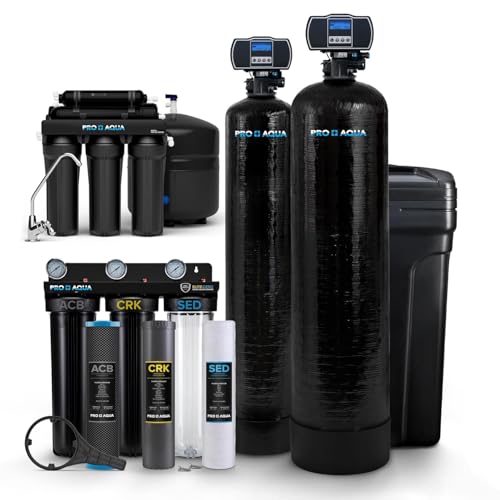
5 STAGE ULTIMATE PROTECTION: Specifically designed to provide unmatched filtration performance for well water. This whole house filtration package will provide safe water for your entire home and remove many contaminants found in well water as well as hardness.
Limestone and Hard Water in Texas and Florida
While the Southwest’s water hardness stems from desert geology and evaporation, the South and South-Central regions face their own mineral challenges rooted in limestone bedrock. Texas cities like San Antonio and Austin experience 15-20 gpg hardness because rainwater percolates through limestone aquifers beneath the surface. As water travels through these underground formations, it dissolves calcium and magnesium, becoming increasingly hard. Florida’s situation differs slightly due to coastal karst terrain, where porous limestone allows water to absorb minerals as it moves through the ground. Tampa’s hardness reaches 17 gpg during dry seasons when less rainfall dilutes mineral concentrations. Both regions’ geology makes municipal filtration insufficient for removing these dissolved minerals, leaving residents with naturally hard water regardless of treatment efforts.
Recommended Products

【 SUITABLE FOR 1-3 BATHROOMS 】Ideal for small to medium households, this powerhouse duo of filter and conditioner provides high quality filtered water with a high flow rate of 20 GPM. Experience safe, soft, and odor-free water throughout your entire home.

Platinum Water Softener: Removes Hard Water Deposits

💧 Perfectly designed for 1-2 bathrooms homes, the Aquasure Signature Series is the professional grade Whole House Water system that delivers high quality filtered, ultra-softened water to every outlet throughout your entire home. No need for manual regeneration, backwash, draining, this system automatically regenerates and backwash, making it cost efficient and easy to maintain
Why Your Neighbor’s Water Hardness Differs From Yours
Even though geologic factors like limestone bedrock determine whether a region experiences hard water overall, your individual water hardness can differ markedly from your neighbor’s, and understanding why matters for your home’s water treatment decisions. Your water source profoundly influences hardness levels—municipal systems may draw from different wells or surface sources than private systems nearby. Seasonal variability affects hardness too; during dry seasons, less rainwater dilutes mineral concentrations, increasing hardness substantially. Additionally, your home’s plumbing infrastructure matters. Older pipes may contribute pipe corrosion that alters water chemistry before reaching your taps. Distance from treatment facilities and variations within the same zip code mean your neighbor’s water quality may differ considerably from yours. Contact your local water utility or health agency for property-specific hardness information.
Water Hardness Treatment Guidelines by Region
Since you’ve learned how your individual water hardness can differ from your neighbor’s, understanding treatment options becomes the next logical step in addressing hard water problems in your home. Regional guidelines help determine which treatment methods work best for your area’s specific hardness levels. In the Southwest, where hardness often exceeds 15 gpg, whole-house water softeners become essential. The Midwest and Texas regions require similar aggressive treatment approaches due to their elevated mineral content. Seasonal adjustments matter notably too—during dry seasons, hardness levels spike, necessitating stronger treatment. Tampa residents, for instance, notice dramatic hardness increases when rainfall decreases. Consulting your local water utility helps you understand your region’s typical hardness patterns, allowing you to select appropriate treatment solutions tailored to your specific location’s needs.
Recommended Products

PROTECTS PLUMBING AND APPLIANCES FROM HARD WATER SCALE WITH ZERO WATER WASTE FILTERS DIRT, SAND, SILT, CLAY, RUST, AND OTHER DEBRIS WITH REUSABLE SEDIMENT FILTER CARTRIDGE...
Test Your Water Before Buying a Softener
Testing your water’s hardness before you invest in a softener isn’t optional—it’s the foundation of making a smart purchase decision. You can start with home testing kits, which provide quick preliminary results about your water’s mineral content. However, these initial findings shouldn’t be your only reference point. I’d recommend sending a sample to a certified lab for lab validation, ensuring accuracy before spending money on equipment. Local water utilities and health agencies can direct you to testing resources. Since hardness varies by location, season, and water source, professional testing gives you precise data specific to your property. This information helps you determine whether treatment is necessary and which softener system best fits your household’s needs.
Recommended Products

Ensure compliance and effective monitoring with accurate results for over 90 methods across 48 parameters for a range of applications.

THIS KIT ONLY HAS MY GARDEN POOL AQUARIUM AND TERRARIUM TEST STRIPS FOR AQUARIUM TESTING, DOES NOT HAVE 4335 DISKS WHICH ARE REQUIRED FOR THIS DEVICE TO TEST AQUARIUMS PROPERLY. WE ONLY HAVE 4320 DISKS AND TEST STRIPS IN THE BUNDLE

PRECISE CHLORINE MEASUREMENTS – Accurately measures Free Chlorine (0.02–2.00 mg/L Low Range) and Total Chlorine (0.1–8.0 mg/L High Range), providing reliable data for water quality analysis.
Frequently Asked Questions
How Has Water Hardness in the United States Changed Since the 1975 USGS Baseline Data?
I can’t provide historic trends or regional shifts since the 1975 USGS baseline because the knowledge base doesn’t contain data comparing water hardness changes over time. The available information only references that 1975 data remains accurate for current assessments.
Which States Have the Softest Water Supplies in the Nation?
I don’t have specific data about which states have the softest water supplies. The knowledge provided focuses on the hardest water states like Indiana, Arizona, and Texas. Coastal regions typically have softer water, but I’d need additional information to identify the softest states accurately.
Can Hard Water Affect Health Differently Than Soft Water Consumption?
Hard water’s mineral content—like a double-edged sword—offers enhanced mineral bioavailability for your bones, yet research suggests potential cardiovascular risks. I’d recommend consulting your doctor about your water’s hardness level’s health implications for you specifically.
How Do Seasonal Changes Impact Water Hardness Levels Year-Round?
I’ve found that seasonal runoff and temperature-driven solubility directly impact your water’s hardness throughout the year. During dry seasons, mineral concentrations increase markedly, while rainy periods dilute mineral content, creating fluctuations you’ll notice.
What Is the Cost Comparison Between Different Water Softening Treatment Methods?
I can’t provide specific cost comparisons between water softening methods because the knowledge base doesn’t contain pricing data on installation costs or long-term maintenance expenses. You’ll want to contact local water-softening vendors for accurate quotes tailored to your situation.