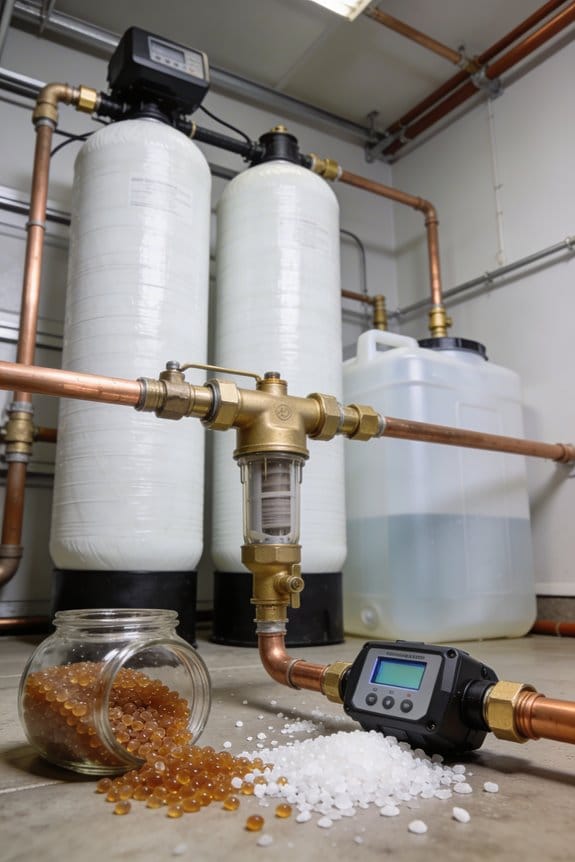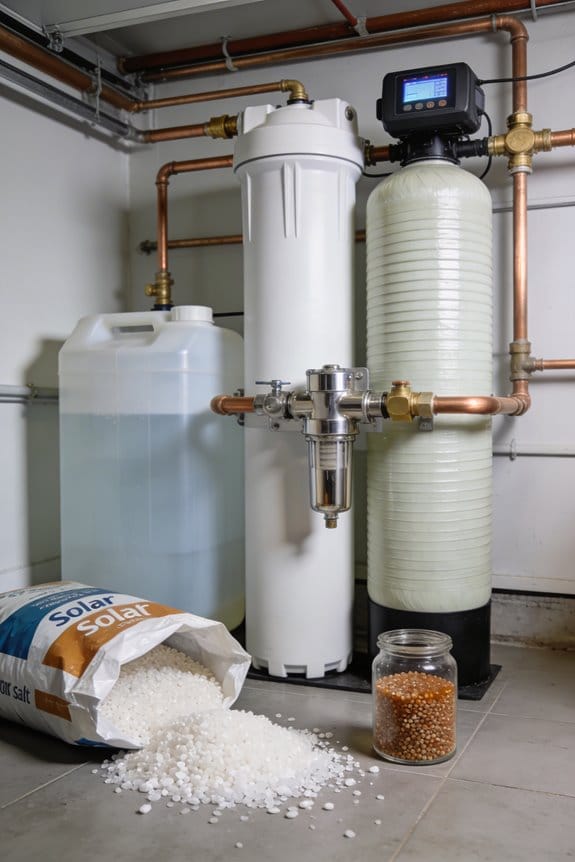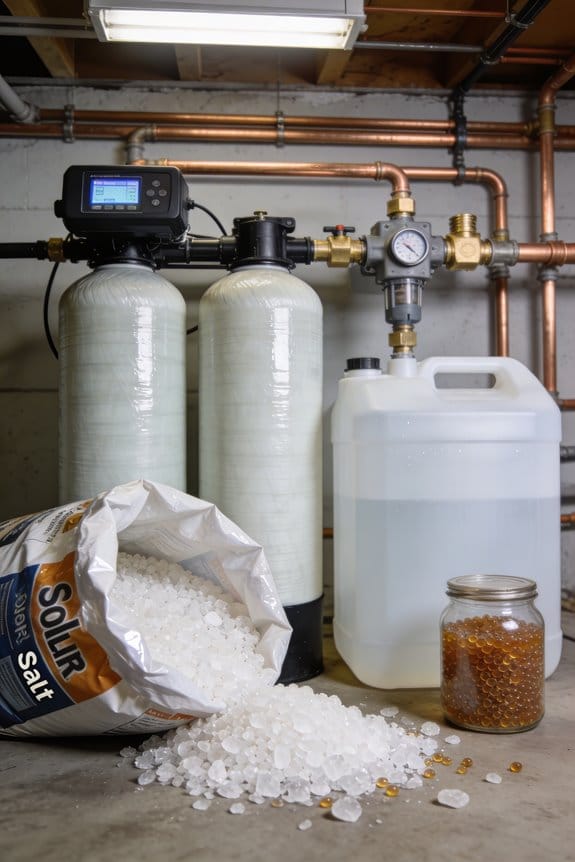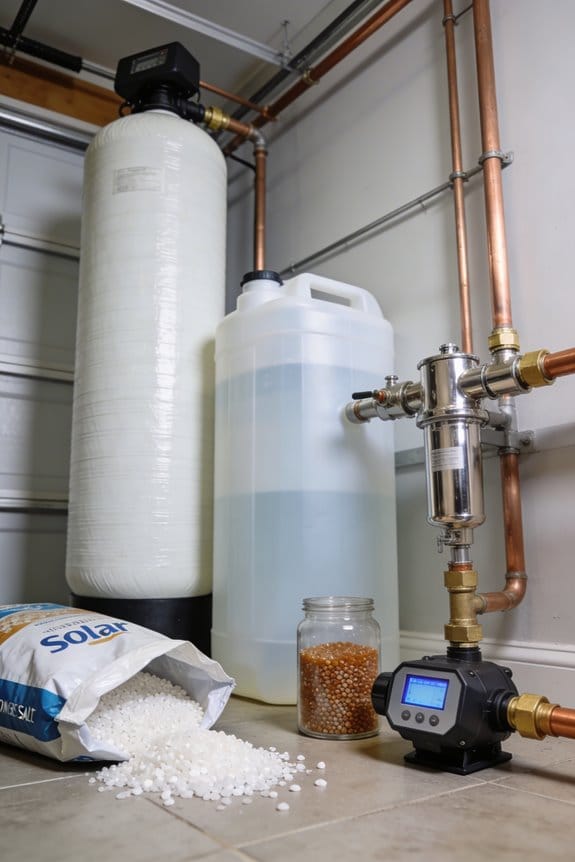
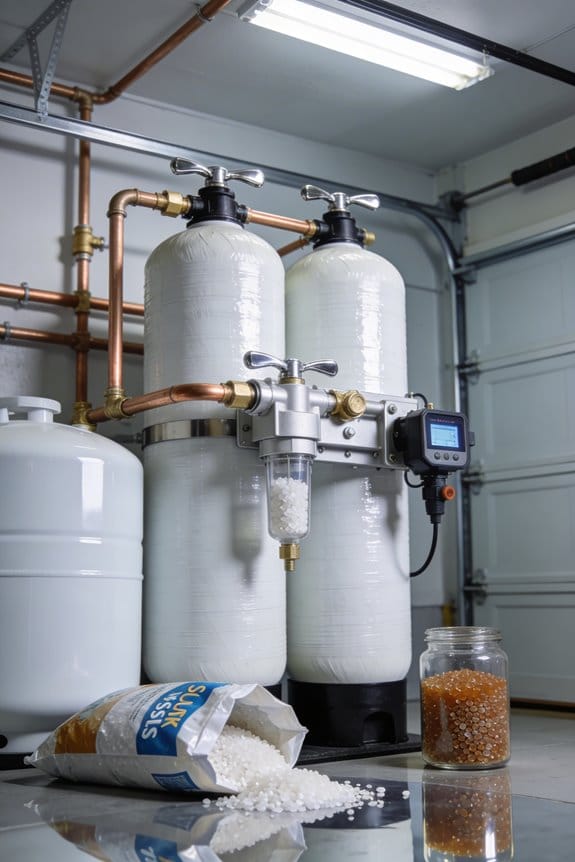

A water softener bypass valve redirects water around your softener unit, giving you access to hard water without shutting down your entire plumbing system. You’ll find it on your softener’s control head as a handle, lever, or button. Single-valve systems are simpler for homeowners—you pull the handle out for soft water or push it in to bypass. It’s useful during maintenance, winterization, or when you need unsoftened water for specific tasks like filling pools. Understanding your valve type and proper operation guarantees you’ll have reliable access to both water options whenever needed.
Key Takeaways
- A water softener bypass valve redirects water flow around the softener to provide unsoftened hard water when needed.
- Use the bypass valve during maintenance, winterization, pool filling, or when you specifically need hard water for certain tasks.
- Single-valve systems with a simple handle are most common for residential use; pull outward for soft water, push inward to bypass.
- Locate the bypass valve on top or back of the softener control head between inlet and outlet water lines.
- Perform quarterly maintenance tests and seasonal inspections to keep the valve mobile, leak-free, and functioning properly.
What Is a Water Softener Bypass Valve: and Why It Matters?
When you need water to skip the softening process, a bypass valve is the solution, and it’s an essential component that many homeowners don’t realize they have. I’m here to explain what it does and why it matters for your home.
A bypass valve redirects water flow around your softener unit, allowing unsoftened water to reach your plumbing when needed. This matters because it lets you access hard water without shutting off your entire system. Whether you’re following manufacturer standards during maintenance, considering different installation options, or managing water quality for specific tasks like filling pools, the bypass valve provides flexibility.
Proper system sizing and understanding your valve’s operation guarantees you’ll have reliable access to both softened and unsoftened water whenever circumstances demand it.
Single or Three-Valve: Which System Do You Have?
To understand how your bypass valve operates, you’ll first need to identify which type of system you’re working with, since single-valve and three-valve setups function quite differently. Single bypass valves feature a handle that you push in or pull out, making them simpler for residential installations. Three-valve systems use separate inlet, outlet, and bypass valves, offering more control during maintenance. Your valve sizing and installation options depend on your water softener’s design and your home’s plumbing setup. Check your unit’s manual or look at the pipe configuration near your softener’s head. Single systems are typically easier for homeowners to operate, while three-valve arrangements suit commercial or complex plumbing needs requiring precise flow management.
Recommended Products

Dual alternating tanks never run out of soft water

💧 【 PERFECT FOR 4-6 BATHROOMS 】Rated to treat 64,000 Grains of hardness, this is the professional grade Whole House Water system that delivers high quality filtered, ultra-softened water to every outlet throughout your entire home.

Platinum Air Injection with Filox (Mang-Ox) media for highest removal capabilities
Locate Your Bypass Valve in Five Minutes

Finding your water softener’s bypass valve requires only a quick visual inspection of your unit’s head and connecting pipes, so you’ll be ready to operate it in just a few minutes.
Start by examining the top or back of your softener’s control head, where you’ll locate markers indicating valve position. Next, trace the water lines entering and leaving your unit. Your bypass valve typically sits between these inlet and outlet pipes, appearing as a handle, button, or lever.
Check orientation of any handles you find—they’ll align with the plumbing when active. If you have a three-valve system, you’ll notice three separate valves instead of one. Look for a T-handle or cone-shaped handle as your primary identifier. Once located, you’re prepared to engage bypass mode whenever necessary for maintenance or specific household needs.
Recommended Products

DIY install with supplemental instructions by AFW Filters on USB
💧 Perfectly designed for 4-6 bathrooms homes, the Aquasure Signature Series is the professional grade Whole House Water system that delivers high quality filtered, ultra-softened water to every outlet throughout your entire home. No need for manual regeneration, backwash, draining, this system automatically regenerates and backwash, making it cost efficient and easy to maintain.
Dual alternating tanks never run out of soft water
Operate Your Valve: Different Steps for Each Type
Operating your water softener’s bypass valve depends entirely on which type you have, and I’ll walk you through the specific steps for each one.
For single bypass valves, pull the handle outward for normal soft water service, then push it inward to activate bypass mode. If the handle’s stuck, twist it gently to restore movement.
Three-valve systems require different valve operation: open your inlet and outlet valves while closing the center bypass for regular service. To bypass, reverse this—close the outer valves and open the center one.
Before attempting any valve operation, gather your tool checklist and review safety reminders. For seasonal tips, engage bypass mode during winterization or extended absences to protect your system from unnecessary strain.
Recommended Products

Complete Twin tank water softener provides continuous soft water. Ships Loaded

Fleck 9100 SXT Digital Metered Dual Tank Control Valve for 24/7 Soft Water

COMPLETE PACKAGE - Complete package that includes a whole house Water Softener, Upflow Carbon Filtration System, & Drinking Water Reverse Osmosis System. Our package also includes an installation manual and technical support. AFW Filters water bottle included with system. Water bottle has sanitizer pack, silicone lubricant, and hardness test strips for the PERFECT install!
When to Use Bypass Mode (And When Not To)
Now that you know how to operate your bypass valve, understanding when to actually use it becomes equally important. You should activate bypass mode during plumbing repairs, maintenance work, or when you need unsoftened water for garden irrigation. Bypass mode also proves useful when winterizing your home or during extended absences. However, avoid using bypass mode for regular daily activities, as this defeats your softener’s purpose and allows hard water minerals into your system. Don’t rely on bypass mode as a permanent solution unless specific circumstances demand it. Consider emergency precautions by knowing your bypass valve’s location before problems arise. Use bypass strategically to maintain your water softener’s efficiency while addressing temporary needs. When normal conditions resume, always return your valve to its standard operating position.
Keep Your Valve Working: Simple Maintenance Steps
Because your bypass valve controls critical water flow in your softener system, keeping it in good working condition requires regular attention and simple preventive care. I recommend performing seasonal inspections to check for leaks, corrosion, or mineral buildup around the valve. Look for any visible damage or discoloration that might indicate problems developing.
Applying lubricant application to moving parts helps prevent sticking and guarantees smooth operation when you need to switch between modes. Use a silicone-based lubricant specifically designed for water system components, avoiding oils that attract dirt and debris.
Test your valve quarterly by moving it through both positions to maintain mobility. If you notice resistance or grinding sounds, gently work the handle back and forth. These straightforward maintenance steps extend your valve’s lifespan markedly.
Recommended Products

COMPLETE PACKAGE - Complete package that includes a whole house Water Softener w/ UPGRADED 10% resin & Upflow Carbon Filtration System. Our package also includes an installation manual and technical support. AFW Filters included with system, sanitizer pack, silicone lubricant, and hardness test strips for the PERFECT install!

COMPLETE PACKAGE - Complete package that includes a whole house Water Softener w/ UPGRADED Purolite C100E US made resin & Upflow Carbon Filtration System. Our package also includes an installation manual and technical support. Silicone lubricant and hardness test strips for the PERFECT install!

AFW filters Designed by WQA Certified Water Specialist
Fix a Stuck Bypass Valve: Quick Fixes
When mineral deposits, corrosion, or lack of use cause your bypass valve to resist movement, you don’t need to call a professional immediately—many stuck valves respond well to simple troubleshooting steps. Start by applying a penetrating lubricant around the valve’s handle or knob, letting it soak for several hours to break down buildup. Gently work the handle back and forth with gradual pressure, avoiding sudden force that could cause damage. If the valve remains stuck after lubrication attempts, try applying heat using a heat gun on low setting to expand the metal components slightly. Should these methods fail, valve replacement becomes necessary. A new bypass valve typically costs less than professional service calls and installs straightforwardly at your softener’s head.
Recommended Products

Dual alternating tanks never run out of soft water High flow, treats high hardness Most efficient system for saving salt and water usage Complete whole house water softener...
Frequently Asked Questions
Can I Operate the Bypass Valve Without Turning off the Main Water Supply?
Yes, I can operate the bypass valve without shutting off the main water supply. It’s designed as a manual override for emergency isolation, allowing me to redirect water flow around the softener while maintaining water access throughout my home.
What Happens if I Leave the Bypass Valve in Bypass Mode Permanently?
Like a dam redirecting a river’s flow indefinitely, permanently bypassing your softener means I’m exposing your home to hard water. You’ll face appliance scaling, reduced efficiency, and costly damage that’ll drain your wallet faster than softened water flows.
How Often Should I Switch Between Bypass and Normal Softening Modes?
You shouldn’t regularly switch modes. I’d only use bypass for specific situations like maintenance or seasonal adjustments. Otherwise, keep it in normal mode for continuous appliance protection and peak water softening performance.
Will Using Bypass Mode Affect My Water Softener’s Regeneration Cycle?
Bypass mode won’t disrupt your device’s regeneration timing or salt usage. When you’re bypassing, I’m allowing unsoftened water to flow directly past the softener, so it’s simply sitting idle without consuming resources.
Can a Faulty Bypass Valve Cause Water Pressure Problems in My Home?
Yes, a faulty bypass valve can definitely cause water pressure problems in your home. I’d check for leaking seals or flow restriction—both commonly reduce pressure and indicate you’ll need professional repair soon.