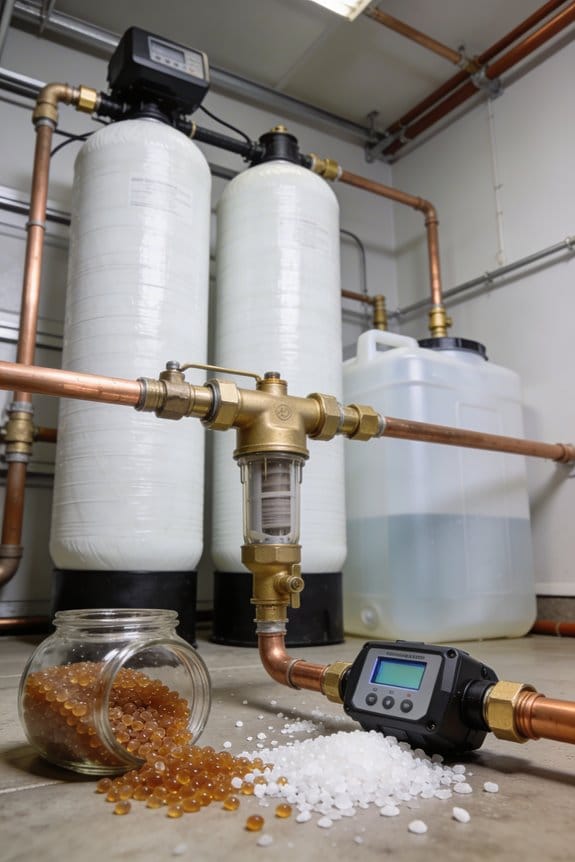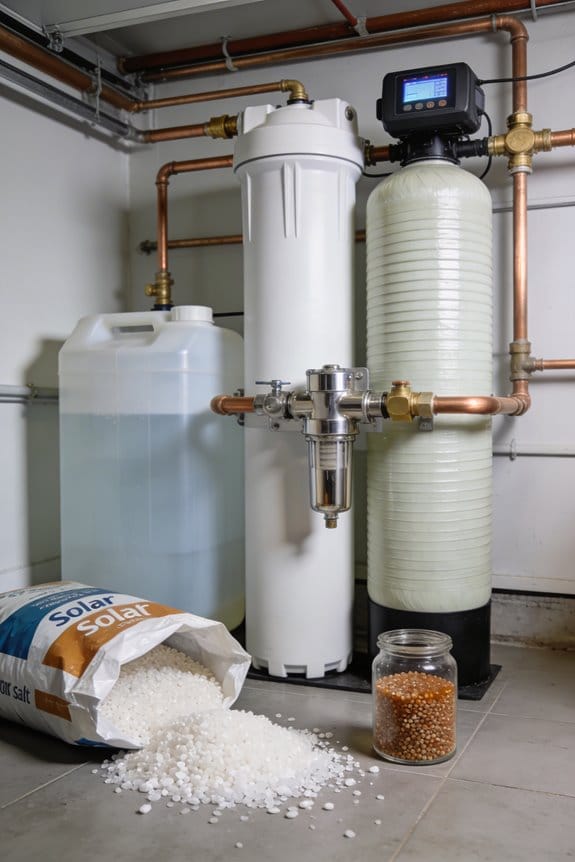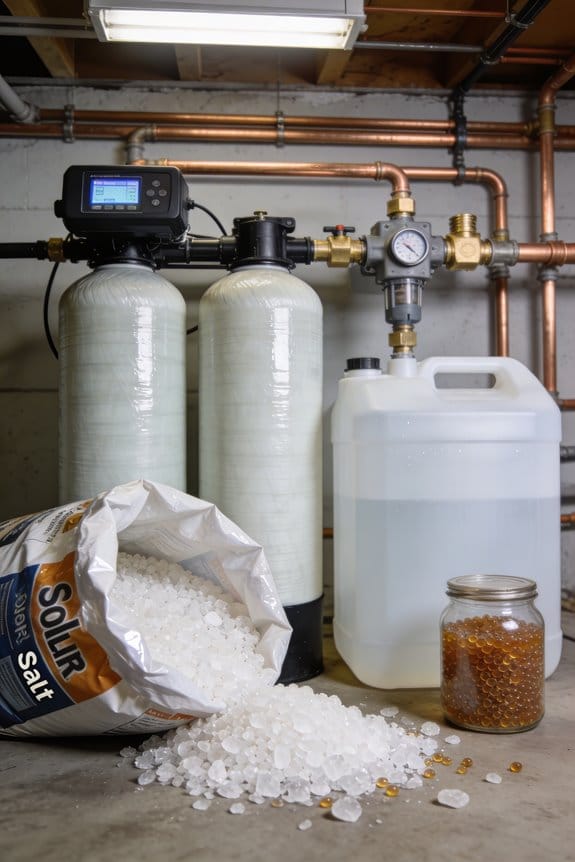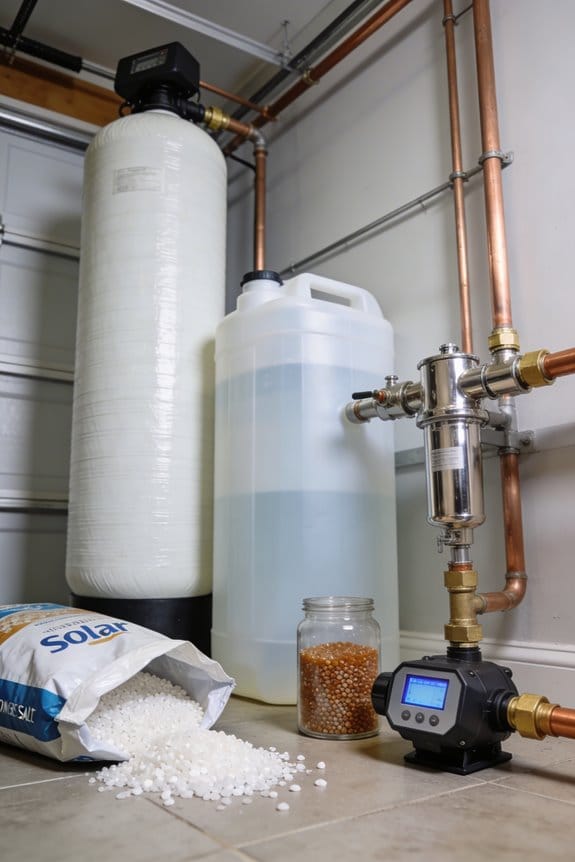
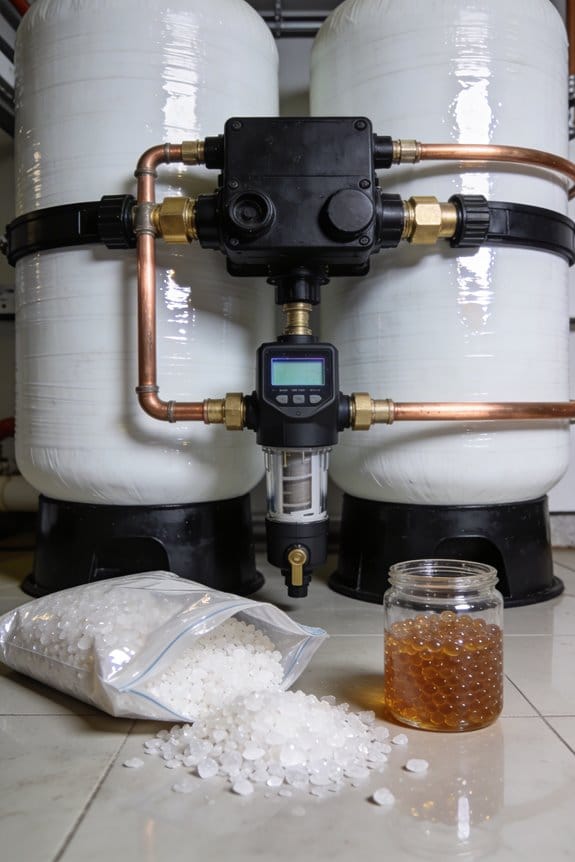

Your water softener leaks from several possible sources. Cold tanks create condensation that mimics drips, while worn O-ring seals at drain fittings cause slow leaks. Loose drain connections, faulty float valves that overfill the brine tank, and aggressive water flow during regeneration cycles can all trigger leaks. Identifying which component’s responsible is essential for stopping the problem. Understanding each source will help you pinpoint exactly where yours originates.
Key Takeaways
- Faulty float valves in the brine tank stick or clog, causing overflows onto the floor.
- O-rings dry out and crack over time, creating slow leaks at drain fittings and connections.
- Loose drain line fittings, kinks, or clogs build backpressure that forces water out during regeneration.
- Leaks intensify during aggressive regeneration phases like backwashing and brine refill when water flows forcefully.
- Cracks in resin tanks or brittle hoses at connections rupture under pressure and cause active leaking.
Condensation vs. Actual Leaks: How to Tell the Difference
When you notice water around your water softener, you’re probably wondering if something’s broken, but here’s what many homeowners don’t realize: that puddle might not be a leak at all. Condensation forms when cold water flows through uninsulated tanks in humid environments, creating droplets that collect on floors. To distinguish between condensation and actual leaks, observe whether moisture appears constantly or water drips actively. You can monitor humidity levels in your space and use thermal imaging to identify cold spots on the tank surface where condensation develops. If you’re seeing steady moisture rather than flowing water, insulating your tank with a sweat jacket solves the problem. This simple solution prevents moisture buildup without requiring repairs to your system’s internal components.
Common Water Softener Leak Sources by Component

If you’ve ruled out condensation as the culprit, your water softener likely has a genuine leak somewhere in its system. I’ll walk you through the main components where leaks originate. The brine tank frequently develops issues from faulty float valves that stick or clog, causing overflows. Valve seal failures occur when O-rings dry out and crack over time. Drain line problems arise from loose fittings, kinks, or clogs that build backpressure. Tank and hose damage includes cracks in resin tanks and brittle hoses at connections. Pipe corrosion weakens joints where water continuously flows. Electrical faults can trigger safety mechanisms that cause temporary overflows. By identifying which component leaks, you’ll narrow down your repair options considerably.
Recommended Products

Reduces hardness in the water, eliminates scale, spot build up for the entire home and combat the high iron issue at up to 10 ppm and removes red stain buildup.
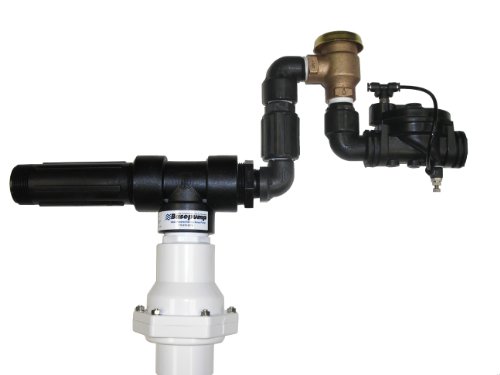
Water Powered Sump Pump: The Basepump is a dependable, powerful, high-performance system with a built-in atmospheric vacuum breaker that prevents back-flow and operates automatically using your home's water pressure—no need to be present.
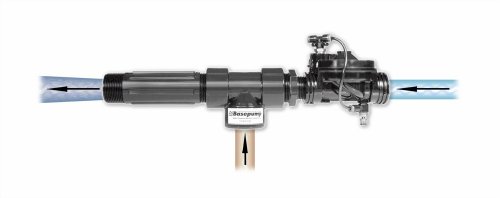
Water Powered Backup Sump Pumps: Extremely reliable, very powerful, water powered backup sump pump system. Fully automatic operation. You don’t need to be home to operate it. Uses water pressure from your existing water supply to remove water from the sump.
Regeneration Cycle Leaks: Why They Happen During Cleaning

During your water softener’s regeneration cycle—the cleaning process that restores the resin’s ability to soften water—you might notice water leaking from parts of the system that normally stay dry. These leaks occur because water flows aggressively through the tank during backwashing and brine refill phases. To diagnose regeneration timing issues, I recommend manually starting the cycle using your control button for about five seconds, then observing where moisture appears. Leaks intensify as the system refills or backwashes the resin bed. Power failures during regeneration trigger safety floats, causing temporary overflows that often resolve after several complete cycles. If leaking persists beyond one or two regenerations, inspect valve seals and drain connections for damage, as these components bear the most pressure during cycle diagnostics.
Recommended Products

New Fleck 2510 SXT replacement digital AIR INJECTION backwashing filter valve

10-YEAR TANK WARRANTY – Includes a 10-year limited warranty on the fiberglass resin tank and brine tank under normal use, plus a 1-year limited warranty on the control valve, bypass, fittings, and electronic components — extendable up to 5 years with system registration and use of one bottle of Tier1 Water Softener Cleaner (TIER1-WS-CLNSR-16) every 3 months.

New Fleck 2510 SXT Digital Water softener valve replacement
Brine Tank Leaks and Overflows

Beyond the regeneration cycle itself, your brine tank—the separate container that holds salt and creates the cleaning solution—can develop its own leaking problems that require different solutions. A faulty float valve, which controls water level inside the tank, may stick or clog, causing the tank to overfill and overflow onto your floor. Salt bridging, where hardened salt forms an arch inside the tank, can create gaps that trap water. When you forcefully break up these bridges during cleaning, you might accidentally puncture the tank bottom. Additionally, malfunctioning brine valves or rotor valves cause continuous overflows. Power outages during refill phases can trigger safety floats, leading to temporary excess water. Inspect your brine tank regularly for cracks or damage from maintenance activities.
Recommended Products

Dual alternating tanks never run out of soft water

Complete Twin tank water softener provides continuous soft water
Dual alternating tanks never run out of soft water
Valve and Seal Wear: Identifying and Fixing O-Ring Failures

As your water softener ages, the rubber seals called O-rings that line the drain fittings, brine connections, and bypass valve gradually dry out and crack, creating slow leaks that can persist for weeks before you notice them. You can revive these seals through lubrication maintenance by applying silicone grease, which restores flexibility without requiring full replacement. When selecting lubricants, confirm material compatibility with your system’s rubber components to prevent chemical degradation. Inspect O-rings regularly for visible cracks, discoloration, or hardening. If leaks continue after lubrication, replacement becomes necessary. Age-related deterioration is inevitable, but proactive maintenance extends seal lifespan considerably. Check connections where hoses attach to valves, as these areas experience the most stress and failure.
Recommended Products

Delivers cleaner, smoother water throughout your entire home, enhancing everyday moments from showering and cooking to drinking and cleaning

PROTECTS PLUMBING AND APPLIANCES FROM HARD WATER SCALE WITH ZERO WATER WASTE FILTERS DIRT, SAND, SILT, CLAY, RUST, AND OTHER DEBRIS WITH REUSABLE SEDIMENT FILTER CARTRIDGE CAN BE USED FOR HOMES WITH UP-TO 5 BATHROOMS EASY INSTALLATION, LOW MAINTENANCE 120-DAY SATISFACTION GUARANTEE

Salt-Free, Citrus-Based Softening: Uses CitraCharge technology to soften water without salt while retaining essential minerals, preventing scale buildup, and avoiding the slick feel of traditional salt-based systems.
Drain Line Problems and Quick Fixes
While O-ring failures account for many water softener leaks, I’ve found that drain line problems often go unnoticed until water starts pooling in unexpected places. Loose fittings at connection points leak during the regeneration cycle when water flows forcefully through your system. Improper hose routing creates kinks and sharp bends that build excessive pressure, straining joints and causing drips. Drain clogging from debris causes backpressure, forcing water to overflow from unexpected areas rather than flowing freely outside. I recommend inspecting your drain line’s path to make certain it slopes downward without twists. Use plumber’s tape to seal connections, apply sealant at fittings, or run a snake through clogs. High water pressure often worsens these issues, so consider adjusting your system’s pressure settings.
Recommended Products
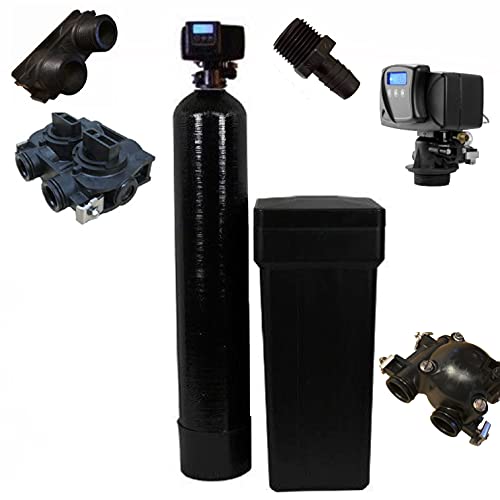
Reliable Fleck 5600 SXT Digital Control Valve: Features the industry-trusted Fleck 5600 SXT digital metered control valve known for durability and reliability in water softening applications
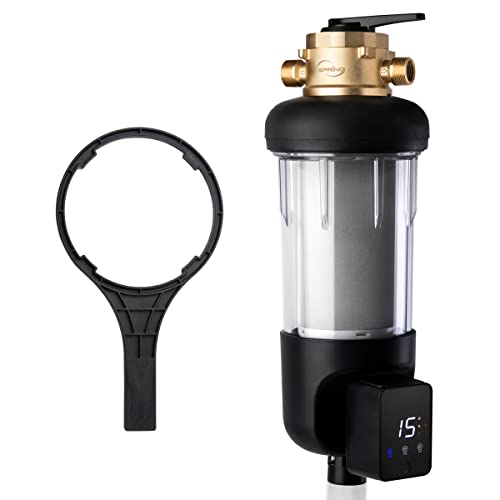
[NSF/ANSI 372 Certified] The WSP200ARJ-BP sediment water filter is certified lead-free under NSF/ANSI 372 standards, ensuring safer and cleaner water for your home.
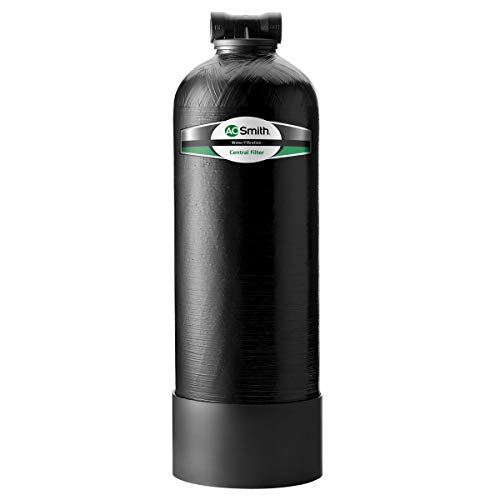
Advanced Filtration For Healthy, Great Tasting Water - The AO-WH-FILTER reduces 96.9% of Chlorine taste & odor for clean water from every tap in your home. NOT a water softening system.
Frequently Asked Questions
How Much Water Leakage Is Normal During a Water Softener Regeneration Cycle?
You’re watching water pool beneath your softener during regeneration—is this normal? I’d say brief seepage is expected overflow during cycles, but if it’s excessive, you’ve got a problem worth investigating.
Can I Use My Water Softener While It’s Actively Leaking Without Causing Damage?
I wouldn’t recommend using your softener while it’s actively leaking. You can temporarily isolate the bypass valve to prevent damage and stop water flow until you’ve identified and fixed the underlying issue causing the leak.
What’s the Average Cost to Repair Versus Replace a Leaking Water Softener Unit?
Would you rather invest $300–$800 in repairs or $1,500–$3,000 for replacement? I’d get a repair estimate first—most leaks cost less, but if your unit’s old, replacement might make financial sense long-term.
How Often Should I Perform Preventive Maintenance to Avoid Future Leak Problems?
I’d recommend annual inspections and seasonal tuneups to catch issues early. Check your tank’s seals, drain lines, and brine valve quarterly. Regular maintenance prevents most leaks before they become costly problems.
Will a Water Softener Leak Affect My Home’s Water Quality or Safety?
Your leaking water softener won’t directly compromise safety, but I’d watch for microbial growth in pooled water and taste changes if contamination enters your system. I’d address leaks promptly.