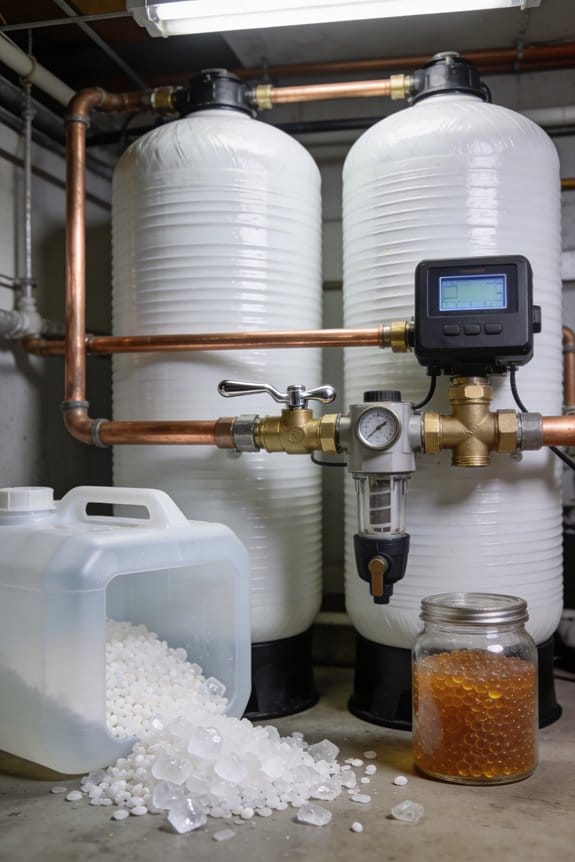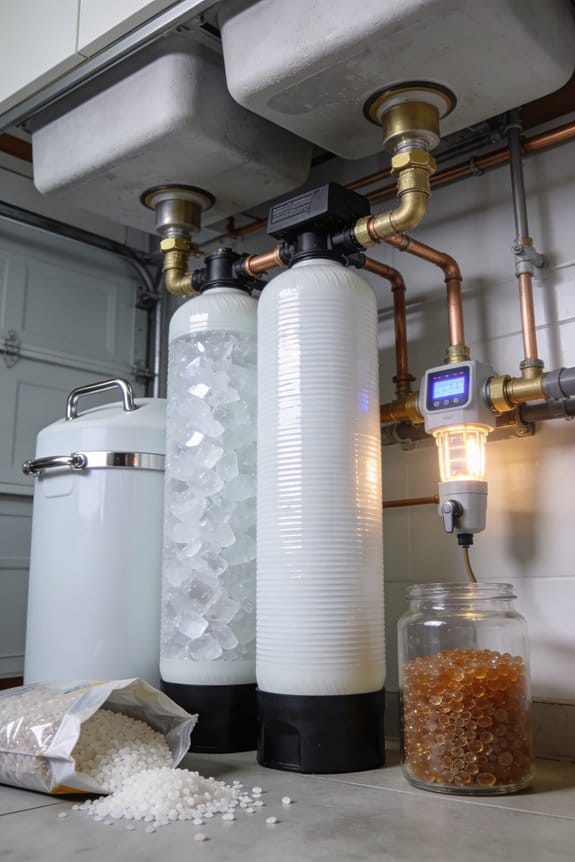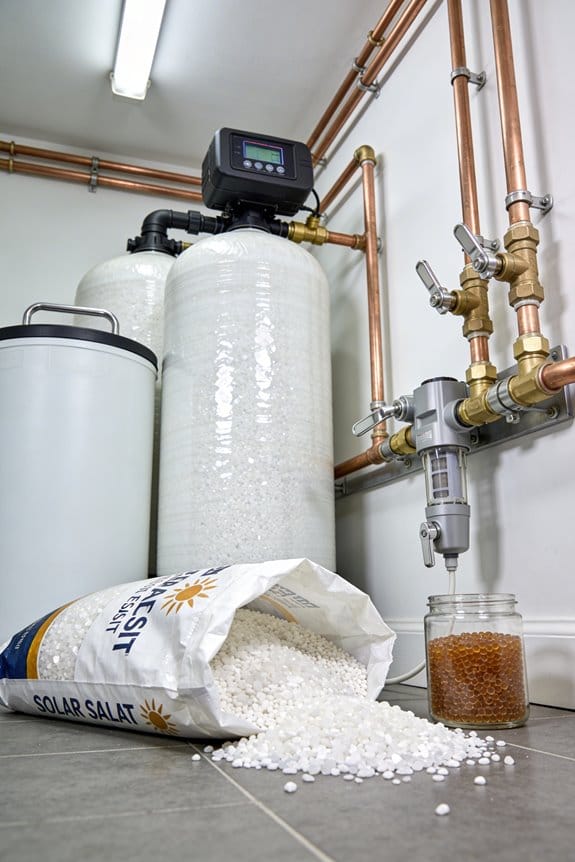
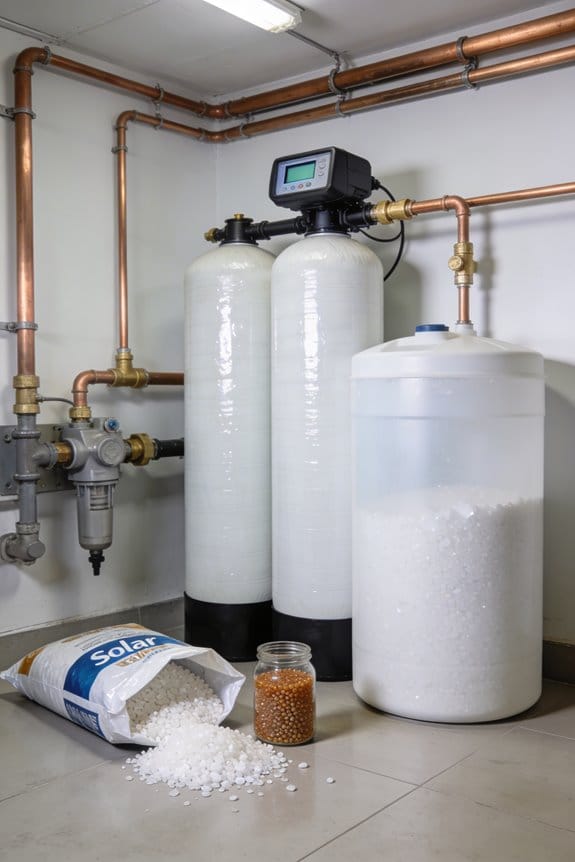

Salt-free systems and reverse osmosis work together as a two-stage protection system for your home. Salt-free conditioners crystallize hardness minerals so they can’t stick to pipes or appliances, while reverse osmosis removes contaminants like bacteria and chemicals that salt-free systems can’t handle. When you combine them, the conditioner protects your RO membrane from scaling damage, extending its lifespan. Water flows through the salt-free unit first, then to your point-of-use RO system, giving you whole-house scale prevention plus safe drinking water. Understanding how each component functions reveals why this combination outperforms either system alone.
Key Takeaways
- Salt-free conditioning crystallizes hardness minerals, preventing scale buildup that would damage RO membranes and reduce their lifespan.
- RO systems remove contaminants like PFAS, bacteria, and heavy metals that salt-free systems cannot, providing comprehensive water purification.
- Salt-free pre-treatment protects RO membranes from scaling, allowing them to operate efficiently at optimal pressure levels without premature failure.
- Combined dual systems deliver whole-house scale prevention plus point-of-use safe drinking water through complementary filtration mechanisms.
- Proper installation places the salt-free conditioner first in the main line, ensuring water flows through catalytic media before reaching the RO system.
How Hard Water Damages Pipes and Appliances
Hard water’s minerals accumulate inside your pipes and appliances, creating layers of scale that restrict water flow and reduce efficiency. When calcium and magnesium minerals build up over time, they form stubborn deposits that narrow your pipes. This buildup causes two major problems: pipe corrosion and appliance scaling.
Pipe corrosion occurs when scale traps moisture against metal surfaces, causing rust and deterioration. Your water heater, dishwasher, and washing machine suffer from appliance scaling, which reduces their lifespan and performance. The scale acts as an insulator, forcing your heater to work harder and consume more energy.
You’ll notice reduced water pressure, higher utility bills, and frequent appliance repairs. Without treatment, hard water damages cost homeowners thousands in replacements and maintenance.
How Salt-Free Conditioners Crystallize Minerals Without Removing Them

Rather than extracting hardness minerals from your water like traditional softeners do, salt-free conditioners transform those minerals into harmless crystals through a process called Template Assisted Crystallization, or TAC. Inside the system, catalytic media like Filtersorb SP3 facilitates crystal nucleation, which is when calcium and magnesium particles begin forming tiny nano-crystals. This process converts minerals into solid structures that can’t stick to pipes or appliances. The crystallized minerals remain in your water, which means you’re retaining beneficial elements while preventing scale damage. Additionally, surface passivation occurs on your plumbing, creating a protective barrier against corrosion. You’re effectively restructuring how hardness minerals behave without removing them entirely, protecting your home’s infrastructure effectively.
Salt-Free vs. Salt-Based Softeners: Which Protects Better?
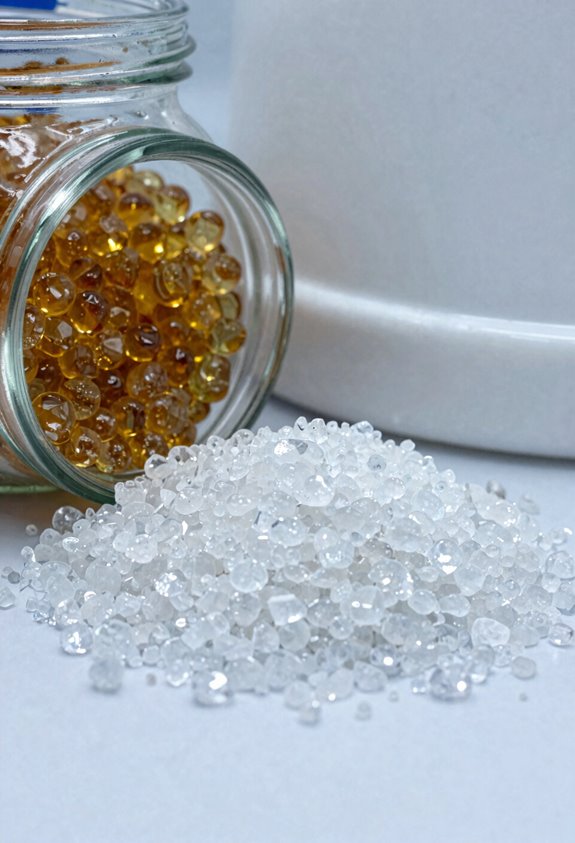
When you’re deciding between salt-free and salt-based water treatment systems, understanding how each protects your home requires examining their fundamental approaches to handling hardness minerals. Salt-based softeners use ion exchange, replacing calcium and magnesium with sodium, which removes hardness entirely but adds salt to your water. Salt-free systems, conversely, crystallize minerals through Template Assisted Crystallization, transforming them into harmless particles that won’t stick to surfaces. For scale protection, salt-free technology prevents buildup without extracting beneficial minerals your body needs. Salt-based softeners eliminate hardness completely, yet introduce sodium—a sodium alternative consideration for health-conscious households. Salt-free systems offer superior environmental benefits, require no electricity or backwashing, and protect pipes effectively while maintaining water quality throughout your entire home.
Recommended Products

Complete Twin tank water softener provides continuous soft water

Delivers cleaner, smoother water throughout your entire home, enhancing everyday moments from showering and cooking to drinking and cleaning

【 SUITABLE FOR 1-3 BATHROOMS 】Ideal for small to medium households, this powerhouse duo of filter and conditioner provides high quality filtered water with a high flow rate of 20 GPM. Experience safe, soft, and odor-free water throughout your entire home.
What Does Reverse Osmosis Remove That Salt-Free Can’t?
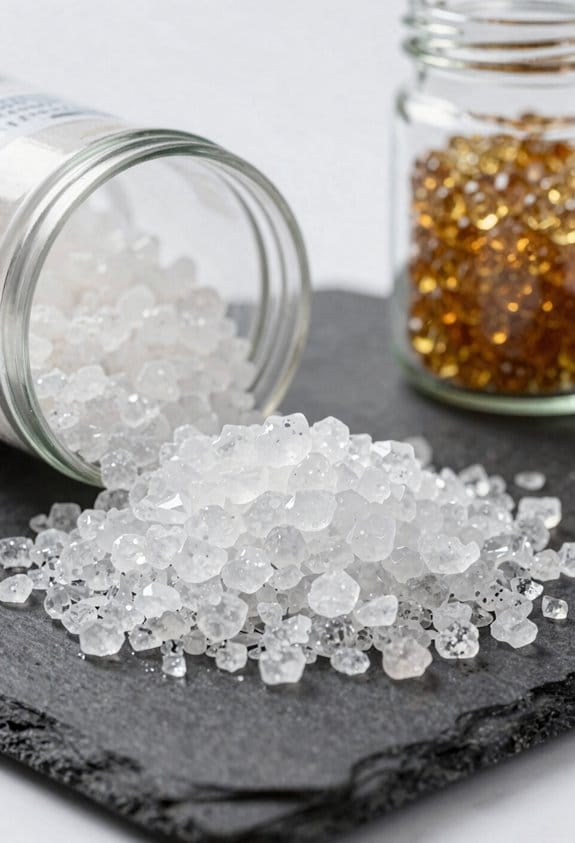
While salt-free systems excel at preventing scale buildup and protecting your pipes, they work within a specific scope that doesn’t include removing dissolved contaminants from your water. Reverse osmosis tackles what salt-free can’t by filtering out harmful substances like PFAS removal, which are industrial chemicals linked to health concerns. RO systems also handle bacteria removal, eliminating microorganisms that salt-free systems can’t address. Additionally, reverse osmosis removes heavy metals, fluoride, arsenic, chlorine, and up to 99% of over 1,000 impurities total. While salt-free crystallizes minerals to prevent scaling, it doesn’t purify your water. That’s why combining both technologies creates thorough protection—the salt-free system guards your appliances, while the RO system makes your drinking water truly clean and safe.
Recommended Products

Upgrade Your Kitchen & Lifestyle: Treat yourself to the Tyent UCE 13 Plate Turbo Hydrogen Alkaline Water Ionizer Purification System, a truly top-tier home essential. This unit features 13 platinum-coated titanium solid/mesh hybrid plates and the largest, most robust water cell available. The compact matte-black and steel design adds a luxurious touch to the kitchen, saves valuable counter space, and provides your family with superior drinking water every day.

𝐀𝐝𝐯𝐚𝐧𝐜𝐞𝐝 𝐅𝐢𝐥𝐭𝐫𝐚𝐭𝐢𝐨𝐧 𝐓𝐞𝐜𝐡𝐧𝐨𝐥𝐨𝐠𝐲: Crystal Quest whole house water filter system employs reverse osmosis technology to efficiently remove contaminants and dissolved solids from your water supply. This advanced filtration process of our house water filter system ensures you access clean, refreshing water that tastes great.

The WECO Backwashing filter with KL/OZ is a specialized Point-Of-Entry (POE) system designed for municipal and well water supplies. Utilizes iron reduction media consisting of manganese dioxide (MnO2) coated onto naturally mined ZEOSORB. Lightweight filtration media with various functions and properties for water treatment and remediation.
Why Should You Combine Salt-Free and RO Systems?
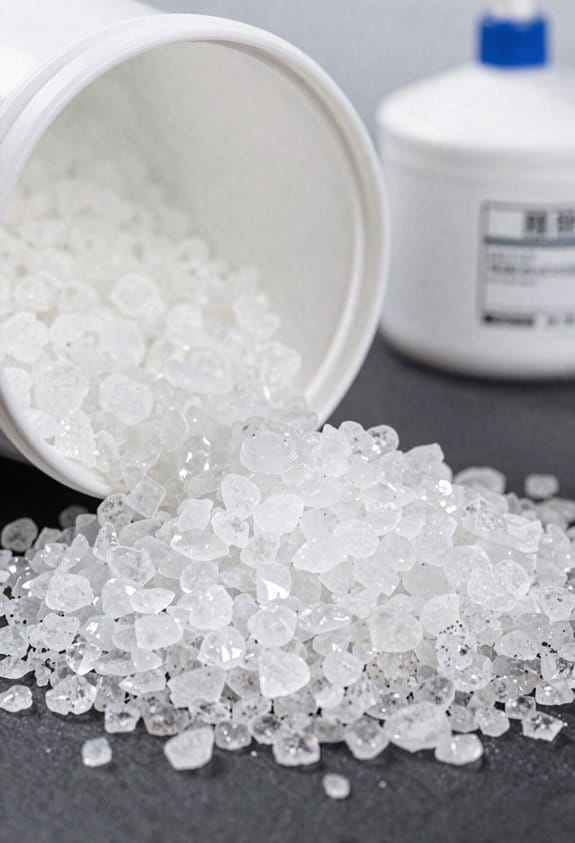
Since each technology addresses different water problems, combining salt-free systems with reverse osmosis creates all-encompassing home water protection that neither system can achieve alone. I’d recommend this pairing because salt-free systems excel at scale prevention, crystallizing hardness minerals before they damage your pipes and appliances. When you add reverse osmosis to your drinking water line, you’re removing contaminants that salt-free systems can’t filter. This dual approach also provides vital membrane protection for your RO system. The salt-free conditioner acts as a prefilter, preventing scale buildup on the RO membrane, which extends its lifespan markedly. Together, they deliver thorough water treatment: whole-house scale prevention plus point-of-use purification, ensuring clean, protected water throughout your home.
Recommended Products

PROTECTS PLUMBING AND APPLIANCES FROM HARD WATER SCALE WITH ZERO WATER WASTE FILTERS DIRT, SAND, SILT, CLAY, RUST, AND OTHER DEBRIS WITH REUSABLE SEDIMENT FILTER CARTRIDGE CAN BE USED FOR HOMES WITH UP-TO 5 BATHROOMS EASY INSTALLATION, LOW MAINTENANCE 120-DAY SATISFACTION GUARANTEE

Compact design for space-saving installation: The one-tank compact design of the iSpring WCS50KG whole house water softener helps save valuable space in your home, making it easier to install in tight or limited areas. The system is designed for indoor installation and is intended for cold water supply only. It features an inlet/outlet connector with the options of 1" or ¾" NPT, providing flexibility and compatibility with different plumbing setups.

COMMERCIAL RO SYSTEM WITH RELIABLE FEATURES - The iSpring CRO1000 is a true commercial-grade reverse osmosis system with a high output of 1,000 GPD. Its tankless design provides on-demand clean, filtered water with a flow rate of 0.7 GPM. Built-in inlet and outlet gauges allow for easy pressure monitoring. The optional PMP1000 booster pump is recommended for water pressure below 80 psi (working range: 80-130 psi).
How Water Flows Through Your Dual-System Setup
Your water’s journey through a combined salt-free and reverse osmosis system follows a logical path designed to address each water quality problem at the right stage. Water enters your home through the salt-free conditioner first, where upflow dynamics pull it through catalytic media like Filtersorb SP3. This initial stage crystallizes hardness minerals, preventing scale buildup while preserving beneficial minerals in your water supply.
Next, the conditioned water travels to your point-of-use reverse osmosis system. The RO membrane receives water at controlled pressure considerations, typically 40-60 psi, forcing it through the semipermeable barrier. This final filtration removes contaminants while the pre-treatment protects your membrane from scaling damage, extending system lifespan markedly.
Why Salt-Free Systems Extend Water Heater Life by 105–110
One of the most significant advantages of installing a salt-free conditioning system is its dramatic impact on water heater efficiency and longevity. When hardness minerals crystallize instead of accumulating as scale, your water heater maintains peak heat transfer capacity. This means your system works more efficiently, using less energy to reach desired temperatures. The crystallized minerals create a protective layer that enhances corrosion resistance on internal surfaces, preventing rust and deterioration. Studies show this protection improves overall efficiency by 105–110 percent compared to untreated hard water systems. Since your heater operates more effectively with reduced mineral buildup, it experiences less strain, extends its lifespan significantly, and lowers your energy bills substantially over time.
Whole-House Salt-Free Conditioning Plus Point-of-Use RO Purification
When you combine a whole-house salt-free conditioning system with a point-of-use reverse osmosis filter, you’re creating a two-stage water treatment approach that addresses different water quality challenges simultaneously. The salt-free conditioner crystallizes calcium and magnesium minerals throughout your home, protecting pipes and appliances while maintaining mineral balance in your water. This pre-treatment safeguards your RO membrane from scaling damage. Meanwhile, your point-of-use RO system removes up to 99% of contaminants like lead, chlorine, and PFAS from your drinking water. Together, they enhance plumbing aesthetics by preventing buildup and corrosion, while delivering cleaner water. This combination eliminates the need for salt backwashing, making it an eco-friendly solution that protects your entire home’s water system efficiently.
Recommended Products
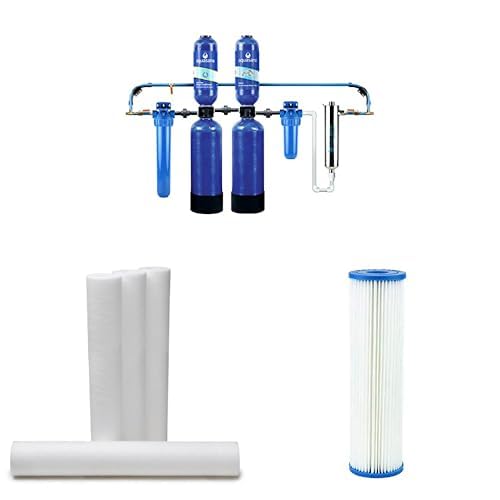
Clean, Great Tasting Water From Every Tap In Your Home - Removes 97% of chlorine. Plus, activated carbon is effective at reducing organic chemicals including pesticides, herbicides, and VOCs while allowing for a fast and reliable flow rate.

4 STAGE ULTIMATE PROTECTION: Specifically designed to provide unmatched filtration and softening performance. This whole house filtration/salt-free softener conditioner package will provide safe soft water for your entire home and remove heavy metals, odors, colors, and many other contaminants in your water.

Cleaner, Healthier Water from Every Tap in Your Home – High-performance water filter system for great-tasting water, improved air quality, healthier hair & skin, and protected pipes & appliances
How to Install and Maintain Your Dual-System Setup
Installing and maintaining this dual-system setup requires understanding how each component works within the larger framework, since the salt-free conditioner and reverse osmosis filter depend on proper placement and care to function effectively together. Your installation checklist should include positioning the salt-free unit at your main water line before the RO system, ensuring the conditioner protects your RO membrane from scale damage. Follow your maintenance schedule by checking the salt-free media annually and replacing RO filters every six to twelve months, depending on your water quality. Monitor water pressure regularly, as declining pressure indicates filter saturation. Flush your RO system monthly to prevent bacterial growth. Proper installation placement and consistent maintenance extend both systems’ lifespans while maximizing their combined effectiveness.
Recommended Products
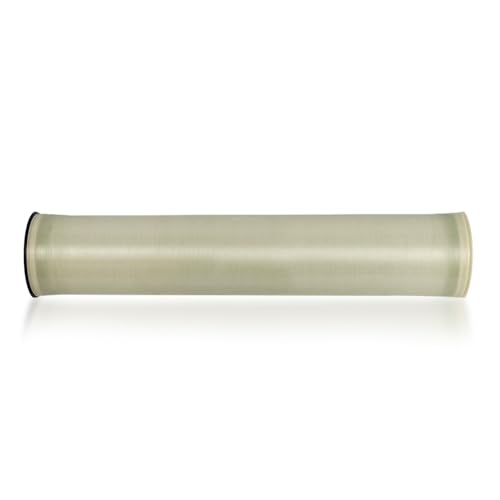
HIGH-WATER PRODUCTION: The XLE-8040 commercial reverse osmosis membrane provides an impressive 14,000 gallons per day (GPD) output at an optimal pressure of 100 PSI, ensuring a reliable supply of purified water for various applications.


STRONG AND DURABLE - Our Seawater pressure vessels are rated for operation up to 1200 PSI. The Corrosion resistant fiberglass material is designed to withstand harsh marine and seawater conditions
Frequently Asked Questions
How Long Does It Take for Salt-Free Systems to Show Visible Descaling Results in Existing Plumbing?
I’ve found that you’ll typically notice visible descaling results within two to four weeks, though the scale timeline varies based on water hardness levels. Most homeowners report significant improvements in their visible timeframe by month two.
Can I Use a Salt-Free Conditioner With My Existing Water Softener Without Conflicts?
I’d strongly advise against mixing them—they’re oil and water. Your softener’s ion exchange clashes with salt-free crystallization. Before attempting integration, run compatibility testing and establish maintenance scheduling to prevent system conflicts.
What Is the Lifespan of Filtersorb SP3 Media Before Replacement Becomes Necessary?
I’d recommend replacing your Filtersorb SP3 media every 5-7 years under normal conditions. The media lifespan depends on your water quality and usage, but this replacement interval guarantees peak performance and scale prevention throughout your home.
Does Combining Salt-Free and RO Systems Increase Water Pressure or Flow Rate Issues?
You’ll face a paradox: while salt-free systems maintain pressure, RO’s semipermeable membrane creates inevitable flow reduction. I’d recommend adding a booster pump to counteract these pressure effects and restore adequate household water delivery.
Are There Specific Water Hardness Levels Where Salt-Free Conditioning Becomes Less Effective?
I’ve found that salt-free systems show effectiveness variability at hardness thresholds above 400-500 ppm. At these elevated levels, you’ll notice reduced crystallization efficiency and increased scaling, making traditional softening a better option for your home.