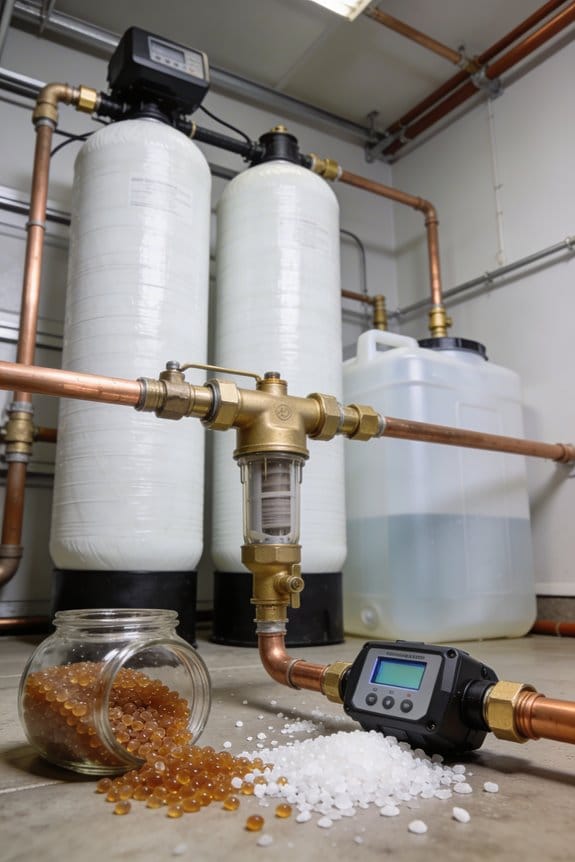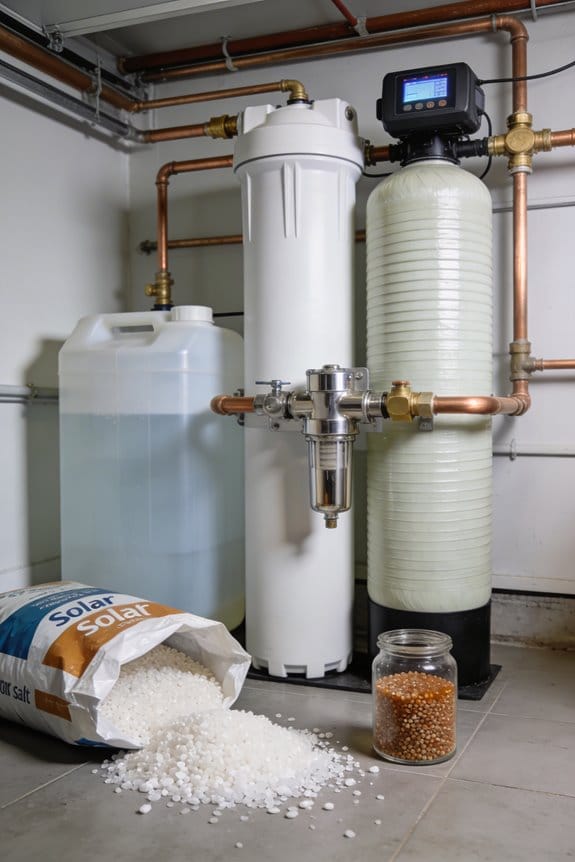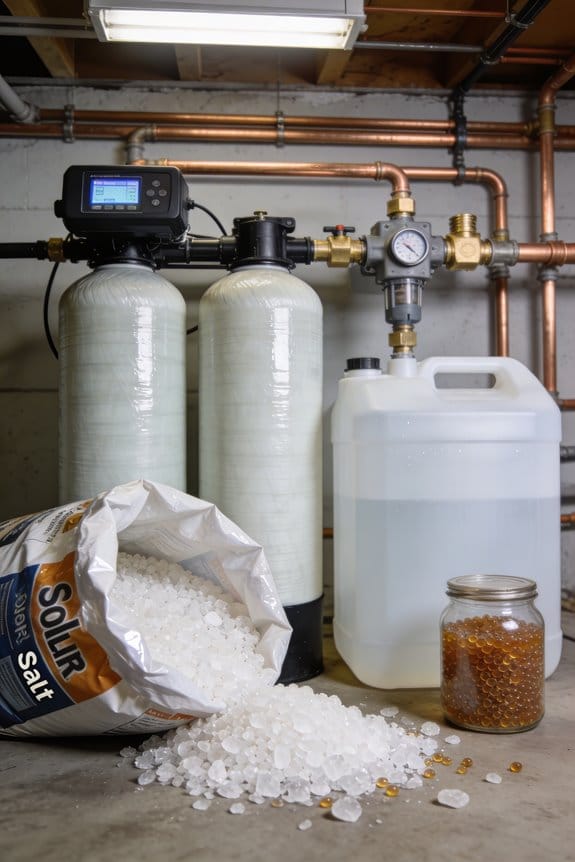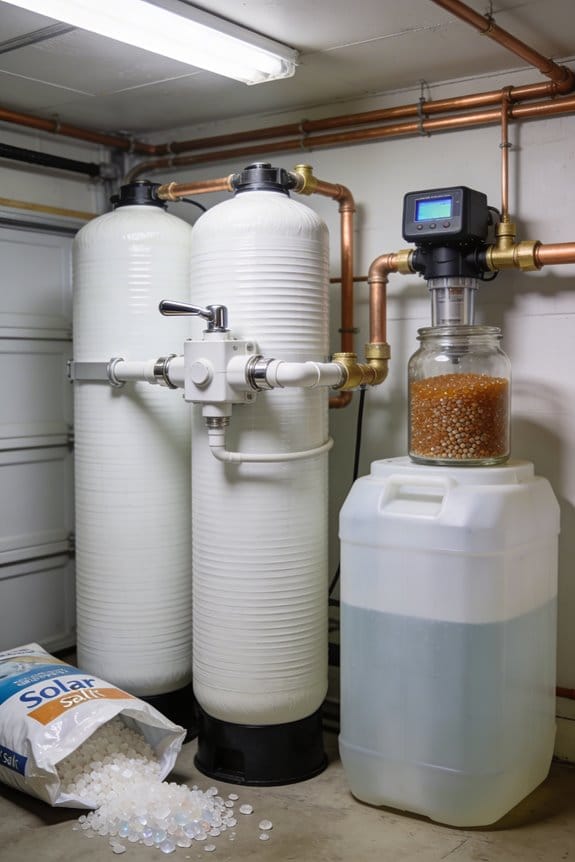
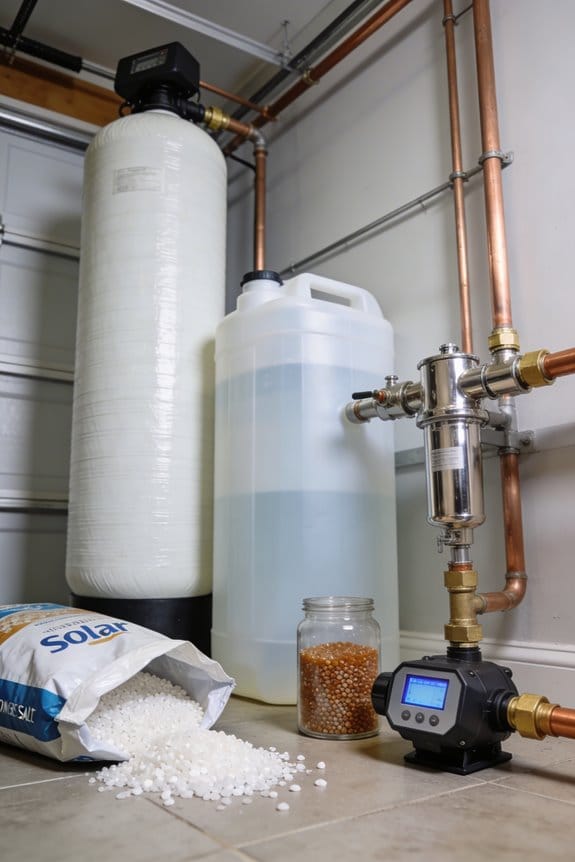

To set your water softener’s hardness level, first test your water using a home kit or contacting your local water authority to get hardness in gpg. Calculate compensated hardness by adding iron and manganese adjustments if you have well water. Input this value into your softener’s digital controls or manual dial. Monitor your output water with test strips every few weeks, adjusting settings in five-gpg increments if you notice scale buildup or spotting on dishes. Understanding these fundamentals helps you discover the best settings for your specific water conditions.
Key Takeaways
- Test your water hardness using home testing kits or contact your local water authority for accurate gpg or ppm measurements.
- Calculate compensated hardness by adding iron (×6) and manganese (×3) multipliers to your base hardness reading in gpg.
- Set initial hardness between 25-35 gpg for most households, adjusting based on your specific water test results and regional conditions.
- Access digital controls via program/select button, use arrows to input compensated hardness value, then press to save the setting.
- Monitor output water with test strips every few weeks and adjust settings in five-gpg increments if scaling or spotting occurs.
Test Your Water Hardness Before You Start
Before you can set your water softener to work effectively, how do you know what hardness level to program? Testing your water is the essential first step. You have two main options: use home testing kits available at most hardware stores, or contact your local water authority for their hardness measurements in gpg or ppm. When using home testing, careful sample handling guarantees accurate results. If you have well water, measure both iron and manganese levels in ppm, since these minerals affect your compensated hardness calculation. Convert ppm to gpg by dividing by 17 or 17.1. Since water hardness fluctuates seasonally, retest every six months to keep your softener properly calibrated and functioning at peak efficiency.
Recommended Products
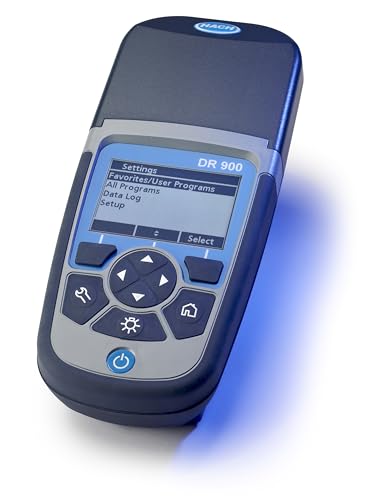
Ensure compliance and effective monitoring with accurate results for over 90 methods across 48 parameters for a range of applications.

THIS KIT ONLY HAS MY GARDEN POOL AQUARIUM AND TERRARIUM TEST STRIPS FOR AQUARIUM TESTING, DOES NOT HAVE 4335 DISKS WHICH ARE REQUIRED FOR THIS DEVICE TO TEST AQUARIUMS PROPERLY. WE ONLY HAVE 4320 DISKS AND TEST STRIPS IN THE BUNDLE

PRECISE CHLORINE MEASUREMENTS – Accurately measures Free Chlorine (0.02–2.00 mg/L Low Range) and Total Chlorine (0.1–8.0 mg/L High Range), providing reliable data for water quality analysis.
Calculate Your Compensated Hardness Level
Once you’ve tested your water and know the hardness level, I need to explain how to calculate your compensated hardness, which accounts for iron and manganese that also need to be softened. Your iron compensation starts by multiplying the iron ppm by 6, then adding this result to your base hardness number. For manganese adjustment, multiply the manganese ppm by 3 and add it to your total. For example, if you have 12 gpg hardness with 1.5 ppm iron and 0.5 ppm manganese, your calculation would be: 12 + (1.5 × 6) + (0.5 × 3) = 21 gpg compensated. This final number is what you’ll program into your softener to guarantee complete mineral removal.
Recommended Products

The information below is per-pack only

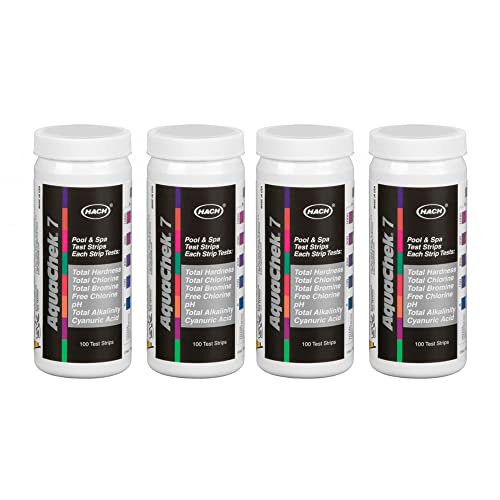
Tests for: Total Hardness, Total Chlorine, Total Bromine, Free Chlorine, pH, Total Alkalinity, Stabilizer (Cyanuric Acid)
Pick Your Starting Hardness Setting

Now that you’ve calculated your compensated hardness level, you’ll want to dial in your softener with a starting point that matches your water’s mineral content. The recommended baseline for most households falls between 25 and 35 gpg, though regional averages vary noticeably. If your water tested between 7 and 10 gpg, start at 30 gpg as your initial setting. For very hard water areas, begin at 20 to 25 gpg to prevent over-softening and unnecessary salt waste. Extremely hard water exceeding these ranges may require settings of 35 to 40 gpg, though consulting your manufacturer’s guidelines is advisable. Once you’ve selected your starting point, you’ll adjust the softener through either digital controls or manual dials, depending on your unit’s design.
Recommended Products

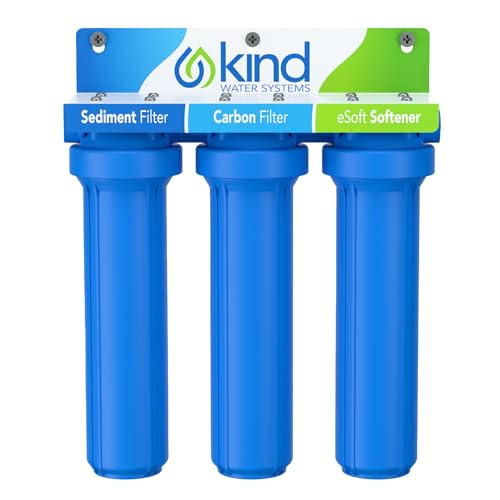
Delivers cleaner, better-tasting water throughout your entire home, improving everyday use from showering and cooking to drinking and cleaning

COMPLETE PACKAGE - Complete package that includes a whole house Water Softener, Upflow Carbon Filtration System, & Drinking Water Reverse Osmosis System. Our package also includes an installation manual and technical support. AFW Filters water bottle included with system. Water bottle has sanitizer pack, silicone lubricant, and hardness test strips for the PERFECT install!
Adjust Hardness on Digital or Manual Controls
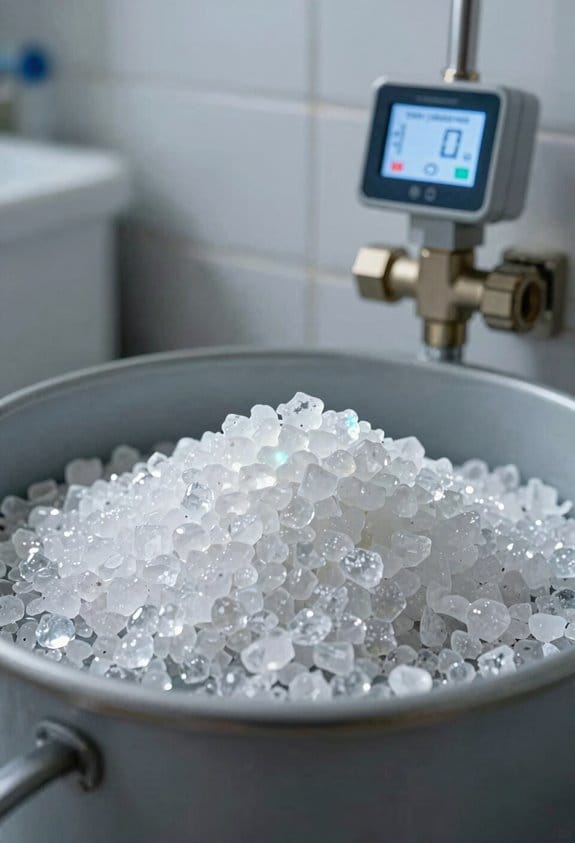
With your starting hardness setting selected, you’ll need to input that value into your water softener using either the digital control panel or manual dial system your unit features. For digital controls, locate the program or select button on your panel to access the hardness screen. Use the up and down arrows to enter your calculated compensated hardness value in gpg. Once you’ve input the number, press the program button to save your settings. If you have a manual system, rotate the dial to match your tested hardness level. Understanding button mapping on digital units and valve orientation on manual systems helps guarantee accurate adjustments. Monitor your water quality after programming to confirm the settings are working effectively.
Recommended Products

Complete Twin tank water softener provides continuous soft water

DIY install with supplemental instructions by AFW Filters on USB

💧 Perfectly designed for 4-6 bathrooms homes, the Aquasure Signature Series is the professional grade Whole House Water system that delivers high quality filtered, ultra-softened water to every outlet throughout your entire home. No need for manual regeneration, backwash, draining, this system automatically regenerates and backwash, making it cost efficient and easy to maintain.
Monitor Output Water and Spot Adjustment Problems
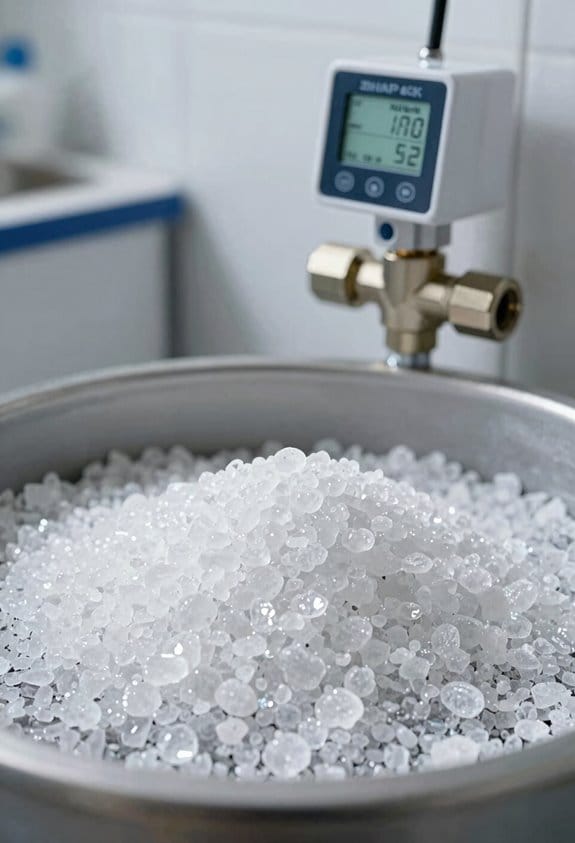
After you’ve programmed your water softener with the compensated hardness value, regularly monitoring your output water becomes essential to confirm the settings are performing correctly. I recommend using test strips to check your water clarity and compare results against the provided charts every few weeks. If you notice scale buildup on fixtures or poor lathering in your soap, your settings may be too high. Conversely, if you see spotting on dishes or appliance maintenance issues increase, your settings might be too low. Test your water in five-gpg increments when adjustments are needed. Also observe your salt consumption; unusually high usage suggests over-compensation. This ongoing monitoring guarantees your softener operates efficiently while protecting your appliances and plumbing systems.
Recommended Products

Tests for: Total Chlorine, Total Bromine, Free Chlorine, pH, Total Alkalinity, Total Hardness, Stabilizer (Cyanuric Acid)

Professional tests total chlorine, total bromine, free chlorine, pH and total alkalinity
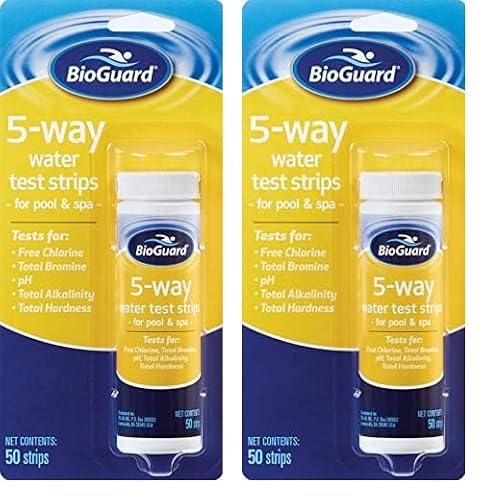
The information below is per-pack only
Recognize When Hardness Settings Need Adjusting
Even though you’ve carefully set your water softener’s hardness level based on your water test results, the right setting isn’t permanent—your water quality can change with seasons, rainfall, and groundwater fluctuations. I recommend watching for specific signs that indicate adjustment needs. If you notice visible scaling on faucets, fixtures, or inside pipes, your softener isn’t removing enough hardness. Similarly, poor softening symptoms like soap that won’t lather properly or spots on dishes suggest undertreatment. Conversely, if you’re using excessive salt without seeing these problems, you’ve likely overcompensated. Test your output water monthly using test strips, comparing results against your baseline. When you spot these warning signs, adjust your hardness setting in five-grain increments and retest within two weeks to verify improvement.
Retest Water Hardness Seasonally
Your water’s hardness level typically changes throughout the year, making seasonal retesting essential to keep your softener working effectively. Temperature effects substantially influence water composition, particularly during winter and summer months when mineral concentrations fluctuate. I recommend retesting every six months to catch these variations before they impact your system’s performance.
When you retest, you’ll identify whether seasonal plumbing changes require hardness adjustments. Spring snowmelt and summer weather patterns alter groundwater mineral content, affecting how your softener operates. By monitoring these shifts, I can prevent scale buildup and guarantee consistent water quality.
Contact your local water authority or use at-home test kits to measure current hardness levels in ppm or gpg. Once I’ve gathered this data, I’ll adjust my softener settings accordingly, assuring peak performance throughout the year.
Frequently Asked Questions
How Often Should I Add Salt to My Water Softener Based on Hardness Settings?
I’ll reveal something surprising: you can’t pin down your salt schedule without grain testing first. Here’s why—harder settings demand more frequent refills, though I’d suggest monitoring usage monthly and adjusting based on consumption patterns you observe.
Can I Adjust My Water Softener Settings if I Have a Metered or Timer-Based System?
Yes, I can adjust your metered softener by entering compensated hardness directly. For timer-based systems, I’ll optimize regeneration frequency based on your water usage. Metered calibration guarantees efficient salt consumption and proper softening performance.
What Causes High Salt Consumption, and Does Over-Setting Hardness Waste Salt?
Picture white crusty deposits coating your fixtures—that’s what happens when I over-set your softener’s hardness. Yes, over-setting wastes salt because I’m regenerating too often for unnecessary scale prevention. I’m effectively throwing money down the drain.
How Do I Know if My Water Softener Is Regenerating Frequently Enough?
I’d monitor your cycle indicators and flow rates to gauge regeneration frequency. If you’re noticing scale buildup or poor lathering between cycles, your softener isn’t regenerating often enough. Adjust settings upward accordingly.
Should I Adjust Hardness Settings Differently for Seasonal Water Changes or Moving?
You’d think water stays constant, but I’ve found seasonal calibration essential when you move or seasons shift. I recommend retesting every six months and using your relocation checklist to recalibrate your hardness settings accordingly.