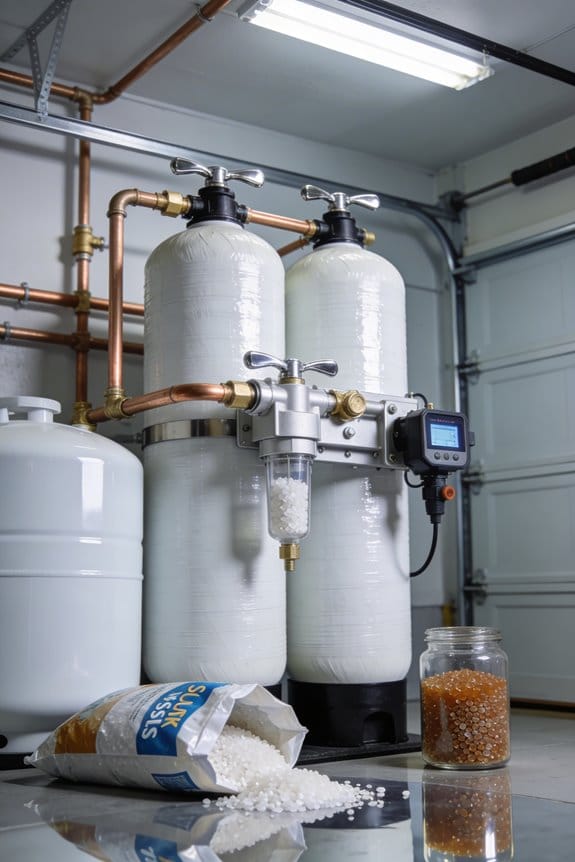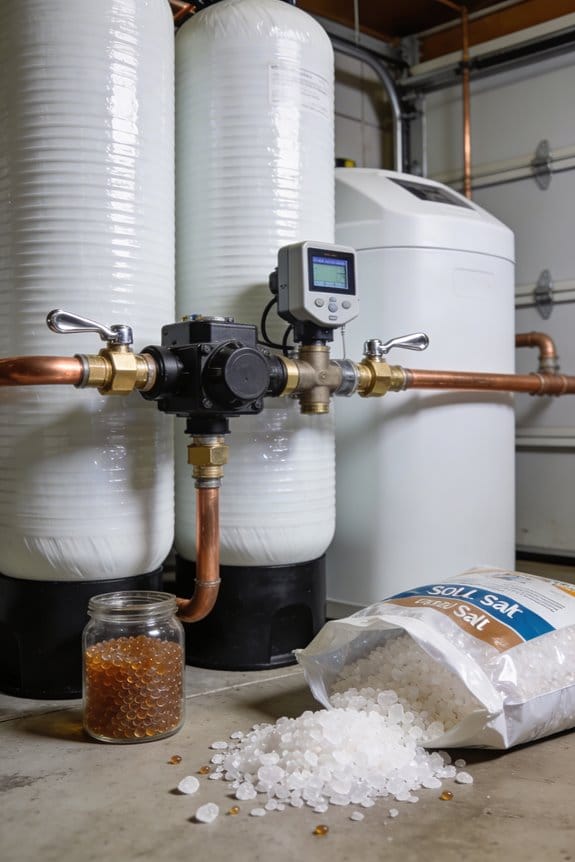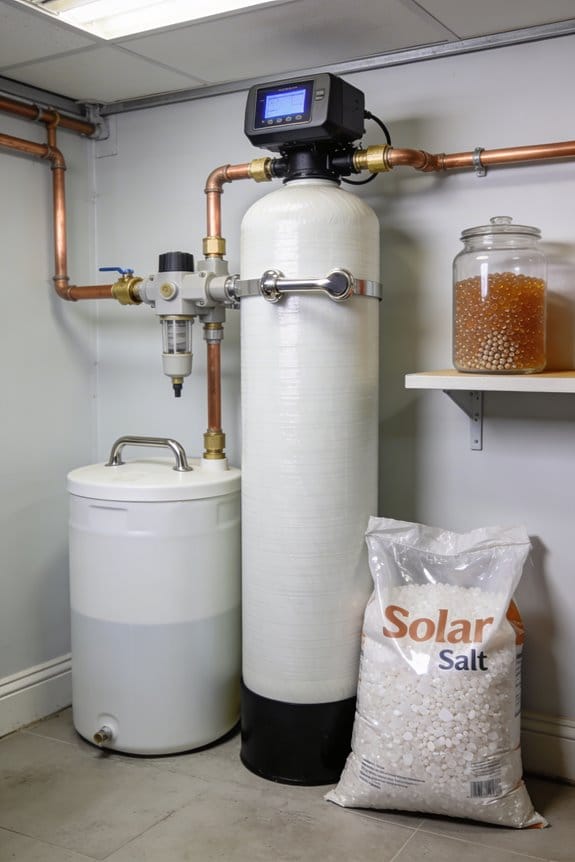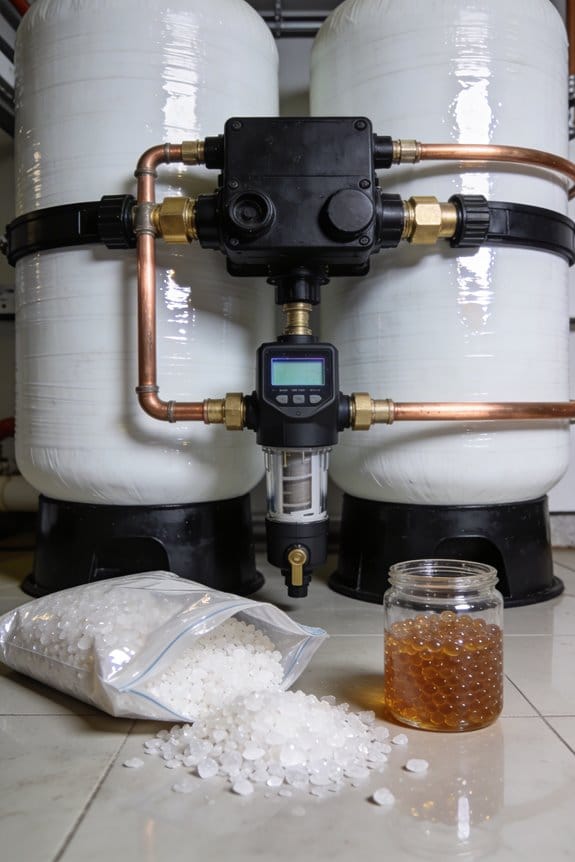
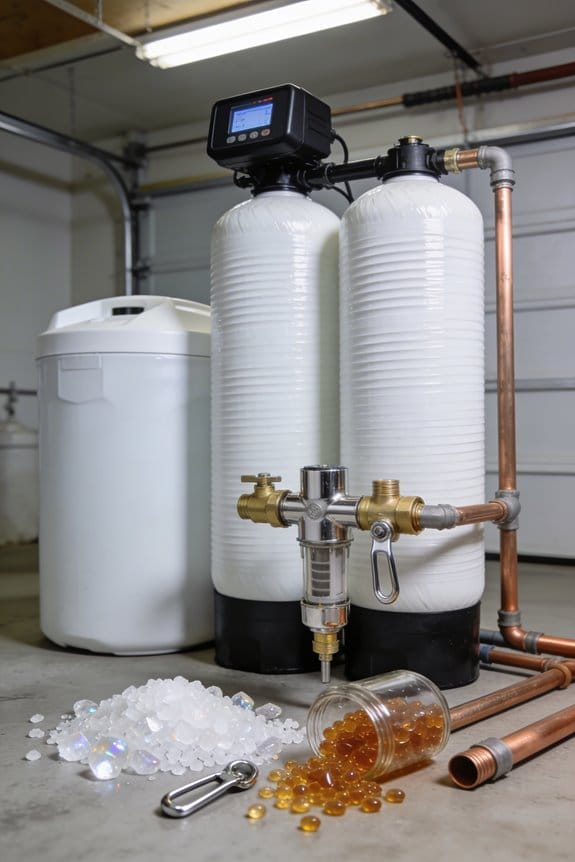

Most whole-house water softener installations take 2 to 4 hours for standard setups. Your installer begins with a 30 to 60-minute assessment of your plumbing layout and water pressure, then spends 1.5 to 2.5 hours on core plumbing connections and hardware setup. Final testing takes another 30 to 45 minutes. However, older plumbing, combo filtration systems, or complications can extend the timeline markedly, and understanding these factors helps you prepare for what’s ahead.
Key Takeaways
- Standard whole-house water softener installation typically takes 2 to 4 hours for most residential systems.
- Installation duration breaks into three phases: initial assessment (30-60 minutes), core plumbing setup (1.5-2.5 hours), and final testing (30-45 minutes).
- Combo filtration-softener systems require longer installation times of 4 to 6 hours due to multiple connections and dual regeneration cycles.
- Older plumbing infrastructure, difficult accessibility, and permit requirements can significantly extend installation time beyond standard durations.
- Professional installation ensures faster completion and code compliance compared to DIY approaches, typically costing $200 to $600.
Standard Installation Timeline: 2 to 4 Hours
When you’re planning to have a whole-house water softener professionally installed, you’ll want to know that most standard installations take between two and four hours from start to finish. This timeframe helps set realistic customer expectations for your project. Your installer checklist will include several key phases: an initial assessment lasting 30 to 60 minutes, core plumbing and hardware setup requiring 1.5 to 2.5 hours, and final testing plus system verification taking 30 to 45 minutes. The actual duration depends on your home’s plumbing complexity and existing infrastructure. Understanding this timeline helps you plan your day accordingly and prepare your home for the technician’s arrival.
The Initial Assessment Phase

As the installer begins examining your home’s plumbing system, they’ll spend about 30 to 60 minutes evaluating various factors that influence the entire installation process. During this site inspection, the professional assesses your current plumbing layout, identifies where the softener unit will fit best, and determines what modifications are necessary. They’ll check water pressure, examine existing pipes, and evaluate accessibility of main water lines and drain connections. Water testing occurs to establish your home’s hardness level, which helps calibrate the system properly. The installer also identifies any potential complications, such as aging infrastructure or unusual plumbing configurations, that might affect the timeline. This thorough initial phase guarantees accurate project planning and prevents unexpected delays during installation.
Core Plumbing and Hardware Setup

Once your plumber completes the initial assessment, the core installation work begins with shutting off your main water supply and cutting into your existing plumbing lines. This phase typically requires 1.5 to 2.5 hours to complete. Your plumber will carefully install pipe fittings that connect your main water supply directly to the softener unit. Proper valve alignment guarantees water flows correctly through the system before reaching your home’s pipes. Next, they’ll connect the drain line, which allows salt-based systems to discharge treated water safely. For combo filtration-softener systems, multiple connections demand precise positioning. Throughout this phase, your plumber verifies all connections are secure and properly positioned, setting the foundation for successful system operation.
Recommended Products

4 STAGE ULTIMATE PROTECTION: Specifically designed to provide unmatched filtration and softening performance. This whole house filtration/salt-free softener conditioner package will provide safe soft water for your entire home and remove heavy metals, odors, colors, and many other contaminants in your water.

💧 Perfectly designed for 1-2 bathrooms homes, the Aquasure Signature Series is the professional grade Whole House Water system that delivers high quality filtered, ultra-softened water to every outlet throughout your entire home. No need for manual regeneration, backwash, draining, this system automatically regenerates and backwash, making it cost efficient and easy to maintain

COMPLETE PACKAGE - Complete package that includes a whole house Water Softener, Upflow Carbon Filtration System, & Drinking Water Reverse Osmosis System. Our package also includes an installation manual and technical support. AFW Filters water bottle included with system. Water bottle has sanitizer pack, silicone lubricant, and hardness test strips for the PERFECT install!
Salt-Based Systems: What Takes So Long

Salt-based water softeners can tie up a plumber’s time for 2 to 4 hours during installation, and understanding why helps explain the labor involved in getting your system running. The brine tank setup requires careful positioning and secure connections to your main softener unit. Technicians must also configure the drain line properly, since your system needs somewhere to discharge water during the resin regeneration process, which happens periodically to restore the softener’s effectiveness. Brine maintenance involves establishing the correct salt levels and programming the system to recognize when regeneration should occur. Additionally, technicians perform electrical connections for the control valve and timer mechanisms. Each component demands precision to make certain your system operates efficiently and delivers consistently soft water throughout your home.
Recommended Products

𝐂𝐥𝐞𝐚𝐧𝐞𝐫, 𝐇𝐞𝐚𝐥𝐭𝐡𝐢𝐞𝐫 𝐖𝐚𝐭𝐞𝐫 𝐟𝐫𝐨𝐦 𝐄𝐯𝐞𝐫𝐲 𝐓𝐚𝐩 𝐢𝐧 𝐘𝐨𝐮𝐫 𝐇𝐨𝐦𝐞: High-performance water filter system for great-tasting water, improved air quality, healthier hair & skin, and protected pipes & appliances.

𝐂𝐥𝐞𝐚𝐧𝐞𝐫, 𝐇𝐞𝐚𝐥𝐭𝐡𝐢𝐞𝐫 𝐖𝐚𝐭𝐞𝐫 𝐟𝐫𝐨𝐦 𝐄𝐯𝐞𝐫𝐲 𝐓𝐚𝐩 𝐢𝐧 𝐘𝐨𝐮𝐫 𝐇𝐨𝐦𝐞: Specially designed for well water. High-performance water filter system for great-tasting water, improved air quality, healthier hair & skin, and protected pipes & appliances.

PROTECTS PLUMBING AND APPLIANCES FROM HARD WATER SCALE WITH ZERO WATER WASTE FILTERS DIRT, SAND, SILT, CLAY, RUST, AND OTHER DEBRIS WITH REUSABLE SEDIMENT FILTER CARTRIDGE CAN BE USED FOR HOMES WITH UP-TO 5 BATHROOMS EASY INSTALLATION, LOW MAINTENANCE 120-DAY SATISFACTION GUARANTEE
Combo Systems: Why They Need 4 to 6 Hours

When you’re combining filtration and softening capabilities in a single system, you’re looking at a markedly more complex installation that demands 4 to 6 hours of professional labor. I’ll explain why these combo systems take considerably longer than standard softeners.
The extended timeline stems from dual regeneration cycles and multiple plumbing connections required for both functions. Technicians must integrate filtration stages alongside softening components, demanding precise space planning to accommodate larger equipment footprints. Each system requires separate drain hookups, electrical connections, and calibration procedures. Additionally, professionals must carefully coordinate water flow through both filtration and ion exchange stages, ensuring peak performance. The complexity increases when existing plumbing doesn’t align with ideal system placement, necessitating additional piping work and careful spatial arrangement within your home.
Recommended Products

𝐂𝐥𝐞𝐚𝐧𝐞𝐫, 𝐇𝐞𝐚𝐥𝐭𝐡𝐢𝐞𝐫 𝐖𝐚𝐭𝐞𝐫 𝐟𝐫𝐨𝐦 𝐄𝐯𝐞𝐫𝐲 𝐓𝐚𝐩 𝐢𝐧 𝐘𝐨𝐮𝐫 𝐇𝐨𝐦𝐞: Specially designed for well water. High-performance water filter system for great-tasting water, improved air quality, healthier hair & skin, and protected pipes & appliances.

Delivers cleaner, smoother water throughout your entire home, enhancing everyday moments from showering and cooking to drinking and cleaning

ENJOY CLEAN WATER FROM EVERY FAUCET - WCFM500K whole house water filtration system reduces iron (up to 12 ppm), manganese & hydrogen sulfide (up to 20 ppm), solids, and turbidity with 3-micron sediment filtration. Automatic media regeneration extends system lifespan up to 10 years with no filter replacements.
What Slows Down Water Softener Installation
Several factors can draw out your water softener installation beyond the standard timeline, and understanding them helps you prepare for what’s ahead. Older plumbing systems often require extensive modifications, which adds hours to your project. If your home needs new drain lines or electrical outlets, you’re looking at additional labor. Location matters too—difficult-to-reach installation spaces slow down technicians considerably. Unexpected permits can delay your start date markedly, particularly in areas with strict building codes. Seasonal delays occur during peak installation periods when professionals have longer wait times. The complexity of your existing infrastructure determines how much cutting and rerouting technicians must perform. Recognizing these variables beforehand allows you to budget realistic timeframes and costs for your installation.
How Your Home Slows Water Softener Installation
Your home’s specific characteristics play a substantial role in determining how long your water softener installation takes, and I’ll explain the main factors that can add time to the project. Older homes often have outdated plumbing that’s harder to work with, requiring more careful modification. If your main water line is difficult to access, technicians spend extra time locating and preparing the connection points. New drain line plumbing through walls greatly extends the timeline. Additionally, permit delays in your area can postpone your installation start date entirely. Homes without existing electrical outlets near the installation site require electricians to run new lines, adding hours to the project. These structural and logistical factors combine to make installation times highly variable between properties.
Hot Water Tank Replacement: Extra Hours
A water softener installation doesn’t end when the unit connects to your main water line, because soft water transforms your entire home’s plumbing system, including the hot water that flows from your tank. Your existing hot water tank may require replacement after softener installation, adding several extra hours to your overall project timeline. This replacement typically takes a few hours to a day or two, depending on your tank’s size and your household’s daily water usage. Tank logistics involve draining the old unit, disconnecting plumbing lines, and installing the new tank with proper connections. Before replacing your tank, check your warranty transfer requirements, as some manufacturers have specific guidelines about installation procedures that affect coverage and system longevity.
Recommended Products

Intelligent control system with LCD display

Intelligent control system with LCD display

Professional Installation Costs
When you’re planning a water softener installation, understanding the costs involved helps you budget effectively for this home improvement project. Professional installation typically ranges from $200 to $600, depending on your location and system complexity. I’d recommend asking installers about warranty options, which often cover parts and labor for specific periods. Beyond installation fees, you’ll want to factor in maintenance costs, including regular salt purchases for salt-based systems and occasional filter replacements. Some companies offer bundled packages that include installation, warranty coverage, and first-year maintenance, potentially providing better overall value. Getting multiple quotes helps you compare pricing and service offerings before making your decision.
Recommended Products
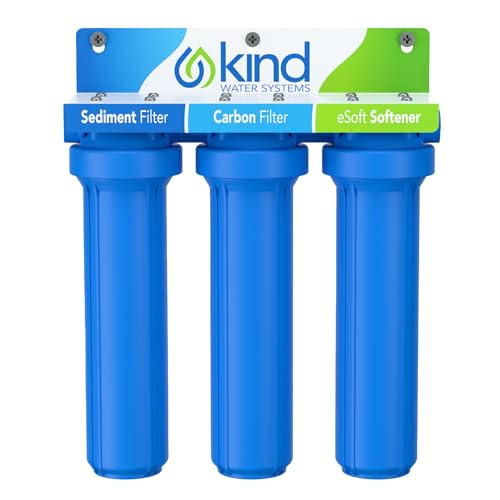
Delivers cleaner, better-tasting water throughout your entire home, improving everyday use from showering and cooking to drinking and cleaning

Complete 80,000 Grains metered on demand water softener .- Upgraded Paddle Wheel Meter

💧 Perfectly designed for 1-2 bathrooms homes, the Aquasure Signature Series is the professional grade Whole House Water system that delivers high quality filtered, ultra-softened water to every outlet throughout your entire home. No need for manual regeneration, backwash, draining, this system automatically regenerates and backwash, making it cost efficient and easy to maintain.
Frequently Asked Questions
What Workspace Requirements Must Be Prepared Before the Water Softener Installation Begins?
I’d literally move mountains to guarantee you’ve got a million square feet cleared, but honestly, you’ll need about nine square feet. Make sure there’s utility access and floor drainage available for the technician’s work.
How Soon After Installation Does Cold Water Become Soft in the Home?
Your cold tap will deliver soft water immediately once I activate the system. You can start immediate testing right away, though your hot water tank will need a few hours to a day or two to fully replace with soft water.
What Is the Purpose of the Brine Tank in Salt-Based Water Softener Systems?
The brine tank’s purpose is to store salt for your ion exchange process. I’ll explain: it holds the salt solution that regenerates your softener’s resin beads, allowing them to continue removing minerals from your water effectively.
Why Do Combo Filtration-Softener Systems Require More Installation Time Than Standard Units?
I’ve found that combo systems take longer because they demand greater system compatibility between filtration and softening units. You’ll need multiple plumbing connections, precise drain and electrical configurations, plus increased maintenance complexity during calibration and testing phases.
How Long Does It Take for Hot Water to Become Soft After Installation?
I’ll cut to the chase: your hot water won’t become soft overnight. It takes a few hours to a day or two for your tank to fill with softened water, depending on regeneration timing and your household’s usage patterns.