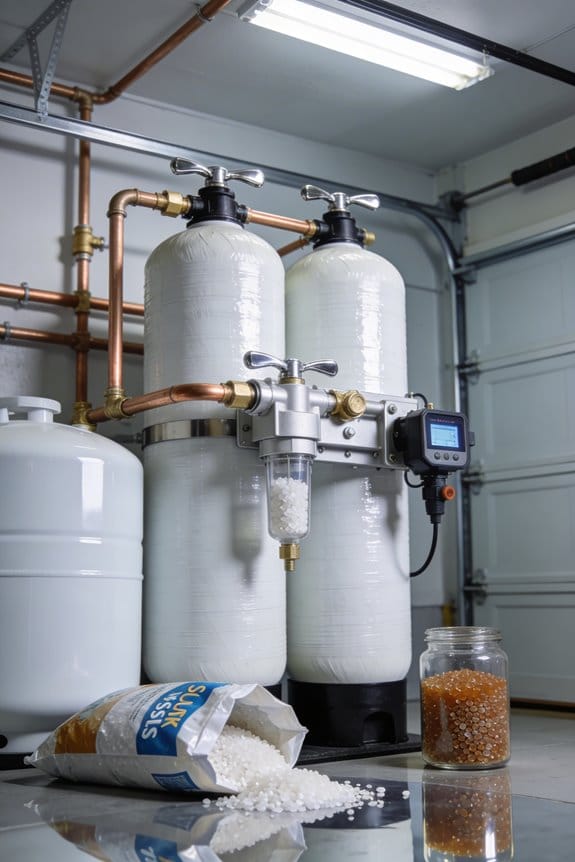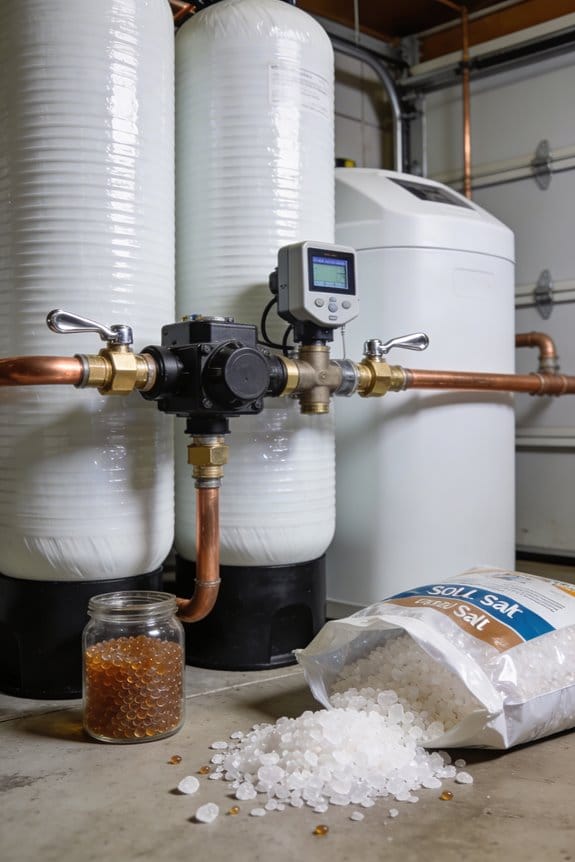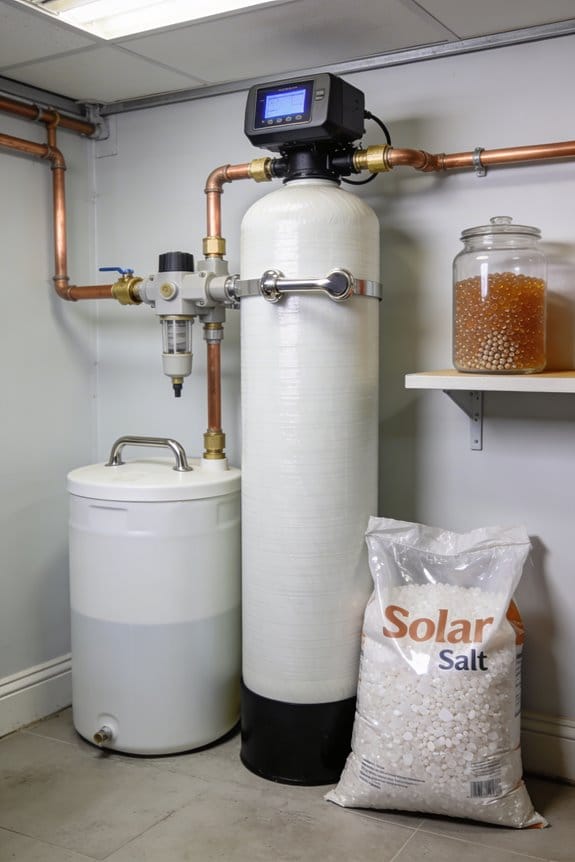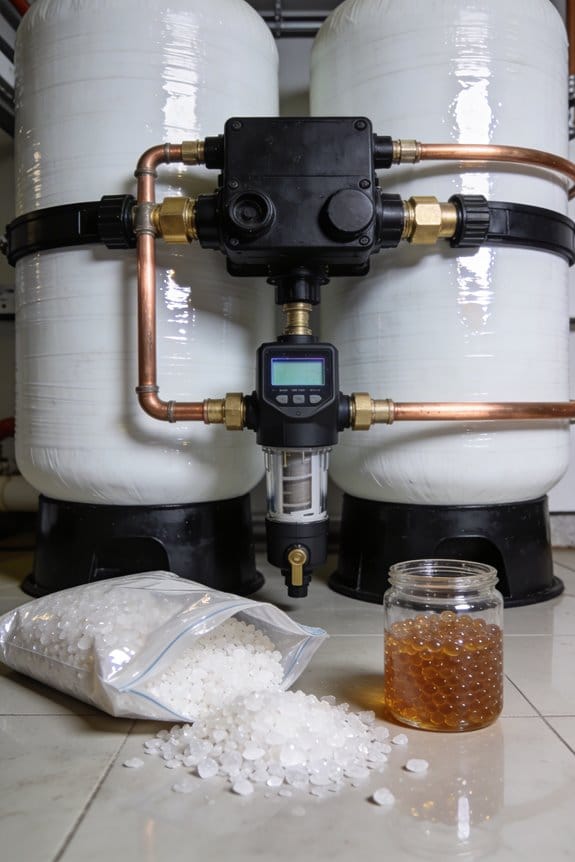


Your water softener stops working when salt doesn’t dissolve properly in the brine tank, creating a hard crust that prevents mineral-removal chemicals from forming. The resin beads inside degrade over time and can’t exchange ions effectively. Clogged nozzles restrict water flow, the control valve malfunctions from power loss, or the system fails to draw brine during regeneration cycles. Understanding these five main issues helps you determine whether you need repairs or replacement, and what each section covers will guide your next steps.
Key Takeaways
- Salt bridging creates a hard crust layer preventing salt from dissolving and mixing with water in the brine tank.
- Resin bed degradation over 10–15 years reduces ion exchange effectiveness, allowing hard minerals to pass through untreated.
- Clogged injectors, nozzles, or venturi components restrict brine flow and water circulation during regeneration cycles.
- Power interruptions or timer malfunctions prevent scheduled regeneration cycles from running at proper intervals.
- High iron, manganese, chlorine, or sediment in supply water accelerates resin breakdown and reduces softening performance.
Salt Bridging: Why Your Salt Isn’t Dissolving
When your water softener stops working effectively, salt bridging often comes into play, creating a hard crust layer in your brine tank that prevents salt from dissolving and mixing with water to form the brine solution your system needs for regeneration. This problem develops when you overfill your brine tank beyond the halfway point, or when you use low-quality salt crystals that don’t dissolve properly. Environmental conditions like humidity mushing cause salt to clump together, blocking the brine solution from forming. Salt crusting creates a hollow space above the water, preventing contact between salt and liquid. During regeneration cycles, you’ll notice the salt level remains static instead of dropping, indicating your softener can’t access the salt it needs to recharge the resin beads effectively.
Resin Beads Stop Exchanging Ions Over Time
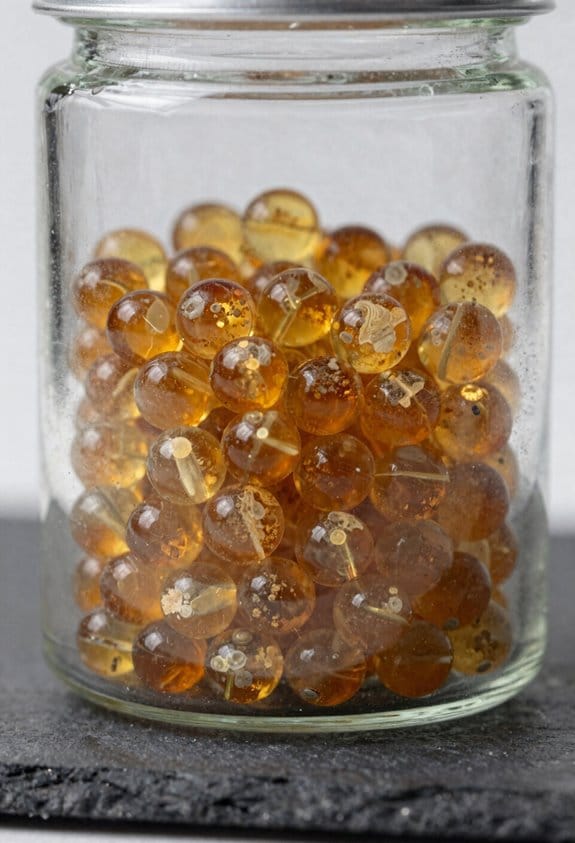
Because your water softener relies on resin beads to remove hard water minerals through a process called ion exchange, you’ll want to understand why these beads deteriorate over time and eventually stop working effectively. Over 10-15 years, resin degradation occurs naturally as beads break down from constant use and exposure to chlorine, iron, and sediments in your water supply. This deterioration causes ion depletion, meaning the beads can’t exchange ions efficiently anymore. When this happens, hard water minerals pass through without being removed, and you’ll notice your water feels less soft. Environmental factors like high humidity and temperature fluctuations accelerate this decline. Eventually, you’ll need to replace the resin beads entirely to restore your softener’s performance and maintain soft water quality throughout your home.
Recommended Products

COMPLETE PACKAGE - Complete package that includes a whole house Water Softener w/ UPGRADED Purolite C100E US made resin & Upflow Carbon Filtration System. Our package also includes an installation manual and technical support. Silicone lubricant and hardness test strips for the PERFECT install!

Upgraded Large Light Commercial 18x40 round brine tank w/safety float

Perfect for homes with 4 to 6 bathrooms and up to 7 family members, who desires softened water and clean, chemical-free water for the whole family.
Brine Tank Won’t Empty During Regeneration
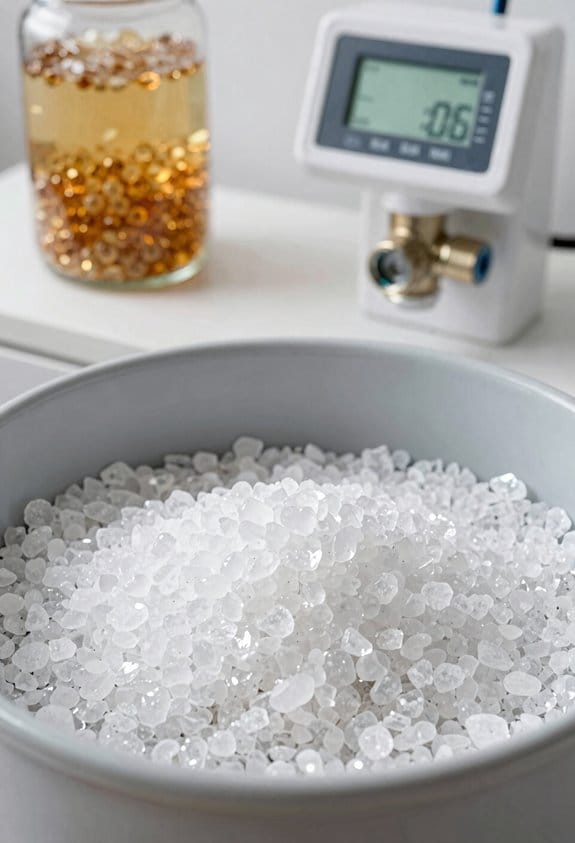
Your water softener’s brine tank plays a vital role in the regeneration cycle, and when it won’t empty properly, your system can’t restore the resin beads’ ability to soften water. Several issues can prevent proper emptying. A clogged brine line blocks the flow of salt solution, while a stuck float sensor fails to signal the system that the tank needs draining. The brine pump, which pushes brine through the system, may malfunction or lose power. Additionally, a faulty injector can restrict brine flow, and a plugged valve drain hose prevents water from exiting. I recommend checking these components during maintenance to make certain your regeneration cycle completes successfully and your softener operates effectively.
Recommended Products

64k Digital Dual Tank Alternating IRON PRO Water Softener with Fleck 9100SXT

COMPLETE PACKAGE - Complete package that includes a whole house Water Softener w/ UPGRADED 10% resin & Upflow Carbon Filtration System. Our package also includes an installation manual and technical support. AFW Filters included with system, sanitizer pack, silicone lubricant, and hardness test strips for the PERFECT install!
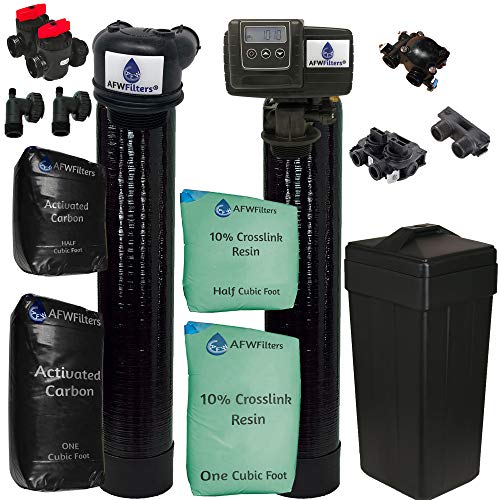
COMPLETE PACKAGE - Complete package that includes a whole house Water Softener w/ UPGRADED 10% resin & Upflow Carbon Filtration System. Our package also includes an installation manual and technical support. AFW Filters water bottle included with system. Water bottle has sanitizer pack, silicone lubricant, and hardness test strips for the PERFECT install!
No Salt Usage When Regeneration Runs
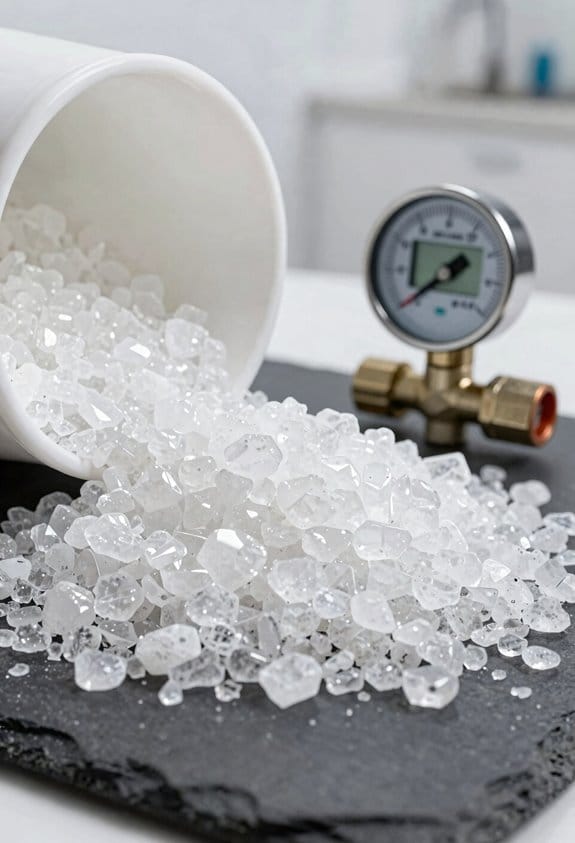
Often, a water softener that completes its regeneration cycle without consuming salt indicates a breakdown in the brine system’s ability to deliver salt solution where it’s needed. Several culprits commonly cause this problem. A blocked brine line prevents salt water from reaching the resin tank during regeneration. The injector, which draws brine into the system, may become clogged with sediment or mineral deposits. Air pockets trapped in the brine line can also disrupt the suction needed for proper salt extraction. Electronic faults within the control valve or circuit board might prevent the valve from opening correctly. Additionally, a faulty float valve can malfunction, stopping the system from initiating the brine draw phase. Identifying which component’s failing requires checking each connection systematically.
Recommended Products
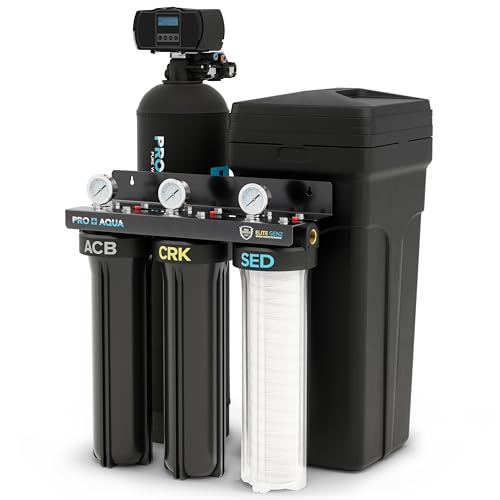
Three-stage filtration removes chlorine, lead, iron, VOCs, sulfur, and more
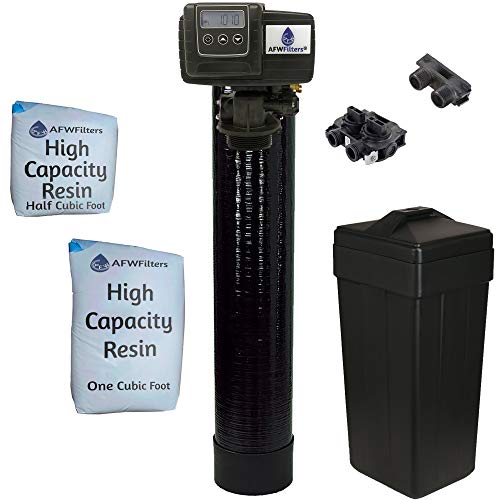
Can be used on any kind of water supply to remove hard water and other elements from your water

Fleck 5600SXT FILTER only valve, backwashing only for FILTER tanks with carbon, calcite, iron media, ect. It is NOT for a water softener, it does NOT have a brine connection as a softener needs.
Clogged Nozzles Block Water Flow Through the System
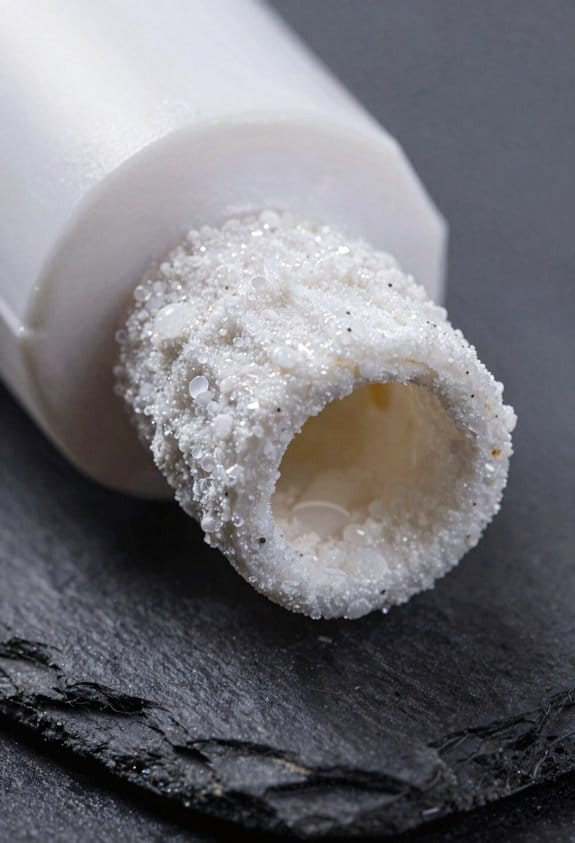
When sediment, mineral deposits, or debris accumulate inside the nozzle and venturi components, water flow through your softener becomes severely restricted, preventing the system from completing its regeneration cycle effectively. This flow restriction means your resin beads can’t receive the concentrated brine solution they need to recharge properly.
I recommend checking your nozzle cleaning schedule regularly, as clogged passages directly impact your system’s performance. A dirty or damaged nozzle forces water to bypass the resin tank entirely, leaving hard water untreated in your home. You’ll notice reduced water pressure or inadequate softening results. Professional nozzle cleaning or replacement restores proper water flow and allows regeneration to proceed normally, returning your softener to full functionality.
Recommended Products

This is an O.E.M. Authorized part

Includes all interior parts
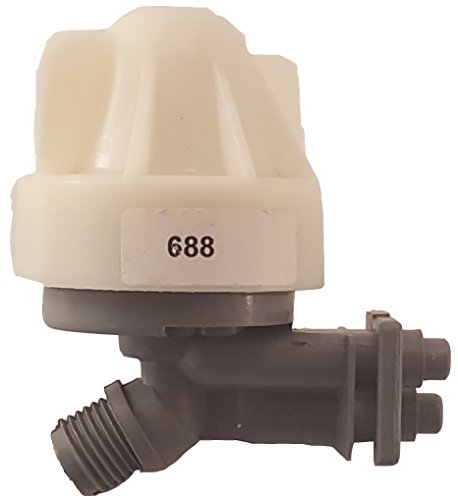
This part is typically only for systems 40,000 grains or larger
Regeneration Cycles Miss or Run at Wrong Times
Even if I’ve cleaned or replaced clogged nozzles and restored proper water flow, my softener can still fail to work correctly if the regeneration cycles aren’t happening at the right times or aren’t happening at all. Timer errors are a common culprit, where incorrect time settings prevent the system from initiating regeneration when needed. Power interruptions can reset the control board, disrupting scheduled cycles entirely. When regeneration doesn’t occur on schedule, hard water minerals accumulate in the resin beads, rendering them ineffective at softening water. I should verify the timer settings match my household water usage patterns and check that the system maintains consistent power. Regular monitoring guarantees cycles run properly for peak softener performance.
Hard Water Still Coming From Your Taps
Despite having a water softener installed, you might still notice hard water coming from your taps, which indicates that something in the softening process has broken down or isn’t functioning properly. Several factors could cause this problem. Your resin beads may have deteriorated from iron buildup, sediments, or chlorine exposure, losing their ion exchange effectiveness. Alternatively, plumbing leaks in your brine line or faulty injectors prevent proper salt brine circulation. Water chemistry issues arise when your hardness settings are too low for your household’s actual water conditions. Additionally, if regeneration cycles miss or run incorrectly, your resin never gets recharged. A malfunctioning bypass valve or clogged nozzles also restrict softening. Identifying which component failed requires systematic testing of your system’s critical functions.
How to Know If You Need Repairs or Replacement
Once you’ve identified that your water softener isn’t working properly, you’ll need to determine whether your system requires targeted repairs or a complete replacement, since this decision materially affects your budget and timeline. Start by checking your warranty status, as coverage may offset repair costs substantially. Consider diagnostic testing to pinpoint the exact problem—whether it’s a faulty valve, resin deterioration, or control board failure. If your system is under ten years old with a single component issue, repairs typically make sense. However, if your softener exceeds fifteen years or multiple failures occur simultaneously, replacement becomes more economical. Professional technicians can perform thorough diagnostic testing to guide your decision-making process effectively.
Recommended Products


Reduces hardness in the water, eliminates scale, spot build up for the entire home and combat the high iron issue at up to 10 ppm and removes red stain buildup.
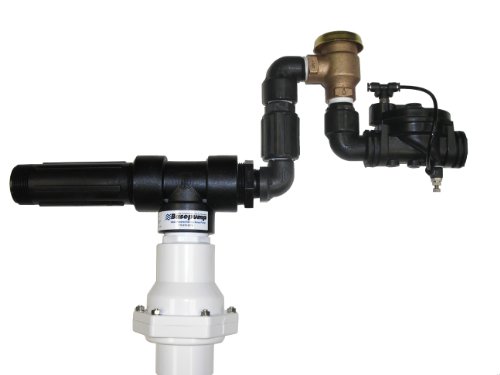
Water Powered Sump Pump: The Basepump is a dependable, powerful, high-performance system with a built-in atmospheric vacuum breaker that prevents back-flow and operates automatically using your home's water pressure—no need to be present.
Why Maintenance Every Few Years Prevents Most Failures
Regular maintenance performed every two to three years serves as your water softener’s best defense against the costly failures outlined in previous sections, since many problems stem from neglect rather than manufacturing defects. Scheduled inspections catch issues like salt bridging, resin deterioration, and valve malfunctions before they worsen. During preventive cleaning, technicians remove mineral buildup, check the brine tank float, and inspect nozzles for clogs. They’ll verify your system uses quality salt and operates at correct settings. This proactive approach extends your softener’s lifespan from ten to fifteen years, preventing expensive component replacements. Without routine care, small problems escalate into system failures that compromise water quality and require urgent, costlier repairs or complete replacement.
Frequently Asked Questions
Can High Humidity or Temperature Changes Damage My Water Softener’s Components?
Yes, I’m telling you that nature’s mood swings—humidity effects and temperature cycling—can genuinely wear down your softener’s components. High moisture encourages resin deterioration and salt mushing, while temperature fluctuations stress seals and valves over time.
Does Chlorine in City Water Harm Resin Beads and Reduce Softening Effectiveness?
Yes, chlorine in your city water damages resin beads through chlorine degradation, causing resin fouling. This deterioration reduces your softener’s ion exchange effectiveness, making it unable to remove hard water minerals properly.
What Causes Salty Taste or Slick Feeling in Water After Regeneration?
Like water trapped behind a dam, residual brine gets stuck in your lines after regeneration. I’ve found that salty buildup and slippery residue linger when your system doesn’t flush completely, leaving you with that uncomfortable salty taste.
How Does Low Water Pressure Indicate Underlying Problems in My Softener?
I’ll tell you that low flow and pressure fluctuations signal clogs or deposits restricting water movement through your softener. You’re likely experiencing blockages in the valve drain hose, nozzle, or venturi that need clearing immediately.
Can a Malfunctioning Float Valve Cause Excessive Salt Consumption and Overflow Issues?
Yes, I’ve found that a stuck float valve causes 40% more salt consumption than normal. When it malfunctions, you’ll experience brine siphoning and overflow issues, draining your salt reserves rapidly while creating costly operational problems.